
NEW
Font size
S
M
L
XL
 Worksheets
Newton's Laws of Motion
Total questions: 75
Worksheet time: 2hrs 35mins
Name
Class
Date
1.
Which force produces a change in motion?
a)
unbalanced force
b)
balanced force
c)
gravitational force
d)
frictional force
2.
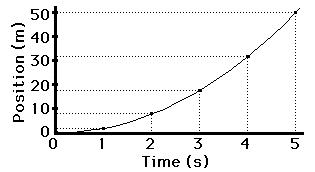
The picture of the position vs. time graph shows an object that is...
a)
accelerating/speeding up
b)
moving at a constant speed
c)
not moving
d)
accelerating/slowing down.
3.
What is the standard unit force is measured in?
a)
Newtons
b)
pounds
c)
grams
d)
meters
4.
What is Newton's First Law known as? The Law of
a)
Friction
b)
Mass
c)
Inertia
d)
Gravity
5.
Which has more Inertia? (so need more force to move)
a)
Truck
b)
Ant
c)
A cat
d)
A skateboard
6.
What is the formula for force?
a)
F=M/A
b)
F=MA
c)
F=AX
d)
what is force?
7.
What is Newton's Third Law?
a)
Object in motion stays in motion and an object at rest stays at rest unless acted on by a outside force
b)
Force = mass x acceleration
c)
For every action there is an equal and opposite reaction
8.
According to Newton's second law, if you increase the force applied to an object :
a)
it accelerates more
b)
it doesn't move
c)
you get more inertia
d)
it decelerates
9.
Who is the scientist who came up with the Laws of Motion?
a)
Sir Issac Newton
b)
The Greeks
c)
John Dalton
d)
Sir John Newt
10.
What is Newtons 2nd law of motion?
a)
Pancakes
b)
Force= Mass multiplied by acceleration
c)
For every action there is a equal and opposite re-action.
d)
Law of gravity
11.
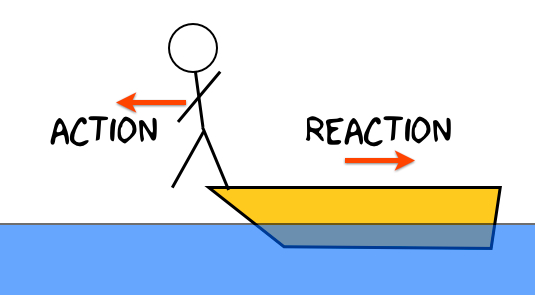
What law of motion does this picture represent?
a)
Newtons 1st law
b)
Newtons 4th law
c)
Newtons 3rd law
d)
Newtons 2nd law
12.
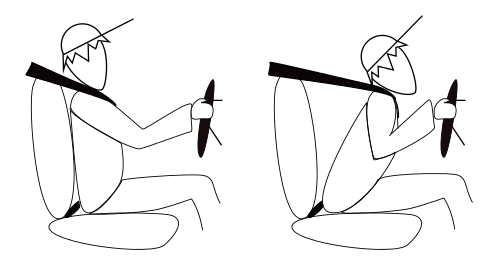
What Newtons law does this picture represent
a)
Newtons 2nd law
b)
Law of gravity
c)
Newtons 1st law
d)
Newtons 5th law
13.

What law of motion does this picture represent?
a)
Newtons 3rd law
b)
Newtons 4th law
c)
Newtons 1st law
d)
Newtons 2nd law
14.
A distance vs. time graph shows an object's
a)
frame of reference
b)
speed
c)
acceleration
d)
favorite food
15.
Speed =
a)
distance / time
b)
time / distance
c)
distance * time
16.
On a distance-versus-time graph, a straight line ALWAYS indicates that an object’s speed is _____.
a)
constant
b)
zero
c)
increasing
d)
decreasing
17.
Change in speed over a given period of time is
a)
velocity
b)
motion
c)
speed
d)
acceleration
18.
On a distance vs. time graph, the steeper the slope _____
a)
the slower the speed
b)
the faster the speed
c)
less acceleration
d)
greater acceleration
19.
When something has speed in a certain direction it is called ___________.
a)
motion
b)
position
c)
velocity
d)
speed
20.
Acceleration of an object happens when things ________
a)
slow down
b)
go faster
c)
change direction (turn)
d)
All of the above
21.
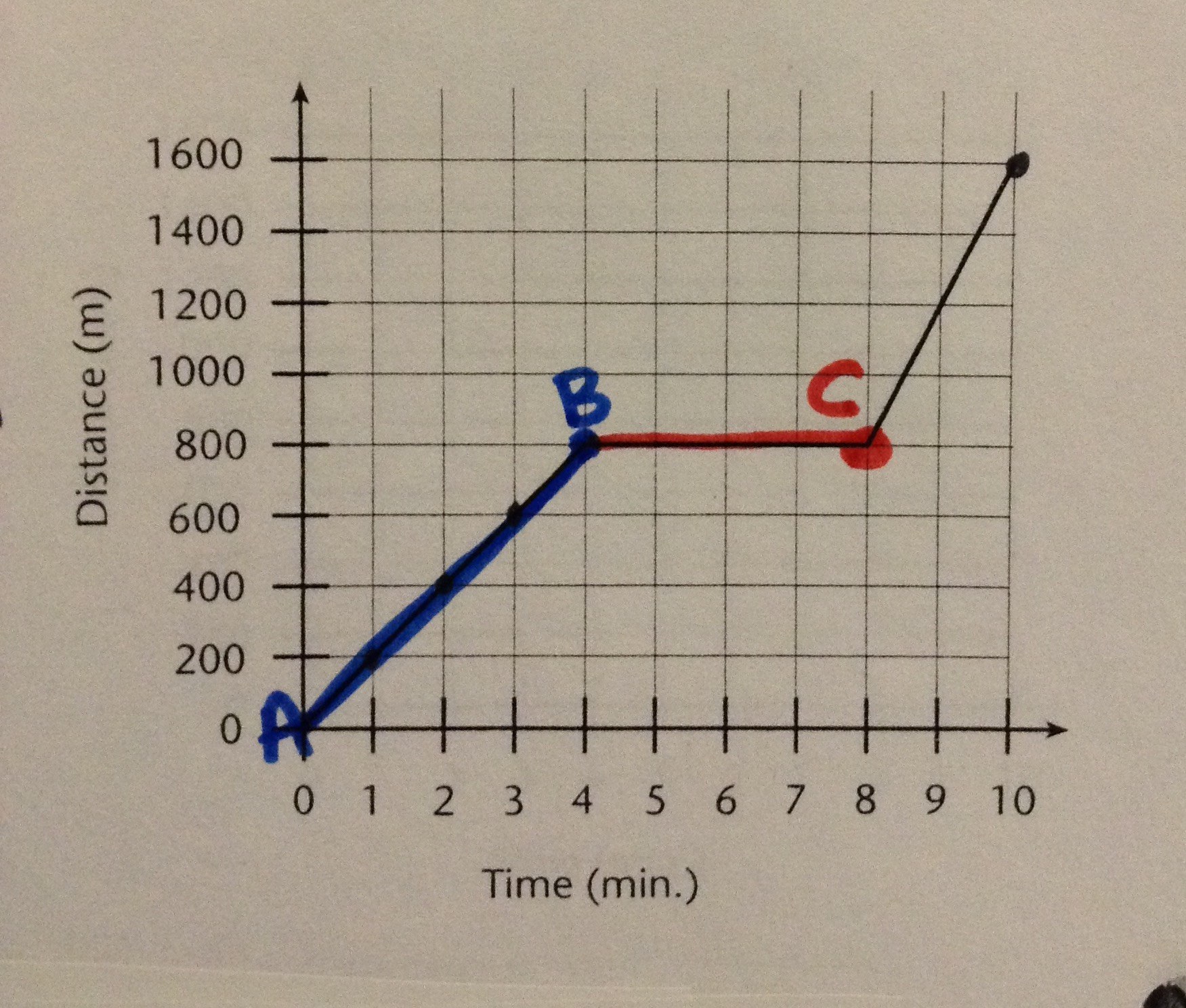
LT4: The graph shows Ashley riding her bike to Maria's house.
What is occurring from point A to point B?
What is occurring from point A to point B?
a)
they are traveling at a constant speed
b)
they are decreasing in speed
c)
they stopped to take a break
22.
LT5: The rate at which velocity CHANGES is:
a)
acceleration
b)
speed
c)
direction
d)
physics
23.
Forces always act in equal and opposite pairs.
a)
Newton's 1st Law
b)
Newton's 3rd Law
c)
Newton's second law
24.
An empty truck and a fully loaded truck are next to each other at a traffic light. When the light turns green, the lighter truck increases speed more quickly. Which of these best explains this situations
a)
Newton's first law
b)
Newton's second law
c)
Newton's third law
d)
Conservation of momentum
25.
Newton's first law of motion states that __________.
a)
when a force is applied on an object, there is an equal force applied by the object in the opposite direction
b)
hen a force acts on an object, its acceleration is in the same direction as the force
c)
an object will remain at rest or keep moving with a constant velocity unless a force acts on it
d)
cceleration is calculated by dividing the force exerted on an object by the mass of the object
26.

When you step on a Lego. You push on the Lego and the Lego pushes back on you.
a)
Newton's 1st Law
b)
Newton's 2nd Law
c)
Newton's 3rd Law
27.

"For every action, there is an equal and opposite reaction."
a)
Newton's 1st Law
b)
Newton's 2nd Law
c)
Newton's 3rd Law
d)
Newton's 4th Law
28.

Force = Mass x Acceleration
a)
Newton's 1st Law
b)
Newton's 2nd Law
c)
Newton's 3rd Law
d)
Newton's 4th Law
29.

"An object in motion (or at rest) will to stay in motion (or at rest) until an outside force acts upon it."
a)
Newton's 1st Law
b)
Newton's 2nd Law
c)
Newton's 3rd Law
d)
Newton's 4th Law
30.

The tendency of an object to resist changes in its motion is...
a)
inertia
b)
force
c)
acceleration
d)
velocity
31.
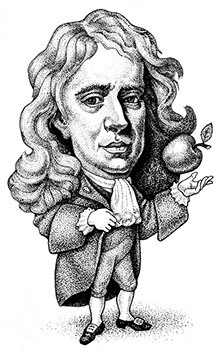
A Newton is a unit of...
a)
force
b)
inertia
c)
acceleration
d)
velocity
32.

When all the forces on an object are equal and opposite, & the net force is zero, that's...
a)
balanced forces
b)
unbalanced forces
c)
terminal velocity
d)
reaction forces
33.

The combination of all the forces acting on an object is the...
a)
net force
b)
action force
c)
reaction force
d)
balance force
34.
What is the definition of "weight"?
a)
the force in which gravity pulls on an object
b)
the time it takes to get on a ride
c)
the amount of matter in an object
d)
the size of an object
35.
What is Newtons 2nd law of motion?
a)
Force= Mass multiplied by acceleration
b)
An object at rest stays at rest unless acted on an unbalanced force.
c)
For every action there is a equal and opposite re-action.
d)
Law of gravity
36.
What is Newtons 3rd law of motion?
a)
Force= Mass multiplied by acceleration
b)
An object at rest stays at rest unless acted on an unbalanced force.
c)
For every action there is a equal and opposite reaction.
d)
Law of gravity
37.
What is Newtons 1st law of motion?
a)
Force= Mass multiplied by acceleration
b)
An object at rest stays at rest unless acted on an unbalanced force.
c)
For every action there is a equal and opposite re-action.
d)
Law of gravity
38.
Mass is a measure of an object's inertia. Objects with greater mass have a greater inertia; objects with less mass have less inertia.
a)
true
b)
false
39.
The tendency of an object to resist changes in its motion is...
a)
inertia
b)
force
c)
acceleration
d)
velocity
40.

Which one of Newton’s Laws of Motion best explains why the dishes do not move when the table cloth is removed?
a)
Newton's 1st Law
b)
Newton's 2nd Law
c)
Newton's 3rd Law
d)
Newton's Law of Biology
41.
According to Newton's second law, if you increase the force applied to an object :
a)
it accelerates more
b)
it doesn't move
c)
you get more inertia
d)
it decelerates
42.
An empty truck and a fully loaded truck are next to each other at a traffic light. When the light turns green, the lighter truck increases speed more quickly. Which of these best explains this situations
a)
Newton's first law
b)
Newton's second law
c)
Newton's third law
d)
Conservation of momentum
43.
If you kicked a ball in space it would keep going because there is no gravity, friction, or air friction going against it. It will only stop moving in that direction if something comes into contact with it. This is an example of...
a)
Newton's First Law
b)
Newton's Second Law
c)
Newton's Third Law
44.
A person not wearing a seatbelt flies through a car window when someone slams on the breaks because the person’s body wants to remain in continuous motion even when the car stops.
a)
Newton's 1st Law
b)
Newton's 2nd Law
c)
Newton's 3rd Law
d)
None of them
45.
Why is it harder to push a van filled with bowling balls than it is to push van filled with basketballs?
a)
The mass of the car is greater than the mass of the basketball
b)
The mass of the bowling balls is greater than the mass of the basketballs
c)
The van with the basketballs is bigger than the van with the bowling balls.
d)
It should be equally as hard to push the two vans.
46.
According to Newton’s first law of motion, a moving object that is not acted on by an unbalanced force will
a)
remain in motion.
b)
eventually come to a stop.
c)
change its momentum.
d)
accelerate.
47.
A sled sliding on a flat, icy surface with a constant velocity is best described by
a)
Newton’s first law of motion for objects at rest.
b)
Newton’s first law of motion for objects in motion.
c)
Newton’s second law of motion.
d)
Newton’s third law of motion.
48.
Acceleration is caused by a force acting on a mass.
a)
Newton’s first law of motion
b)
Newton’s second law of motion
c)
Newton’s third law of motion
49.
Forces always act in equal and opposite pairs.
a)
Newton's 1st Law
b)
Newton's 3rd Law
c)
Newton's second law
50.
Which law explains when a magician pulls a tablecloth out from under dishes and glasses on a table without disturbing them.
a)
Law 1
b)
Law 3
51.
Newton's 1st law is often called the _______.
a)
Newton's 2nd law
b)
action-reaction law
c)
law of equality
d)
law of inertia
52.
A person is pushed forward into their seatbelt when a car stops. Which of Newton's laws explains this motion?
a)
1st law
b)
2nd law
c)
2 and 3 law
d)
3rd law
53.
When air rushes out of a balloon and it moves upward. This is an example of which Law of Motion.
a)
Newton's First Law
b)
Newton's Second Law
c)
Newton's Third Law
54.

A person steps out of the boat and onto the dock. As the person moves forward onto the dock, the boat moves backward. Which statement best describes the backward motion of the boat as the person steps forward?
a)
For every action there is an equal and opposite reaction.
b)
Every mass exerts a force on every other mass.
c)
An object at rest tends to stay at rest.
d)
Friction opposes the motion of an object.
55.

A person in car slides to the right when going through a very sharp left turn on the highway.
a)
1st Law
b)
2nd Law
c)
3rd Law
56.
A crumpled piece of paper hits the ground before a flat sheet of paper because
a)
the acceleration of gravity is greater on the crumpled paper.
b)
there is more air resistance against the flat paper.
c)
the crumpled paper is more massive
d)
the crumpled paper is less massive.
57.
An empty truck and a fully loaded truck are next to each other at a traffic light. When the light turns green, the lighter truck increases speed more quickly. Which of these best explains this situations
a)
Newton's first law
b)
Newton's second law
c)
Newton's third law
d)
Conservation of momentum
58.

Any push or pull on an object.
a)
force
b)
velocity
c)
inertia
d)
momentum
59.

The force of attraction between all matter.
a)
inertia
b)
friction
c)
net force
d)
gravity
60.
When all the forces on an object are equal and opposite, & the net force is zero, that's...
a)
balanced forces
b)
unbalanced forces
c)
terminal velocity
d)
reaction forces
61.

Mass x acceleration = ?
a)
force
b)
inertia
c)
momentum
d)
velocity
62.
A push or a pull is measured in
a)
miles per hour
b)
pounds
c)
Newton
d)
kilogram
63.
An object at rest or an object in motion will continue to be at rest or in motion not unless unbalanced force is applied is Newton's ___ law.
a)
first
b)
second
c)
third
d)
fourth
64.
The egg drop or the coin drop is an example of the ____ law.
a)
first
b)
second
c)
third
d)
fourth
65.
When the net force is zero, the forces on an object are balanced. True or false.
a)
true
b)
false
66.
When you jump into the air, your feet exerting a force against the ground is the ____ force.
a)
3rd law
b)
reaction
c)
action
d)
none of these
67.
Pushing a cartful of groceries is more difficult that pushing an empty one shows which Newton law?
a)
1st Law
b)
2nd Law
c)
3rd law
68.
____ prevents the movement of an object when force is applied.
a)
friction
b)
Normal force
c)
static friction
d)
sliding friction
69.
Any time the forces are unbalanced, an object will accelerate.
a)
true
b)
false
70.
The moon and other satellites rotate around the earth. Identify the force that keeps these satellites in orbit.
a)
gravity
b)
friction
c)
a strong force
d)
electromagnetic force
71.
According to Newton's First Law, an object's velocity will not change if _____ acts upon it.
a)
a balanced force
b)
an unbalanced force
c)
zero force
72.
Hitting a baseball with a bat is an example of ____.
a)
Law of Inertia (1st Law)
b)
Law of Mass and Acceleration (2nd law)
c)
Law of Action and reaction or Newton's 3rd Law)
73.
According to the Law of Universal gravitation, the force of attraction between 2 objects depend on
a)
mass and weight
b)
mass and acceleration
c)
mass and distance between them
d)
mass and gravity
74.
Which of the following is true?
a)
An object will speed up if the direction of motion and applied force are in opposite direction.
b)
Unbalanced force will not change the velocity of an object.
c)
Compression force is a kind of friction.
d)
An object will slow down if the direction of motion and the net force are in opposite direction.
75.
Newton's 1st Law of Motion is known as
a)
The Law of Force = M x a
b)
The Law of Inertia
c)
The Law of Action-Reaction
d)
The Law of Gravity
Reset

