
 Worksheets
Unit Review - Genetics
Total questions: 40
Worksheet time: 54mins
Name
Class
Date
1.
Which sequence of DNA bases would pair with this partial strand
ATG TGA CAG
ATG TGA CAG
a)
ATG TGA CAG
b)
TAC ACT GTC
c)
GTA AGT GAC
d)
CAT TCA CTG
2.
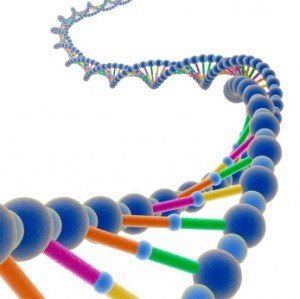
Which of the following best describes a DNA molecule?
a)
double helix
b)
contains ribose
c)
made of amino acids
d)
contains Uracil
3.
Which of the following units are repeatedly joined together to form a strand of DNA?
a)
amino acids
b)
nucleotides
c)
fatty acids
d)
polysaccharides
4.

In a molecule of double-stranded DNA, the amount of Adenine present is always equal to the amount of
a)
cytosine
b)
guanine
c)
thymine
d)
uracil
5.
Adenine bonds with ______________.
a)
Guanine
b)
Thymine
c)
Cytosine
d)
Adenine
6.
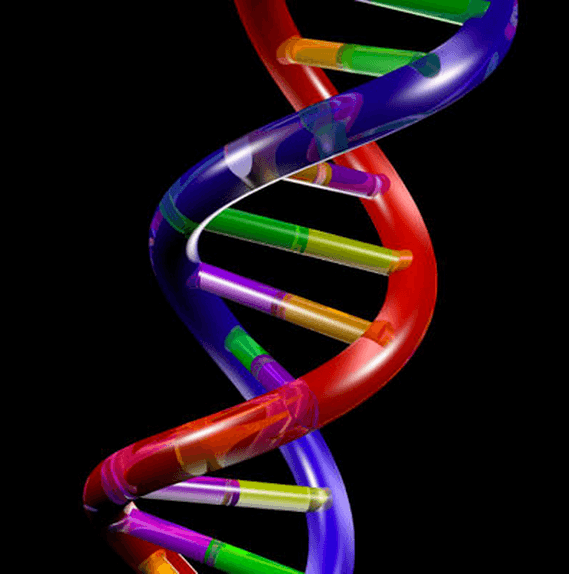
What determines the code, or information, of a DNA molecule?
a)
the shape (structure) of the nitrogen bases
b)
the order (sequence) of the nitrogen bases
c)
the color of the nitrogen bases
d)
the frequency (number) of nitrogen bases
7.
The enzyme that unzips the DNA to prepare for replication
a)
helicase
b)
replicase
c)
polymerase
d)
synthase
8.
DNA replication results in two DNA molecules,
a)
each one with two original strands
b)
each one with two new strands
c)
each one with one new strand and one original strand
d)
one with two new strands and the other with two original strands
9.
A process in which DNA has the unique ability to make an exact copy of itself.
a)
Replication
b)
Translation
c)
Transcription
10.
In what part of Mitosis, does DNA replication occur?
a)
Interphase
b)
Prophase
c)
Metaphase
d)
Anaphase
11.
Adenine and Guanine are examples of:
a)
Purines
b)
Pyrimidines
12.

Fruit fly body cells have 8 chromosomes. After mitosis, you would expect a resulting fruit fly daughter cell to have ...
a)
16 chromosomes.
b)
46 chromosomes.
c)
8 chromosomes.
d)
4 chromosomes.
13.

Name the phase:
a)
Anaphase
b)
Telophase
c)
Metaphase
d)
Prophase
14.

Name the previous phase of Mitosis.
a)
Prophase
b)
Metaphase
c)
Anaphase
d)
Telophase
15.
Which of the following is NOT occuring during interphase?
a)
Cell growth
b)
DNA being copied
c)
DNA condensing
d)
Two new cells are made
16.

Why would it be important to replicate DNA before a cell divides in mitosis or meiosis?
a)
In order for genetic information to be transferred into daughter cells.
b)
In order for the cell to be able to increase in size.
c)
In order for the DNA to be contained in the nucleus.
d)
In order for the cell to re-order the DNA sequencing in the new cells.
17.
What is it called when a sperm and egg meet?
a)
meiosis
b)
fertilization
c)
zygotic addition
d)
mitosis
18.

Meiosis makes sperm and egg cells. In humans, sperm and egg cells each have _____ chromosomes. Therefore a fertilized human egg cell (sperm and egg cell combined) would create a cell with _____ chromosomes.
a)
23, 46
b)
46, 23
c)
2, 4
d)
50, 100
19.
What causes genetic variation in meiosis?
a)
the process of mitosis
b)
crossing over of chromosomes in meiosis
c)
chromosomes being replicated
d)
chromosomes pulling apart
20.
Unlike mitosis, meiosis in male mammals results in the formation of
a)
one haploid gamete
b)
three diploid gametes
c)
four diploid gametes
d)
four haploid gametes
21.
What kind of cells are made in MEIOSIS?
a)
Haploid cells (gametes)
b)
Diploid Somatic Cells
c)
Epithelial Cells
d)
Stem Cells
22.
Which of these is the Central Dogma of Biology in the correct order?
a)
DNA --> mRNA --> protein
b)
DNA --> protein --> mRNA
c)
mRNA --> DNA --> protein
d)
protein --> DNA --> mRNA
23.
Amino acids are joined together in order to form
a)
DNA
b)
ribosomes
c)
proteins
d)
RNA
24.
The process of _____ occurs in the nucleus and builds mRNA.
a)
Transformation
b)
Transduction
c)
Translation
d)
Transcription
25.
How many alleles (letters) do each person carry for a trait?
a)
1
b)
2
c)
3
d)
4
26.
Dominant alleles are represented by a:
a)
Male gene
b)
lowercase letter
c)
recessive trait
d)
capital letter
27.
Aa, DD, bB, yy are all examples of
a)
genotypes
b)
phenotypes
28.
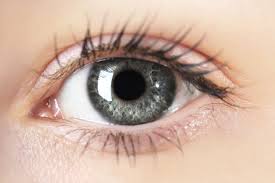
What you see, or the physical appearance.
a)
Genotype
b)
Phenotype
c)
Homozygous
d)
Heterozygous
29.
Which of the following genotypes is homozygous dominant?
a)
A
b)
Aa
c)
AA
d)
aa
30.
Which of the following genotypes is heterozygous?
a)
Bb
b)
BB
c)
bb
d)
B
31.

Each one of the boxes on the Punnett Square represents what probability of an offsprings' genotype?
a)
25%
b)
1%
c)
10%
d)
0%
32.
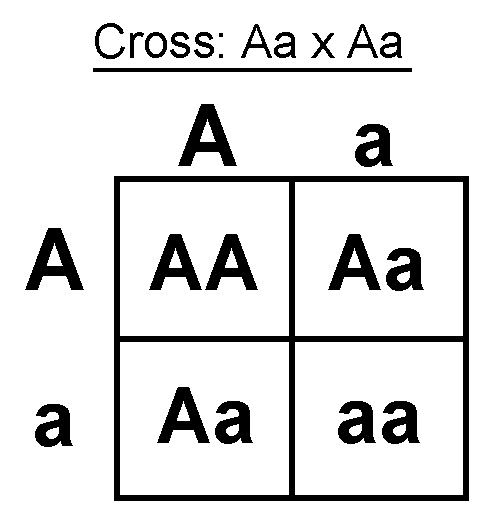
What is the phenotype of the offspring? (A-Brown hair; a-blond hair)
a)
50 % Brown Hair and 50% Blond Hair
b)
25 % Brown Hair and 75% Blond Hair
c)
75 % Brown Hair and 25% Blond Hair
d)
0% Brown Hair and 100% Blond Hair
33.
What mutation has occurred here?
T-G-A-C-C-A
T-G-A-G-C-A
T-G-A-C-C-A
T-G-A-G-C-A
a)
Substitution
b)
Deletion
c)
Insertion
d)
Frameshift
34.
What is a codon?
a)
It is a three letter section of bases that are read by ribosomes to stamp amino acids into a protein
b)
They are the codes on the DNA (hence "code-on"
c)
It is a type of mutation that occurs when there has been a substitution, deletion or insertion.
d)
It is a made up word for this quiz. Nice try, Wampler.
35.
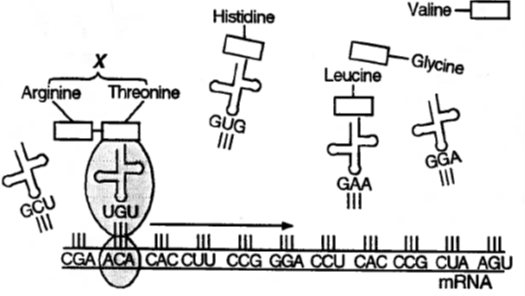
What process is going on in this photo?
a)
Transcription
b)
Translation
c)
Replication
d)
All the above
36.
What is a substance called if it speeds up a chemical reaction?
a)
reusable
b)
catalyst
c)
specific
d)
fragile
37.
With what 3 letters do enzymes typically end?
a)
-ose
b)
-ase
c)
-ese
d)
-tic
38.
Any substance that is acted upon by an enzyme is called a(n)?
a)
Coenzyme
b)
Substrate
c)
Vitamin
d)
Polypeptide
39.
Enzymes are...
a)
nucleic acids
b)
proteins
c)
lipids
d)
carbohydrates
40.
An enzyme speeds up a chemical reaction in the cell but can only be used once. True or False?
a)
true
b)
false
100 %

