wayground logo

Free Printable Worksheets

NEW

Font size

S
M
L
XL
Worksheets

HS-ESS2-6 Carbon Cycle

Total questions: 54

Worksheet time: 36mins

Name
Class
Date
1.
Which one of these does not add CO2 to the atmosphere?
a)
cooking with gas
b)
planting trees
c)
burning wood
d)
riding in a bus
2.
Combustion is another word for _______________.
a)
a train
b)
a bus
c)
a dog
d)
burning
3.
What does not produce carbon dioxide?
a)
Photosynthesis
b)
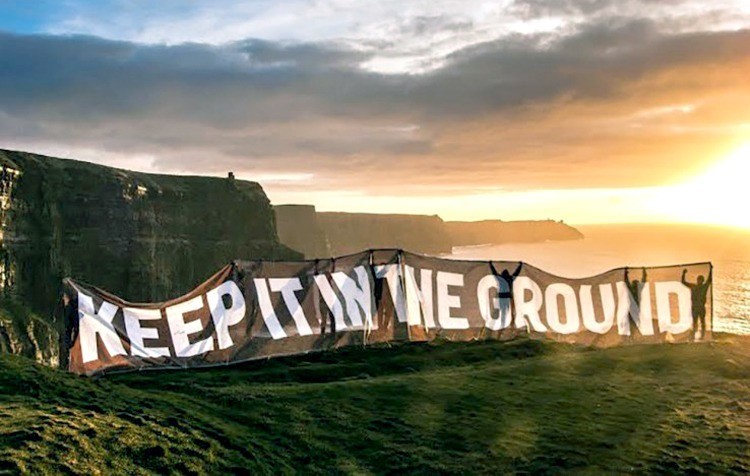
Burning Fossil Fuels
c)
Animal respiration
d)
Plants decaying
4.
How do living organisms return carbon to the atmosphere in the carbon cycle?
a)
respiration and photosynthesis
b)
 decomposition and respiration
5.
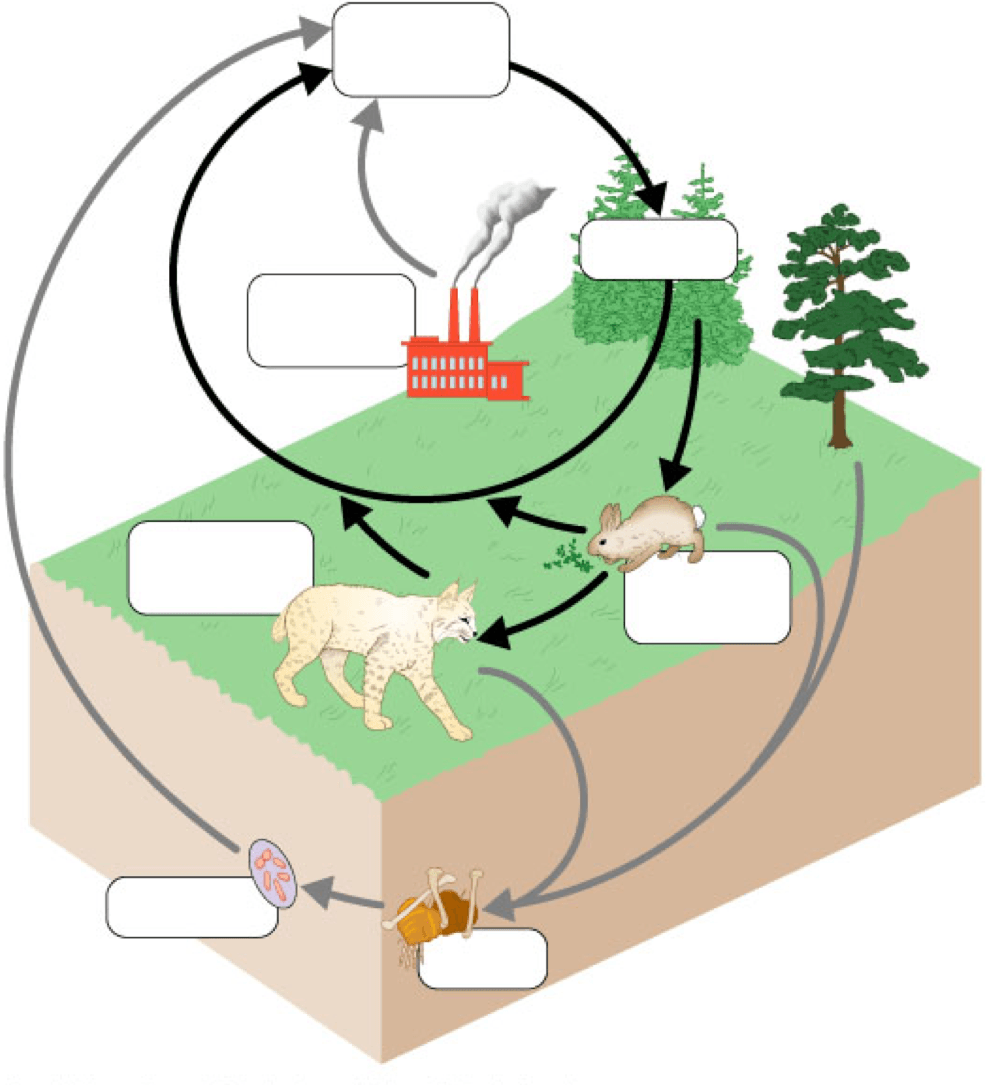
In the carbon cycle, producers take in the gas __
a)
carbon dioxide
b)
oxygen
c)
nitrogen
d)
carbon monoxide
6.
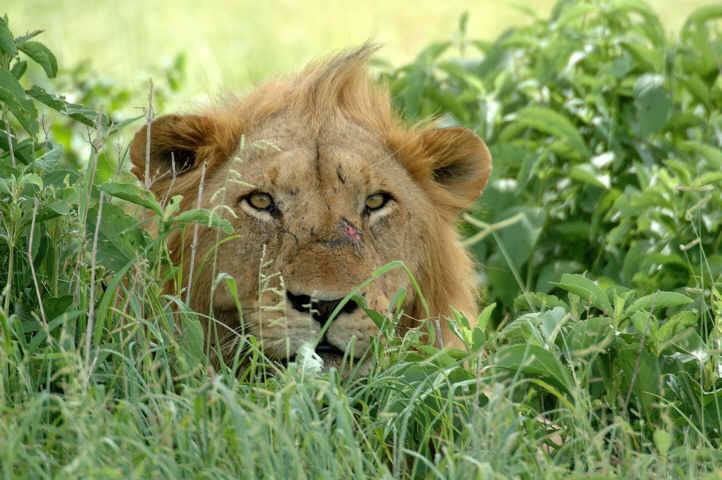
How does the carbon in grass become part of a lion?
a)
The lion eats the grass
b)
Carbon from grass doesn't end up in a lion. 
c)
The carbon ends up in the lion's food chain. 
d)
The lion breathes in carbon given out by the plant
7.

In what process is carbon dioxide transformed into chemical energy of glucose?

a)

Photosynthesis

b)

Respiration

c)

Primary Production

d)

Secondary Production

8.
All of the carbon in existence is continually recycled in the carbon cycle
a)
True
b)
False
9.
Organisms that do not decompose can be buried and become what?
a)
water
b)
nutrients
c)
air
d)
fossil fuels
10.

Why is the ocean important to the carbon cycle?

a)

It keeps sediment containing carbon underwater for millions of years

b)

The ocean always releases more carbon dioxide then it takes in (increases global warming)

c)

The ocean isn't important to the carbon cycle.

11.
Carbon can be found in...?
a)
The atmosphere
b)
Inside of the Earth
c)
Fossil fuels
d)
All of the above!
12.
Carbon dioxide is produced by the burning of fossil fuels
a)
True
b)
False
13.
Carbon dioxide is easily dissolved in water.
a)
True
b)
False
14.
Which process converts carbon in the form of sugar into carbon dioxide gas?
a)
Bioremediation
b)
Photosynthesis
c)
Respiration
d)
Transpiration
15.
If global warming increases ocean temperatures, then how will that effect the amount of carbon dioxide in the atmosphere?
a)
The oceans will absorb more CO2 and reduce the amount of atmospheric CO2
b)
The oceans will release more CO2 and increase the amount of atmospheric CO2
c)
The oceans will have no effect on the amount of atmospheric CO2
16.

In the process of photosynthesis, plants use the energy of the Sun to form _________ from _________.

a)

glucose and oxygen; carbon dioxide and water

b)

carbon dioxide and water; glucose and oxygen
17.

The circulation of the element Carbon among Earth's atmosphere, land, oceans, and organisms is called _____________.

a)

the Carbon Cycle

b)

the Oxygen Cycle

c)

the Carbon dioxide Cycle

d)

the Water Cycle

18.

_____________ is an essential element of all living creatures.

a)

Gold

b)

Carbon

c)

Carbon dioxide

d)

Silver

19.

The total amount of the carbon on Earth is constant due to Earth being a closed system and the conservation of matter.

a)

True

b)

False

20.

Bacteria that decompose dead plants release _____________ back into the atmosphere.

a)

water

b)

nitrogen

c)

oxygen

d)

carbon

21.

Organisms that die in the ocean may __________ to the bottom and form limestone rock after a long period of time.

a)

sink

b)

float

c)

rise

d)

increase

22.

Ocean coral and oysters use carbon to create _________.

a)

oxygen

b)

shells & skeletons

c)

leaves

d)

food

23.

Limestone is a type of rock created from the ______________ of dead sea organisms.

a)

waste

b)

slime

c)

shells

d)

unknown

24.

Over ________________ of years, once-living matter that remains in the ground can transform into fossil fuels.

a)

millions

b)

hundreds

c)

thousands

d)

a few handful

25.

Since the mid- 1800's, _____________ activity has significantly altered the carbon cycle.

a)

animal

b)

plant

c)

unknown

d)

human

26.

Burning fossil fuels has raised the concentration of ___________ in the atmosphere.

a)

oxygen

b)

rain

c)

carbon

d)

nitrogen

27.
When a volcanic eruption spews gases and ash into the air, which two spheres are interacting?
a)
Hydrosphere and geosphere
b)
Biosphere and Geosphere 
c)
Geosphere and Atmosphere 
d)
Biosphere and Atmosphere 
28.
Which of the following accurately represents a carbon source and the process which releases carbon from that source?
a)
fossil fuels, respiration
b)
animals, photosynthesis 
c)
plants, photosynthesis 
d)
bicarbonate, combustion 
29.

Which of the following is NOT a flux process of carbon for the carbon cycle?

a)

Diffusion

b)

Combustion

c)

Decomposition

d)

Atmosphere

30.

Which of the following is NOT a carbon reservoir?

a)

Atmosphere

b)

Soil

c)

Coal stored in Earth's Crust (Fossil Fuels

d)

Decomposition

31.

What flux process takes place when carbon begins in the bacteria and fungus reservoir as a carbohydrate and ends as carbon dioxide in the atmosphere reservoir?

a)

Diffusion

b)

Photosynthesis

c)

Combustion

d)

Respiration

32.

What flux process occurs when phytoplankton remove the dissolved carbon dioxide from the surrounding seawater in order to make glucose

a)

Diffusion

b)

Decomposition

c)

Photosynthesis

d)

Respiration

33.

What flux process occurs when coal (fossil fuel) is used for energy?

a)

Decomposition

b)

Combustion

c)

Pressurization

d)

Respiration

34.

What form is carbon in plants?

a)

CO2 gas

b)

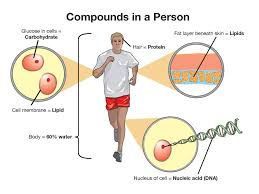
macromolecules (lipids, proteins, nucleic acids & carbohydrates)

c)

Carbon Solid (pure carbon)

d)

Dissolved CO2

35.
What form is carbon on the ocean surface?
a)
CO2 gas 
b)
Organic compounds (carbohydrates)
c)
Carbon solid (pure carbon)
d)
Dissolved CO2
36.
What form is carbon in shellfish and coral?
a)
CO2 gas Calcium 
b)
Calcium Carbonate
c)
Carbon solid (pure carbon)
d)
Dissolved CO2
37.
What process brings in carbon from the atmosphere into the terrestrial (land) food web? (More than one answer)
a)
Respiration
b)
Combustion 
c)
Decomposition
d)
Photosynthesis
38.
Carbon compounds move from plants to animals via the process of _______?
a)
Respiration
b)
Photosynthesis
c)
Ingestion (eating)
d)
Diffusion
39.
Which process moves carbon from above-ground food webs to the food web in the soil?
a)
Respiration 
b)
Photosynthesis
c)
Ingestion(eating)
d)
Death and Decomposition
40.
Which forest carbon process moves carbon from the biosphere to the atmosphere?
a)
Ingestion 
b)
Combustion/Burning 
c)
Respiration 
d)
Both respiration and combustion 
41.
Limstone is a sedimentary rock made of Calcium carbonate.  When it melts due to tectonic forces or volcanic action, the chemical reaction causes it to release 
a)
Oxygen
b)
Carbon dioxide
c)
calcium carbonate
d)
carbohydrates
42.
carbon is moved from rocks and soil on land to rivers and oceans by a process called 
a)
weathering
b)
erosion
c)
runoff
d)
all of these
43.
Coal, gas and oil are three main types of 
a)
carbon that originally came from plants that died 
b)
fossil fuels that we burn for energy
c)
carbon that came from phytoplankton that died
d)
all of these
44.
Atmospheric carbon dioxide dissolves into ocean surface waters.
a)
The colder the water, the more is dissolved
b)
The warmer the water, the more is dissolved
c)
Temperature has no effect on how much dissolves
45.
You might think that carbon trapped deep in Earth's crust would be locked there forever, but in fact subduction and the intense heat of the core release carbon dioxide through:
a)
volcanoes
b)
magnetic pole reversals
c)
hot springs
46.
Which of these is a real path in the carbon cycle?
a)
Atmospheric CO2 -> land plants -> limestone
b)
Atmospheric CO2 -> oceanic CO2 -> marine plants/algae -> coal
c)
Atmospheric CO2 -> land plants -> land animals -> soil
47.

Coal (a form of carbon) is a part of which sphere ?

a)

Atmosphere

b)

Hydrosphere

c)

Biosphere

d)

Geosphere

48.
Carbon dioxide dissolved in the ocean is a part of which system?
a)
Atmosphere
b)
Hydrosphere
c)
Biosphere
d)
Geosphere
49.
Which one of these sources of carbon is NOT a part of the biosphere?
a)
shells/coral
b)
land plants
c)
marine animals
d)
petroleum
50.
Which one of these sources of carbon is NOT a part of the geosphere?
a)
Coal
b)
Petroleum
c)
Natural gas
d)
Dissolved CO2 in the ocean
51.
What is the end product of burning fossil fuels (whether they are coal, oil or natural gas) and where does it go?
a)
Carbon dioxide; atmosphere
b)
Methane; atmosphere
c)
Oxygen; atmosphere
d)
Water; atmosphere
52.
With regard to time, the carbon cycle can be as quick as the ___ cycle and as slow as the ___ cycle.
a)
water; rock
b)
rock; water
c)
Sun; Moon
53.

An example of a fast flux rate is

a)

respiration by plants

b)

volcanic eruption/release of carbon trapped in rock material

c)

creation of stored carbon in fossil fuels

d)

formation of organic limestone in the deep ocean

54.

TRUE or FALSE There's more carbon stored in the ocean than surface sediments, biosphere and atmosphere.

a)

TRUE

b)

FALSE