
NEW
Font size
S
M
L
XL
 Worksheets
Bio-Enzymes
Total questions: 42
Worksheet time: 34mins
Name
Class
Date
1.
What is the purpose of an enzyme?
a)
give permission for the reaction
b)
raise activation energy
c)
speed up reactions
d)
control how many reactions occur
2.
Where do substrates bind on an enzyme?
a)
voltage-gated channels
b)
surface receptor
c)
calcium channels
d)
active site
3.
Enzymes are capable of increasing the rate of a chemical reaction within a living cell. Enzymes accomplish this through which of the following means?
a)
reducing the number of products
b)
reducing the activation energy
c)
increasing the temperature of the cell
d)
increasing the concentration of reactants
4.

What is structure A?
a)
Substrate
b)
Active site
c)
Enzyme
d)
Products
5.

What is structure D?
a)
Substrate
b)
Active site
c)
Enzyme
d)
Products
6.

What is structure C?
a)
Substrate
b)
Active site
c)
Enzyme
d)
Products
7.

What is structure E, F, G?
a)
Substrate
b)
Active site
c)
Enzyme
d)
Products
8.
What is a substance called if it speeds up a chemical reaction?
a)
reusable
b)
catalyst
c)
specific
d)
fragile
9.
Each enzyme only has 1 substrate that will fit its active site. What is this called?
a)
reusable
b)
catalyst
c)
specific
d)
fragile
10.
Once a new product leaves an enzyme, the enzyme is unchanged and ready for the next substrate. What is this called?
a)
reusable
b)
catalyst
c)
specific
d)
fragile
11.
What 3 letters do enzymes typically end in?
a)
-ose
b)
-ase
c)
-ese
d)
-tic
12.

Which of the following conclusions can be drawn from this graph?
a)
The optimum pH of the enzyme is 6.6.
b)
The optimum pH of the enzyme is 5.8
c)
The enzyme’s activity increases as pH increases 5.0 to 9.0
d)
The enzyme’s activity is greater around pH of 8.0 .
13.
What is the name for the mechanism of enzyme activity?
a)
Lock and key
b)
jigsaw puzzle
c)
hammer and nail
d)
two hands pattern
14.
The "lock and key hypothesis" attempts to explain the mechanism of?
a)
Vacuole formation
b)
Pinocytosis
c)
Sharing of electrons
d)
Enzyme specificity
15.
Any substance that is acted upon by an enzyme is called a(n)?
a)
Coenzyme
b)
Substrate
c)
Vitamin
d)
Polypeptide
16.
After the enzyme and substrate bind together and perform the reaction, what does the substrate become?
a)
a substrate
b)
an enzyme
c)
a product
d)
an active site
17.
Enzymes are
a)
nucleic acids
b)
proteins
c)
lipids
d)
carbohydrates
18.
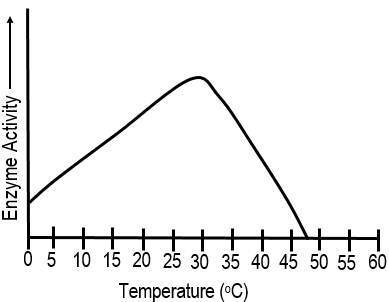
Based on the graph, what temperature does this enzyme work best?
a)
15 C
b)
40 C
c)
30 C
19.
What happens when enzymes are heated to a high temperature?
a)
The enzymes die.
b)
The shapes of the enzyme are altered or denatured
c)
The enzymes' amino acid sequence changes.
d)
The enzymes remain the same
20.
Which of these is NOT true?
a)
Enzymes can denature (change shape) when the temperature gets too high.
b)
Enzymes can only be used once in a chemical reaction.
c)
Extreme pH can denature enzymes.
d)
Enzymes speed up chemical reactions.
21.

Letter D...
a)
active site
b)
enzyme
c)
substrate
d)
products
22.
Which of these enzymes breaks down the sugar in milk?
a)
lactose
b)
lactase
c)
Fructose
d)
Amylase
23.
Enzymes are composed of which of the following monomers?
a)
amino acids
b)
carbohydrates
c)
nucleotides
d)
monosaccharides
24.
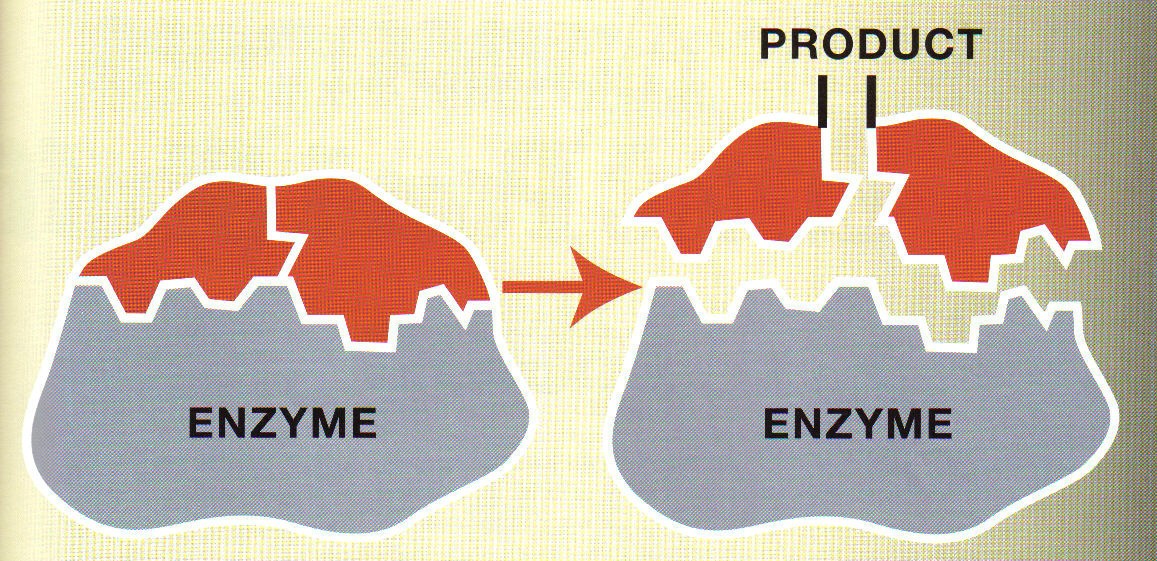
Molecules that bind to enzymes and enhance an enzyme's ability are called:
a)
CoFactors
b)
CoEnzymes
c)
Allosteric Inhibitors
d)
Allosteric Activators
25.
What makes an enzyme substrate specific?
a)
Size
b)
Shape
c)
Name
d)
Location it is found in
26.
What type of macromolecule are enzymes?
a)
Protein
b)
Carbohydrate
c)
Lipid
d)
Nucleic Acid
27.
What is another name for enzymes?
a)
chemical catalyst
b)
microorganism
c)
biological catalyst
d)
catalyst
28.
In the experiment conducted to check the affect of substrate concentration on rate of reaction. What is the independant variable?
a)
Time
b)
Reaction Rate
c)
concentration of substrate
d)
concentration of enzyme
29.
What is the substrate for the enzyme catalase?
a)
Hydrogen
b)
Water
c)
Oxygen
d)
Hydrogen Peroxide
30.
Why does the reaction rate reaches plateau in the experiment conducted to test the affects of increasing concentration of enzyme?
a)
time
b)
limited by substrate
c)
enzymes are denatured
d)
enzymes are inactive
31.
What is the dependant variable in testing the effect of temperature on enzyme activity?
a)
enzyme
b)
rate of reaction
c)
temperature
d)
time
32.
If you are testing for the effect of enzyme concentration on rate of reaction, what IS NOT a control variable?
a)
type of enzyme
b)
enzyme concentration
c)
concentration of substrate
d)
Type of substrate
33.
the pH at which an enzyme is most efficient is called the _________ pH of an enzyme
a)
neutral
b)
optimum
c)
minimum
d)
experimental
34.
Homeostasis in the human body is often maintained by a:
a)
neutral feedback loop
b)
solar feedback loop
c)
positive feedback loop
d)
negative feedback loop
35.
The "effect" of a given stimulus is the...
a)
response
b)
stimulus
c)
cause
d)
result
36.
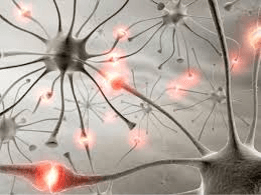
a body system that controls and coordinates all body activities through electric impulses/messages between brain, spinal cord and nerves.
a)
endocrine system
b)
nervous system
c)
nerve
d)
neuron
37.
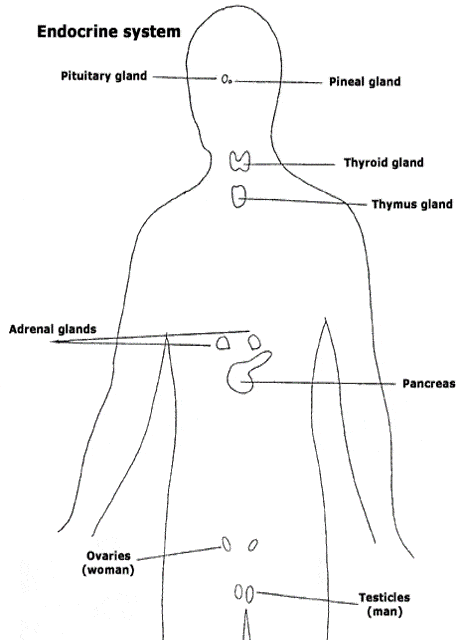
a body system that controls growth and homeostasis by secreting hormones from glands.
a)
skeletal system
b)
nervous system
c)
endocrine sytem
d)
integumentary system
38.

organ of the endocrine system that secretes hormones.
a)
heart
b)
gland
c)
brain
d)
skin
39.
chemical made by glands that tell cells to make something or respond in some way.
a)
acid
b)
enzyme
c)
perspiration
d)
hormone
40.

What is the endocrine system?
a)
senses the hormone levels in the blood
b)
controls all other endocrine glands
c)
A group of glands that work together with the nervous system to coordinate all body functions
d)
decreases bone calcium levels
41.
Which of the following is an example of positive feedback to indirectly maintain homeostasis?
a)
the chemical reactions involved in blood clotting
b)
your blood vessels dilate and you begin to sweat in response to elevated body temperature
c)
your blood vessels constrict and you begin to shiver in response to low body temperature
d)
your coach compliments you on your performance in practice
42.

What is mean by homeostasis?
a)
Controls and coordinates body activities through chemical
b)
controls and coordinates body activities through electrical impulses
c)
For maintenance of a steady state in the internal environment
d)
remove metabolic waste products from the cel
Reset

