wayground logo

Free Printable Worksheets

Font size

S
M
L
XL
Worksheets

Archive Energy questions

Total questions: 182

Worksheet time: 3hrs 46mins

Name
Class
Date
1.

The formation of coal

a)

gives us a clue that the earth’s climate was more wet millions of years ago

b)

gives us a clue that the climate was much more dry than it is now

c)

gives us a clue that the earth was much colder millions of years ago

d)

gives us a clue that millions of years ago the earth’s climate was about the same as it is today

2.

We turn coal into electricity by burning coal. We burn the coal to

a)

use as fuel to run a generator

b)

turn water into steam to turn a turbine

c)

turn into oil to create gasoline

d)

turn into fuel to run a transformer

3.

Which statement is true?

a)

We use more coal now because we have more people.

b)

We use less coal now because we make electricity using other methods.

c)

We use less coal now because it is running out.

d)

We use more nuclear energy to make electricity instead of using coal.

4.

Coal makes

a)

Less energy than wood

b)

More energy than wood

c)

Less energy than peat

d)

Less energy than solar

5.

Which of the following is a disadvantage of using coal? Choose all that apply.

a)

It can cause water pollution

b)

It can cause health problems in the miners

c)

It can be dangerous to mine

d)

It it difficult to transport

6.

Which of the following transforms energy from uranium atoms into electrical energy?

a)

magnetic fields

b)

solar panels

c)

nuclear fission

d)

satellite dish

7.

Which of the following transforms energy from plant and animal matter into electrical energy?

a)

rotating windmills

b)

burning biomass

c)

splitting atoms

d)

mining coal

8.
Which of the following transforms energy from the oceans into electrical energy?
a)
ocean buoys
b)
tidal turbines
c)
tsunamis
d)
deep sea trenches
9.
Which is a nonrenewable source of energy?
a)
nuclear
b)
wind
c)
sunlight
d)
biomass
10.

Which is a nonrenewable source of energy?

a)

solar

b)

wind

c)

coal

d)

geothermal

11.
Which is a renewable source of energy?
a)
coal
b)
uranium
c)
ocean tides
d)
natural gas
12.
Which is a renewable source of energy?
a)
a dam
b)
a nuclear plant
c)
a coal mine
d)
an oil refinery
13.
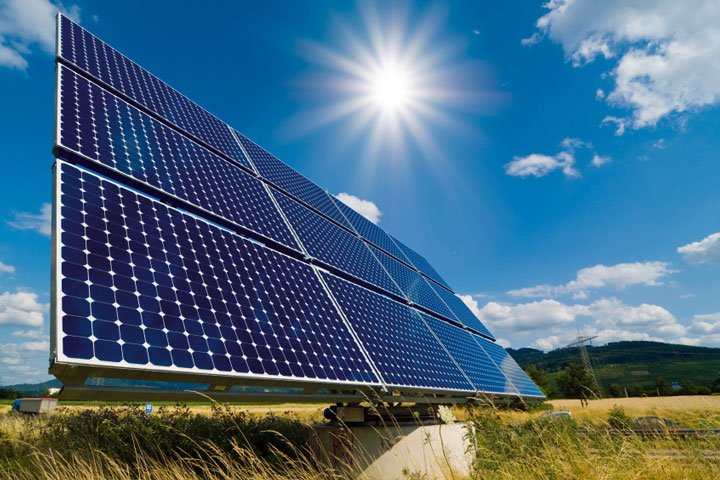
The picture shows sunlight shining on solar panels. 
Which statement best describes this energy source?
a)
Sunlight is a renewable energy source used to produce hydropower.
b)
Sunlight is a nonrenewable energy source used to produce nuclear power.
c)
Sunlight is a renewable energy source used to produce electricity.
d)
Sunlight is a nonrenewable energy source used to produce natural gas.
14.
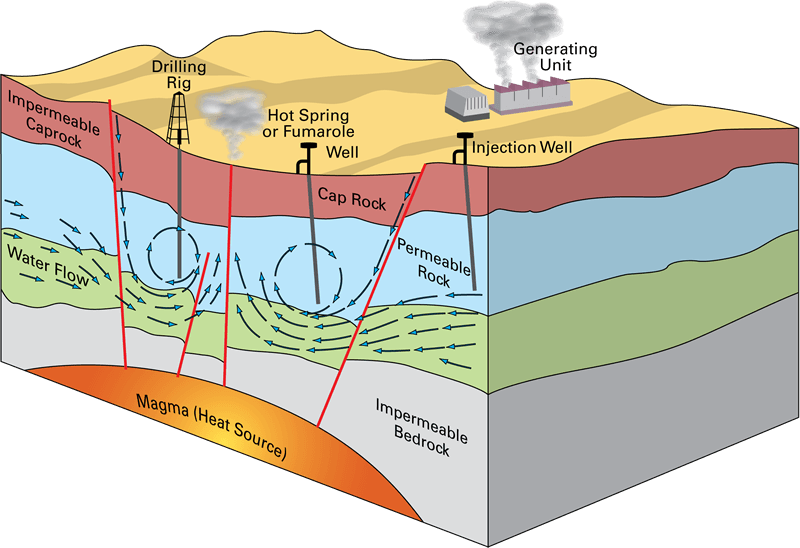
The picture shows a geothermal power plant. 
Which statement best describes this energy source?
a)
Geothermal power plants are renewable energy sources used to remove magma.
b)
Geothermal power plants are nonrenewable energy sources used to produce natural gas.
c)
Geothermal power plants are renewable energy sources used to produce electricity.
d)
Geothermal power plants are nonrenewable energy sources used to dig for oil.
15.

There is the same amount of energy today as when the world began.

a)

True

b)

False

16.

An energy source that is gone forever once it is used up is called?

a)

renewable

b)

nonrenewable

c)

natural resource

d)

raw material

17.
Energy that comes from natural resources that can be replenished are called ?
a)
nonrenewable
b)
energy in motion
c)
untapped energy
d)
renewable
18.
Cause of pollution in our air and water is _________
a)
geothermal
b)
fossil fuels
c)
biomass
d)
politics
19.

A windmill is a renewable energy source

a)

True

b)

False

20.
Coal, oil, and natural gas are all are renewable energy sources.
a)
True
b)
False
21.
Nuclear fussion releases energy which is used to heat water, which produces steam, which drives turbines to produce what...?
a)
Electricity
b)
Uranium
c)
Natural Gas
22.
The fossil fuels formed hundreds of millions of years ago from the remains of dead ?
a)
Animal and plants
b)
Plants and bones
c)
Fungus and animal
d)
Rock and Plants
23.

Which of the following nonrenewable energy resources is NOT a fossil fuel?

a)

Natural gas

b)

Coal

c)

Oil

d)

Nuclear

24.

Wind, water, geothermal solar and biomass are what types of energy sources?

a)

Renewable

b)

Nonrenewable

25.

Which kind geothermal plant is most common type?

a)

Dry steam

b)

Binary

c)

Flash

d)

Wet steam

26.

What is geothermal energy?

a)

energy that determines the temperature of matter

b)

thermal energy generated and stored in the Earth

c)

energ in an object due to its motion or position, or both.

d)

The sum of kinetic and potential energy in an object that is used to do work.

27.

How many kinds of geo thermal steams are there?

a)

2

b)

3

c)

4

d)

5

28.

What is a benefit of geothermal energy

a)

With geothermal power you can produce food in an easier way

b)

Geothermal power produces more pollution

c)

geothermal power increases selectivity and sensitivity

d)

Geothermal power Is homegrown, reducing our dependence on foreign oil

29.

Where is geothermal energy not available?

a)

Alaska

b)

New jersey

c)

Hawaiii

d)

Western states

30.

How much does geothermal energy cost per kilowatt-hour (kwh)?

a)

$0.03

b)

$0.05

c)

$0.07

d)

$1.00

31.

What's is an enhanced geothermal system (EGS)?

a)

A man made reservoir created where there's is hot rocks

b)

A machine made reservoir where there's hot rocks

c)

A man Made reservoir where there's cold rocks

d)

A machine made reservoir where there's cold rocks

32.

How many kinds of geo thermal steams are there?

a)

2

b)

3

c)

4

d)

5

33.
What is geothermal energy?
a)
Heat energy generated and stored within the Earth
b)
Kinetic energy generated by the movement of tectonic plates
c)
Heat energy generated by the biomass of the Earth
d)
Heat energy transferred to the Earth by solar flares
34.
What are three advantages of geothermal energy?
a)
Eco-friendly, widely available, creates jobs
b)
Cheaply utilized, no potential emissions, surface stability 
c)
Highly efficient, extraction without fossil fuels, low risk
d)
Stronger, faster, better than ever
35.
What are three disadvantages of geothermal energy?
a)
Expensive to set in motion, potential emissions, surface instability 
b)
Non-Eco friendly, not widely available, lack of job openings
c)
Not efficient, extraction  requires fossil fuels, high risk
d)
Weaker, slower, worse than ever
36.
How is geothermal energy captured?
a)
Hydro-thermal convection systems (water turns turbine)
b)
Direct-Heat system (hot water from within the earth is brought to the surface)
c)
Ground-source heat pump (pipelines that utilize the constant temperature from beneath the surface)
d)
All of the answers
37.
How much energy do experts estimate that geothermal energy can provide?
a)
4500000 exajoules
b)
570000 gigajoules
c)
10 quitillionjoules
d)
42 femtojoules
38.
Where are geothermal plants located?
a)
Tectonic Boundaries
b)
Geyser Hot-spots
c)
Hot Water Springs
d)
All of the answers
39.
How deep do geothermal pipes have to be?
a)
6m -10m 
b)
200m
c)
12m 
d)
Varies
40.
What is geothermal energy mainly used for around the world?
a)
Heating and stuff
b)
Electricity
c)
Feeling good about yourself
d)
Burn Biomass
41.
It is sent down into the earth using the _________well.
a)
production
b)
induction
c)
injection
d)
infection
42.
How many geothermal power plants are located in The Geysers? 
a)
21(great meme)
b)
22 
c)
25 
d)
28
43.
What is the worldwide potential?
a)
1 terawatt
b)
3 terawatt
c)
5 terawatt
d)
2 terawatt
44.
Although only some resources are profitably _________. 
a)
explodable
b)
explotable
c)
expliotable
d)
exploitable
45.
Solar Is Latin for what word?
a)
Saturn
b)
Stars
c)
Sun
d)
Solar system
46.
Does the size of the solar panel affect how much sun light is taken in?
a)
Yes
b)
No
c)
It depends if the panel is made from something else
d)
Yes, no, maybe so
47.
Is solar energy a renewable or a non-renewable source of power?
a)
Renewable
b)
Non-renewable
c)
Half/Half of both
d)
Neither
48.
Where would you put a solar panel?
a)
On your house
b)
Throw it into the sun
c)
On your window
d)
Where sunlight can reach it
49.
How efficient is a solar panel?
a)
22-31%
b)
50-75%
c)
11-15%
d)
5-8%
50.
Why is solar energy considered a renewable energy source?
a)
You can get money back from the government if you put solar panels on your house
b)
Solar energy is cheaper than fossil fuels
c)
The sun's energy will not run out for billions of years
d)
Solar energy can be used to recharge batteries
51.
Photovoltaic cells convert sunlight into:
a)
Heat
b)
Motion
c)
Light
d)
Electricty
52.
What is the source of energy is least used of Earth's energy?
a)
The sun
b)
The wind
c)
Water 
d)
Heat
53.
What is the main reason why we all don't use solar energy?
a)
They don't work at night
b)
On cloudy days we would need backup or storage systems which is expensive and some areas so not receive sun
c)
They can't be transported to many places
d)
They are exclusive to only certain countries
54.
Which country is 1st for having the most solar panels in the world?
a)
China
b)
India
c)
Spain
d)
None of 'em
55.
Which country is 10th in having the most solar panels?
a)
Belize
b)
Haiti
c)
South Korea
d)
None of 'em
56.

Name the units for the quantities below?


Solar cell power:

a)

Amperes (A)

b)

Watts per meter square (W/m2)

c)

Volts (V)

d)

Ohm

57.

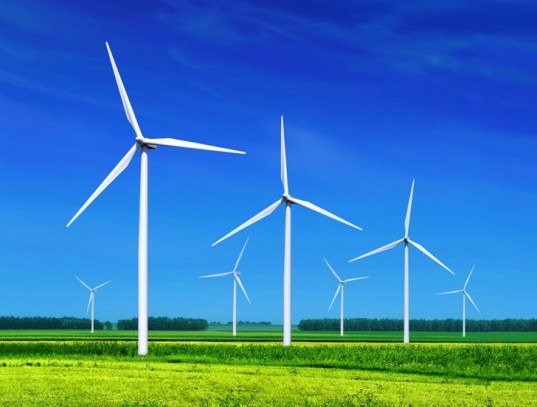
what is the name of the device shown above?

a)

wind turbine

b)

water turbine

c)

solar cell car

d)

hand generator

58.

Draw the energy transfer diagram for solar cell?

a)

light energy to electrical energy

b)

heat energy to electrical energy

c)

light energy to mechanical energy

d)

heat energy to mechanical energy

59.

Which one of the following technologies is mainly used in solar water heating systems?

a)

Wind turbine

b)

Passive solar energy

c)

Solar cell

d)

Active solar energy

60.

Which type of energy can be utilized by solar panels?

a)

Chemical

b)

Light

c)

Wind

d)

Mechanical

61.

What is the most suitable weather condition for the solar power plants to operate at their best?

a)

Cloudy

b)

windy

c)

foggy

d)

clear

62.

The sun produces an immense amount of light and heat because it contains tremendous

amount of:

a)

Sound energy

b)

Mechanical energy

c)

Nuclear energy

d)

Electrical energy

63.

The mechanical advantage of a solar car toy can be changed by:

a)

Putting an extra switch

b)

Selecting different relative size of the pulleys

c)

Selecting bigger motor

d)

vInstalling a tight belt

64.

Which of the following renewable energy source is suitable and abundant in UAE:

a)

Hydroelectric energy

b)

Fossil fuel energy

c)

Geothermal energy

d)

Solar energy

65.

Solar Energy is energy from the sun that is converted into thermal or electrical energy.

a)

True

b)

False

66.

Nonrenewable Resources are replaced by nature at a rate close to the rate in which they are used; whereas Renewable Resources exist in a fixed amount.

a)

True

b)

False

67.

Solar Energy is a nonrenewable resource.

a)

True

b)

False

68.

Solar Energy is used for:

a)

Generating Electricity

b)

Providing Light

c)

Heating Water

d)

Heating Homes, Greenhouses, and Other Buildings

e)

All of the above

69.

Which system types fall under the Active Solar Systems?

a)

Photovoltaics (PV)

b)

Solar Heating and Cooling (SHC)

c)

Concentrating Solar Power (CSP)

d)

All of the above

e)

None of the above

70.

Photovoltaic is devices or cells that generate electricity directly from sunlight via an electronic process that occurs naturally in certain types of materials.

a)

True

b)

False

71.

What are the types of Photovoltaic systems?

a)

Parabolic trough, Power Tower, Linear Reflector, & Dish Engine

b)

Crystalline silicone, Thin-film PV, & Concentrating PV

c)

Active Solar Systems & Passive Solar Systems

d)

Passive Solar Cooling & Passive Solar Heating

e)

None of the above

72.

What is the most common Photovoltaic system used?

a)

Crystalline Silicone

b)

Thin-film PV

c)

Concentrating PV

d)

All of the Above

e)

None of the above

73.

Solar Heating and Cooling (SHC) collects thermal energy from the sun and uses the heat to provide hot water, space heating, cooling, and pool warming.

a)

True

b)

False

74.

The three major components of Solar Heating and Cooling are the collector, insulating pipes, and hot water storage.

a)

True

b)

False

75.

The different system types of Concentrating Solar Energy are:

a)

Photovoltaic, Thin-film PV, & Concentrating PV

b)

Active Solar Systems & Passive Solar Systems

c)

Parabolic trough, Power tower, Linear reflector, & Dish engine

d)

Passive solar cooling & Passive solar heating

e)

None of the above

76.

Concentrating Solar Power uses mirrors to concentrate energy from the sun to drive steam turbines or engines to create electricity.

a)

True

b)

False

77.

Passive Solar Systems (select all answers that apply)

a)

use mechanical or electrical devices to convert the sun's heat/light into energy

b)

collect, store, and distribute heat energy without the use of moving parts

c)

takes advantage of a building's location, climate, & materials to minimize energy use.

d)

All of the above

e)

None of the above

78.

Nonrenewable energy use was on the rise in 2017, while renewable energy use was on the decline.

a)

True

b)

False

79.

About ____% of Hawaii's electricity is from solar.

a)

5

b)

10

c)

15

d)

20

e)

None of the above

80.

About ___% of the farms in Hawaii have Photovoltaic systems in place.

a)

2

b)

4

c)

6

d)

8

e)

None of the above

81.

In the U.S., solar energy made up .9% of total electricity generated in 2016.

a)

True

b)

False

82.
Nuclear Power is - 
a)
Renewable
b)
Non-renewable
83.
Nuclear power uses ____ for fuel.
a)
steel
b)
coal
c)
uranium
d)
hydrogen
84.
Nuclear energy uses _____ to turn turbines to power a generator.
a)
wind
b)
water
c)
steam
d)
solar
85.
Splitting a uranium atom is called - 
a)
fission
b)
fusion
86.
Energy is stored in the ___ of an atom.
a)
proton
b)
neutron
c)
electron cloud
d)
nucleus
87.
Uranium is found in 
a)
the sun
b)
hydrogen
c)
rocks in the ground
d)
xrays
88.
Uranium is found in 
a)
the sun
b)
hydrogen
c)
rocks in the ground
d)
xrays
89.
What is an advantage  of nuclear energy?
a)
radioactive waste
b)
no pollution
c)
we will never run out
d)
it is the safest way to make energy
90.
All of the following are problems of nuclear energy except ---
a)
storage of radioactive fuel
b)
pollution
c)
security concerns
d)
natural disasters (tsunamis, earthquakes, etc.)
91.
Uranium pellets are an example of ___ energy.
a)
chemical
b)
mechanical
c)
electrical
d)
radiant
92.
Spent nuclear fuel (already used) is stored at -
a)
a landfill
b)
on site at the nuclear power plant
c)
a repository in Nevada
93.
What are the two major forces involved with nuclear energy? 
a)
Fission and Fusion
b)
Alpha and Beta particles
c)
Gamma and Fission
d)
Radioactivity and Alpha Decay
94.
What happens to an isotope when its mass becomes too large and unstable
a)
It begins to emit radioactive energy, which can cause a fission reaction
b)
It begins to add protons in order to balance out the nucleus' mass
c)
It beings to emit only an electron because electrons are the largest subatomic particle 
d)
It begins to release compounds such as CO2
95.
What type of radioactive decay is in this picture? 
a)
Alpha
b)
Beta
c)
Gamma
d)
Fission
96.
What type of radioactive decay is in this picture? 
a)
Alpha
b)
Beta
c)
Gamma
d)
Fusion
97.
What decay emits (releases) a He atom (2 protons and 4 neutrons?)
a)
Alpha
b)
Beta
c)
Gamma
d)
Fission
98.
What type of decay emits an electron?  
a)
Alpha
b)
Beta
c)
Gamma
d)
Fusion
99.
Solve this decaying equation: 
4He+  ______ --->    238U92
a)
234Th90
b)
236Th90
c)
236Ra88
d)
234U90
100.
Solve this decay question: 
14C6 -----> ____ +  0β-1
a)
14C7
b)
13C6
c)
14N7
d)
15N7
101.
What does a gamma ray consist of? 
a)
Photons
b)
Electrons
c)
Protons
d)
Neutrons
102.
What happens in a chain reaction? 
a)
An isotope that releases several million times more energy per reaction than compared to a chemical reaction 
b)
An isotope that reacts to a nuclear explosion from an atomic bomb
c)
Same element, different mass 
d)
Various isotopes exploding at all once 
103.
C-14 has 8 neutrons and C-13 has 7 neutrons.  How many protons are in C-14? 
a)
6
b)
12.01
c)
7
d)
8
104.
A radioactive isotope has a half life of 30 years.  At year 0, there are 400 radioactive atoms.  How many are left after 120 years of decay
a)
50 atoms
b)
30 atoms
c)
25 atoms
d)
12.5 atoms
105.
What is the same about an element and its isotopes? 
a)
Same number of neutrons
b)
Same number of protons
c)
Same number of electrons or neutrons
d)
Same atomic mass
106.
What are the three (3) types of radiation that exist in nuclear chemistry?
a)
Alpha, Beta, and Gamma
b)
Fission, Fusion, and Friction
c)
Protons, Neutrons, and Electrons
d)
Atomic Mass, Isotopes, and Ions
107.
What are the two main elements (gases) that make up the Sun? 
a)
Carbon and Helium
b)
Iron and Hydrogen
c)
Hydrogen and Helium
d)
Carbon and Hydrogen 
108.
What are the atomic numbers of the two main elements that make up the Sun? 
a)
6 and 2
b)
1 and 2
c)
6 and 12
d)
2 and 12
109.
What are two isotopes that are used in a Nuclear Reactor for electricity? 
a)
U-235 and Pu-239
b)
U-238 and He
c)
H and He
d)
C-14 and Pu-239
110.
What happens to the nuclei of isotopes during a FUSION reaction
a)
They break down or break a part
b)
They fuse and/or combine together
c)
They add more neutrons to its mass
d)
They collapse into a black hole 
111.
What process does the Sun go through in order to produce limitless energy for billions of years
a)
Fusion
b)
Fission
c)
Alpha, Beta, Gamma
d)
Isotopic implosion 
112.
What process do humans use in in order to construct and use an Atomic Bomb? 
a)
Fusion
b)
Fission
c)
Alpha, Beta, and Gamma
d)
Isotopic implosion 
113.
What was the name of the area in 1986 in which there was a nuclear explosion at a power plant?
a)
Chernobyl
b)
Fukushima
c)
New York City
d)
Three Mile Island
114.

Wind Energy is energy gathered by using wind to turn turbines and is then harnessed and stored, if not used right after.

a)

True

b)

False

115.

Wind turbines are machines that convert kinetic energy from wind into mechanical energy.

a)

True

b)

False

116.

People used wind energy to propel boats across the Nile as early as:

a)

3000 BC

b)

4000 BC

c)

5000 BC

d)

6000 BC

e)

None of the above

117.

The first wind turbine that produced electricity in Scotland was created by Professor James Blythe in ____.

a)

1687

b)

1787

c)

1887

d)

1987

e)

None of the above

118.

In ___ the first wind farm was built in the U.S., powering up to 4,149 homes.

a)

1955

b)

1965

c)

1975

d)

1985

e)

1995

119.

Different types of wind turbines include: (select all that apply)

a)

Traditional Turbine

b)

Windmill

c)

Wind Generator

d)

Vertical Axis Wind Turbine

e)

Horizontal Axis Wind Turbine

120.

If the mechanical energy gets directly used by machinery, such as a pump, grinding stone, or grinding grains it is a windmill.

a)

True

b)

False

121.

If the wind turbine converts mechanical energy into electricity it is a wind generator.

a)

True

b)

False

122.

When the blades rotate perpendicular to the ground it is a horizontal axis wind turbine and when the blades rotate parallel to the ground it is a vertical axis wind turbine.

a)

True

b)

False

123.

The most common type of wind turbine you will see in Hawaii is:

a)

Vertical Axis Wind Turbine

b)

Windmill

c)

Horizontal Axis Wind Turbine

d)

Wind Generator

e)

None of the above

124.

The mechanical power of a wind turbine can be used for:

a)

Pumping Water

b)

Grinding Grain

c)

Conversion to electricity

d)

All of the above

125.

There has been a decrease in the number of wind turbines being used.

a)

True

b)

False

126.

Prices to make wind turbines has been increasing.

a)

True

b)

False

127.

The primary focus going forward will be offshore development of wind turbines.

a)

True

b)

False

128.

Wind turbines work by the wind spinning blades around a rotor. The rotor is connected to the main shaft, which spins a generator to create electricity.

a)

True

b)

False

129.

Fewer blades that spin faster generally makes a more efficient wind turbine.

a)

True

b)

False

130.
When wind strikes an object is exerts a force. True or False
a)
False
b)
True
131.
Kinetic energy is present in the wind. True or False
a)
True
b)
False
132.
To get wind energy, the kinetic energy is converted into mechanical energy first. True or False
a)
False
b)
True
133.
Wind turbines are used for what purpose in a wind mill
a)
For giving aesthetic look
b)
For creating noise pollution
c)
For rotating and making kinetic energy into mechanical energy
d)
All the above
134.
A wind turbine built on land is onshore wind turbine and a wind turbine built on sea is offshore wind turbine. True or False?
a)
False
b)
True
135.
__________ is an energy resource that WILL NOT run out in the next several hundred years.
a)
Renewable Energy Resource
b)
Nonrenewable Energy Resource
136.
__________ is an energy resource that WILL run out in the next several hundred years.
a)
Renewable Energy Resource
b)
Nonrenewable Energy Resource
137.
Coal is a __________ energy resource.
a)
Renewable
b)
Nonrenewable
138.
Hyrdo Power is a __________ energy resource.
a)
Renewable
b)
Nonrenewable
139.
Solar Power is a __________ energy resource.
a)
Renewable
b)
Nonrenewable
140.
Nuclear Power is a __________ energy resource.
a)
Renewable
b)
Nonrenewable
141.
Natural Gas is a __________ energy resource.
a)
Renewable
b)
Nonrenewable
142.
The sun is the source of all energy on Earth.
a)
true
b)
false
143.
__________is the energy generated from the sun by using solar panels.
a)
Wind
b)
Hydro
c)
Nuclear
d)
Solar
144.
The energy of nuclear reactions between atoms that creates heat and turns turbines is _________.
a)
Coal
b)
Wind
c)
Hydro
d)
Nuclear
145.
__________is the energy created by wind turning wind turbines.
a)
Geothermal
b)
Hydro
c)
Wind
d)
Nuclear
146.
__________is a gas found under the Earth’s surface and is used to produce energy by burning it.
a)
Geothermal
b)
Natural Gas
c)
Coal
d)
Nuclear
147.
_________is energy generated when moving water turns turbines.
a)
Wind
b)
Hydro
c)
Geothermal
d)
Solar
148.
_________is compacted matter dug from under the Earth’s surface that is used to provide energy by burning it.
a)
Hydro
b)
Coal
c)
Nuclear
d)
Geothermal
149.
__________uses heat from the interior of the Earth.  We will be using this at our new school!
a)
Solar
b)
Geothermal
c)
Nucler
d)
Wind
150.
Wind is a __________ energy resource.
a)
Renewable
b)
Nonrenewable
151.
Geothermal Power is a __________ energy resource.
a)
Renewable
b)
Nonrenewable
152.
Hydroelectric power plants are mainly used to produce -
a)
heat for homes
b)
electricity
c)
power for industries 
d)
energy for transportation
153.
_____ uses dams to turn flowing water into electricity.
a)
hydropower
b)
tidal power
c)
biomass
d)
nuclear
154.
Hydropower uses _________ to turn turbines that run generators.
a)
steam
b)
moving water
c)
uranium
d)
tides
155.
One advantage of tidal power is -
a)
it can be used anywhere
b)
tides are predictable
c)
tidal power does NOT need a back up source
d)
it is available ALL day
156.
Which is a disadvantage of hydropower?
a)
it disrupts habitats and floods land
b)
you can only use in areas with very high tides
c)
it can injure birds and bats
d)
dams are very noisy and disrupt the view
157.
Which is NOT an example of Biomass?
a)
wood
b)
crops
c)
wind
d)
animal and yard waste
158.
A "dam" built to harness the energy from ocean tides is called a - 
a)
reservoir
b)
barrage
c)
turbine
d)
generator
159.
Which is NOT a way tidal power affects the environment?
a)
changes the water level
b)
stirs up sediment that affects water quality
c)
air pollution
d)
fish could get hurt by turbines
160.
Which renewable resource uses the natural resource in the picture below to produce energy?
a)
wind
b)
tidal
c)
biomass
d)
geothermal
161.
Which energy source is non-renewable?
a)
biomass
b)
nuclear
c)
hydropower
d)
tidal power
162.
Which renewable source can be used in Stephens city?
a)
hydropower
b)
tidal power
c)
biomass
163.
Coal is which type of rock?
a)
Sedimentary
b)
Igneous
c)
Metamorphic
d)
Carbonite
164.
When coal is burned, sulfur can combine with oxygen in clouds, producing:
a)
Acid Rain
b)
Shale Sands
c)
Carbon Dioxide
d)
Surfactants
165.
The main ingredient in natural gas is:
a)
Butane
b)
Methane
c)
Propane
d)
Urethane
166.
The U.S. imports about how much of its petroleum from other countries?
a)
1/4
b)
1/3
c)
1/2
d)
2/3
167.
In the Civil War, coal was used to make these two types of metal:
a)
Steel & Aluminum
b)
Iron & Bronze
c)
Steel & Iron
d)
Tin & Copper
168.
Surface mining is used when coal is less than _____ feet underground.
a)
100
b)
200
c)
300
d)
400
169.
This is the cleanest burning of the fossil fuels:
a)
Natural Gas
b)
Coal
c)
Petroleum
d)
Shale
170.
Over 40% of the oil in a barrel goes to produce this:
a)
Plastics
b)
Electricity
c)
Jet fuel
d)
Gasoline
171.
In what three states does hydro account for more than half of electricity production?
a)
OR, CA, TX
b)
TX, MI, NJ
c)
OR, ID, WA
d)
WA, MT, LA
172.
When is water commonly stored, due to decreased consumption rates?
a)
Morning
b)
Noon
c)
Afternoon
d)
Night
173.
Carbon Dioxide is also known as a:
a)
Greenhouse Gas
b)
Fossil Fuel
c)
Sedimentary Rock
d)
Renewable Resource
174.
What percent of dams in the U.S. were built to produce energy?
a)
3%
b)
9%
c)
15%
d)
21%
175.
This may contribute to an increase in future hydro costs:
a)
Lack of fuel
b)
Maintenance costs
c)
Construction supplies
d)
Licensing & studies
176.
What percent of air pollution is caused by hydropower plants?
a)
0%
b)
25%
c)
50%
d)
75%
177.
Height of the water behind a dam is called:
a)
Flow
b)
Intake
c)
Stock
d)
Head
178.
Artificial lakes above dams are called:
a)
Intakes
b)
Spillway gates
c)
Turbines
d)
Reservoirs
179.
What's the easiest place to build a hydropower plant?
a)
Natural waterfall
b)
Basalt column
c)
Annually recurring spring
d)
River delta
180.
The U.S. and Canada both have hydropower plants at this location:
a)
Hoover Dam
b)
Niagara Falls
c)
Snake River
d)
Vancouver Basin
181.
Hydor, which means water, comes from the language of which ancient civ?
a)
China
b)
Mesopotamia
c)
Egypt
d)
Greeces
182.
Which U.S. state is the leading producer of coal?
a)
Michigan
b)
Texas
c)
California
d)
Wyoming