
 Worksheets
Jayden
Total questions: 145
Worksheet time: 2hrs 4mins
Name
Class
Date
1.
What is at the center of every atom?
a)
An electron
b)
A compound
c)
A molecule
d)
A nucleus
2.
Which two particles make up the nucleus of an atom?
a)
Protons and Electrons
b)
Protons and Neutrons
c)
Molecules and Compounds
d)
Neutrons and Electrons
3.
What is the role of an electron in an atom?
a)
Electrons live inside the nucleus and carry a neutral charge.
b)
Electrons circle the nucleus and have a positive charge.
c)
Electrons circle the nucleus and have a negative charge.
d)
Electrons live inside the nucleus and have a negative charge.
5.
In an atom, what is the number of protons equal to?
a)
The number of electrons.
b)
The number of neutrons.
c)
The number of molecules.
d)
The number of nuclei.
5.
In an atom, what is the number of protons equal to?
a)
The number of electrons.
b)
The number of neutrons.
c)
The number of molecules.
d)
The number of nuclei.
6.
In an atom, what is the number of protons equal to?
a)
The number of electrons.
b)
The number of neutrons.
c)
The number of molecules.
d)
The number of nuclei.
7.
In an atom, what is the number of protons equal to?
a)
The number of electrons.
b)
The number of neutrons.
c)
The number of molecules.
d)
The number of nuclei.
8.
In an atom, what is the number of protons equal to?
a)
The number of electrons.
b)
The number of neutrons.
c)
The number of molecules.
d)
The number of nuclei.
9.
Which of the following determines the type of element that an atom makes?
a)
The size of the nucleus.
b)
The number of protons.
c)
How much the atom weighs.
d)
The number of neutrons.
10.
What forms when two atoms combine?
a)
A molecule.
b)
A nucleus.
c)
A proton.
d)
An electron.
11.
What is a compound?
a)
The center of an atom that is formed by neutrons, protons, and electrons.
b)
A tiny particle that makes up all matter.
c)
A molecule that is formed from two or more different types atoms.
d)
A molecules that is formed from the same type of atoms.
12.
A proton is a _____ charged particle.
a)
Negatively
b)
Positively
13.
An electron is a _____ charged particle.
a)
Positively
b)
Negatively
14.
What is an atomic number?
a)
The sum of protons and neutrons in an atom.
b)
The sum of protons and electrons in an atom.
c)
The number of protons in an atom of a specific element.
d)
The number of neutrons in a specific element.
15.
The number of neutrons equals...
a)
atomic number - mass number
b)
Protons - neutrons
c)
Electrons - protons
d)
mass number - atomic number
16.
The atoms of any given element ____ have the same number of protons.
a)
sometimes
b)
always
c)
never
17.
Each element ___ its own atomic number.
a)
has
b)
does not have
c)
sometimes has (depends on the element)
18.
What charge does a neutron have?
a)
positive
b)
negative
c)
no charge
d)
neutral
19.
What charge does a neutron have?
a)
positive
b)
negative
c)
no charge
d)
neutral
20.
Where are protons located in the atom?
a)
orbitals
b)
nucleus
c)
rings
d)
positive
21.
Where are electrons located in the atom?
a)
Nucleus
b)
Shells/orbitals
c)
rings
d)
center
22.
Where are neutrons located in the atom?
a)
shells/orbitals
b)
rings
c)
center
d)
nucleus
23.
The number of protons plus neutrons.
a)
Mass number
b)
Mass Weight
c)
Atomic number
d)
Atomic weight
24.
all matter is made of what
a)
energy
b)
atoms
c)
electrons
d)
compounds
25.
How would you write 4.3756 x 10⁴ in standard form?
a)
437,560,000
b)
0.00043756
c)
43,756
d)
4,3756
26.
How would you write 0.0005 in scientific notation?
a)
50 x 105
b)
5 x 10⁴
c)
5 x 10³
d)
.5 x 103
27.
How would you write -5.6 x 10⁻³ in standard form?
a)
0.0056
b)
-5,600
c)
0.00056
d)
-0.0056
28.
Scientific Notation is made up of two number parts. The first part should be a number between 1 and 100.
a)
True
b)
False
29.
Scientific Notation is made up of two number parts. The second part is a power of base 10.
a)
True
b)
False
30.
When writing a number in scientific notation, the first number must be greater than 1, but less than 10.
a)
False
b)
True
31.
The rule of scientific notation is to write all exponents with a base of ____.
a)
50
b)
5
c)
100
d)
10
32.
How do you write
1001
in scientific notation?
1001
in scientific notation?
a)
1.0001 x 10⁴
b)
1.01 x 10⁵
c)
1.001 x 10³
d)
10.1 x 10³
33.
How do you write
8.317 x 10⁶
in standard form?
8.317 x 10⁶
in standard form?
a)
8, 371, 000
b)
83, 170, 000
c)
837, 100
d)
8, 317, 000
34.
Which of the following is correct scientific notation?
a)
20.35 x 10⁴
b)
.2035 x 104
c)
2035 4
d)
2.035 x10⁴
35.
Express the following in scientific notation:
.000457
.000457
a)
457 x 106
b)
457 x 10-6
c)
4.57 x10⁴
d)
4.57 x 10⁻⁴
36.
Express the following in standard notation:
8.025 x 10⁻⁸
8.025 x 10⁻⁸
a)
.00000008025
b)
.000000008025
c)
802,500,000,000
d)
80,250,000,000
37.
Express the following in standard notation:
8.025 x 10⁻⁸
8.025 x 10⁻⁸
a)
.00000008025
b)
.000000008025
c)
802,500,000,000
d)
80,250,000,000
38.
Express the following in scientific notation:
.000045
.000045
a)
4.5 x 10⁻⁵
b)
45 x 10-6
c)
4.5 x10⁵
d)
45 x 106
39.
Express the following in scientific notation:
10,030,400,000
10,030,400,000
a)
1.00304 x 10⁹
b)
1.00304 x 10¹⁰
c)
1.00403 x 10¹⁰
d)
1.00304 x10⁻¹⁰
40.
Express the following in scientific notation:
0.0000002203
0.0000002203
a)
.02203 x 107
b)
22.03 x 10⁻⁶
c)
2.203 x 10⁻⁷
d)
22.03 x 10⁶
41.
Convert to scientific notation:
520,000,000
520,000,000
a)
52 x 107
b)
5.2 x 10⁷
c)
5.2 x 10⁸
d)
0.52 x 10⁹
42.
Convert to standard notation:
2.4 x 10⁻³
2.4 x 10⁻³
a)
2400
b)
0.24
c)
0.024
d)
0.0024
43.
Convert to standard notation:
3.05 x 10⁵
3.05 x 10⁵
a)
305,000
b)
305
c)
3,050,000
d)
30,500
44.
Write 7.113 x 10⁷ in standard form.
a)
71,130,00
b)
7,113,000
c)
0.0000007113
d)
7,113
45.
Write 0.00000707 in scientific notation.
a)
7.07 x 10⁻⁶
b)
7.07 x 10⁶
c)
707 x 108
d)
707 x 10-8
46.
Write 2.08 x 10² in standard form.
a)
208
b)
0.0208
c)
20,800
d)
0.208
47.
Write 7.8 x 10⁻³ in standard form.
a)
0.0078
b)
7,800
c)
78
d)
0.078
48.
Write 6,700 in scientific notation.
a)
6.7 x 10³
b)
6.7 x10⁻³
c)
67 x 102
d)
67 x 10-2
49.
Write 52,300,000 in scientific notation.
a)
5.23 x 10⁷
b)
5.23 x 10⁻⁷
c)
52.3 x 10⁶
d)
52.3 x 10⁻⁶
50.
UNDERSTANDING:
The first number in scientific notation must be...
The first number in scientific notation must be...
a)
between and including 0 and 10
b)
between and including 1 and 9.9999
c)
between and including 0 and 9.999
d)
between and including 1 and 10
51.
What is scientific notation?
a)
A long way to write really short numbers
b)
A short way to write really long numbers
c)
I don't know...
d)
None of the above
52.
UNDERSTANDING
If the exponent is a negative number...
If the exponent is a negative number...
a)
you will get a large number
b)
you will get a small number
53.
Which of the following is correct scientific notation?
a)
20.35 x 10⁴
b)
.2035 x 104
c)
2035 4
d)
2.035 x10⁴
54.
How would you write 564,000,000 in scientific notation?
a)
5.64 x 10⁻⁷
b)
5.64 x 10⁶
c)
5.64 x 10⁸
d)
56.4 x 10⁷
55.
How would you write 4.3756 x 10⁴ in standard form?
a)
437,560,000
b)
0.00043756
c)
43,756
d)
4,3756
56.
Magnetism is a type of ____________
a)
force
b)
book
c)
plant
d)
animal
57.
What do magnets stick to?
a)
copper
b)
wood
c)
iron
d)
plastic
58.
When two magnets attract, they ______________
a)
push apart
b)
change color
c)
get colder
d)
pull together
59.
When two magnets repel, they ________________
a)
change color
b)
pull together
c)
push apart
d)
get colder
60.
The force of magnetism can go through many materials.
a)
True
b)
False
61.
Magnets have a north and a south ___________
a)
shape
b)
color
c)
pole
d)
region
62.
Two north poles will attract.
a)
True
b)
False
63.
A north pole and a south pole will attract.
a)
True
b)
False
64.
What would we call a nail that can pick up a paperclip because it is touching a magnet?
a)
temporary magnet
b)
poles
c)
force
d)
detector
65.
Iron filings and a compass are examples of ________________
a)
poles
b)
detectors
c)
temporary magnets
d)
force
66.
The force of magnetism is stronger when magnets are ________________
a)
cold
b)
round
c)
closer together
d)
farther apart
67.
How many neutrons in C-14?
a)
6
b)
7
c)
14
d)
8
68.
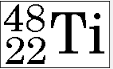
How many protons does this isotope of titanium have?
a)
48
b)
22
c)
26
d)
70
69.

How many neutrons does the isotope of lithium have?
a)
8
b)
3
c)
4
d)
5
70.
How many neutrons does uranium-235 have?
a)
238
b)
92
c)
146
d)
143
71.

What do these isotopes of carbon all have in common?
a)
neutrons & mass number
b)
atomic number and neutrons
c)
atomic number and electrons
d)
protons, atomic number, and mass number
72.

In a correctly written symbol what would be located in the "A" position?
a)
number of neutrons
b)
atomic number
c)
number of electrons
d)
mass number
73.

What element is this? What is the mass number of this atom?
a)
sodium, 23
b)
magnesium, 23
c)
magnesium, 12
d)
sodium, 11
74.
What quantities vary between isotopes of an element?
a)
protons, electrons, and atomic mass
b)
protons, electrons, and atomic number
c)
neutrons and electrons
d)
neutrons and atomic mass
75.
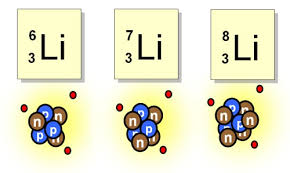
which atom has 4 neutrons?
a)
Li-6
b)
Li-7
c)
Li-8
d)
they have the same # of neutrons
76.

which explanation of this notation is correct?
a)
12 is proton #
b)
6 tells you there are 6 neutrons
c)
6 tells you there are 6 protons
d)
12 is not a mass # here
77.
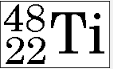
How many protons does this isotope of titanium have?
a)
48
b)
22
c)
26
d)
70
78.

How many neutrons does the isotope of lithium have?
a)
8
b)
3
c)
4
d)
5
79.
How many neutrons does uranium-235 have?
a)
238
b)
92
c)
146
d)
143
80.

What do these isotopes of carbon all have in common?
a)
neutrons & mass number
b)
atomic number and neutrons
c)
atomic number and electrons
d)
protons, atomic number, and mass number
81.

In a correctly written symbol what would be located in the "A" position?
a)
number of neutrons
b)
atomic number
c)
number of electrons
d)
mass number
82.

What element is this? What is the mass number of this atom?
a)
sodium, 23
b)
magnesium, 23
c)
magnesium, 12
d)
sodium, 11
83.
What quantities vary between isotopes of an element?
a)
protons, electrons, and atomic mass
b)
protons, electrons, and atomic number
c)
neutrons and electrons
d)
neutrons and atomic mass
84.

An atom of hydrogen has a mass number of 1. How many neutrons does it have?
a)
0
b)
1
c)
2
d)
3
85.

What is the mass number of an atom of hydrogen that has 1 neutron?
a)
0
b)
1
c)
2
d)
3
86.

An atom of boron has a mass number of 12. How many neutrons does it have?
a)
6
b)
7
c)
11
d)
12
87.

An atom of boron has 6 neutrons. What is its mass number?
a)
6
b)
7
c)
11
d)
12
88.

An atom of oxygen has 6 neutrons. What is its mass number?
a)
6
b)
8
c)
14
d)
16
89.

An atom of lithium has a mass number of 8. How many neutrons does it have?
a)
3
b)
5
c)
7
d)
8
90.

An atom of lithium has 3 neutrons. What is its mass number?
a)
3
b)
4
c)
6
d)
7
91.
Isotopes are atoms of the same element with different #’s of __________ & therefore different __________.
a)
n0 ; atomic #’s
b)
p+ ; atomic #’s
c)
e- ; atomic masses
d)
n0 ; atomic masses
92.
How many neutrons in C-14?
a)
6
b)
7
c)
14
d)
8
93.

A property that causes subatomic particles such as protons and electrons to attract or repel each other is called
a)
electrical charge
b)
induction
c)
static electricity
94.
The force of attraction or repulsion between electrically charged objects is called
a)
induction
b)
electric force
c)
electrical charge
95.

A device that converts chemical energy to electrical energy is called a
a)
voltmeter
b)
resistor
c)
battery
96.

This law states that the voltage in a circuit equals the product of the current and the resistance.
a)
Newton's 1st law
b)
Ohm's Law
c)
1st law of thermodynamics
97.
Potential difference is also called
a)
resistance
b)
voltage
c)
current
98.

Who developed Ohm's Law?
a)
Isaac Newton
b)
James Joule
c)
Georg Ohm
99.
This particle is found in the nucleus and has no charge
a)
Neutron
b)
Proton
c)
Electron
100.
This particle is found in the nucleus and has a positive charge
a)
Electron
b)
Proton
c)
Neutron
101.
This is a negatively charged particle found outside the nucleus
a)
Electron
b)
Proton
c)
Neutron
102.
This contains most of the mass of an atom
a)
Electron Cloud
b)
Nucleus
c)
Electron
103.
This is the simplest of all atoms and contains only one proton and one electron
a)
Oxygen
b)
Hydrogen
c)
Water
104.
The first person to ever talk about an atom was
a)
Democritus
b)
Rutherford
c)
Dalton
105.
All matter is made of what?
a)
energy
b)
atoms
c)
electrons
d)
compounds
106.
How did Rutherford discover the proton?
a)
Cathode tube ray experiment
b)
Gold Foil Experiment
c)
Planetary Model
d)
Plum Pudding Model
107.
Who stated that all atoms of the same element are excacty alike?
a)
Democritus
b)
Dalton
c)
Thomson
d)
Borh
108.
Which of these grouping of elements could have the characteristic of luster (shiny)?
a)
Metal
b)
Nonmetal
c)
metalloids
d)
Both metals and metalloids
109.
Which of these grouping of elements could have the characteristic of brittle?
a)
Metal
b)
Nonmetal
110.
Which of the following is a good conductor of heat?
a)
Metal
b)
Nonmetal
c)
Metalloid
111.
Which of these is a property of metals?
a)
It's malleable
b)
It can't conduct electricity
c)
They are used in food
d)
It's very brittle
112.
One property of a nonmetals is that it is a good conductor of electricity?
a)
true
b)
false
113.
Iron is a good conductor, malleable and magnetic. What type of element is Iron?
a)
Metal
b)
Nonmetal
c)
Metalloid
d)
Pretty
114.
Silicon is a semiconductor and has properties of both metals and nonmetals. What type of element is Silicon?
a)
Metal
b)
Nonmetal
c)
Metalloid
d)
Pretty
115.
Which elements are found on the right side of The Periodic Table?
a)
Metals
b)
Nonmetals
c)
Metalloids
d)
Water
116.
All of these properties usually describe metals except...
a)
malleable
b)
conductors
c)
brittle
d)
shiny
117.
All of the following would classify an element as a metal except?
a)
Dull
b)
Luster
c)
Malleable
d)
Hard
118.
Which group of the periodic table is composed of inert (not reactive) gases?
a)
alkali metals
b)
alkaline earth metals
c)
halogens
d)
noble gases
119.
Each column in the periodic table is called a
a)
period
b)
group
c)
cluster
d)
unit
120.
In the modern periodic table elements are arranged by:
a)
atomic mass
b)
atomic number
c)
valence electrons
d)
number of isotopes
121.
Which is an alkali metal?
a)
Magnesium
b)
Iron
c)
Sodium
d)
Europium
122.
Which properties are characteristic of the Group 1 metals?
a)
high reactivity and the formation of unstable compounds
b)
low reactivity and the formation of unstable compounds
c)
high reactivity and the formation of stable compounds
d)
low reactivity and the formation of stable compounds
123.

In what section would Transition Metals be found?
a)
orange
b)
light blue
c)
blue
d)
white
124.
Elements on the left side of the periodic tables are
a)
metals
b)
nonmetals
c)
metalloids
d)
noble gases
125.
What is the name of group 17
a)
halogens
b)
nobles gases
c)
alkali metals
d)
alkaline earth metals
126.
What sublevel is being filled in the lanthanides and actinides?
a)
s
b)
p
c)
d
d)
f
127.
The periodic law states that if you organize elements by their atomic mass
a)
elements will overlap
b)
elements will not share properties
c)
physical properties will remain the same.
d)
chemical properties will occur periodically.
128.
The word “luster” refers to which property of matter?
a)
The ability to conduct electrical or thermal energy
b)
Capable of being drawn out into thin wires
c)
The way a surface appears when it reflects light
d)
Suitable for being shaped by beating or rolling
129.
Most of the elements on the periodic table are classified as "metal".
a)
True
b)
False
130.
The atomic number tells you what?
a)
number of electrons
b)
number of protons
c)
number of neutrons
d)
both electrons and protons in an atom.
131.
Luster is ___________
a)
A. the way light is reflected off a surface.
b)
A. how well a piece of matter conducts electricity.
c)
A. the capability of being drawn out into thin wires or threads.
d)
A. the capability of being hammered out thin.
132.
Malleability is ___________
a)
the way light is reflected off a surface.
b)
how well a piece of matter conducts electricity
c)
A. the capability of being drawn out into thin wires or threads.
d)
the capability of being hammered out thin.
133.
Conductivity is ___________
a)
the way light is reflected off a surface.
b)
how well a piece of matter conducts electricity.
c)
the capability of being hammered out thin
d)
A. the capability of being drawn out into thin wires or threads.
134.
Ductility is ___________
a)
A. the capability of being hammered out thin.
b)
A. the way light is reflected off a surface.
c)
A. the capability of being drawn out into thin wires or threads.
d)
A. how well a piece of matter conducts electricity.
135.
Metals have all of the following physical properties except __________.
a)
high conductivity
b)
shiny luster
c)
malleable
d)
brittle
136.
Which elements are found on the left to middle of The Periodic Table?
a)
Metals
b)
Nonmetals
c)
Metalloids
d)
Candles
137.
Silicon is a semiconductor and has properties of both metals and nonmetals. What type of element is Silicon?
a)
Metal
b)
Nonmetal
c)
Metalloid
d)
Pretty
138.
Iron is a good conductor, malleable and magnetic. What type of element is Iron?
a)
Metal
b)
Nonmetal
c)
Metalloid
d)
Pretty
139.
Which elements are found on the right side of The Periodic Table?
a)
Metals
b)
Nonmetals
c)
Metalloids
d)
Water
140.

Which element is least likely to conduct heat and electricity?
a)
O
b)
Si
c)
Po
d)
Ca
141.

How is Selenium classified?
a)
Metal
b)
Nonmetal
c)
Metalloid
d)
Sedimentary
142.
All of these properties describe metals except...
a)
malleable
b)
conductors
c)
brittle
d)
shiny
143.

Which element is a metalloid?
a)
Titanium
b)
Selenium
c)
Potassium
d)
Polonium
144.
Which of the given choices correctly shows the three main groups of elements listed from least conductivity to greatest conductivity?
a)
Metals, Nonmetals, Metalloids
b)
Nonmetals, Metalloids, Metals
c)
Metalloids, Metals, Nonmetals
d)
Nonmetals, Metals, Metalloids
145.

How would this element be classified?
a)
Metal
b)
Nonmetal
c)
Metalloid
d)
Metamorphic
100 %

