wayground logo

Free Printable Worksheets

Font size

S
M
L
XL
Worksheets

midterm review

Total questions: 150

Worksheet time: 2hrs 45mins

Name
Class
Date
1.
Which of the following is the smallest unit of life that can carry out all life functions?
a)
the mitochondria
b)
the vacuoles
c)
the nucleus
d)
the cell
2.
Which structures are found in every living cell?
a)
cell membrane and cytoplasm
b)
chloroplasts and mitochondria
c)
a cell wall and nucleus
d)
chloroplasts and cell wall
3.
Which cell structure is found in plant and animals cells and controls what can come into or leave a cell?
a)
cell membrane
b)
cytoplasm
c)
nucleus
d)
vacuole
4.
What is the function of the cell nucleus found in both plant and animal cells?
a)
to produce energy
b)
to control cell activity
c)
to remove waste products
d)
to allow molecules to enter the cell
5.
Cell organelles that are responsible for digesting food, worn out organelles and other cellular wastes are called ___________________.
a)
Mitochondria
b)
Vacuoles
c)
Lysosomes
d)
Chlororplasts
6.
What is one basic function of the vacuoles?
a)
circulating oxygen
b)
producing food
c)
controlling cell processes
d)
storing water
7.
Chloroplasts in plant cells allow the plant to perform a function that animal cells cannot do.  What is the main function of the chloroplasts found in plant cells?
a)
to absorb light energy and manufacture food
b)
to remove waste materials by active transport
c)
to manufacture chemical energy from food
d)
to control the shape of the cell
8.
All cells need energy to function.  Which cell organelle is responsible for producing energy in the cell?
a)
chloroplasts
b)
mitochondria
c)
nucleus
d)
vacuoles
9.
What is the function of a cell wall?
a)
to protect and support the cell
b)
to perform different functions in each cell
c)
to prevent water from passing through it
d)
to prevent oxygen from entering the cell
10.
What is the biggest bone in your body?
a)
fibula
b)
humerus
c)
pelvis
d)
femur
11.
Where is the smallest bone in your body?
a)
hand
b)
spine
c)
ear
d)
pinky toe
12.
How many bones does an adult human have?
a)
300
b)
306
c)
206
d)
602
13.
Who has more bones: an adult or a baby?
a)
baby
b)
adult
c)
both have the same
d)
neither have bones
14.
What is another name for your collar bone?
a)
scapula
b)
clavicle
c)
patella
d)
sternum
15.
What is another name for your shin bone?
a)
fibula
b)
tibia
c)
thigh bone
d)
femur
16.
What do your bones protect?
a)
organs
b)
skin
c)
muscles
d)
feelings
17.
What bones protect your heart and lungs?
a)
pelvis and spine
b)
brain and spine
c)
ribs and sternum
d)
ribs and pelvis
18.
What are the three jobs of your bones?
a)
movement, structure, joints
b)
movement, structure, protection
c)
structure, digestion and breathing
d)
movement, digestion and breathing
19.
What does your bone marrow make?
a)
muscles
b)
cartilage
c)
blood cells
d)
germs
20.
Where are three places you can find cartilage?
a)
nose, tongue and eyes
b)
nose, ears and joints
c)
fingernails, lips and eyes
d)
skin, eyes and lungs
21.
What do we call the place where two or more bones meet?
a)
head
b)
cranium
c)
joints
d)
feet
22.
What was Elvis famous for shaking?
a)
fingers
b)
pelvis
c)
clavicles
d)
tibias
23.
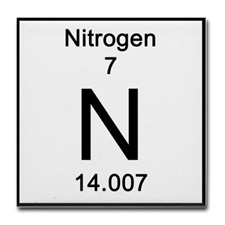
What is the number of protons that the element in this image contain?
a)
14
b)
7
c)
15
d)
18
24.
The first energy level can hold up to how many electrons?
a)
8
b)
4
c)
2
d)
5
25.
What is the atomic mass of "F"
a)
9
b)
18
c)
17
d)
19
26.
all matter is made of what 
a)
energy 
b)
atoms 
c)
electrons 
d)
compounds 
27.
The positive particles of an atom are 
a)
electrons 
b)
positrons 
c)
neutrons 
d)
protons 
28.
the central region of an atom where its neutrons and protons are is its 
a)
nucleus 
b)
electron cloud
c)
core 
d)
center 
29.
an atom with atomic number 6 would have how many protons 
a)
6
b)
12
c)
3
d)
cannot be determined 
30.
Particles in an atom that are neutral and have no charge are 
a)
negatrons 
b)
electrons 
c)
neutrons 
d)
protons 
31.
An atoms overall charge is 
a)
positive 
b)
depends on its mood 
c)
neutral 
d)
negative 
32.
Which of the following is a negatively charged subatomic particle?
a)
Electron
b)
Proton
c)
Neutron
d)
Quark
33.
All matter is made of what?
a)
energy 
b)
atoms 
c)
electrons 
d)
compounds 
34.
The particles that are found in the nucleus of an atom are
a)
neutrons and electrons
b)
electrons only
c)
protons and neutrons
d)
protons and electrons
35.
The atomic number of an elements is the total number of which particles in the nucleus?
a)
neutrons
b)
protons
c)
electrons
d)
protons and electrons
36.
Which of the following is a positively charged subatomic particle found in the nucleus of an atom?
a)
Electron
b)
Proton
c)
Neutron
d)
Quark
37.
Which of the following is a subatomic particle with no charge that is found in the nucleus of an atom?
a)
Electron
b)
Proton
c)
Neutron
d)
Quark
38.
Where are electrons of an atom found?
a)
Nucleus
b)
Electron Cloud
c)
Some are in the nucleus and some in the electron cloud.
d)
They are moving everywhere.
39.
electrons have this type of charge?
a)
negative
b)
positive
c)
neutral
40.
"C" is the element symbol for which element?
a)
calcium
b)
carbon
c)
chlorine
d)
cadmium
41.
What is the atomic symbol for sodium?
a)
Na
b)
So
c)
NaCl
d)
S
42.
What is the atomic number for an element with three protons?
a)
2
b)
1
c)
3
d)
6
43.
A particle that moves around the nucleus is a(n)...
a)
Proton
b)
Neutron
c)
Electron
d)
Quark
44.
Most of the mass in an atom is concentrated in the...
a)
electrons
b)
nucleus
c)
protons
d)
empty space
45.
What does the nucleus consist of?
a)
Protons + Electrons
b)
Neutrons + Electrons
c)
Atoms
d)
Protons + Neutrons
46.
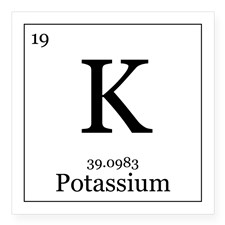
How many neutron are in the atom "K"?
a)
7
b)
2
c)
39
d)
12
47.
How many Hydrogen are in 4H2O?
a)
6
b)
8
c)
2
d)
4
48.
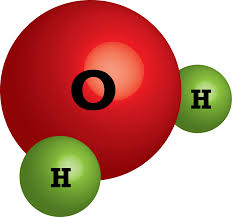
How many Oxygen are in H2O?
a)
1
b)
2
c)
0
d)
4
49.
2H2 + O2 ----> 2H2O What is the product?
a)
------>
b)
2H2O
c)
2H2+ O2
50.
2H2 + O--------> 2H2O What  are the reactants?
a)
----->
b)
2H2O
c)
2H2 +O2
51.
How many Magnesium are in 10MgCl2?
a)
10
b)
5
c)
20
52.
How many elements are in C6H12O6?
a)
1
b)
2
c)
3
d)
4
53.
How many atoms are there TOTAL in:
H2SO4
a)
6
b)
5
c)
7
d)
3
54.
How many Sodium (Na) are in 6NaCl?
a)
1
b)
12
c)
6
55.
Number of N in (NH₄)₂CrO₄
a)
1
b)
2
c)
8
d)
16
56.
(Element or Compound)
       C2H8
a)
Element
b)
Letters
c)
Numbers
d)
Compound
57.
How many atoms of Hydrogen are in this compound
a)
1
b)
2
c)
3
d)
4
58.
Atoms form ions in order to become this
a)
isotopes
b)
stable
c)
metals
d)
nonmetals
59.
How many O's are in Al₂(SO₄)₃
a)
4
b)
12
c)
7
d)
24
60.
Which statement best describes an element?
a)
made from mixture 
b)
thousands in the world
c)
pure, made of only one atom
d)
can be separated 
61.
Which one can be found on the periodic table?
a)
Compound 
b)
Element
62.
Which one has more than one type of atom in it?
a)
Element
b)
Compound 
63.
Water is an example of:
a)
Element
b)
Compound
c)
Solution
64.
When two or more elements chemically combine
a)
element
b)
compound
c)
mixture
d)
solution
65.
Carbon is considered an element while carbon dioxide is considered a compound. This is because carbon dioxide is –
a)
a gas at room temperature.
b)
made of two different elements.
c)
given off by green plants.
66.
Compounds are different than elements because compounds are -
a)
A combination of two or more elements.
b)

B)not able to be broken down into parts
c)
made from the same type of atoms
d)
a pure substance, elements are not
67.
The smallest particle of any particular type of matter is known by which of the following terms?
a)
Element
b)
Chemical
c)
Atom
d)
Substance
68.
A pure substance containing only one kind of atom.
a)
element
b)
mixture
c)
compound
69.
These are found on the Periodic Table.
a)
elements
b)
mixtures
c)
compounds
70.
Examples are water (H2O) and carbon dioxide (CO2).
a)
elements
b)
mixtures
c)
compounds
71.
This picture represents which of the following?
a)
element
b)
compound
c)
mixture
72.
This picture represents which of the following?
a)
element
b)
compound
c)
mixture
73.
What is water?
a)
element
b)
compound
c)
mixture
74.
What is sugar?
a)
element
b)
compound
c)
mixture
75.
What is gold?
a)
element
b)
compound
c)
mixture
76.
What is krypton?
a)
element
b)
compound
c)
mixture
77.
Contains only one kind of atom.
a)
Element
b)
Compund
c)
Mixture
78.
Contains two or more atoms combined
a)
Elements
b)
Compounds
c)
Mixtures
79.
Is in simplest form and cannot be broken down
a)
Element
b)
Compound
c)
Mixture
80.
Can be found on the periodic table
a)
Element
b)
Compound
c)
MIxture
81.
Element is a
a)
pure substance
b)
compound
c)
mixture
d)
molecule
82.
Which of the following is not a compound?
a)
HCl
b)
Cl
c)
NaCl
d)
CO2
83.
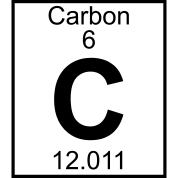
What does the C represent?
a)
atomic mass
b)
atomic number
c)
element name
d)
chemical symbol 
84.
If I gain electrons I become
a)
Positive because I've added to my atom
b)
negative because I've added electrons
c)
same because i'm balanced
d)
equal because now I have electrons
85.
A substance made of two or more elements that are chemically joined in a specific combination is an example of a/an ....
a)
Atom
b)
Element
c)
Compound
86.
A compound is a molecule consists of 2 or more ________.
a)
cells
b)
atoms
c)
elements
d)
mixtures
87.
The smallest unit of matter is ________.
a)
the cell
b)
an atom
c)
a compound
d)
an element
88.
An atom that loses electrons in an ionic bond becomes a ________ charged ion.
a)
Negatively
b)
Positively
89.
An atom that gains an electron in an ionic bond becomes a/an _______________ charged ion.
a)
Negatively
b)
Positively
90.
What are the arrows pointing to?
a)
coefficient
b)
subscript
c)
pineapple
d)
a number
91.
What is the arrow pointing to?
a)
coefficient
b)
subscript
c)
banana
d)
a number
92.
Wood
a)
Gas
b)
Liquid
c)
Solid
93.
Cloud
a)
Solid
b)
Liquid
c)
Gas
94.
Orange Juice
a)
Solid
b)
Liquid
c)
Gas
95.
Orange Juice
a)
Solid
b)
Liquid
c)
Gas
96.
Helium
a)
Gas
b)
Liquid
c)
Solid
97.
Transformation from a solid to a liquid is called...
a)
Freezing
b)
Melting
c)
Evaporating
98.
Transformation from a liquid to a solid is called...
a)
Melting
b)
Evaporation
c)
Freezing
99.
Transformation from a liquid to a gas is called...
a)
Freezing
b)
Evaporation
c)
Melting
100.
Which one takes the shape of its container?
a)
Solid
b)
Gas
c)
Liquid
d)
Gas and Liquid
101.
Which one has a definite shape?
a)
Gas
b)
Solid
c)
Liquid
d)
Solid and Liquid
102.
All of these are solids EXCEPT..
a)
Ball
b)
Chair
c)
Lamp
d)
Sweet Tea
103.
Transformation from a solid to a gas is called...
a)
Melting
b)
Freezing
c)
Evaporation
d)
Sublimation
104.
Which of these is an example of a gas?
a)
Oxygen
b)
Water
c)
Bicycle
d)
Dr. Pepper
105.
True or False: When water droplets form on the outside of a cup full of cold water (the cup "sweats"), it is called melting.
a)
True
b)
False
106.
What is the solid form of water called?
a)
Ice
b)
Rain
c)
Lake
d)
Water Vapor
107.
The ___ is the basic unit of sturucture and function of organisms
a)
atom
b)
cell
c)
matter
d)
all other answers are correct
108.
Which statement is a part of the cell theory?
a)
all cells come from preexisting cells
b)
bacteria are prokaryotic cells
c)
eukaryotic cells are complex
d)
humans are multicellular
109.
Who looked at cork and named the cell?
a)
Robert Hooke
b)
Van Leeuwenhoek
c)
Robert Brown
d)
Francesco Redi
110.
The Cell Theory states...
a)
atoms create all matter
b)
living things evolve
c)
the cell is the backbone of all matter
d)
cells are the basic unit of structure and organization of organisms
111.
"All animals are made of cells". This fact was discovered by...
a)
Matthias Schleiden
b)
Theodor Schwann
c)
Robert Hooke
d)
Rudolf Virchow
112.
All plants are made of cells.  This was discovered by....
a)
Matthias Schleiden
b)
Rudolf Virchow
c)
Robert Hooke
d)
Aristotle
113.
Robert Hooke, Anton van Leeuwenhoek, Theodor Schwann, Rudolf Virchow, and Matthias Schliden were all responsible for what theory?
a)
The Theory of Gravity
b)
The Theory of Relativity
c)
The Cell Theory
d)
The Theory of Continental Drift
114.
What tool do you use to view the cells?
a)
metric ruler
b)
centrifuge
c)
microscope
d)
pipette
115.
Which of the following is NOT a cell theory.
a)
All non-living things are made of cells
b)
All cells come from pre-existing cells
c)
Cells are the basic unit of structure and function of all living things
116.
Rocks are not living because
a)
they never move
b)
they aren't needed for humans
c)
they are not made of cells
d)
they don't break down
117.
Which scientist did NOT contribute to the cell theory?
a)
Anton Van Leeuwenhoek
b)

Robert Hooke
c)
Albert Einstein 
d)

Matthias Schleiden
118.
Who was the "scientist" who observed pond water and teeth scrapings in his microscope?
a)
Hooke
b)
Leeuwenhoek
c)
Schleidian
d)
Virchow
119.
Which of the following is NOT one of the basic points of Cell Theory?
a)
All living things are made of cells.
b)
The cell is the smallest living thing that can perform all the functions of life.
c)
Cells are too small to see without a microscope.  
d)
All cells must come from pre-existing cells.
120.
Cells are often called "the ____ of life."
a)
bread
b)
road map
c)
building blocks
d)
meaning
121.
the photosynthesis equation is
a)
6CO2+6H2O+sunlight~C6H12O6+6O2
b)
nothing
c)
H2O
d)
CO2
122.
also known as the "powerhouse" 
a)
cell membrane
b)
storage
c)
cytoskeleton
d)
mitochondria
123.
what is the control center in a cell
a)
mitochondria
b)
DNA
c)
nucleus
d)
movement
124.
All cells come from___________ cells.
a)
pregnant
b)
pre-existing
c)
paternal
d)
pin size
125.
What do all of these organisms have in common?
a)
They all have uniform offspring
b)
They are all made of cells
c)
They possess the same features
d)
They have the same internal and external structures
126.
What tool do you use to view the cells?
a)
metric ruler
b)
centrifuge
c)
microscope
d)
pipette
127.
What is the basic structural and functional unit of all living things? 
a)
atom
b)
cell
c)
molecule
d)
human
128.
Chloroplasts carry out...
a)
Phagocytocis
b)
Phylocytosis
c)
Photosynthesis
d)
Respiration
129.
Stores food and water for the cell.
a)
Cytoplasm
b)
Cell Wall
c)
Vacuole
d)
Nucleus
130.
No Definite Shape and No Definite Volume
a)
Gas
b)
Liquid
c)
Solid
131.
Definite shape and a definite volume.
a)
Gas
b)
Liquid
c)
Solid
132.
When the temperature of matter decreases the particles ...
a)
speed up and move farther apart
b)
speed up and move closer together
c)
slow down and move farther apart
d)
slow down and move closer together
133.

When air in a hot air balloon is heated the air inside the baloon...

a)

expands

b)

contracts

c)

evaporates

d)

condenses

134.
A puddle of water seemed to disappear. The heat caused the water to -
a)
melt
b)
condense
c)
evaporate
d)
cool
135.
The steam coming off the pot of boiling water is an example of....
a)
a solid becoming a liquid
b)
a liquid becoming a solid
c)
a liquid becoming a gas
d)
a gas becoming a liquid
136.
Which state of matter does ice start as (before you cool it)?
a)
liquid
b)
solid
c)
gas
137.
What is a example of a conductor?
a)
wood 
b)
metal
c)
rubber
d)
rock
138.
Material that allow heat and electricity to pass through them easily are called _________ 
a)
Conductors
b)
Insulators
c)
D-cell
139.

Water will boil at 100oC and _______.

a)

0oF

b)

212oF

c)

32oF

140.

When water freezes, it will

a)

expand

b)

contract

141.

When you melt a solid, do you add or take away heat?

a)

add heat

b)

take away heat

142.

Water will freeze at ____________ and 32oF.

a)

0oC

b)

100oC

c)

212oC

143.

This state of matter has a definite size and shape and it never changed.

a)

solid

b)

liquid

c)

gas

144.

What tool is used to measure volume?

a)

thermometer

b)

scale

c)

beaker

145.

This state of matter does have a definite volume, and it takes the shape of the container that it is in.

a)

solid

b)

liquid

c)

gas

146.

_____________________ occurs when a liquid changes to a gas.

a)

Melting

b)

Evaporation

c)

Condensation

147.

_____________________ occurs when a gas changes to a liquid.

a)

Melting

b)

Evaporation

c)

Condensation

148.

_____________________ occurs when a liquid changes to a solid by removing heat.

a)

Melting

b)

Freezing

c)

Boiling

149.

_____________________ can make evaporation happen quicker.

a)

Melting

b)

Freezing

c)

Boiling

150.

What state of matter does not have a definite size or shape, and it takes the shape of the container it is in?

a)

solid

b)

liquid

c)

gas