wayground logo

Free Printable Worksheets

Font size

S
M
L
XL
Worksheets

Chemistry

Total questions: 122

Worksheet time: 1hrs 20mins

Name
Class
Date
1.
Particles in an atom that are neutral and have no charge are 
a)
negatrons 
b)
electrons 
c)
neutrons 
d)
protons 
2.
The smallest particle of any particular type of matter is known by which of the following terms?
a)
Compound
b)
Atom
c)
Chemical
d)
Element
3.
all matter is made of what 
a)
energy 
b)
atoms 
c)
electrons 
d)
compounds 
4.
If an atom has 3 electrons, how many protons does it have?
a)
1
b)
2
c)
4
d)
3
5.
If the number of protons equal the number of _____, the atom will have no charge
a)
protons
b)
neutrons
c)
electrons
d)
nucleus
6.
The subatomic particle with a negative charge is the
a)
electron
b)
proton
c)
neutron
d)
nucleus 
7.
What is the atomic number?
a)
the number of protons
b)
the number of protons and neutrons
c)
the number of neutrons
d)
the number of protons and electrons
8.
What is the mass number?
a)
the number of protons
b)
the number of protons and neutrons
c)
the number of neutrons
d)
the number of protons and electrons
9.
Ions are: 
a)
atoms with a positive or negative charge
b)
atoms with no charge
c)
atoms with ONLY a positive charge
d)
atoms with ONLY a negative charge
10.
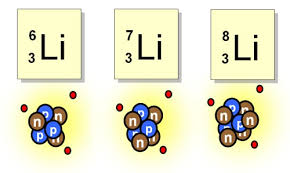
How many neutrons does the isotope of lithium have?
a)
8
b)
3
c)
4
d)
5
11.
How many protons does this isotope of titanium have?
a)
48
b)
22
c)
26
d)
70
12.

Anything that has mass and takes up space is called

a)

matter

b)

element

c)

electron

d)

nucleus

13.

The positive particle in the nucleus of an atom is called a(n)

a)

proton

b)

electron

c)

nuetron

d)

mixture

14.

The negative particle found outside the nucleus of an atom is called a(n)

a)

electron

b)

proton

c)

neutron

d)

atom

15.

The neutral particle found in the nucleus of an atom is called a(n)

a)

proton

b)

neutron

c)

electron

d)

atom

16.

Two or more elements chemically combined is called a(n)

a)

compound

b)

mixture

c)

element

d)

atom

17.

Hydrogen is an example of a(n)

a)

element

b)

compound

18.

Helium is an example of a(n)

a)

element

b)

compound

19.

Sugar (C6H12O6) is an example of a(n)

a)

compound

b)

element

20.

Hydrogen Peroxide (H2O2) is an example of a(n)

a)

compound

b)

element

21.

How many electrons are in the atom?

a)

2

b)

3

c)

4

d)

7

22.

What is the atomic number for this element?

a)

3

b)

4

c)

6

d)

7

23.

What is the atomic mass?

a)

22

b)

26

c)

48

d)

70

24.

What is the atomic number?

a)

19

b)

20

c)

39

d)

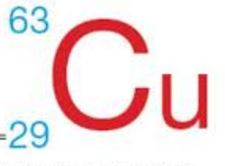
29

25.

How many protons does the element have?

a)

26

b)

30

c)

56

d)

82

26.

How many neutrons does the element have?

a)

22

b)

26

c)

48

d)

70

27.

How many electrons does this element have?

a)

26

b)

30

c)

56

d)

82

28.

A column on the periodic table is called a

a)

period

b)

group

c)

colony

d)

herd

29.

Group 18 contains element that do not combine with other elements naturally. These are called the

a)

noble gases

b)

carbon group

c)

boron group

d)

metalloids

30.

The atomic number tells us

a)

how many protons plus neutrons an element has.

b)

how many protons or neutrons an element has.

c)

how many protons or electrons an element has.

d)

how many protons, neutrons, and electrons an element has.

31.
Which solution is most acidic
a)
pH 3
b)
pH 7
c)
pH 10
d)
pH1
32.
What does an indicator of 7 tell you?
a)
acid
b)
neutral
c)
base
33.
What do we call the part of the equation to the left of the arrow in this example
CH4 + O2 ---> CO2 +H2O
a)
product
b)
yield
c)
reactant
d)
action
34.
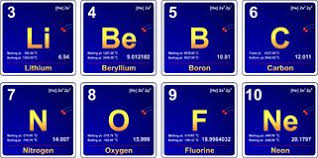
What is arranged in the periodic table?
a)
atoms
b)
elements
c)
compounds
d)
molecules
35.
if a substance turns litmus paper blue and it has a pH of 10 - what is it
a)
acid
b)
base
c)
neutral
36.
Water is an example of 
a)
homogeneous mixture
b)
compound
c)
element
d)
heterogeneous mixture
37.
Electrons have what kind of charge?
a)
positive
b)
negative
c)
neutral.
38.
The compounds or elements present at the end of a reaction 
a)
reactants
b)
catalyst
c)
products
d)
energy 
39.
The compounds and elements that are present at the beginning of a reaction:
a)
reactants
b)
catalyst
c)
products
d)
energy 
40.
Which of these are true about elements?
a)
Elements make all things in the universe
b)
An atom is the smallest part of an element
c)
There are over 100 elements in the universe
d)
All of these are correct.
41.
What is this called?
a)
Bohr's Model
b)
Electron Table
c)
Breakfast Table
d)
Periodic Table
42.
What is this?
a)
Molecule
b)
Atom
c)
Element
d)
Electron
43.
Protons are ________ and are located in the ____.
a)
neutral, nucleus
b)
positive, nucleus
c)
negative, nucleus
d)
positive, electron cloud
44.
Electrons are _______, and are located in the ________.
a)
negative, electron cloud.
b)
positive, electron cloud.
c)
negative, nucleus.
d)
neutral, electron cloud. 
45.
Neutrons are ________ and located in the _____.
a)
positive, nuclues.
b)
positive, electron cloud.
c)
neutral, electron cloud.
d)
neutral, nucleus.
46.
The particles that are found in the nucleus of an atom are
a)
neutrons and electrons
b)
electrons only
c)
protons and neutrons
d)
protons and electrons
47.
What does this picture represent?
a)
Atom
b)
Molecule
c)
Proton
d)
Neutron
48.
Chemical reactions that release energy are known as ________________________.
a)
Endothermic
b)
Exothermic
c)
Boring
d)
Reactions
49.
Chemical reactions that absorb energy are known as ________________________.
a)
Endothermic
b)
Exothermic
c)
Boring
d)
Explosive
50.
_________________ are the elements and compounds that enter into a chemical reaction.
a)
Polymers
b)
Bonds
c)
Reactants
d)
Products
51.
Term for any large organic molecule made of many subunits.
a)
polymer
b)
monomer
c)
oligosaccharide
d)
dimer
52.
Term for a single subunit of a polymer
a)
polymer
b)
monomer
c)
dimer
d)
macromolecule
53.
How many protons does Carbon have?
a)
3
b)
4
c)
5
d)
6
54.
Sodium has an atomic number of 11, how many protons does this atom have?
a)
22
b)
11
c)
12
d)
2
55.
Where is the proton located?
a)
In the very dense nucleus
b)
Floating around in the negative electron cloud
c)
the loose nucleus
d)
the positive electron cloud
56.
What number on the element key tells you how many protons an element has?
a)
Atomic Mass
b)
Element name
c)
Atomic number
d)
Element Symbol
57.
The following element key shows how many protons?
a)
16
b)
15.999
c)
Oxygen
d)
8
58.
Elements can have the same number of protons?
a)
True
b)
False
59.
Protons are equal to:
a)
Atomic Mass
b)
Number of neutrons
c)
Atomic Number
d)
All of the subatomic particles
60.
Which subatomic particle causes the nucleus to have a positive charge?
a)
Neutron
b)
Electrons
c)
Protons
d)
Valence electrons
61.
The electron cloud is the home of the proton?
a)
True
b)
False
62.
Which of the following is NOT an accurate description of the nucleus?
a)
positively charged from the protons
b)
extremely dense from neutrons and protons
c)
negatively charged
d)
in the center of the atom
63.
Which subatomic particle along with the protons make up the total mass of an atom.
a)
Neutron
b)
Electrons
c)
Valence electrons
d)
protons make up all the mass
64.
A stable element with 27 electrons will contain how many protons?
a)
27 protons in the electron cloude
b)
59 protons in the extremely dense nucleus
c)
27 protons in the extremely dense nucleus
d)
59 protons in the electron cloud
65.
What is the atomic mass of Neon?
a)
10
b)
20.18
c)
10.18
d)
20.18
66.
How many protons are in Beryllium?
a)
4
b)
9
c)
5
d)
2
67.
What is the atomic mass of Copper?
a)
63
b)
29
c)
34
d)
92
68.
How many neutrons are in a Gold atom?
a)
79
b)
196
c)
118
d)
275
69.
How many electrons does a Copper atom have?
a)
63
b)
29
c)
92
d)
34
70.
What is the atomic mass of Gold?
a)
79
b)
196.9665
c)
117
d)
275
71.
What is the atomic weight of Helium
a)
4
b)
2
c)
6
d)
1
72.
What is the atomic mass of Hydrogen?
a)
1
b)
2
c)
3
d)
0
73.
How many neutrons does a Hydrogen atom have?
a)
1
b)
2
c)
3
d)
0
74.
How many electrons does an Iodine atom have?
a)
53
b)
126
c)
73
d)
179
75.
How many electrons are in a gold atom?
a)
79
b)
196
c)
117
d)
275
76.
What is the atomic weight of Iron?
a)
26
b)
55.845
c)
56
d)
30
77.
How many electrons does an atom of Krypton have?
a)
36
b)
83.80
c)
47.80
d)
119.80
78.
What number is circled?
a)
Number of Neutrons
b)
Number of Protons
c)
Atomic Mass
d)
Number of Electrons
79.
How many electrons does a Hydrogen atom have?
a)
1
b)
2
c)
3
d)
0
80.
How many neutrons does an Oxygen atom have?
a)
8
b)
16
c)
24
d)
7.999
81.
What is the number highlighted?
a)
Atomic number
b)
Atomic mass
c)
Number of protons
d)
Number of electons
82.
What is this number representing?
a)
Number of protons
b)
Number of Protons and Electrons
c)
Number of Protons and Neutrons
d)
Number of Electrons, Protons and Neutrons
83.
What does this number represent?
a)
Number of protons
b)
Number of neutrons
c)
Number of electrons
d)
Number of protons and neutrons
84.
What is the atomic mass of Sodium?
a)
11
b)
22.9898
c)
33.9898
d)
11.9898
85.
How many valence electrons does Hydrogen have?
a)
1
b)
2
c)
3
d)
4
86.
How many valence electrons does Lithium have?
a)
1
b)
2
c)
3
d)
4
87.
How many valence electrons does sodium have?
a)
1
b)
2
c)
3
d)
4
88.
How many valence electrons does magnesium have?
a)
1
b)
2
c)
12
d)
24
89.
How many valence electrons does Carbon have?
a)
4
b)
12
c)
6
d)
14
90.
How many valence electrons does Phosphorus have?
a)
31
b)
5
c)
15
d)
4
91.
How many valence electrons does Oxygen have?
a)
8
b)
2
c)
16
d)
6
92.
How many valence electrons does Neon have?
a)
18
b)
8
c)
10
d)
2
93.
How many valence electrons does Sulfur
a)
16
b)
32
c)
6
d)
3
94.
How many valence electrons does Krypton have?
a)
36
b)
18
c)
8
d)
4
95.
How many valence electrons are represented here?
a)
7
b)
5
c)
2
d)
8
96.
Valence electrons are: 
a)
Electrons farthest away from the nucleus
b)
Electrons closest to the nucleus
c)
Electrons that just come and go - they don't stay with the atom
d)
Electrons in the second shell
97.
The majority of an atom's mass exists where?
a)
In the nucleus
b)
In the electron cloud
c)
In the space between the nucleus and the electrons
d)
In the neutrons
98.
What do these isotopes of carbon all have in common?
a)
neutrons & mass number
b)
atomic number and neutrons
c)
atomic number and electrons
d)
protons, atomic number, and mass number
99.
which atom has 4 neutrons?
a)
Li-6
b)
Li-7
c)
Li-8
d)
they have the same # of neutrons
100.
How many electrons should Hydrogen have around its Lewis dot model?
a)
1
b)
2
c)
7
d)
8
101.
How many Valance electrons does Iodine Have?
a)
6
b)
16
c)
7
d)
17
102.
What is an ion?
a)
A Charged Atom
b)
A Large Atom
c)
A Small Atom
d)
A Cute Atom
103.
Cations are...
a)
Positive
b)
Negative
c)
Neutral
d)
Purring
104.
Anions are...
a)
Positive
b)
Negative
c)
Neutral
d)
Crying
105.
An atom becomes _________ when it gains electrons.
a)
Positive
b)
Negative
c)
Neutral
d)
Invinsible
106.
An atom becomes _______ when it loses electrons.
a)
Positive
b)
Negative
c)
Neutral
d)
Invinsible
107.
How many neutrons does the isotope of lithium have?
a)
8
b)
3
c)
4
d)
5
108.
How many neutrons does uranium-235 have?
a)
238
b)
92
c)
146
d)
143
109.
What element is this?  What is the mass number of this atom?
a)
sodium, 23
b)
magnesium, 23
c)
magnesium, 12
d)
sodium, 11
110.
What quantities vary between isotopes of an element?
a)
protons, electrons, and atomic mass
b)
protons, electrons, and atomic number
c)
neutrons and electrons
d)
neutrons and atomic mass
111.
How many neutrons in C-14?
a)
6
b)
7
c)
14
d)
8
112.
Isotopes are atoms of the same element with different #’s of __________ & therefore different __________.
a)
n0 ;  atomic #’s
b)
p+ ; atomic #’s
c)
e- ; atomic masses
d)
n0 ; atomic masses
113.
How many neutrons does the isotope below have?     89 36Kr
a)
53
b)
36
c)
89
d)
125
114.
How does the size of an electron compare to the size of a proton?
a)
larger
b)
smaller
c)
equal
115.
True or False? Neutrons have a negative charge
a)
True
b)
False
116.
What is the atomic number for an element with three protons?
a)
2
b)
1
c)
3
d)
6
117.
What does the 1.00794 stand for?
a)
Hydrogen
b)
atomic number
c)
atomic mass
d)
atomic explosion
118.
How many electrons can the first energy level hold?
a)
1
b)
2
c)
8
d)
0
119.
What is the number of protons that the element in this image contain?
a)
14
b)
7
c)
15
d)
18
120.
Which particle does not contribute mass to the atom?
a)
Proton
b)
Neutron
c)
Electron
d)
Nucleus
121.
Two isotopes of carbon are carbon-12 and carbon-14.  These isotopes differ from one another by two protons.
a)
true
b)
false
122.
Ions are: 
a)
atoms with a positive or negative charge
b)
atoms with no charge
c)
atoms with ONLY a positive charge
d)
atoms with ONLY a negative charge