
 Worksheets
DNA Repair
Total questions: 117
Worksheet time: 2hrs 0mins
Which of the following mechanisms will remove uracil and incorporate the correct base?
Direct repair
Base excision repair
Mismatch repair
Nucleotide excision repair
DNA damage caused by alkylating agents is repaired by which mechanism?
Nucleotide excision repair
Single stranded basic repair
Double stranded break repair
Mismatch repair
Difference between global genomic (GG) & transcription coupled (TC) nucleotide excision repair?
In TC repair an staled RNA polymerase is identified
In GG repair an staled RNA polymerase is dentified
GG uses CSA and CSB before XPA
TC uses CSA and CSB before XPA
What is the main enzyme that plays the major role in formation of thymine dimer?
a) DNA glycosylase
b) DNA photolyase
c) DNA gyrase
d) DNA ligase
In SOS repair system cleavage of LexA and UmuD is mediated by ___________
a) RecB
b) RecA
c) RecC
d) UvrA
In the following compounds which are involved in nucleotide excision repair?
a) UvrA, UvrB, UvrC
b) UvrC, UvrD
c) Uvr C, XPA, XPD
d) XPA, XPC, XPD, XPG
In mismatch repair mechanism which of the following protein recognizes DNA mismatches in genomic DNA?
Mut H
Mut S
Mut L
UVR A
The activity of AP endonuclease is seen in
Base excision repair
nucleotide excision repair
mismatch repair
double stranded break repair
Xenoderma pigmentosum in humans is associated with a mutation in
photoreactivation
Nucleotide excision repair
Mismatch repair
Base excision repair
Which of the DNA repair mechanism is known as the 'cut and patch mechanism?
Photoreactivation
Nucleotide excision repair
Base excision repair
Mismatch repair


Offspring DIFFERENT from parent = _________


What contributes to genetic variation?
crossing over
law of independent assortment
law of segregation
gene linkage
What is an exception to Mendel's law of independent assortment?
crossing over
gene linkage
law of segregation
meiosis
A housefly has 6 pairs of chromosomes, how many possible combinations could be produced?
12
6
64
36

What plant is an example of a polyploid with 8 chromosomes (8n)?
Coffee
Wheat
Strawberry
Oat


What is the building block of the biomolecule, Nucleic Acid?


What's the most important part of Mrs. Tackett's Syllabus you should follow?
Ask for you help when you're confused
No Cell Phone Policy
Don't chat when a Teacher is Teaching
All of the Above!!!!
RNA must be edited before it can be used to make Proteins, what happens during this editing process?
A spliceosome cuts out exons
A spliceosome cuts out the introns
A splicesome pairs nucleotides with the DNA base pairs
The RNA is checked for typos


What is the correct order to make a protein?
Protein, DNA, RNA
RNA, DNA, Protein
DNA, RNA, Protein
Protein, RNA, DNA
RNA has what base that is instead of thymine?
guanine
adenine
thymine
uracil
What enzyme does transcription use?
DNA polymerase
ligase
RNA polymerase
helicase
Which RNA carries the message?
mRNA
rRNA
tRNA
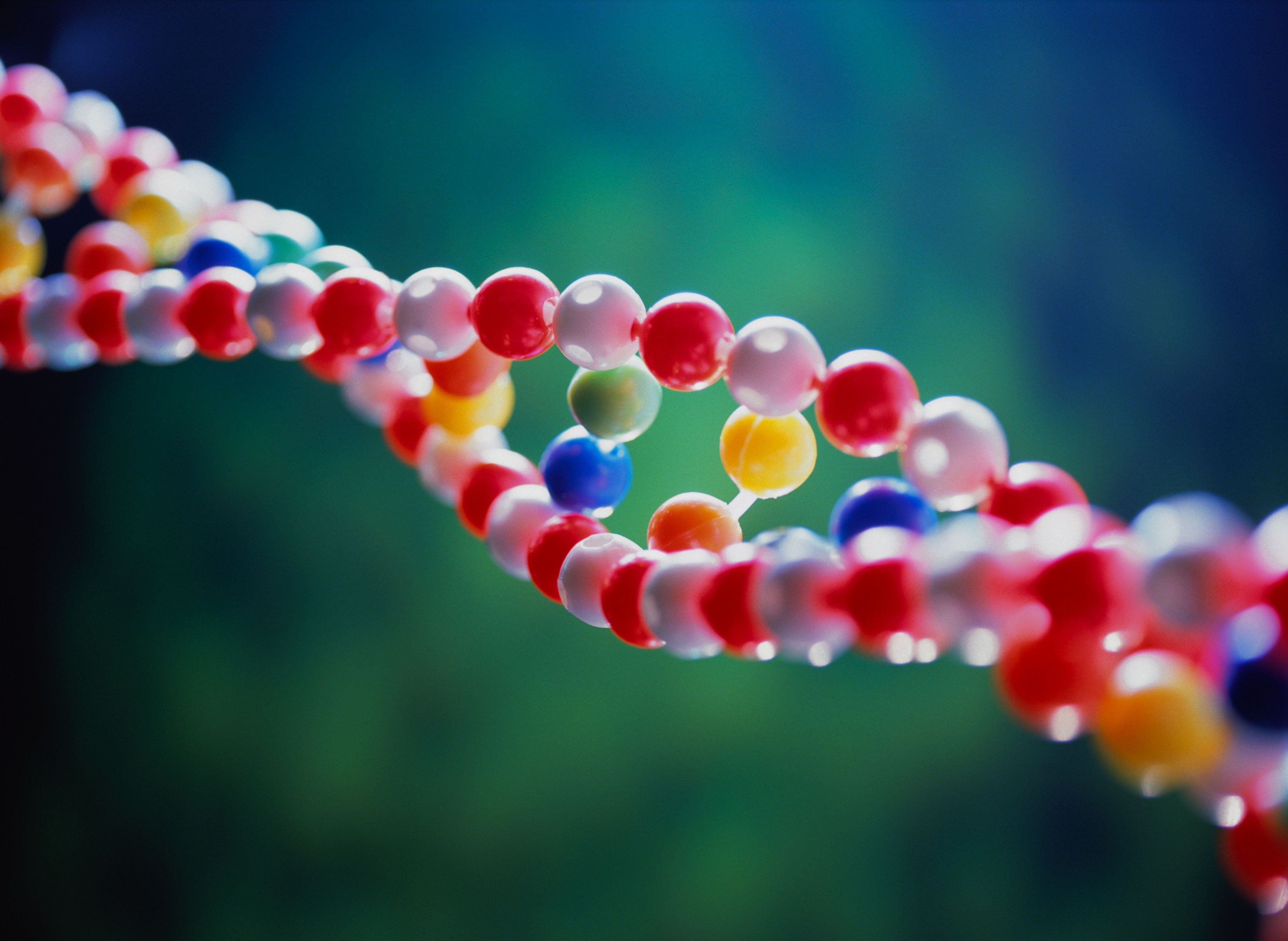


AATCATGGA

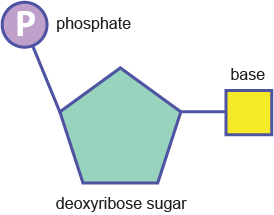


The picture below shows the steps of DNA replication beginning with step one and ending with step three. Because you are re-using the old (or parent) strand, DNA replication is said to be:
semi-conservative
semi-discontinuous
continuous
fully conserved
What is the name of the enzyme that unwinds the DNA?
Helicase
DNA polymerase
Ligase
RNA Polymerase
Match the nucleotide with its complementary nucleotide. (DNA to DNA)
Adenine bonds with:
Thymine
Cytosine
Guanine
Uracil
Match the nucleotide with its complementary nucleotide. (DNA to DNA)
Cytosine bonds with:
Thymine
Cytosine
Guanine
Uracil
Which enzyme is responsible for adding the free/new nucleotides to the replicating DNA?
Helicase
DNA Polymerase
Ligase
RNA Polymerase
Which is the first step in DNA Replication?
Helicase unzips the original DNA strand
DNA Polymerase builds new strands by bringing in new nucleotide bases.
RNA Primase lays down an RNA primer
Ligase seals the gaps between the fragments
DNA Polymerase changes the RNA primer to DNA nucleotides

T-G-A-C-C-A
T-G-A-G-C-A
The mutated DNA segment is TTACGCAAC. This is an example of ___ mutation.


ATG CCA AAT
ATG CCA AAT
Mutation: ATC GCAT
What mutation occurred?
The mutated DNA segment is TTCGCAAG. This is an example of ___ mutation.
The mutated DNA segment is TTCGCAAG. This is an example of ___ mutation.
Which enzyme is responsible for forming phosphodiester bonds between the Okazaki fragments?
Ligase
Helicase
DNA Polymerase 1
DNA Polymerase 3
Direction that DNA is replicated
3' to 5'
5' to 3'
Direction that DNA is READ?
3' to 5'
5' to 3'
The separation of the two single strands of DNA creates a ‘Y’ shape?
enzyme
unzip
A replication fork

Structure C is
helicase
primase
DNA polymerase III
gyrase

H is the
leading strand
lagging strand
parent strand
none of these

Structure G is
primase
gyrase
DNA polymerase III
DNA polymerase I

Replication is occurring AWAY FROM the replication fork on strand
I, the leading strand
I, the lagging strand
H, the leading strand
H, the lagging strand

This structure is an Okazaki fragment.
A
D
F
G

Built models to determine that DNA was a double helix shape with base pairs A-T and G-C in rungs between the sugar/phosphate backbone of DNA.
Watson & Crick
Franklin
Wilkins
Pauling
Chargaff

Worked on DNA imaging techniques and published Franklin's x-ray crystallography image of DNA
Watson & Crick
Franklin
Wilkins
Pauling
Chargaff

Provided clear x-ray crystallography images of DNA
Watson & Crick
Franklin
Wilkins
Pauling
Chargaff

One of the first scientists to use x-ray crystallography to observe DNA, hypothesized that there was a helix shape
Watson & Crick
Franklin
Wilkins
Pauling
Chargaff

Discovered that there was the same amount of A and T in a cell, and C and G in a cell.
Watson & Crick
Franklin
Wilkins
Pauling
Chargaff
Using x-ray diffraction to determine the structure of a crystal, such as DNA
x-ray crystallography
gas chromatography
chromatography
gel electrophoresis
A pair of parallel strands that twist together about an axis
nucleotide
double helix
base pair
esther bonds
basic structural unit of DNA. Examples: adenine, guanine, cytosine, thymine
nucleotide
phosphate
ribose sugar
enzyme
5 carbon sugars and phosphates linked together through chemical bonds to provide the structural framework for nucleotides
chromosome
nucleotide
phosphate-sugar backbone
enzyme
Base pairs (correctly matched)
A-G and C-T
A-C and G-T
A-T and G-C
C-A and T-G
made up of a long strand of DNA that is bonded to proteins in a way that makes them condense/fold to form chromosomes
genetics
chromosome
proteins
DNA
a piece of a chromosome that is composed of specific nucleotide sequences of DNA
chromatid
nucleotide
gene
circular DNA
REVIEW: when cells take in oxygen and glucose and convert them into water, carbon dioxide, and ATP energy
DNA synthesis
cellular respiration
breathing
photosynthesis
REVIEW: The property of water that allows for plants to carry water from the soil, through roots and stems, to leaves
pH (neutral, acidic, basic)
hydrogen bonding (adhesion, cohesion)
polarity (soluble, insoluble)
temperature (high heat capacity, solid water's density)

