
 Worksheets
Heat Test Review
Total questions: 51
Worksheet time: 23mins
Name
Class
Date
1.
Which of the following terms identifies the change from a liquid to gas?
a)
Vaporization
b)
Condensation
c)
Deposition
d)
Sublimation
2.
Which of the following terms identifies the change from a liquid to solid?
a)
Melting
b)
Condensation
c)
Vaporization
d)
Freezing
3.
When the temperature of matter increases the particles...
a)
speed up and move closer
b)
speed up and move farther apart
c)
slow down and move closer together
d)
slow down and move farther apart
4.
Definite shape and a definite volume.
a)
Gas
b)
Liquid
c)
Solid
5.
No Definite Shape and No Definite Volume
a)
Gas
b)
Liquid
c)
Solid
6.
No definite shape, but has a definite volume
a)
Gas
b)
Liquid
c)
Solid
7.
Phase change from a solid to a gas.
a)
sublimation
b)
deposition
c)
condensation
d)
evaporation
8.
Phase change from a solid to a liquid.
a)
melting
b)
sublimation
c)
boiling
d)
condensation
9.
When the temperature of matter increases the particles...
a)
speed up and move closer
b)
speed up and move farther apart
c)
slow down and move closer together
d)
slow down and move farther apart
10.
When the temperature of matter decreases the particles ...
a)
speed up and move farther apart
b)
speed up and move closer together
c)
slow down and move farther apart
d)
slow down and move closer together
11.
Phase change from a gas to a liquid.
a)
condensation
b)
evaporation
c)
melting
d)
deposition
12.
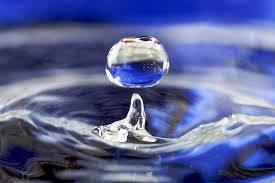
Which state of matter has molecules that slide past each other but stay close together? They do not form a regular pattern.
a)
solid
b)
liquid
c)
gas
13.
The phase change from water vapor to liquid water is known as...
a)
evaporation
b)
precipitation
c)
condensation
d)
sublimation
14.
5. What is it called when a solid turns directly into a gas?
a)
Sublimation
b)
Condensation
c)
Liquid
15.
Change from gas to liquid...
a)
condensation
b)
evaporation
c)
expansion
d)
movement
16.
Change from Liquid to Solid is call......
a)
fusion
b)
Freezing
c)
sublimation
d)
evaporation
17.
change from liquid to gas is called....
a)
expansion
b)
evaporation
c)
condensation
d)
sublimation
18.
All changes in the state of matter of a substance requires
a)
vibration
b)
water
c)
permission
d)
energy
19.
What happens to particles when they are heated?
a)
They speed up and spread out
b)
They slow down and compress
c)
They stop moving
d)
They move closer together and speed up
20.
Boiling is ...
a)
liquid to gas
b)
gas to solid
c)
gas to liquid
d)
solid to liquid
21.
Water has a specific heat of 4184 J/KgºC. Wood has a specific heat of 1760 J/KgºC. What material needs more energy to raise the temperature 1ºC
a)
Wood
b)
Water
c)
Both are the same
22.

Copper, Stainless Steel, Carbon Steel, and Zinc were all heated using the same thermal energy. What material would be the coolest after being heated?
a)
Copper
b)
Carbon Steel
c)
Zinc
d)
Stainless Steel
23.
What does temperature measure?
a)
Heat
b)
ºC
c)
Kinetic Energy
d)
Thermal Energy
24.
How does heat flow?
a)
Always from cold to warm
b)
Always from warm to cold
c)
Both warm to cold & cold to warm
d)
It depends on the temperature
25.
What is the formula to calculate heat energy required to raise the temperature of any substance?
a)
Q=mc∆t
b)
Q=mc
c)
Q= ½mv
d)
m=QC
26.

There are four cups of hot cocoa. The cup sizes are shown. The temperature of the cocoa in each cup is 25 degrees celsius. Which cup has the MOST thermal energy?
a)
Large cup (Trenta)
b)
Small cup (Tall)
c)
Venti
d)
All three are the same temperature so they have same thermal energy
27.
The specific heat is the amount of energy needed to raise the temperature one degree Celsius of a substance.
a)
True
b)
False
28.

What would be the effect on the particles if more heat is supplied to the system?
a)
They would slow down
b)
They would stop moving
c)
They would speed up
d)
There would be no effect
29.
Which has a higher specific heat capacity, water or sand?
a)
Sand
b)
Water
c)
They both have the same specific heat capacity.
30.
What is thermal equilibrium?
a)
When two objects are at rest at the same time.
b)
When two or more objects reach a common temperature.
c)
When two objects have the same specific heat.
31.

The faster molecules move,
a)
the higher the temperature
b)
the less temperature
c)
the same temperature
d)
I don't know
32.
What has a higher specific heat?
a)
Plastic Bowl
b)
Copper Wire
33.
What has a higher specific heat?
a)
Rubber Tire
b)
Metal Key
34.
Conductors have ___________ specific heat.
a)
low
b)
high
35.
Insulators have ___________ specific heat.
a)
low
b)
high
36.
What has a higher specific heat?
a)
Metal Spoon
b)
Wooden Spoon
37.
Water has a specific heat of 4.18 J/gºC. Wood has a specific heat of 1.76 J/gºC. What material needs more energy to raise the temperature 1ºC
a)
Wood
b)
Water
c)
Both are the same
38.

Which direction will the heat flow while this person holds a hot cup of tea?
a)
from the cup to her hand
b)
from her hand to the cup
c)
no heat is transferred
39.

Which direction will the heat flow while this ice cap melts?
a)
there is no heat transfer
b)
from the icecap to the water
c)
from the water to the icecap
40.
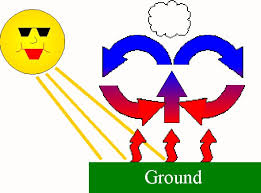
Warm air rises and the cool air sinks.
a)
conduction
b)
convection
c)
radiation
41.

In this experiment, the WARM red dye and the COLD blue dye was placed in the water at the same time. The warm red dye rose to the top while the cold blue dye sank to the bottom.
a)
conduction
b)
convection
c)
radiation
42.
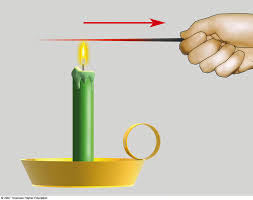
The candle will slowly heat the metal and transfer the heat directly to the mans hand.
a)
conduction
b)
convection
c)
radiation
43.

The chocolate bunny and the blow dryer.
a)
conduction
b)
convection
c)
radiation
44.
Poor conductors like wood and plastic are called:
a)
conductors
b)
insulators
c)
burners
45.
What is the definition of CONDUCTION?
a)
When heat is transferred from objects like rays of light or electromagnetically.
b)
a hot liquid or air that expands, becomes less dense, and rises or becomes more dense, and sinks.
c)
When heat transfers from objects that are touching.
d)
When heat transfers through the heater or AC in your house.
46.

What happens when ice cubes melt in a glass?
a)
Heat travels from the ice to the warmer water.
b)
No energy is transferred.
c)
Heat is transferred from the warmer water to the ice cubes.
d)
The water warms up due to the humidity
47.
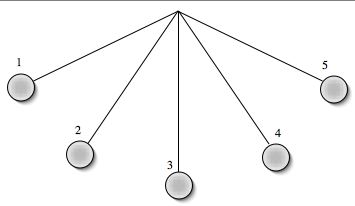
When a pendulum swings, at which point is kinetic energy highest?
a)
1
b)
2
c)
3
d)
4
48.
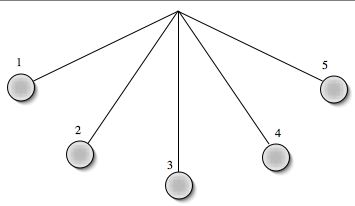
When a pendulum swings, at which point is potential energy at its greatest?
a)
1
b)
2
c)
3
d)
4
49.
__________ energy is the energy of motion.
a)
Light
b)
Sound
c)
Kinetic
d)
Chemical
50.
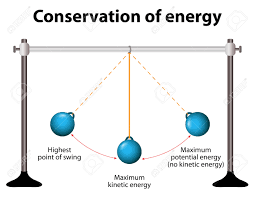
Conservation of energy states that energy cannot be ________ or ________, but can be altered from one form to another.
a)
created, destroyed
b)
gravity, force
c)
heat, created
51.
What are the two factors that affect kinetic energy?
a)
time and energy
b)
power and mass
c)
mass and speed
d)
time and work
100 %

