
NEW
Font size
 Worksheets
Ch. 3 Review
Total questions: 50
Worksheet time: 1hrs 10mins
Which zone would support the greatest diversity of coral reef ecosystems?
abyssal zone
photic zone
aphotic zone
intertidal zone
Which explains why secondary succession generally occurs more rapidly in an area than does primary succession?
Average precipitation is higher
Moderate climatic conditions exist
Pioneer species are microscopic
Soil formation has already occurred
Which ecosystem has the greatest biodiversity?
bog
estuary
marsh
swamp
Conifer trees dominate boreal forests rather than tundra because of _______________.
a lack of permanently frozen soil.
direct rays of light hitting the biome.
mild climatic and weather conditions.
the absence of better adapted trees.
Which explains why few animal species live in a fast-flowing river?
Cold water lowers dissolved oxygen levels.
Currents prevent accumulation of most organic matter.
Few animals are adapted to withstand the high-speed water.
Frothing water reflects sunlight away from autotrophs.
Which defines a biome as a desert?
a region of few or no trees
annual rainfall less than 10 cm/year
area with no organic matter in soil
rate of evaporation is higher than precipitation
All the populations living in a pond would be an example of a(n) __________________________.
biome
organisms
biological community
biosphere
Heavy precipitation, high winds, and a temperature of 15⁰C on a mountaintop is an example of ___________________________.
climate
weather
The location of the greatest percentage of liquid freshwater is ________________________.
locked in glaciers
in lakes and rivers
underground
Trees cannot take root in tundra biomes because of the existence of ___________________.
mosquitoes
permafrost
herbivores
The terrestrial biome with greatest biodiversity is a(n) __________________.
desert
tundra
tropical rain forest
temperate grasslands
Temperate forest plant life is dominated by _____________.
conifer trees
grasses and shrubs
deciduous trees

Hypothesis the possible behaviors of a school of steelhead trout in water with a temperature of 10 o C.
The trout would be abundant and swim normally
The trout would show signs of physiological stress, including erratic swimming, drifting to the bottom, or floating upside down.
Primary succession occurs in an area that has:
Has Soil
Has No Soil
Has Some Soil
none of these
___ are the first organisms to colonize an area and begin the process of ecological succession.
foundational organisms
introductory organisms
primary organisms
pioneer species
What is the main difference between primary and secondary ecological succession?
Primary begins WITHOUT soil; Secondary begins WITH soil
Primary is the first state and secondary is the second stage
Primary builds plant community; secondary builds animal community.
Primary begins WITH soil; Secondary begins WITHOUT soil
Which of the following is the correct order of ecological succession?
grass - shrubs - lichens - trees
lichens - shrubs - grasses - trees
lichens - grasses - shrubs - trees
grasses - lichens - shrubs - trees
All of the following contribute directly to soil formation EXCEPT
lichens
decomposition of organisms
volcanic eruptions
erosion of rock by weather
Which is faster: Primary or Secondary Succession?
Primary Succession
Secondary Succession
Both Take The Same Amount of Time
Which of the following is NOT a pioneer species?
Shrubs
Lichen
Mosses
Fungi

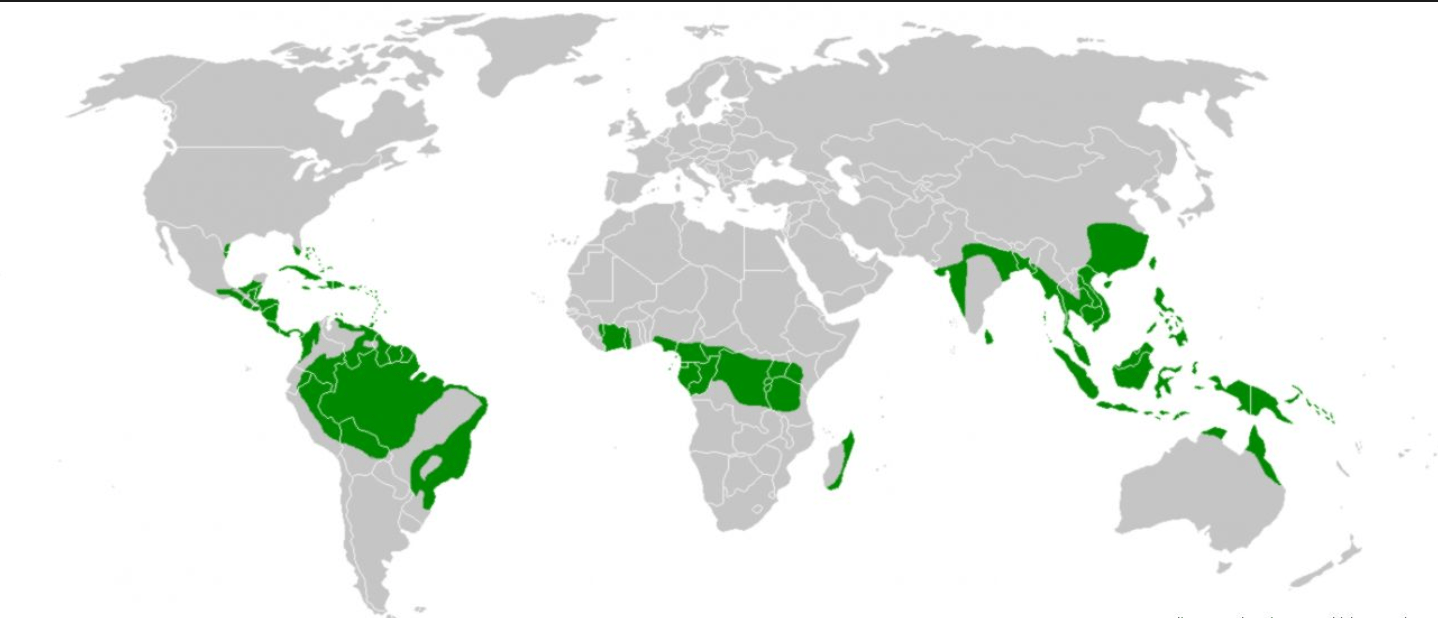
Which biome covers most of the land mass near Earth's equator?
tundra
desert
grassland
tropical rainforest

Which biome contains large populations of grazing herbivores, like cows and bison, few species of birds, and deep, rich soil but few trees?
taiga
tundra
deciduous forest
grassland

Which biome has deciduous trees (that lose their leaves in the fall)?
Temperate Forest
Rainforest
Grasslands
Taiga

Which biome has 4 seasons?
Taiga
Tundra
Tropical Rainforest
Temperate Forest

Which biome is home to cacti, scorpions, coyotes, kangaroo rats, and lizards?
Desert
Grasslands
Temperate Forest
Taiga

lichens, mosses, grasses, and other low-growing plants are common vegetation in this biome due to the permafrost, low rainfall, and very cold temperatures.
Desert
Taiga
Tundra
Grasslands
What term describes the living parts of an ecosystem?
Biotic Factors
Abiotic Factors

What are the 2 types of aquatic biomes?
rivers and streams
lakes and oceans
marine and fresh water
marine and oceanic

_________ is the amount of salt dissolved in water.
Temperature
Salinity
Nutrients
Pressure

These man-made structures are a threat to river ecosystems
dams
satellites
solar panels
none of these

The area of an aquatic ecosystem that is near shallow, near shore, & has an abundance of sunlight & wildlife
benthic zone
littoral zone
limnetic zone
sunlight zone

What aquatic biome is characterized by flowing fresh water?
Lakes/Ponds
Mangroves Swamps
Rivers/Streams
Coral Reefs

From the surface to the deepest, which is the correct position of the 3 zones of lakes and ponds?
Littoral , Profundal, Limnetic
Profundal, Limnetic, Littoral
Profundal, Littoral, Limnetic
Littoral, Limnetic, Profundal
Freshwater biomes contain less than __% salt.
1%
2%
3%
4%
Marine biomes are made up of more than ____% salt.
1%
2%
3%
4%
This is the largest biome.
Grasslands
Tundra
Desert
Aquatic
True or False? The presence of sunlight is considered an abiotic factor in marine ecosystems.
True
False

