NEW
Font size
 Worksheets
Unit 2 Test Review
Total questions: 36
Worksheet time: 21mins
If a molecule of water passed through the cell wall, which cell structure would it encounter next in order to enter the cell?
Nucleus
Cell Membrane
Cell Wall
Ribosome
Which cellular structure in an animal cell helps maintain homeostasis by controlling the transportation of substances into and out of the cell?
Flagella
Nucleus
Cell Membrane
E.R.
Which molecules form the bilayer of the cell membrane?
Phospholipid Bilayer
Nerves
Proteins
Cholesterol
Which is a rigid structure that protects plant cells and helps them keep their shape?
Cell Membrane
Cell Wall
Cytoskeleton
Brain
Which organelle contains chromosomes
DNA
RNA
Nucleus
Nucleous
Scientists discover a fossilized cell. While analyzing the cell, they find an organelle that has a double membrane and contains genetic material. Which cell organelle have they most likely found?
Skin
Nucleus
Protein
Ribosome

Which number synthesizes proteins?
1
2
3
4

The more squiggly lines (surface area) increases what?
Energy
Power
Love
Sense
Which organelles are most helpful in distinguishing between plant and animal cells?
cell wall and cell membrane
cell membrane and nucleus
chloroplast and cell wall
chloroplast and vacoule
How are eukaryotic and prokaryotic cells similar?
Both types of cells contain ribosomes.
Both types of cells contain mitochondria.
Both types of cells have linear DNA.
Both types of cells contain a nucleus.
Which cell types will most likely communicate using electrical charges?
Stem cells
Nerve Cells
Brain Cells
Lung Cells
Some tissues can be successfully transplanted in humans to treat various medical conditions. Which tissue is transplanted specifically to replace human stem cells?
Bone Marrow
Skin
Heart
Cornea
Which cell is undifferentiated? Hint: It can become any cell.
Start Cell
Stem Cell
Smart Cell
Nerve Cell
An organism’s ability to maintain balance and stability within its vital internal systems is best referred to as what process?
Homeostasis
Mitosis
Meiosis
Photosynthesis

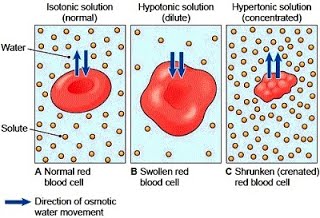
Which will shrink?
1
2
3
4
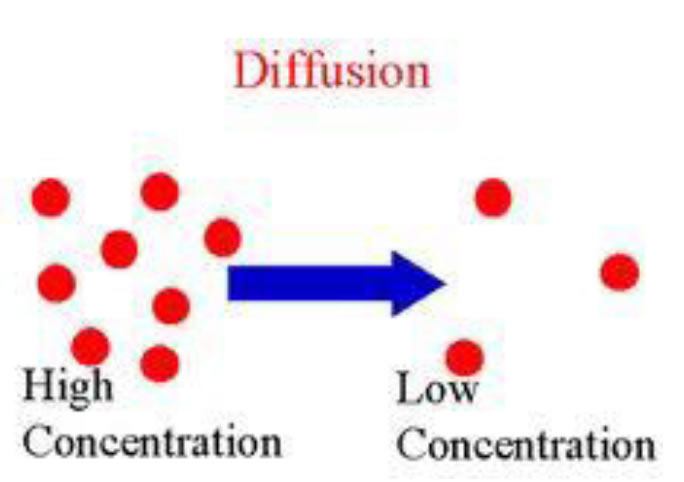
Which process moves an ion across a cell membrane against the concentration gradient? Hint: Low to High
Active
Passive
Endocytosis
Exocytosis

Hypertonic
Isotonic
Hypotonic
None
Which is a difference between active and passive transport?
Active transport requires ATP, while passive transport does not.
Cells only carry out active transport when they need to move, while passive transport occurs constantly.
Eukaryotes are capable of active transport, while prokaryotes are capable of passive transport.
Cells with mitochondria carry out active transport, while cells without mitochondria carry out passive transport.
Which could be used to represent the plasma membrane’s job?
a gatekeeper allowing cars in and out of a parking lot
a nuclear power plant producing energy
a high school principal running a school
a farmer growing crops
A freshwater plant is placed in a container of saltwater. What will most likely happen to the cells of the plant?
They will shrink because salt will move out of them.
They will shrink because water will move out of them.
They will swell because salt will move into them.
They will swell because water will move into them.
Which will most likely happen if a freshwater plant cell is placed in a beaker of salt water for an hour?
It will lose water and shrink.
It will swell and burst.
It will use energy and pump extra salt out of the cell.
It will reach a state of equilibrium.
What will happen to a cell that is placed in a hypotonic saline solution?
Water will enter the cell causing it to swell.
Water will exit the cell causing it to shrink.
Salt will exit the cell causing it to shrink.
Salt will enter the cell causing it to swell.