
 Worksheets
World History Midterm Review
Total questions: 86
Worksheet time: 2hrs 36mins


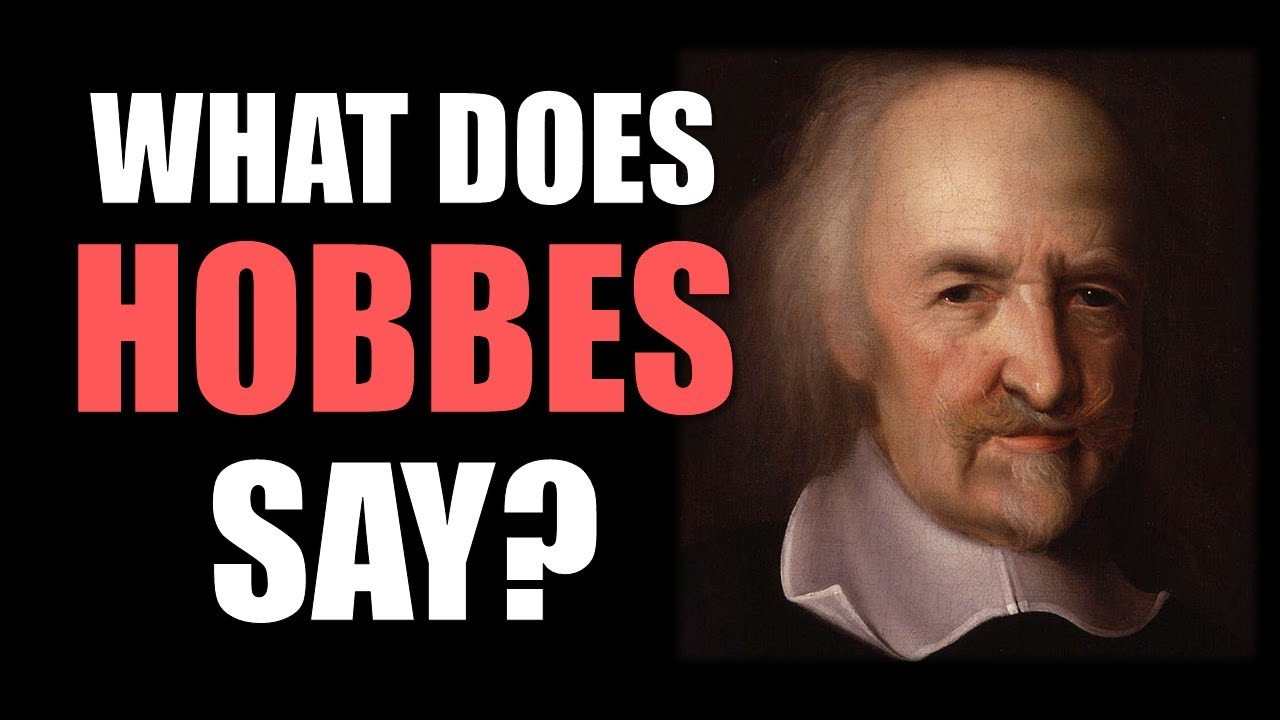


Father of Capitalism
Adam Smith
Adam Samson
Smith Adam
John Locke

They needed a tax collector
That they had no voice in Parliment
That they wanted their tax check
That Parliament had heard them
"We hold these truths to be self-evident, that all men are created equal, that they are endowed, by their Creator, with certain unalienable Rights, that among these are Life, Liberty, and the pursuit of Happiness."
- What document is this from?
Proclamation of 1763
Bill of Rights
Declaration of Independence
The Preamble to the Constitution

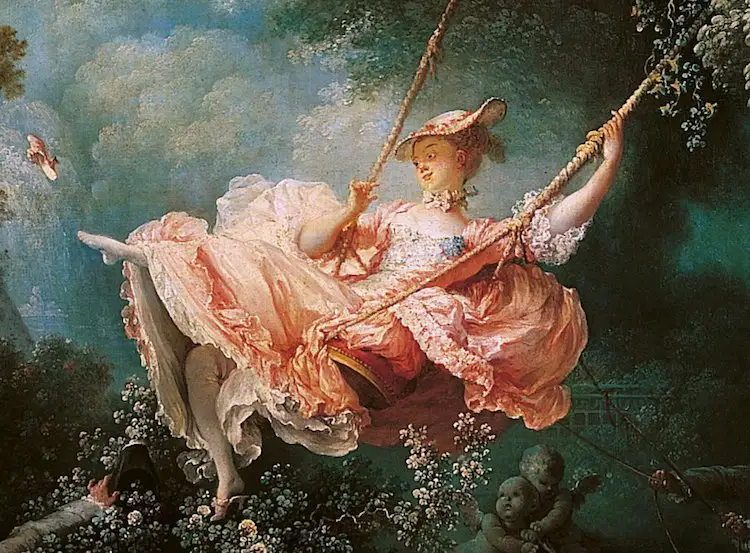
Rococo
Cubism
Baroque
Impressionism

Elegant compositions by Handel, Haydn, and Mozart reflected a new musical style of the Enlightenment known as
romantic
classical
baroque
folk


"No Taxation without Representation."
What does this mean?

This painting is an example of what artistic style?
Renaissance
Baroque
Rococo
Reformation
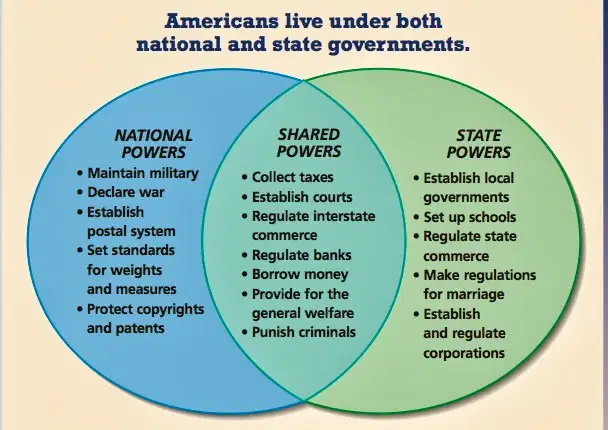
The principle of the United States government illustrated in this Venn diagram is
Federalism
Socialism
Republicanism
Confederation


What pamphlet was written by Karl Marx and Friedrich Engels that describes a radical form of socialism called Marxism?
The Communist Manifesto
The Wealth of Nations
The Social Contract
The Encyclopedia

What type of engine was invented by James Watt?
Gasoline Engine
Steam Engine
Coal Engine
Locomotive

What are identical components that can be used in place of each other?
Interchangeable parts
Factories
Dynamos
Assembly Lines

Who invented a process to mass produce steel?
Abraham Darby
Henry Bessemer
Andrew Carnegie
James Watt
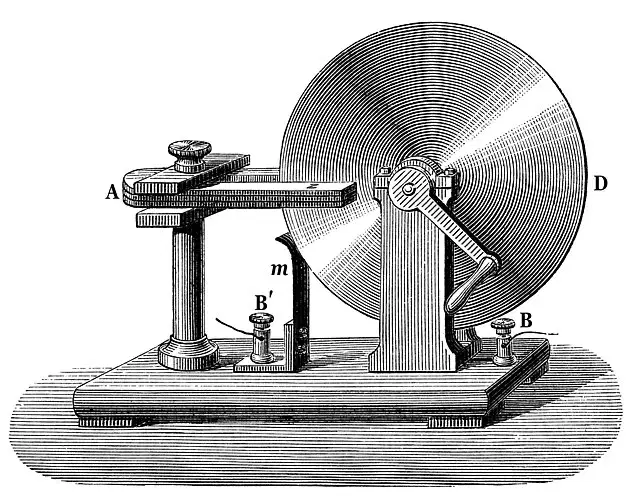
Who invented the electric generator known as a dynamo
Michael Faraday
Nikola Tesla
Nikolas Otto
Thomas Edison
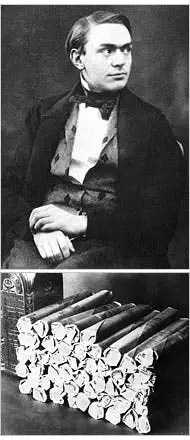
Who invented dynamite?
Guglielmo Marconio
Alfred Nobel
Nicola Tesla
David Fariday

What invention made the automobile and the airplane possible?
movable parts
the dynamo
internal combustion engine
the steam engine

What is the idea that society should be the greatest happiness for the greatest number of citizens is called?
Utopia
Utilitarianism
Socialism
Dynamo
Louis Pasteur
David Ricardo
Charles Darwin
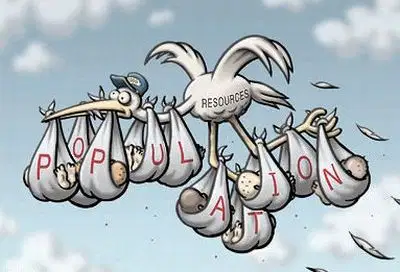
Thomas Mathlus
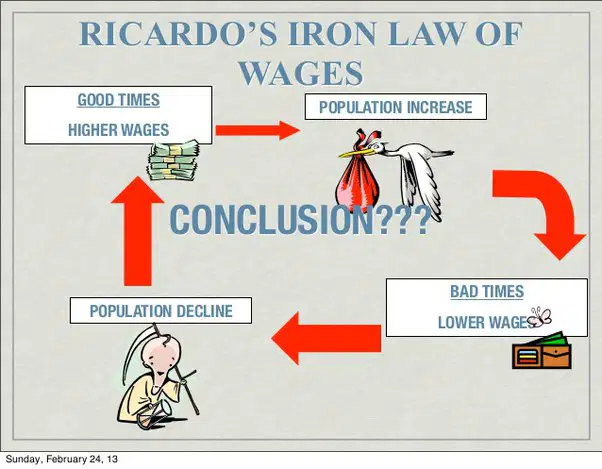
According to his “Iron Law of Wages” wage increases will not raise the standard of living of poor families.
Adam Smith
Karl Marx
David Ricardo
Jeremy Benthem

What is the name for the working class during the Industrial Revolution?
darwinist
proletariat
communist
dynamo
Corporations
Shares of a company sold to investors for needed capital to produce and use new technology.
People employed in an organization or engaged in an organized undertaking such as military service.
The people engaged in or available for work, either in a country or area or in a particular company or industry.
Businesses that are owned by many investors who buy shares of stock.
Which of the following statements best illustrates the idea of laissez-faire capitalism?
The government should pass laws to protect the workers.
Private property will cease to exist. The people will own the means of production.
The workers will rise up and overthrow the privileged class.
Government should not interfere in relations between workers and business owners.

The painting seen here is an example of
impressionism
postimpressionism
expressionism
romanticism

Claude Monet's paintings are an example of the artistic movement known as
impressionism
postimpressionism
expressionism
romanticism
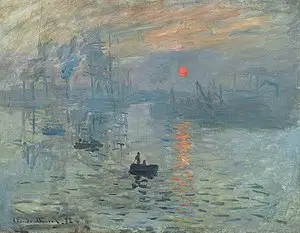
What invention caused artists to turn from realism and embrace impressionism?
the telescope
the microscope
the light bulb
the camera

Mary Shelly's book Frankenstein is an example of the literary movement known as
Realism
Expressionism
Impressionism
Romanticism
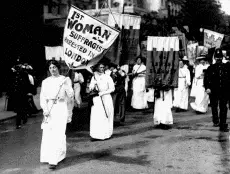
The women in this photograph are protesting
against child labor
for better working conditions
for the right to vote
against women's suffrage

Charles Darwin’s book, On the Origin of Species, was controversial because it
justified withholding welfare from the poor.
differed from the creation story in the Bible.
suggested there were patterns among elements in the periodic table.
stated that all human diseases could be cured.

He discovered that a microbe can change over time and become harmful.
Jacob Lister
Florence Nightingale
Louis Pasteur
Robert Koch

What group of people does the man on the right in this diagram represent?
welfare recipients who are too lazy to work
workers who don't have enough money to go on vacation
employees who work at home
a member of a labor union who has gone on strike

This British doctor and missionary who explored Africa for 30 years believed that the way to end the slave trade was to open up the interior of Africa to Christianity and trade.
Mungo Park
David Livingston
Henry Stanley
Richard Burton

Use the political cartoon and your knowledge of Social Studies to answer the question below.
What was the primary cause of the Opium Wars?
China was upset because Britain refused to sell them Opium.
Britain was upset because China outlawed the Opium trade.
Britain stopped buying Chinese tea.
The Chinese emperor threatened to invade India

Which statement best reflects an effect of Imperialism in Africa?
Land was distributed equally between social classes.
Territorial divisions were primarily established using tribal boundaries.
Timbuktu became the center of great learning.
Natural resources were exploited for the benefit of European powers.

All of the headlines above refer to-
Causes of the Boer War
Motives for Imperialism
Actions of Nationalism
Effects of the Crimean War


What does the phrase "White Man's Burden: in this excerpt refer to?
The belief that Europeans had a duty to "civilize" primitive people.
The challenge of opening up trade with remote regions.
The advantage non-Europeans would gain by trading with Europeans.
The idea that bigger, stronger Europeans could carry more baggage.


Both were led by rich, upper class citizens
Both were led by the government
Both resisted foreign influence over their nation
Both welcomed foreign control by the West

What is Social Darwinism?
Survival of the fittest in society
The idea that some races are better than others
The idea that you need to "civilize" other cultures
all of these options


Which of the following best accounts for the European influence on Africa by 1914?
European countries that were the first to explore Africa in the fifteenth and sixteenth centuries became the most dominant in Africa by 1914.
European countries that were the first to industrialize came to dominate Africa by 1914.
European countries that had republican and democratic governments were less likely to dominate Africa than countries with more authoritarian regimes.
European countries that were strongly influenced by national churches were most likely to dominate Africa for missionary purposes.

This cartoon suggests that political power is often acquired through
the inheritance of land
market demands
religious conversion
the use of technology

This cartoon represents a contemporary characterization of which of the following?
Germany plans to dominate Africa after its unification
a satire on Italy’s inability to win an African colony
British designs for a Cape-to Cairo connection in Africa
an endorsement of the “White Man’s Burden”
The Boers were descendants of
Watusi nomads, who had been driven south by German colonists.
the original Dutch settlers of Cape Town and the surrounding areas.
the indigenous Zulu peoples of South Africa.
German colonists who pushed the Zulu peoples out of Nigeria.


The Zulu leader in the early 1800s who created a strong kingdom by subduing several neighboring peoples. As a result, the Zulu kingdom resisted colonization for over 50 years.
Menelik II
Emperor Meiji
Leopold II
Shaka

What is Spheres of Influence?
Replacing local leaders with foreigners
Putting local leaders in charge (with guidance from foreigners)
Region in which the economic interests of a foreign country outweigh that of the country they are in
Removing the government and having anarchy

Why did Great Britain wish to control the Suez Canal?
Control of the Suez Canal provided ships quicker access to the Indian Ocean from Europe.
Control of the Suez Canal gave Great Britain control of the Silk Road to India and China.
Control of the Suez Canal provided a solution to the irrigation problems in northern Africa.
Control of the Suez Canal allowed Great Britain to make allies of African nations.

How did many native Africans provide resistance to European Imperialism?
Ethnic groups such as the Asante and Zulu often engaged in military skirmishes with European settlers.
Ethnic groups sponsored local elections to make South Africa an independent nation.
Ethnic populations such as the Aztecs and Mayans chased out the Spanish conquistadors.
Ethnic populations developed new weaponries to conquer British forces.

Tensions in the Ottoman Empire between Turkish nationalists led to genocide of this ethnic group.
Algerians
Egyptians
Armenians
Turks

Which of the following is the best example of imperialism?
France building a powerful navy.
England's alliance with France.
German schools teaching English.
England and Germany competing for colonies.

What name is used for the U.S. policy towards China that Secretary Hay negotiated ?
Open Door
Square Deal
Good Neighbor
Manifest Destiny

Why was Japanese rule unpopular in Korea?
The Japanese brought modern transportation systems to Korea
The Japanese allowed all Koreans to vote in elections
The Japanese imposed feudalism on Korea
The Japanese imposed harsh rule and set out to erase the Korean culture and language

Why did the Japanese turn away from the Shogun, returning power to the Emperor in the Meiji Restoration?
Japan's army was defeated by the Americans, who conquered Japan
Japan's military was defeated by the Russians, driving the Japanese out of Korea
The Shogun was unable to avoid giving in to the Americans in the Treaty of Kanagawa
The forces of the Emperor defeated the Shogun's supporters in a coup


Commodore Matthew Perry’s visits to Japan in 1853 and 1854 resulted in the
colonization of Japan by the United States
transfer of spheres of influence to China
introduction of Christianity to Japanese society
opening of trade and diplomatic relations with Japan

Which European country did Japan defeat in war in the early years of the 20th century?
Germany
Britain
France
Russia


The Japanese added Taiwan to their Empire after defeating the China in the Sino-Japanese War. Which number represents Taiwan?
1
2
3
4

