wayground logo

Free Printable Worksheets

NEW

Font size

S
M
L
XL
Worksheets

Atoms/Periodic Table

Total questions: 40

Worksheet time: 1hrs 27mins

Name
Class
Date
1.
The positive particles of an atom are 
a)
electrons 
b)
positrons 
c)
neutrons 
d)
protons 
2.
Particles in an atom that are neutral and have no charge are 
a)
negatrons 
b)
electrons 
c)
neutrons 
d)
protons 
3.
An atoms overall charge is 
a)
positive 
b)
depends on its mood 
c)
neutral 
d)
negative 
4.
all matter is made of what 
a)
energy 
b)
atoms 
c)
electrons 
d)
compounds 
5.
If an atom has 3 electrons, how many protons does it have?
a)
1
b)
2
c)
4
d)
3
6.
The subatomic particle with a negative charge is the
a)
electron
b)
proton
c)
neutron
d)
nucleus 
7.
If the number of protons equal the number of _____, the atom will have no charge
a)
protons
b)
neutrons
c)
electrons
d)
nucleus
8.
What is the atomic number?
a)
the number of protons
b)
the number of protons and neutrons
c)
the number of neutrons
d)
the number of protons and electrons
9.
What is the mass number?
a)
the number of protons
b)
the number of protons and neutrons
c)
the number of neutrons
d)
the number of protons and electrons
10.
Ions are: 
a)
atoms with a positive or negative charge
b)
atoms with no charge
c)
atoms with ONLY a positive charge
d)
atoms with ONLY a negative charge
11.
Two atoms of the same element but with different mass numbers are called________
a)
electrons
b)
isotopes
c)
variables
d)
electron cloud
12.
How many neutrons does the isotope of lithium have?
a)
8
b)
3
c)
4
d)
5
13.

Which particles are included in the center of an atom?

a)

protons and electrons

b)

electrons and neutrons

c)

protons and neutrons

14.

The number of _______________ determines the atomic number.

a)

protons

b)

electrons

c)

neutrons

15.

What particles are found on the outside of an atom?

a)

protons

b)

neutrons

c)

electrons

16.

Which particle has a positive charge?

a)

neutron

b)

proton

c)

electron

17.

Which particle has no charge?

a)

neutron

b)

proton

c)

electron

18.

Which particle has a negative charge?

a)

electron

b)

proton

c)

neutron

19.

What should the number 8 be labeled as?

a)

Atomic Number

b)

Element Name

c)

Element Symbol

d)

Atomic Mass

20.

What should "Oxygen" be labeled as?

a)

Atomic Number

b)

Element Name

c)

Element Symbol

d)

Atomic Mass

21.

What should "O" be labeled as?

a)

Atomic Number

b)

Element Name

c)

Element Symbol

d)

Atomic Mass

22.

What should 15.999 be labeled as?

a)

Atomic Number

b)

Element Number

c)

Element Symbol

d)

Atomic Mass

23.

What is the atomic number for Manganese?

a)

25

b)

55

c)

20

d)

60

24.

What is the atomic mass for Manganese?

a)

25

b)

54.938

c)

20

d)

22

25.

What is the element symbol for Manganese?

a)

Mg

b)

Mn

c)

M

d)

Me

26.
The symbol for Carbon is
a)
6
b)
12.011
c)
C
d)
Ca
27.
Beryllium has how many protons?
a)
4
b)
9.0122
c)
2
d)
13.0122
28.
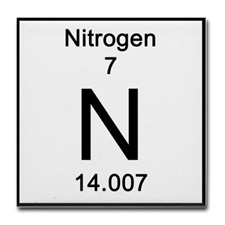
What is the number of protons that the element in this image contain?
a)
14
b)
7
c)
15
d)
18
29.
Atoms make up, what?
a)
Everything living and nonliving
b)
Energy
30.
What is the atomic mass of "F"
a)
9
b)
18
c)
17
d)
19
31.

What is the number of protons that the element in this image contain?

a)

14

b)

7

c)

15

d)

18

32.

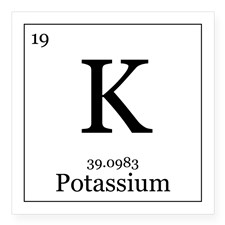
How many neutrons are in the atom "K"?

a)

7

b)

2

c)

39

d)

20

33.
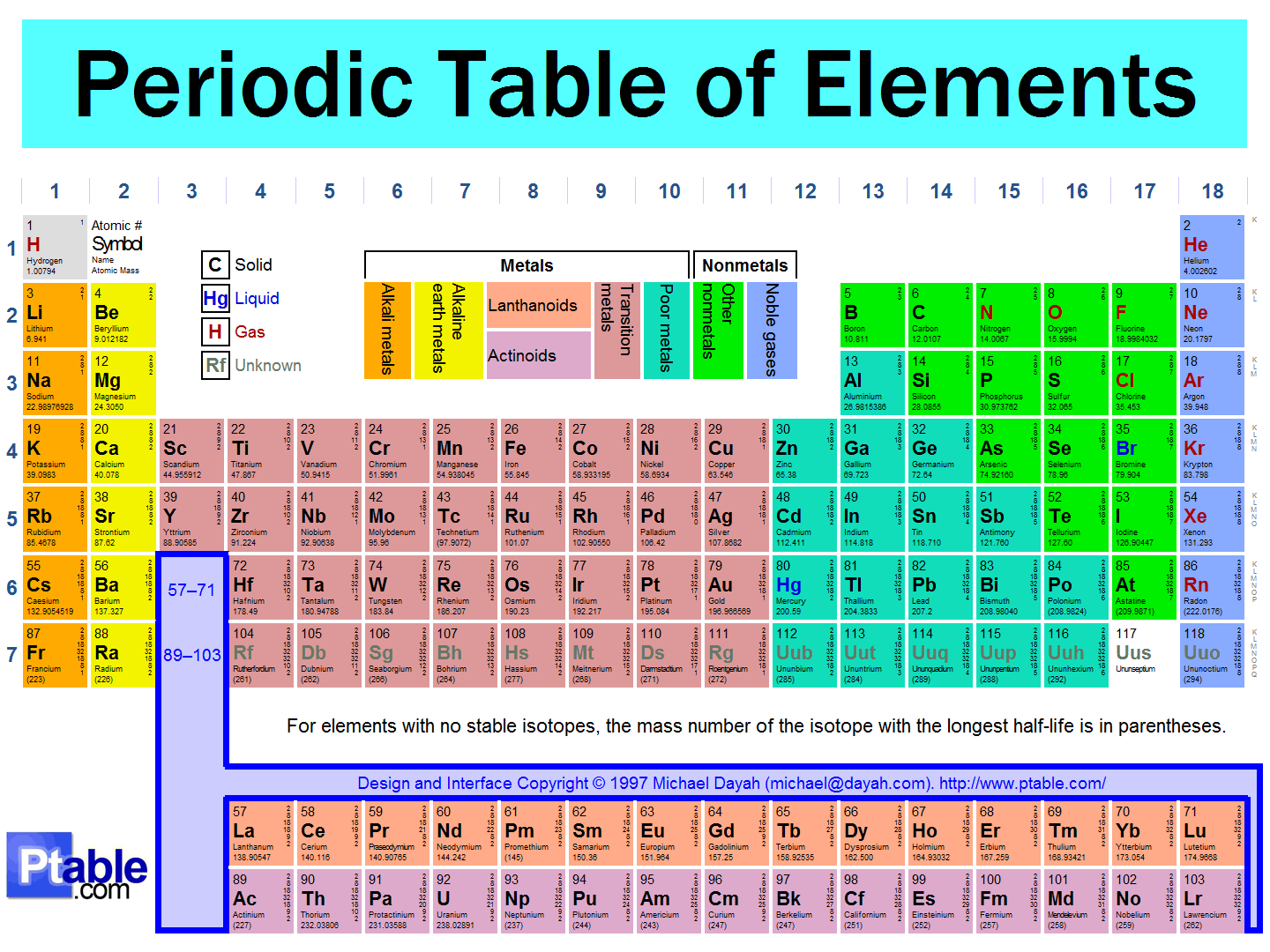
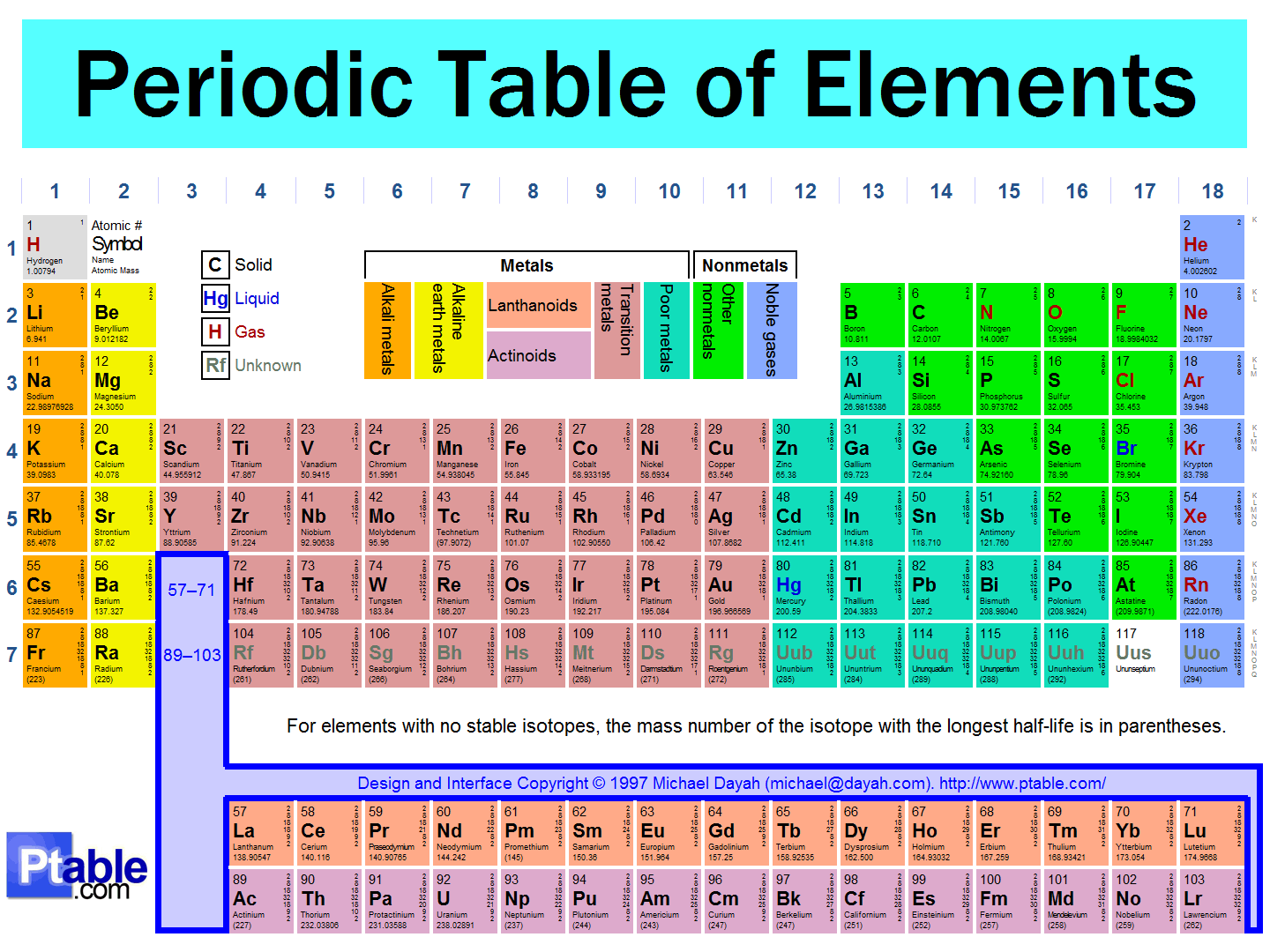
The horizontal row on the periodic table is called a
a)
group
b)
family
c)
period
d)
atomic number
34.
A vertical column is called...
a)
group
b)
tower
c)
period
d)
crew
35.
The yellow atoms are called 
a)
metals
b)
nonmetals
c)
metalloids
d)
noble gases
36.
In the modern periodic table elements are arranged by:
a)
atomic mass
b)
atomic number
c)
valence electrons
d)
number of isotopes
37.
Each column in the periodic table is called a 
a)
period
b)
group
c)
cluster
d)
unit
38.
Group 18 elements are known as the _____ _____ and have full valence shells.
a)
royal gases.
b)
supreme solids.
c)
noble gases.
d)
legit liquids.
39.
Which elements have the most similar chemical properties?
a)
K and Na
b)
K and Ca
c)
K and Cl
d)
K and S
40.
The elements in this group only have 1 valence electron and include Li, Na, and K. 
a)
Group 11
b)
Group 1
c)
Group 3