wayground logo

Free Printable Worksheets

NEW

Font size

S
M
L
XL
Worksheets

Protists, Plants, and Porifera

Total questions: 51

Worksheet time: 30mins

Name
Class
Date
1.
What is the part of the sponge that allows water to enter?
a)
Ostia
b)
Mesenchyme
c)
spongocoel
d)
osculum
2.
Which part of the sponge body is a large opening at the top of the central cavity through which water leaves the sponge?
a)
Ostia
b)
Meenchyme
c)
Spongecoel
d)
Osculum
3.
Sponges eat by
a)
bottom feeding
b)
filter feeding particles from the water
c)
scaveging
d)
they don't eat
4.
The ability of a sponge to regrow lost parts is called
a)
regeneration
b)
budding
c)
somatic embryogenesis
d)
autotrophism
5.
Because sponges cannot move around they are considered ______. 
a)
sessile
b)
senile
c)
sedementary
d)
spongin
6.
Sponges feed by ______ particles out of the water column as it passes through their pores. 
a)
filtering
b)
suspending
c)
consuming
d)
eating
7.
cells have sticky, funnel-shaped collar to collect food particles and a flagellum that creates a water current
a)
amoebocyte
b)
ostiocyte
c)
pinacocyte
d)
choanocyte
8.
skeleton structures made of silica or calcium carbonate 
a)
spicules
b)
spongin
c)
sessile
d)
something
9.
Asexual sponge reproduction where a piece of the adult sponge breaks off and settles in a new area growing to adulthood.
a)
broadcast spawning
b)
branching
c)
budding
d)
forcast spawning
10.
Which of the following is the correct description of how Porifera get food?
a)
They hunt and capture prey using tetacles
b)
They surround food particles using cytoplasmic extensions
c)
They secrete digestive enzymes and absorb the nutrients
d)
They are suspension feeder that filter food particles out of the water
11.
What type of symmetry do Porifera have?
a)
asymmetrical
b)
bilateral
c)
radial
d)
exoskeleton
12.
Water enters through the ____________ and exits through the ___________. 
a)
ostium, osculum
b)
osculum, ostium
13.

True/False: Sponges reproduce by both sexual and asexual reproduction.

a)

True

b)

False

14.

These are whip-like structures that spins to pull in water and food for the sponge.

a)

Spicules

b)

Gemmules

c)

Plankton

d)

Flagella

15.
The protein that makes up a squishy sponge skeleton is called _____. 
a)
silica
b)
spongin
c)
spicules
d)
sessile
16.

Which phylum are sponges classified?

a)

Cnidaria

b)

Animalia

c)

Porifera

d)

Protista

17.

True/False: Sponges are the most complex of all animals.

a)

True

b)

False

18.

What does the term Porifera mean?

a)

pore-bearing

b)

sponge-bearing

c)

cell-bearing

d)

bud-bearing

19.

_________________ are specialized buds made to survive harsh weather.

a)

Spicules

b)

Plankton

c)

Flagella

d)

Gemmules

20.

Which of the following terms describes organisms that produce both egg and sperm?

a)

Autotrophs

b)

Heterotrophs

c)

Fragmentation

d)

Hermaphrodites

21.

Since plankton are not strong swimmers, how do they move around the ocean

a)

Currents

b)

Waves

c)

Tides

d)

All of these

22.
What is one reason that phytoplankton are important? 
a)
they clean the water
b)
they make oxygen
c)
they are food for us
d)
they make the water warmer
23.
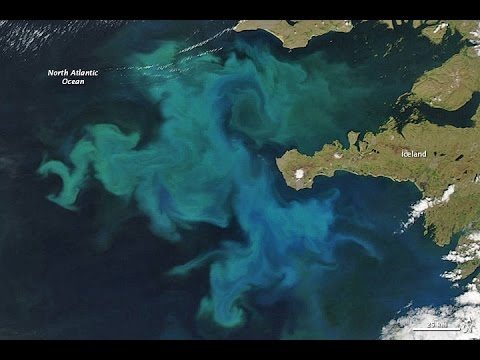
What is the term used to describe a sudden increase in phytoplankton growth? 
a)
A Spring
b)
A Migration
c)
A Bloom
d)
A Flower
24.
Why are air bladders important for seaweed?
a)
float closer to the sun to create shade
b)
float closer to the sun to capture prey
c)
float closer to the surface to collect oxygen
d)
float closer to the sun for photosynthesis
25.
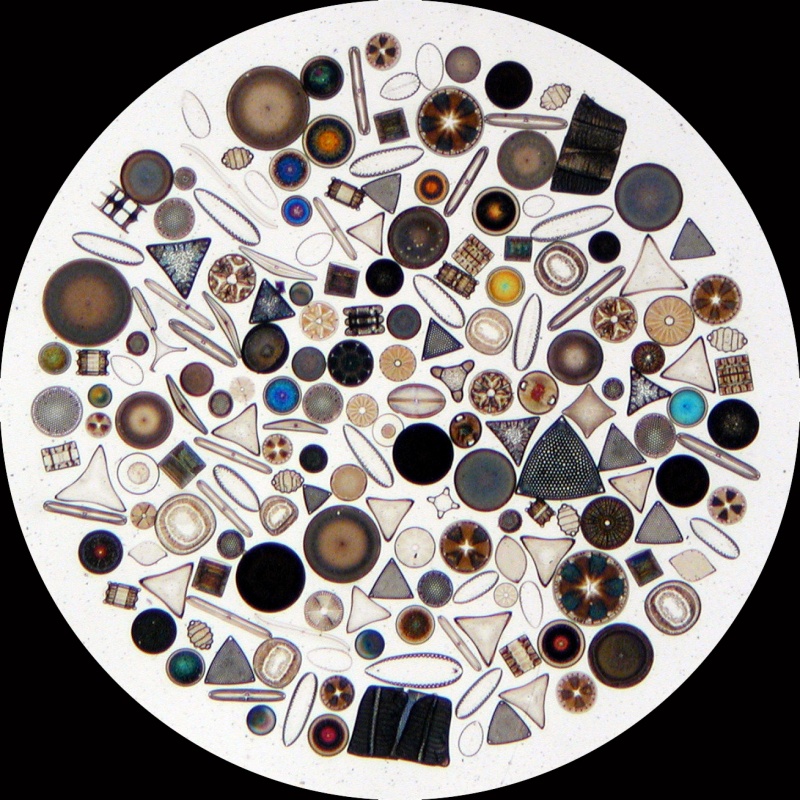
Diatoms are: 
a)
Phytoplankton
b)
Zooplankton
26.
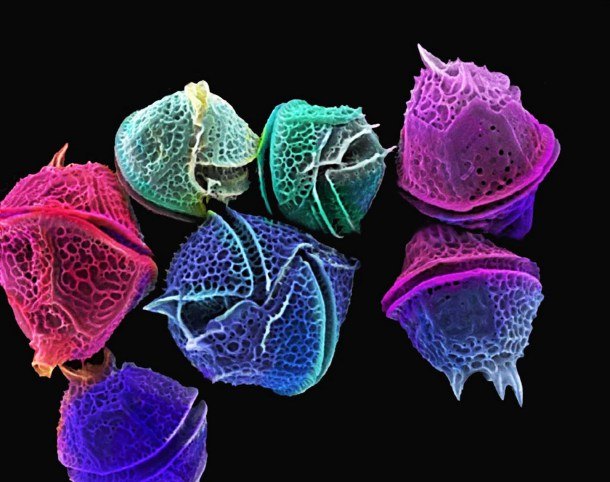
Dinoflagellates can cause __________ which is toxic to fish, shellfish and humans.
a)
Green TIde
b)
Red Tide
c)
Malaria
d)
Algal Bloom
27.
What is the leaf-like flattened portion of the seaweed?
a)
holdfast
b)
thallus
c)
blade
d)
stipe
28.
Which type of algae includes sargasso weed and kelp?
a)
Green algae
b)
Red algae
c)
Brown algae
29.
Which part of the seaweed acts as a root-like structure that attaches the seaweed to a hard surface?
a)
stipe
b)
holdfast
c)
blade
d)
thallus
30.
Arrange the types of seaweed from simplest to most complex.
a)
red - green - brown
b)
green - brown - red
c)
green - red - brown
d)
brown - red - green
31.

In the Kingdom Protista, you may expect to find

a)

Whales

b)

Sea Stars

c)

Bacteria

d)

Single or multi-cellular algae

32.

Marine organisms that drift with the ocean current are called

a)

Nekton

b)

Benthic

c)

Plankton

d)

Surfers

33.

Marine Organisms that are bottom dwellers are called

a)

nekton

b)

benthic

c)

plankton

d)

surders

34.

Marine organisms that are strong swimmers are called

a)

nekton

b)

benthic

c)

plankton

d)

surfers

35.

Dinoflagellates are a type of phytoplankton that are usually found

a)

attached to sharks

b)

living in symbiosis with corals

c)

attacking and eating small fish

d)

at deep sea volcanoes

36.

A diatom is an example of phytoplankton and is considered a(n)

a)

protist

b)

plant

c)

animal

d)

peanut butter and jelly

37.

Over 50% of earth's oxygen comes from where?

a)

ocean animals with shells

b)

phytoplankton

c)

sponges

d)

jellyfish

38.

One "plant-like" characteristic of algae is that it...

a)

is made of true stems

b)

contains xylem and phloem

c)

carries out photosynthesis

d)

all of the above

39.

Why is marine algae important?

a)

decomposers

b)

basis for marine food web

c)

Provides habitat for small sea creatures

d)

oxygen production

e)

2-4 are correct

40.

2 types of phytoplankton...

a)

prokaryotes and eukaryotes

b)

crab larvae and diatoms

c)

copepods and crab larvae

d)

diatoms and dinoflagellates

41.

2 types of zooplankton...

a)

prokaryotes and eukaryotes

b)

diatoms and crab larvae

c)

copepods and crab larvae

d)

diatoms and dinoflagellates

42.

Which types of multicellular algae (seaweed) is the most complex?

a)

green

b)

red

c)

brown

d)

yellow

43.

Most marine algae need to maintain a buoyancy within how many meters of the ocean surface?

a)

1

b)

3

c)

10

d)

40

44.

Plankton, Benthic or Nekton?

a)

Plankton

b)

Benthic

c)

Nekton

45.

Plankton, Benthic, or Nekton?

a)

Plankton

b)

Benthic

c)

Nekton

46.

Plankton, Benthic, or Nekton?

a)

Plankton

b)

Benthic

c)

Nekton

47.

Plankton, Benthic, or Nekton?

a)

Plankton

b)

Benthic

c)

Nekton

48.

What did we use to catch fish on our field trip to Oak beach?

a)

Hair net

b)

Butterfly net

c)

Neise Net

d)

Seine Net

49.

What ocean current did we take advantage of on our field trip while attempting to catch tropical fish?

a)

Southern Current

b)

North Atlantic Current

c)

Gulf Stream

d)

Patagonia Current

50.

Which of the following organisms was NOT found on our field trip?

a)

Blue spotted Cornetfish

b)

Spider Crabs

c)

Asian Shore Crabs

d)

Spotfin Butterflyfish

51.

Which of the following marine plants did we observe in our lab?

a)

Spongeomorpha

b)

Knotted Wrack

c)

Sea Lettuce

d)

Eel Grass