NEW
Font size
 Worksheets
2-Punnett Square
Total questions: 46
Worksheet time: 50mins

A green pea plant (Gg) is crossed with a yellow pea plant (gg). Describe the genotype of the offspring.
50% heterozygous and 25% homozygous recessive
50% heterozygous and 50% homozygous recessive
100% homozygous recessive
25% heterozygous and 50% homozygous

What are the possible genotypes for this cross?
TT = 25% Tt= 50% tt=25%
all tall
TT= 75% tt = 25%
Tt = 100%
If brown eyes are dominant over blue eyes, what would be the parent genotypes if two heterozygous brown eyed persons were crossed?
BB and bb
BB and Bb
Bb and Bb
bb and Bb
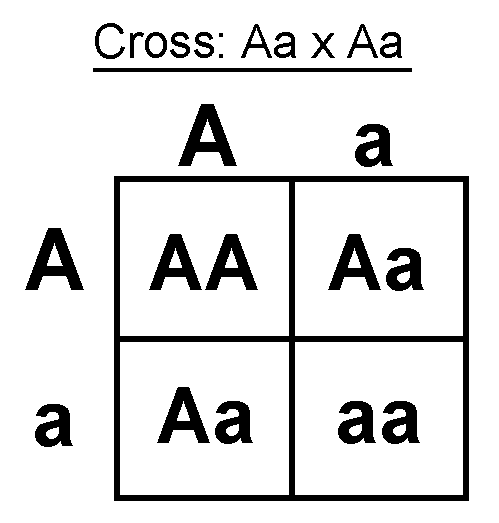
In plants, tall (T) is dominant to short (t). Draw a punnett square and perform the following cross: Tt x Tt
What is the probability of producing a short plant?
0%
25%
50%
75%

What genotype would go in box 2? And is it Homozygous or Heterozygous?
BB Heterozygous
Bb Heterozygous
bb Homozygous
Bb Homozygous

Which of the following must be the father's genotype?
RR
Rr
rr


What is the probability of heterozygous offspring?
25%
50%
0%
100%

What is the likelihood that the offspring will be green (G)?
25%
50%
75%
100%

Each one of the boxes on the Punnett Square represents what percentage?
25%
1%
10%
0%

What is the likelihood that the offspring will be yellow?
0%
25%
50%
75%
What is the likelihood that the offspring will be yellow (g)?
25%
50%
75%
100%
What is the likelihood that the offspring will be green?
0%
25%
50%
75%

What is the probability that the offspring will have blue eyes?
25%
50%
75%
100%

If b stands for blue, what is the percentage that the offspring will have blue eyes?
35%
50%
65%
100%

Which trait is dominant?
purple
white

A tall pine tree (Tt) is crossed with a tall pine tree (Tt). What is the likelihood that an offspring could be short?
0%
25%
50%
75%
A tall pine tree (Tt) is crossed with a tall pine tree (Tt). What is the likelihood that an offspring could be short?
0%
25%
50%
75%
What is the likelihood that the offspring will be green (G)?
25%
50%
75%
100%
Dominant alleles are represented by a:
capital letter
lowercase letter

AA and Aa will both show up as ___________________ traits.
dominant
recessive
Each one of the boxes on the Punnett Square represents what percentage?
25%
1%
10%
0%
What is the likelihood that the offspring will be yellow?
0%
25%
50%
75%
Traits are passed on from one living thing to another through
DNA
blood
minerals
calories
What is the likelihood that the offspring will be yellow (g)?
25%
50%
75%
100%
What is the likelihood that the offspring will be green?
0%
25%
50%
75%

What is the likelihood that the offspring will have brown eyes (B)?
0%
100%
What is the probability that the offspring will have blue eyes?
25%
50%
75%
100%
If b stands for blue, what is the percentage that the offspring will have blue eyes?
35%
50%
65%
100%
Which trait is dominant?
purple
white

A tall plant (TT) is crossed with a short plant (tt). All of the offspring will be ____________.
tall
short
A tall pine tree (Tt) is crossed with a tall pine tree (Tt). What is the likelihood that an offspring could be short?
0%
25%
50%
75%
A tall pine tree (Tt) is crossed with a tall pine tree (Tt). What is the likelihood that an offspring would be tall?
0%
25%
50%
75%

Round seeds are dominant (R). Wrinkled seeds are recessive (r). What is the likelihood that this offspring is round (R)?
0%
25%
50%
75%
Round seeds are dominant (R). Wrinkled seeds are recessive (r). What is the likelihood that this offspring is wrinkled (r)?
0%
25%
50%
75%
Why is DNA important?
it is very small and very complicated
it's in everything that's not alive
it serves as the blueprint for traits of all living things
because we eat it every day for energy