
 Worksheets
Weather and Climate ( Utah Seed 6th grade )
Total questions: 36
Worksheet time: 32mins

What must occur before clouds can form?
Water vapor must get warmer.
Water vapor must lose heat energy.
Precipitation must begin to fall and run off.
Transpiration must add water vapor to the atmosphere.
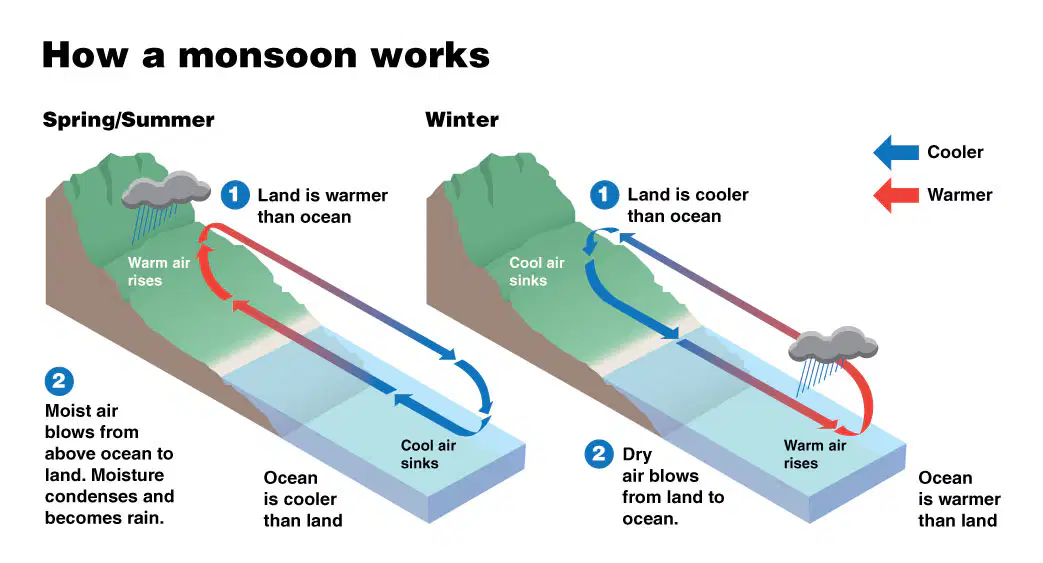
What does monsoon mean?
According to Britannia Kids, A monsoon is a major wind system that seasonally reverses its direction—such as one that blows for approximately six months from the northeast and six months from the southwest. Monsoon winds typically bring wet summers and dry winters to the regions where they blow.

What climate zone do we live in?
Polar
Temperate
Tropical
Westerlies

Global winds that move from West to East are?
(Hint -- Winds are named after where they came from.)
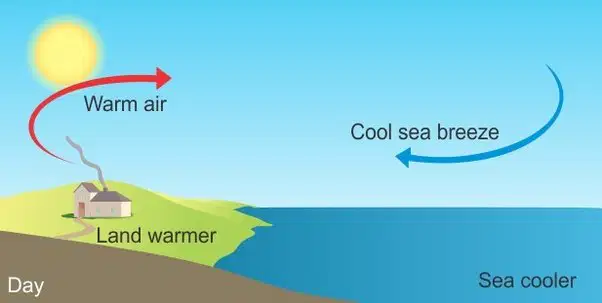
In the day, land ___________than the sea.
cools down faster
cools down slower
heats up faster
heats up slower

What type of wind pattern is this?
(Where is the wind coming from?)
Westerlies
Easterlies
Trade winds
Easterlies

What type of pressure is associated with cold air masses?
(What color does blue represent?)

The Arizona and New Mexico deserts receive winds from which two wind patterns?
U.S. Southwest also regularly experiences monsoon season.
When people think of a monsoon, they often think of heavy rains that pour down for weeks. While a rainy season is part of a monsoon, a monsoon is more than just rain. In fact, monsoons can also cause dry weather. Monsoons are caused by a change in the direction of the wind that happens when the seasons change. In fact, even the word monsoon comes from the Arabic word mausim, which means “season.”
Monsoon Winds and Westerlies
Westerlies and Hadley Cells
Westerlies and Trade winds
Westerlies and Eastern Polar winds


Winds blow from
L to H pressure
H to L pressure
North to South
East to West

North America Monsoon winds blow towards which direction?
Northwest and Northeast
West and Northwest
East and Northeast
East and West

North American Monsoon gets its moisture from
Gulf of California
Pacific Ocean
Gulf of Mexico
Alantic Ocean

What is evaporation?
The part of the water cycle when the sun heats up water, turning it from a liquid into water vapor or steam. It rises from the ground into the air.
The part of the water cycle when the water vapor in the air gets cold. The water turns back into a liquid and forms clouds.
The part of the water cycle when clouds get heavy and can no longer hold the liquid water. This causes the water to fall from the sky to the earth as rain, snow, sleet, or hail.

What type of wind pattern does this represent?
Westerlies
Polar Trade winds
Horse Latitudes
North American Monsoon

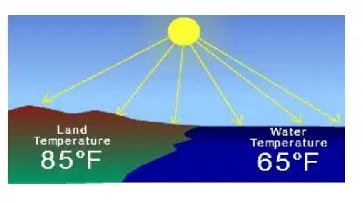
In the day, land ___________than the sea.
cools down faster
cools down slower
heats up faster
heats up slower


Westerlies winds bring moisture from
Pacific Ocean
Alantic Ocean
Indian Ocean
Gulf of Mexico

When the air moves from the sea to the land, a ________________ is formed.
land breeze
land-sea breeze
sea-land breeze
sea breeze
In the day, land is an area of ___________.
no pressure
high pressure
low pressure

Which most accurately explains the way clouds form?
Warm water vapor hits warm air, changing the gas into a liquid, and forming a cloud.
Warm water vapor hits cold air, changing the gas into a liquid, and forming a cloud.
Warm water vapor hits warm air, changing the gas into a solid, and forming a cloud.
Warm water vapor hits cold air, changing the gas into a solid, and forming a cloud.

Hurricanes get their moisture from
cool high pressure over the oceans
evaporations from warm ocean waters
condensation from cold waters
high pressure system from warm ocean waters
High pressure system is usually has what type of weather?
sunny and fair
cloudy and rain
fair and stormy
hurricane
When the air moves from the sea to the land, a ________________ is formed.
land breeze
land-sea breeze
sea-land breeze
sea breeze

Winds are named according to the
direction from which they flow
Direction that they are blowing
after famous pirate ships

