
 Worksheets
Asexual/Sexual Reproduction
Total questions: 20
Worksheet time: 14mins
Name
Class
Date
1.
Which reproduction does diverse offspring come from?
a)
Asexual reproduction
b)
Sexual reproduction
c)
Both asexual and sexual reproduction
d)
Asexual offspring
2.

Which type of offspring come from two parents?
a)
All offsprings
b)
Uniform offspring
c)
Asexual reproduction
d)
Diverse offspring
3.
What are some of the facts about sexual reproduction?
a)
Takes two mates to reproduce and takes a longer time to reproduce
b)
Takes one mate to reproduce and takes a shorter amount of time to reproduce
c)
Takes two mates to reproduce and takes a shorter amount of time to reproduce
d)
Takes one mate to reproduce and takes a shorter amount of time to reproduce
4.
Asexual reproduction can reproduce which offspring?
a)
Diverse offspring
b)
Both diverse and uniform offspring
c)
Uniform offspring
d)
Asexual offspring
5.
What are some of the facts about asexual reproduction?
a)
Takes only one mate to reproduce and takes a longer time to reproduce
b)
Takes a shorter amount of time to reproduce and it takes two mates to reproduce
c)
Reproduces diverse offspring and takes a longer time to reproduce
d)
Takes only one mate to reproduce and takes a shorter time to reproduce
6.
Why does diverse offspring look similar to its parents and uniform looks identical to its parent?
a)
Diverse offspring inherits DNA from one parent, making it look similar to its parents and uniform offspring inherits different parts of DNA, making it look identical to its parents
b)
Diverse offspring inherits different parts of DNA, making it look similar to its parents and uniform offspring gets DNA from one parents making it look identical
c)
Diverse offspring inherits a little amount of DNA, making it look similar to its parents and uniform offspring inherits a lot of DNA, making it look identical to its parent
d)
Diverse offspring inherits a lot of DNA, making it look similar to its parents and uniform offspring inherits a little amount of DNA, making it look identical to its parent
7.
Which of the following is a disadvantage for sexual reproduction?
a)
a lot of time and energy is required for making gametes and finding mates
b)
offspring can be produced more quickly than by asexual means
c)
the genetic diversity makes organisms respond differently to environmental changes
d)
the offspring are genetically different
8.

An asexual offspring needs:
a)
Fertilization
b)
Some fertilization
c)
Wings to fly
d)
No fertilization
9.
Is budding an example of asexual or sexual reproduction?
a)
sexual
b)
both
c)
asexual
d)
neither
10.

If two organisms reproduce sexually, then their offspring will exhibit a genetic makeup that is -
a)
identical to only one parent
b)
identical to all of its siblings
c)
a unique combination of traits
d)
the recessive traits of each parent
11.

Prokaryotes (bacteria) reproduce asexually via -
a)
spore formation
b)
bud creation
c)
vegetative propagation
d)
binary fission
12.

When comparing the offspring of sexually and asexually reproducing organisms, we would expect the genetic material (DNA) of the sexually reproducing organism to -
a)
contain fewer mutations
b)
be lesser in quantity
c)
be simpler overall
d)
show more variation
13.
A type of reproduction in which the genetic materials from two different cells combine, producing an offspring
a)
Asexual Reproduction
b)
Sexual Reproduction
14.
What is an advantage of sexual reproduction?
a)
Allows genetic variation
b)
Only needs one parent
c)
Happens very quickly
d)
Offspring are exact copies of parent
15.
When a starfish grows a new body off a broken arm, what kind of reproduction is this?
a)
Sexual
b)
Differentiation
c)
Asexual
d)
Specialization
16.
Sexual reproduction requires _____ parents and asexual reproduction requires ___ parents
a)
1,1
b)
2,2
c)
2,1
d)
1,2
17.
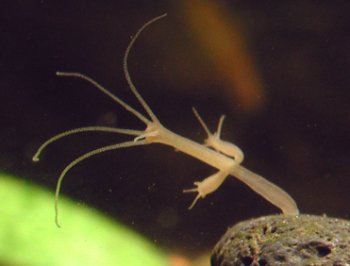
This is when a new organism grows by cell division on the body of its parent. The bud, or offspring is identical to the parent. The bud, when large enough, can break off of the parent and live on its own. Examples of this include yeast, hydra and potatoes.
a)
Regeneration
b)
Vegetative propagation
c)
Fission
d)
Budding
18.
In asexual reproduction, all of the offspring are:
a)
Physically Identical
b)
Genetically Identical
c)
Physically and Genetically Identical
d)
Not Identical
19.
If an environment suddenly changes, which type of reproduction would be most beneficial? Why?
a)
Asexual, because asexual organisms always have variation within species.
b)
Sexual, because sexual organisms have variation within species.
c)
Both Asexual and Sexual reproduction would be beneficial, because they both have variation within species.
d)
Asexual, because asexual organisms have no variation, so they can adapt to a changing environment.
20.
Organism produces offspring without fertilization
a)
Sexual Reproduction
b)
Asexual Reproduction
100 %

