
 Worksheets
crucible final exam
Total questions: 83
Worksheet time: 1hrs 19mins
Name
Class
Date
1.

What is the sequence of events in a story called?
a)
Conflict
b)
Plot
c)
Rising Action
d)
Theme
2.
What part of the plot tells us about the characters, setting, and main conflict?
a)
Plot
b)
Rising Action
c)
Exposition
d)
Falling Action
3.
What information is found in the rising action?
a)
This means the problem of the story.
b)
The conflict is resolved.
c)
The conflict reaches its peak.
d)
The conflict begins to build and develop.
4.
Where does the conflict reach its peak, and the character comes face to face with the conflict?
a)
Climax
b)
Exposition
c)
Setting
d)
Resolution
5.
Which word means the same as climax?
a)
Resolution
b)
Turning Point
c)
Conflict
d)
Exposition
6.
What part of the story leads to the resolution?
a)
Denouement
b)
Plot
c)
Falling Action
d)
Rising Action
7.
What information is found in the resolution of the story?
a)
This tells us who is telling the story.
b)
The characters, setting, and conflict is introduced.
c)
The conflict builds and develops.
d)
The conflict is resolved.
8.
Denouement is another word for....
a)
the exposition.
b)
the climax.
c)
the resolution.
d)
I have no clue what that is!!
9.
What is the correct order of the 5 parts of plot?
a)
Resolution/Denouement, Falling Action, Climax/Turning Point, Rising Action, Exposition
b)
Exposition, Rising Action, Climax/Turning Point, Falling Action, Resolution/Denouement
c)
Exposition, Falling Action, Climax/Turning Point, Rising Action, Resolution/Denouement
d)
Rising Action, Exposition, Falling Action, Climax/Turning Point, Resolution/Denouement
10.
Stage directions are the words written that appear in parentheses throughout the play and these words tell the characters how to _________________.
a)
do the play
b)
use dialogue
c)
act
d)
sing
11.

This is where and when the story takes place.
a)
Character
b)
Climax
c)
Setting
d)
Problem
12.
The use of the five senses to help describe the setting of the story.
a)
Plot Development
b)
Sensory Imagery
c)
Character Traits
d)
Setting
13.
This is the beginning of the story.
a)
Plot
b)
Resolution
c)
Climax
d)
Exposition
14.
Dark brown hair
a)
Internal Character Trait
b)
External Character Trait
15.
smug
a)
External Character Trait
b)
Internal Character Trait
16.
excited
a)
External Character Trait
b)
Internal Character Trait
17.
joyful
a)
Internal Character Trait
b)
External Character Trait
18.
wears glasses
a)
External Character Trait
b)
Internal Character Trait
19.
Who is ". . . a man in his prime we see, with a quiet confidence and an unexpressed, hidden force?"
a)
John Proctor
b)
Parris
c)
Giles Corey
d)
Putnam
20.

ABIGAIL: "She is blackening my name in the village! She is telling lies about me! She is a cold, sniveling woman, and you bend to her!" Who is?
a)
Proctor's Wife
b)
Rebecca Nurse
c)
Ms. Putnam
d)
Tituba
21.

Who has "have laid seven babies unbaptized in the earth. Believe me, sir, you never saw more hearty babies born. And yet, each would wither in my arms the very night of their birth?"
a)
Tituba
b)
Mrs. Putnam
c)
Abigail Williams
d)
Rebecca Nurse
22.
Who is "not some preaching farmer with a book under my arm; I am a graduate of Harvard College. . . you will look far for a man of my kind at sixty pound a year! I am not used to this poverty; I left a thrifty business in the Barbados to serve the Lord. I do not fathom it, why am I persecuted here?
a)
Putnam
b)
Hale
c)
Giles Corey
d)
Parris
23.

HALE: "It’s strange how I knew you, but I suppose you look as such a good soul should. We have all heard of your great charities in Beverly." Who is he talking to?
a)
Abigail Williams
b)
Giles Corey
c)
Rebecca Nurse
d)
Mercy Lewis
24.
Who wants "to open myself! They turn to her, startled. She is enraptured, as though in a pearly light. I want the light of God, I want the sweet love of Jesus! I danced for the Devil; I saw him; I wrote in his book; I go back to Jesus; I kiss His hand."
a)
Hale
b)
Parris
c)
Tituba
d)
Abigail Williams
25.
Who is being described by the following quotation. "Is it the Devil’s fault that a man cannot say you good morning without you clap him for defamation? You’re old and you’re not hearin’ so well as you did."
a)
Parris
b)
Putnam
c)
Rebecca Nurse
d)
Giles Corey
26.
Who has, "something better than hope, I think!"
a)
Proctor
b)
Parris
c)
Abigail Williams
d)
Tituba
27.

Who says: "He say Mr. Parris must be kill! Mr. Parris no goodly man, Mr. Parris mean man and no gentle man, and he bid me rise out of my bed and cut your throat!" ?
a)
Tituba
b)
Abigail Williams
c)
Betty Parris
d)
Ruth Putnam
28.

Who says: "Let either of you breathe a word, or the edge of a word, about the other things, and I will come to you in the black of some terrible night and I will bring a pointy reckoning that will shudder you. And you know I can do it; I saw Indians smash my dear parents’ heads on the pillow next to mine, and I have seen some reddish work done at night, and I can make you wish you had never seen the sun go down?"
a)
Abigail Williams
b)
Tituba
c)
Proctor
d)
Hale
29.
Gives Elizabeth a poppet:
a)
Abigail
b)
Mercy
c)
Mary
d)
Betty
30.
Gives Elizabeth a poppet:
a)
Abigail
b)
Mercy
c)
Mary
d)
Betty
31.
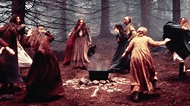
What does Parris see in the woods?
a)
Betty drinking blood.
b)
Abigail drinking blood.
c)
Mercy Lewis dancing naked.
d)
None of these choices
32.
What happens to Abigail's parents?
a)
They are hung for practicing witchcraft.
b)
They are killed in a boating accident.
c)
Abigail murders them.
d)
They are murdered by Indians.
33.
Arthur Miller wrote The Crucible as an allegory for what historical event?
a)
September 11th, 2001
b)
McCarthyism
c)
World War II
d)
The Civil War
34.
What year did the Salem Witch Trials take place?
a)
1893
b)
1799
c)
1692
d)
1957
35.
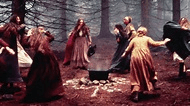
According to Act I, what are the names of the two young girls currently under the influence of witchcraft?
a)
Abby and Ruth
b)
Mercy and Abby
c)
Ruth and Betty
d)
Betty and Mary Warren
36.
Which character is being described here?
"He believed he was being persecuted wherever he went, despite his best efforts to win people." (3)
"He believed he was being persecuted wherever he went, despite his best efforts to win people." (3)
a)
Reverand Parris
b)
Reverand Hale
c)
John Proctor
d)
Thomas Putnam
37.

Who said it?
"Uncle, we did dance; let you tell them I confessed it" (10)
"Uncle, we did dance; let you tell them I confessed it" (10)
a)
Mercy Lewis
b)
Mary Parris
c)
Abigail Williams
d)
Ruth Putnam
38.
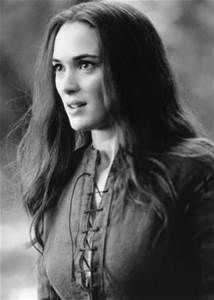
Who said it to whom?
"Your name in this town--it is entirely white, is it not?" (12)
"Your name in this town--it is entirely white, is it not?" (12)
a)
Thomas Putnam to Ruth Putnam
b)
Rev. Parris to Abigail
c)
John Proctor to Abigail Wiliams
d)
Rev. Hale to Elizabeth Proctor
39.
Which character is brought in from the nearby town of Beverly to assess the possibility of supernatural forces (witches) afflicting the community?
a)
John Hale
b)
William Griggs
c)
Francis Nurse
d)
Giles Corey
40.
"I have eleven children, and I am twenty-six times a grandma" (27)
a)
Ann Putnam
b)
Bridget Bishop
c)
Rebecca Nurse
d)
Frances Nurse
41.
Who Said it?
"We cannot look to superstition in this. The Devil is precise. The marks of his presence are definite as stone, and I must tell you all that I shall not proceed unless you are prepared to believe me if I should find no bruise of hell upon her." (38)
"We cannot look to superstition in this. The Devil is precise. The marks of his presence are definite as stone, and I must tell you all that I shall not proceed unless you are prepared to believe me if I should find no bruise of hell upon her." (38)
a)
Rev. Hale
b)
Rev. Parris
c)
Judge Danforth
d)
Judge Hathorne
42.
Why does Abigail accuse Tituba of witchcraft?
a)
She believed Tituba was hurting people with her "Barbados magic."
b)
Accusing Tituba deflected blame from her.
c)
Tituba really was engaging in witchcraft.
d)
She was afraid John Proctor would accuse her of being a harlot if she didn't accuse someone else.
43.

Who said it?
"You will confess yourself or I will take you out and whip you to your death, Tituba!" (44)
"You will confess yourself or I will take you out and whip you to your death, Tituba!" (44)
a)
Rev. Parris
b)
Rev. Hale
c)
Abigail Williams
d)
Judge Danforth
44.

Who said it to whom?
"Your justice would freeze beer!" (55)
"Your justice would freeze beer!" (55)
a)
John Proctor to Elizabeth Proctor
b)
John Proctor to Judge Danforth
c)
Giles Corey to Judge Danforth
d)
Abigail Williams to John Proctor
45.

Which commandment does John Proctor ironically forget when Reverend Hale quizzes him?
a)
(A) Thou shalt not kill
b)
(B) Thou shalt not commit adultery
c)
(C) Honor thy mother and father
d)
(D) Thou shalt not covet.
46.

Whom do Ezekiel Cheever and Herrick, the marshal, come to the Proctor home to arrest?
a)
(A) John Proctor
b)
(B) Reverend Hale
c)
(C) Mary Warren
d)
(D) Elizabeth Proctor
47.
What did Giles Corey say that got his wife arrested?
a)
He said she was reading spell books at night.
b)
He said he couldn't pray while she was reading.
c)
He said she sometimes spoke in strange languages.
d)
He said she killed the neighbors' pigs.
48.
What is the author's name?
a)
McCarthy
b)
Miller
c)
Matthew
d)
Antoine
49.
What does Proctor find out from Danforth about his wife?
a)
She has run to Canada
b)
She is pregnant
c)
She has been killed
d)
She has confessed to witchcraft
50.
What does Cheever accuse John Proctor of doing on the Sabbath Day?
a)
drinking
b)
gambling
c)
dancing
d)
working
51.
What is Hale's internal conflict as Proctor and his friends present evidence to Danforth?
a)
He worries about his own safety from the girls' accusations.
b)
He sees that the has been a failure at removing witchcraft from Salem.
c)
He begins to realize that the people who have been accused and sentenced so far could very well have been innocent.
52.
How does Danforth check Proctor's claim of adultery?
a)
asks Parris if he knows anything about it
b)
brings in Elizabeth to ask why she fired Abigail
c)
takes a poll of the people in the courtroom
53.
What does Proctor end up confessing about himself?
a)
he still loves Abigail
b)
he has divorced his wife
c)
he had an affair with Abigail
d)
he wants to kill Parris
54.
Why does Danforth refuse to stop the proceedings?
a)
He doesn't like John Proctor and Giles Corey.
b)
He is worried how faltering would look on his part, now that several people have already been hung.
c)
He is an evil man who wants to see as many people hung as possible.
55.
Which one of the girls caught in the forest admits they made it all up?
a)
Mercy.
b)
Abigail.
c)
Mary.
d)
Tituba.
56.
In court, Abigail claims that Mary is bewitching her by doing what to her?
a)
Making her cold with her icy stare.
b)
Making her shiver, by sending a chill wind.
c)
Making her shiver by pulling on her shawl.
d)
Making her shawl move.
57.
What does Danforth ask Mary to do to prove that she and the girls are lying?
a)
Pretend to be paralyzed.
b)
Pretend to faint.
c)
Pretend to shiver.
d)
Pretend to be bewitched.
58.
In court, Abigail claims that Mary is bewitching her by doing what to her?
a)
Making her cold with her icy stare.
b)
Making her shiver, by sending a chill wind.
c)
Making her shiver by pulling on her shawl.
d)
Making her shawl move.
59.
Why doesn't Elizabeth admit that she fired Abigail for having an affair with her husband?
a)
She doesn't care about the affair.
b)
She doesn't know about the affair.
c)
She believes that Abigail put a spell on her husband.
d)
She is protecting her husband's reputation.
60.
How does Mary react under the pressure from the girls?
a)
breaks down and calls Proctor the Devil
b)
gets upset and leaves the room
c)
stands strong against them
d)
falls to the floor and huddles in the corner
61.
T or F: Mary Warren is able to faint in court on command.
a)
True
b)
False
62.
The setting of The Crucible is
a)
Salem, 1671
b)
Boston, 1692
c)
Salem, 1692
d)
Andover, 1684
63.
Which character tends to be the voice of reason in Act III?
a)
Hale
b)
Parris
c)
Abigail
d)
Hathorne
64.
What is a "poppet"?
a)
a utensil used for cooking
b)
a bucket used to carry water
c)
a container used to hold feed for cattle
d)
a rag doll
65.
Considering Tituba's state of mind when she begins naming names, what can you infer about her motivation?
a)
She is afraid of Reverend Hale and thinks naming names will save her from punishment
b)
She actually saw Goody Good and Goody Osburne in the forest and wants to tell the truth
c)
She is confused and talking about a dream she once had
d)
She doesn't like the women she names, and she hopes they will be punished
66.
Why does Reverend Parris send for Reverend Hale?
a)
Parris feels the people of Salem will be more accepting of an outside opinion
b)
Hale is considered an expert in matters of witchcraft and the devil
c)
Hale is the most skilled medical person in the region
d)
Parris feels utterly unprepared to deal with the issues he fears are at hand
67.
At the beginning of Act II, John and Elizabeth Proctor are uncomfortable with each other. By the end of the play, however, their relationship changes. How would you describe their relationship in Act IV?
a)
They seem ill at ease with each other
b)
They seem not to care about each other
c)
They are warm and affectionate (for Puritans)
d)
They are hostile and bitter towards each other
68.
What is Proctor's attitude toward Parris?
a)
He respects Parris' devotion to God
b)
He believes Parris is doing what is right
c)
he believes Parris is too interested in wealth
d)
he thinks Parris is too lenient in judging people
69.
What are the fears of witches an allegory to?
a)
Facism
b)
Tyranny
c)
Communism
d)
Capitalism
70.

In act three, Judges from the court ordered up many people to questioned and prosecuted over witchcraft. A good example of this in real life is
a)
XYZ
b)
CREEPS
c)
HUAC
d)
MEA
71.
how are Abigail and Joseph McCarthy alike
a)
They taunted people
b)
They stole from people
c)
They both were parialy responsible for the deaths of many
d)
They both made up storys and rumors that ruined peoples lives
72.
John proctor was an allegory to
a)
The author
b)
Joseph McCarthy
c)
The Army
d)
Hollywood
73.
People accused each other and admitted to witchcraft because of what?
a)
Hysteria
b)
Revenge
c)
Self preservation
d)
None of the above
74.
What was John Proctor's fate?
a)
Death
b)
Jail
c)
exile
d)
excommunication
75.
What is a soliloquy?
a)
a brief remark that the audience can hear but characters cannot
b)
a lengthy speech addressed to the other characters on stage
c)
a lengthy speech in which one character is alone on stage
d)
speech in which a word has a double meaning
76.
What is a soliloquy?
a)
a brief remark that the audience can hear but characters cannot
b)
a lengthy speech addressed to the other characters on stage
c)
a lengthy speech in which one character is alone on stage
d)
speech in which a word has a double meaning
77.
What is an aside?
a)
a brief remark that the audience can hear but characters cannot
b)
a lengthy speech in which one character is alone on stage
c)
speech in which a word has a double meaning
d)
a lengthy speech addressed to the other characters on stage
78.
What is an aside?
a)
a brief remark that the audience can hear but characters cannot
b)
a lengthy speech in which one character is alone on stage
c)
speech in which a word has a double meaning
d)
a lengthy speech addressed to the other characters on stage
79.
What is a monologue?
a)
a lengthy speech in which one character is alone on stage
b)
a brief remark that the audience can hear but characters cannot
c)
speech in which a word has a double meaning
d)
a lengthy speech addressed to the other characters on stage
80.
What is a monologue?
a)
a lengthy speech in which one character is alone on stage
b)
a brief remark that the audience can hear but characters cannot
c)
speech in which a word has a double meaning
d)
a lengthy speech addressed to the other characters on stage
81.

Drama is...
a)
a story that always takes place in the past.
b)
a true story about someone's life.
c)
a story that is performed for an audience.
82.

A "soliloquy" and an "aside" are different from a "monologue" because they are...
a)
quietly spoken off-stage.
b)
both discussions between two characters.
c)
spoken directly to the audience.
83.
A "soliloquy" and an "aside" are different from a "monologue" because they are...
a)
quietly spoken off-stage.
b)
both discussions between two characters.
c)
spoken directly to the audience.
100 %

