
 Worksheets
Meiosis and Genetic Disorders
Total questions: 50
Worksheet time: 44mins
What kind of cells are made in MEIOSIS?
Haploid Gametes
Diploid Somatic Cells
Skin Cells
Liver Cells
The cells produced by meiosis are called:
sex cells/gametes
somatic cells
body cells
skin cells
Why do we need meiosis?
To double the number of chromosomes going into sex cells
To reduce to half the number of chromosomes going into sex cells
To triple the number of chromosomes going into sex cells
To not change the number of chromosomes going into sex cells
What is the cause of genetic variation in meiosis?
chromosomes lining up
crossing over of homologous chromosomes
separation of chromosomes
chromosomes pulling apart

What phase is represented in the image?


Chromosomes exchange genetic material during _______ in prophase I
transcription

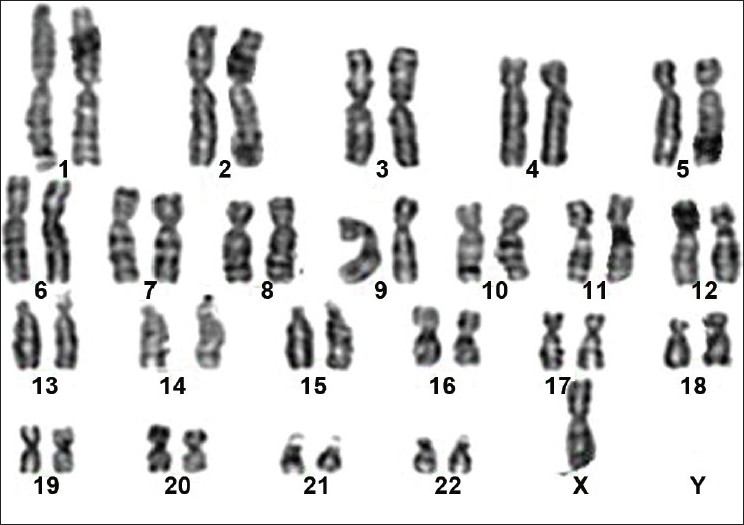
Examine the karyotype
This karyotype shows Trisomy 21
This karyotype has no abnormality
This karyotype is missing a sex chromosome (monosomy x)
This karyotype show Trimsomy 13
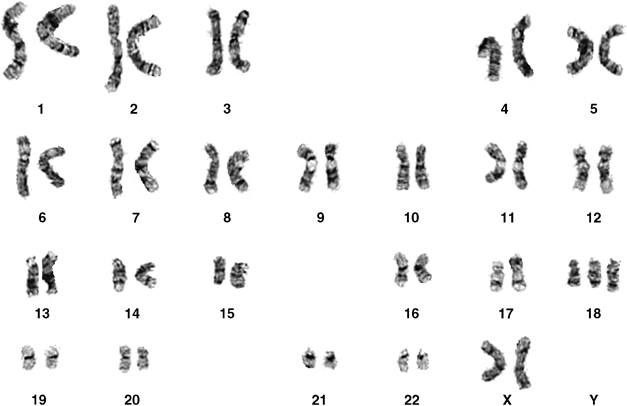
extra or missing chromosomes are found in the sex cell
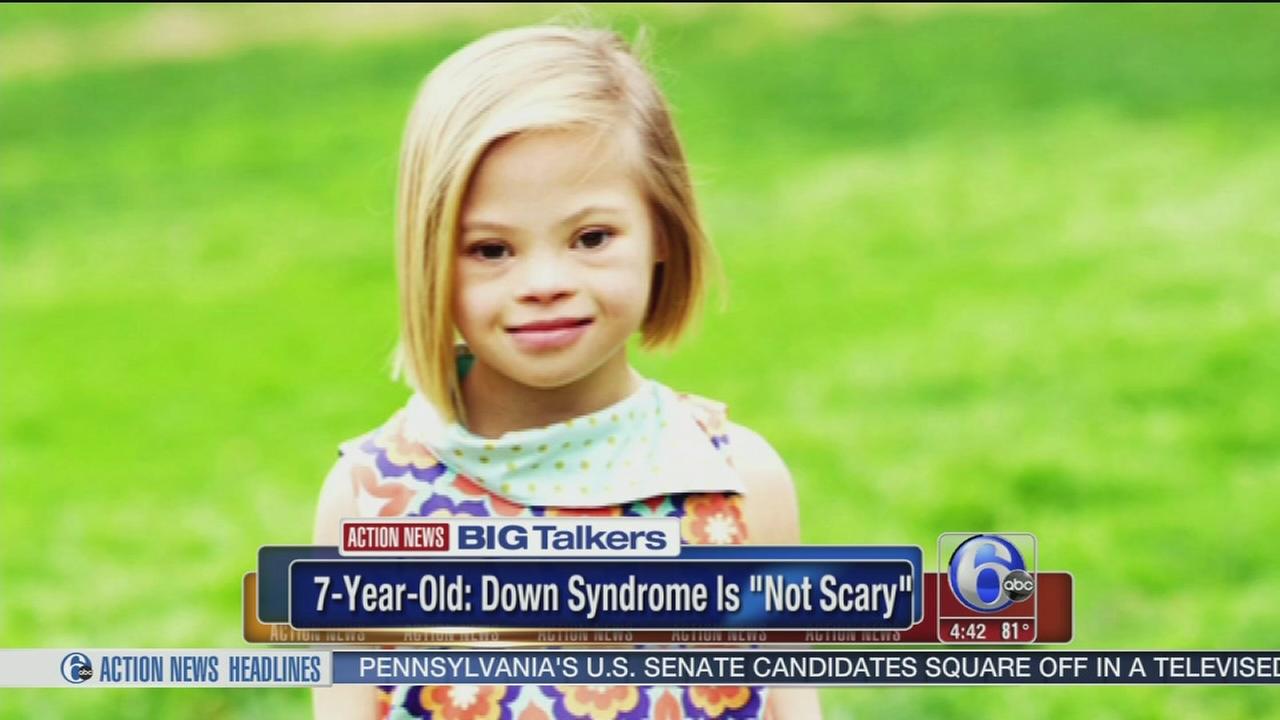
Down's syndrome occurs because of a(n)
missing sex chromosome
extra sex chromosome
extra 21st chromosome
extra 18th chromosome
What would you call the failure of one or more pairs of homologous chromosomes or sister chromatids to separate normally during meiosis?
nondisjunction
anaphase I
nondiploidy
karyotype


A person with Turner's Syndrome is missing a second sex chromosome and is written as
OY
XXY
XO
XX
Chromosome pairs 1-22 are referred to as
sex chromosomes
autosomes


During what stage of meiosis does nondisjunction (failure of chromosomes to separate) occur?
anaphase I or II
metaphase I or II
prophase I or II
cytokinesis
True or False? Before cells undergo meiosis they pass through interphase first.
true
false
In Anaphase I, the _________ are separated by the pulling of the spindle fibers to opposite poles of the cell.
homologous pairs of chromosomes
sister chromatids
centromeres
centrosomes
In Anaphase II, the _________ separate.
Homologues
Sister Chromatids
Tetrads
Centrioles
How many cells are formed at the end of Meiosis II?
2
3
4
8
True or False. In Meiosis II, there are TWO cells that go through each phase at the same time.
true
false
Which of the following are CORRECT observations about the differences between MITOSIS and MEIOSIS? (Check all that apply.)
Mitosis produces cells that identical to the parent cell.
Meiosis produces cells that have half the number of chromosomes as the parent cell.
All cells go through INTERPHASE as part of the cell cycle, whether it goes to mitosis or meiosis next.
In both types of cell division, the chromosomes are only duplicated once.
Only in Mitosis, do you see chromosomes pair up to form a tetrad.
Which part of MEIOSIS is identical to MITOSIS?
Meiosis I
Meiosis II
The products of MEIOSIS have _______ number of chromosomes.
haploid
diploid
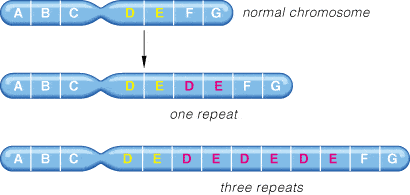

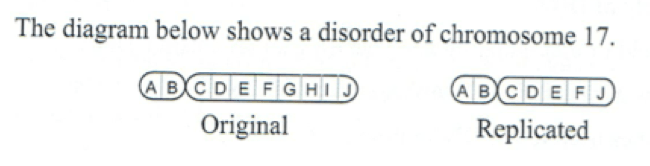
Inversion
When a segment of a chromosome breaks off.
When a segment of a chromosome breaks off, flips, and reattaches.
When a segment of a chromosome is copied or doubles.
When a segment of a chromosome breaks and attaches to a non homologous chromosome.
When entire chromosomes don't separate evenly during meiosis.
What type of mutation changes the structure of chromosomes?
Multiple Point Mutations
Chromosomal Mutation
Structural Mutation

