wayground logo

Free Printable Worksheets

NEW

Font size

S
M
L
XL
Worksheets

Science Benchmark Review

Total questions: 78

Worksheet time: 1hrs 2mins

Name
Class
Date
1.
How many different elements are in this chemical formula: C2H2ClK3
a)
6
b)
8
c)
2
d)
4
2.
Identify
a)
Element
b)
Compound 
c)
Mixture
3.
Examples are water (H2O) and carbon dioxide (CO2).
a)
elements
b)
mixtures
c)
compounds
4.
How many different elements are represented in the compound?
C13H9N
a)
2
b)
3
c)
1
d)
4
5.
A new compound has been discovered. Here is the chemical formula:
CHOFeNaNPb 

How many elements are in this compound?
a)
5
b)
6
c)
7
d)
10
6.
Which of the following is a compound?
a)
Co
b)
He
c)
CO
d)
H
7.
A substance that is dull, brittle, and a nonconductor would be classified as a
a)
metal
b)
nonnmetal
c)
metalloid
d)
metallica
8.
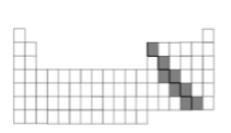
Metals are located on the 
a)
right side of the zig-zag line
b)
left side of the zig-zag line
c)
along the zig-zag line
9.
Where are metalloids located on the periodic table?
a)
to the right of nonmetals
b)
along the zig-zag line
c)
to the left of the zig-zag line
d)
to the right of the zig-zag line
10.
Metals have all of the following physical properties except __________.
a)
high conductivity
b)
shiny luster
c)
malleable
d)
brittle
11.
Silicon is a semiconductor and has properties of both metals and nonmetals. What type of element is Silicon? 
a)
Metal
b)
Nonmetal
c)
Metalloid
d)
Pretty
12.
Which element is least likely to conduct heat and electricity? 
a)
O
b)
Si
c)
Po
d)
Ca
13.
Elements in this area can best be described as -
a)
Malleable
b)
Brittle
c)
Dull
d)
Insulators
14.
Elements in this area can best be described as -
a)
Semi-conductors
b)
Insulators
c)
Ductile
d)
Siny
15.
Metalloids are considered 
a)
Conductors
b)
Semiconductors
c)
Nonconductors
16.
A piece of copper has a mass of 89g and a volume of 10 cm3.  What would be the density of the copper?
a)
0.89 g/cm3
b)
89 g/cm3
c)
8.9 g/cm3
d)
890 g/cm3
17.
The volume of a candy bar is 55cm3. The mass of the candy bar is 70g. What is the density of the candy bar? 
a)
2.3g/cm3
b)
.8g/cm3
c)
3850g/cm3
d)
1.3g/cm3
18.
Tim is trying to find the density of an irregular shaped object. He found the mass of 42g. using a triple beam balance. He found the volume by using water displacement. The beginning volume of the graduated cylinder was 10mL. When the object was placed in the water, the volume rose to 17mL. Tim was then able to calculate the density. What was the density of the irregular shaped object? 
a)
7 mL
b)
7 g/mL
c)
6 g/mL
d)
4.2 g/mL
19.
A change in which NEW substances are formed.
a)
Chemical change
b)
Physical change
c)
Casual change
d)
Formal change
20.
When combined, Red Bull and Milk undergo a chemical change where a solid is formed. What is the solid called?
a)
Compound
b)
Element
c)
Precipitate
d)
Rock 
21.
What is the speed of a car that travels 400 m in 20 minutes?
a)
20 miles/hr
b)
20 m/min
c)
800 m/min
d)
200 miles/hr
22.
Mr. Rudman speed walked 2 miles in 10 minutes, what is his speed?
a)
0.2 miles/min
b)
2 miles/min
c)
20 miles/min
d)
40 miles/min
23.
A ladybug moves from 2 cm to 7 cm in 25 seconds. What is the speed of the ladybug? (Hint: To find the total distance, you have to subtract!)
a)
5 cm/second
b)
0.2 cm/second
c)
12 cm/second
d)
3.57 cm/second
24.
Car #1 that traveled 160 kilometers in 5 hours, and Car #2 traveled 140 kilometers in the same time. Which car traveled faster?
a)
Car #1
b)
Car #2
c)
Their speeds are equal.
25.

What is the speed of this object at 3 seconds?

a)

5 m/s

b)

45 m/s

c)

20 m/s

d)

45 s/m

26.
What does the flat line mean for Charlie?
a)
He stayed at the same speed
b)
He slowed down
c)
He stopped running 
d)
He stayed at the same speed but at a slower rate
27.
If there are two forces going in the same direction how would you find the net force?
a)
Subtract
b)
Add
c)
Neither
d)
Multiply
28.
8 N to the left , and 4 N to the right. Find the net force. Is this balanced 
a)
12 N Right  No
b)
4 N Left  No
c)
12 N Right  Yes
d)
4 N Left  Yes
29.

You and your dad are moving the couch from one side to another. Your dad pushes with a force of 35 N to the right and you push with a force of 25 N right. What is the net force on the couch?

a)

60 N right

b)

10 N left

c)

35 N right

d)

50 N left

30.
What is the net force?
a)
5000 N right
b)
4000 N right
c)
40 N left
d)
4000 N left
31.
You and your friend, are playing tug of war. Your friend pulls with a force of 55 N, to the rights. You pull with a force of 65 N, to the left. What is the net force on the rope?
a)
10 n, to the left
b)
20 N
c)
10 N, to the left
d)
10 N, to the right
32.
Is it BALANCED? 
a)
Yes
b)
No
33.
How will this object move? 
a)
It won't move. 
b)
It will move to the right. 
c)
It will move to the left. 
d)
It will move in both directions. 
34.
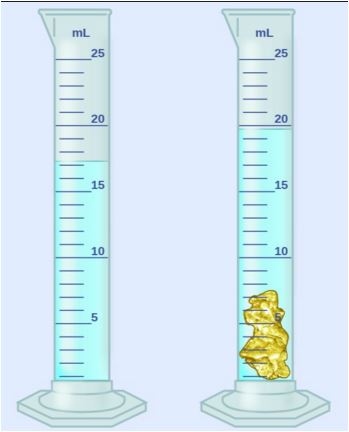
An irregularly shaped piece of gold was lowered into a graduated cylinder holding a volume of water equal to 17 ml. The height of the water rose to 20 ml. If the mass of the gold was 27 g, what was its density?
a)
9 g/mL
b)
10.5 g/mL
c)
6.5 g/mL
d)
8 g/mL
35.
An irregularly shaped stone was lowered into a graduated cylinder holding a volume of water equal to 2 ml. The height of the water rose to 7 ml. If the mass of the stone was 25 g, what was its density?
a)
30g/mL
b)
5g/mL
c)
20g/mL
d)
2.77g/mL
36.
What is happening at E?
a)
Stationary
b)
Accelerating
c)
Fast steady speed; moving away from the starting position
d)
Steady speed; returning to start position
37.
What is happening at A?
a)
Stationary
b)
Accelerating
c)
Slower steady speed; moving away from the starting position
d)
Steady speed; returning to start position
38.
What is happening at D?
a)
Stationary
b)
Accelerating
c)
Fast steady speed; moving away from the starting position
d)
Slower steady speed; moving away from the starting position
39.
a)
This graph is just plain wrong. How can Ms. Tonfack be in two places at once? 
b)
Ms. Tonfack walked to the store at the end of her street. Suddenly,  she jumped high to catch a ballon that was passing by. Then continue walking all the way to the store with her ballon. 
40.
a)
Uriel was walking to the bus stop. She turned around, because she had dropped her phone on the way. Once she had her phone, she continued to walk to the bus stop.
b)
Uriel accelerated her speed, then she deaccelerated because she saw a red light ahead, but then it turned green and she accelerated back to her speed. 
41.
a)
Tom accelerated and then stayed at a constant speed. Then he decelerated when he came to a stop sign and stopped. 
b)
Tom was walking to the bus stop. He waited for the bus when he realized that he had forgotten his phone, so he ran back home. 
42.
The line C-D shows...
a)
Constant acceleration
b)
Constant speed
c)
deceleration
d)
sationary
43.
Deceleration is shown by line...
a)
C-D
b)
D-E
c)
E-F
d)
B-C
44.
Constant speed is shown by line...
a)
0-A
b)
A-B
c)
C-D
45.
What is the speed this motion?
a)
constant speed
b)
not moving
c)
speed increasing
d)
speed increasing at a constant rate
46.
What happens to the force as the length of an inclined plane increases?
a)
The force increases
b)
The force decreases
c)
The force stays the same
47.
Which of the following is a sign that a chemical reaction has occurred?
a)
change in shape
b)
melting
c)
formation of a gas
d)
dissolving
48.
When two substances are mixed, they might form a new substance.  Which of the following would indicate that a new substance has been formed?
a)
The temperature of the mixture decreases.
b)
The volume of the mixture increases.
c)
The mass of the mixture increases.
d)
One of the substances dissolves.
49.
All of the following are evidence of a chemical change EXCEPT-
a)
change in state of matter
b)
formation of a gas
c)
color change
d)
precipitate forms
50.
Which evidence demonstrates that a chemical change has occurred.
a)
water level rises
b)
water becomes cloudy
c)
gas is produced (bubbles)
d)
tablet dissolves
51.
Are forces balanced or unbalanced when skateboarding down a ramp?
a)
Balanced
b)
Unbalanced
52.

What type of motion created the dot diagram for X?

a)

an object at rest

b)

an object moving with a constant speed

c)

an object getting faster

d)

an object getting slower

53.

If the object was moving from left to right, what type of motion created the dot diagram for Y?

a)

an object at rest

b)

an object moving with a constant velocity

c)

an object getting faster

d)

an object getting slower

54.

If the object was moving from left to right, what type of motion created the dot diagram for Z?

a)

an object at rest

b)

an object moving with a constant speed

c)

an object getting faster

d)

an object getting slower

55.

In the table shown, how do you find the total distance and total time to calculate average speed?

a)

Add up the times and add up the distances

b)

look at the top row

c)

look at the last row

d)

Add up the distance and time in the last row

56.

To find average speed, you must find the total distance and total time. Given the table above, how do you find the total distance and total time in order to calculate average speed?

a)

You look at the distance and time in the 3rd trial

b)

You look at the distance and time in the 2nd trial

c)

You look at distance and time in the 1st trial

d)

You add up all 3 times recorded for the total time and all 3 distances recorded for the total distance.

57.

Using the table shown above, what is the average speed of the wind-up toy.

a)

6.2 m/sec

b)

6 m/sec

c)

5 m/sec

d)

6.5 m/sec

58.

A student is given a sample of an unknown substance. He is asked to determine if it is classified as a metal, a metalloid, or a nonmetal. He discovered that the unknown element is a semi-conductor, had a shiny luster, and broke easily. This element is most likely a

a)

metal

b)

nonmetal

c)

metalloid

d)

cannot be determined

59.

Elements in this area can best be described as -

a)

Semi-conductors

b)

Insulators

c)

Good conductors

60.

Find the average speed of the wind-up toy using the table above.

a)

2 m/s

b)

1.8 m/s

c)

7 m/s

d)

5 m/s

61.
Students pulled the same mass up an inclined plane that was 20 cm, 30 cm, and 40 cm long. Each time, they used a spring scale to measure the force needed to pull the mass up the inclined plane. What did they conclude?
a)
Less force was needed on the 20 cm plane
b)
More force was needed on the 40 cm inclined plane.
c)
The least amount of force was needed on the 40 cm inclined plane.
d)
The least amount of force was needed on the 30 cm inclined plane.
62.
When you use an incline plane to raise an object, the ______ the distance you move it the less force you use. 
a)
shorter
b)
longer
c)
distance does not matter
63.

Which of the following inclined planes will require the most force to be used?

a)

The inclined plane with the distance of 20 cm.

b)

The inclined plane with the distance of 30 cm.

c)

The inclined plane with the distance of 40 cm.

d)

All three inclined planes with require the same amount of force.
64.
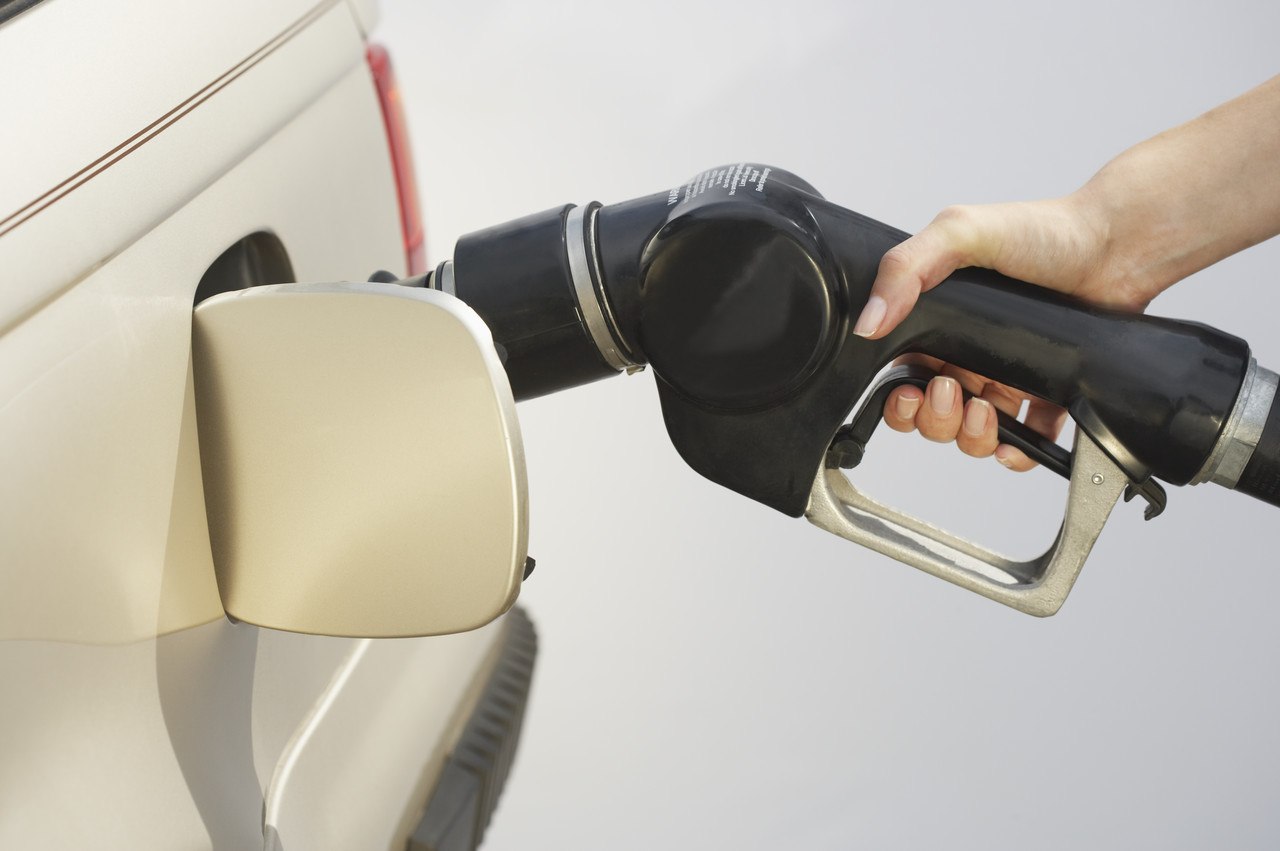
Which energy conversion is taking place when you put gasoline in a car?
a)
thermal -> electrical
b)
mechanical -> electrical
c)
chemical -> mechanical
d)
mechanical -> electromagnetic
65.
what type of energy is stored in a battery?
a)
electrical
b)
chemical
c)
thermal
d)
mechanical
66.
Electrical Energy is transferred to _____ Energy.
a)
Thermal
b)
Solar
c)
Electrical
d)
None
67.
Which energy transformation occurs in a toaster?
a)
chemical to electric
b)
electric to thermal
c)
kinetic to chemical
d)
thermal to potential
68.
A battery converts what type of energy to another?
a)
sound to kinetic
b)
light to heat
c)
mechanical to electrical
d)
chemical to electrical
69.
Energy transformations occur when...
a)
energy is created through conduction
b)
energy changes from one form to another
c)
two forces slide together that are touching
d)
a chemical reaction takes place
70.
Which items would have this energy transformation: chemical energy -> mechanical energy?
a)
person running
b)
candle burning
c)
windmill turning
d)
playing a violin
71.
A hairdryer converts -- 
a)
electrical energy into chemical
b)
electrical energy into thermal
c)
chemical energy into mechanical
d)
thermal energy into mechanical
72.
The diagram shows a complete circuit with a battery and a buzzer making noise. This circuit works by transforming -
a)
chemical energy to electrical to sound.
b)
electrical energy to thermal to light.
c)
sound energy to electrical to chemical.
d)
mechanical energy to electrical to sound.
73.
Which of these is an example of light energy being transformed into chemical energy?
a)
A glow stick lights up when broken.
b)
Water heated by the sun evaporates.
c)
A plant makes sugar in the sunlight.
d)
A battery causes a buzzer to vibrate.
74.
Which of these is not a source of chemical energy?
a)
Spaghetti
b)
The Sun
c)
Battery
d)
Petroleum
75.
The form of energy from the sun can be transformed into the energy needed for a tree to grow. What types of energy occur in this transformation?
a)
Electromagnetic - mechanical
b)
Potential - kinetic
c)
Light - chemical
d)
Nuclear - thermal
76.
The energy transformation that takes place when a flashlight is turned on is...
a)
Chemical - electrical - light
b)
Chemical - light - electrical
c)
Electrical - thermal - light
d)
Nuclear - light - electrical
77.
People get energy from the food that they eat and transform that energy as they move. Which energy transformations occur as a student rapidly rubs the palms of his hands together?
a)
mechanical to thermal to electrical
b)
chemical to mechanical to thermal
c)
mechanical to chemical to sound
d)
chemical to sound to electrical
78.

Which of the following best describes the energy transformations that occur when a flashlight that runs on batteries is turned on?

a)

chemical to mechanical to electrical to light

b)

light to electrical to sound

c)

chemical to light to mechanical to electrical

d)

electric to light to chemical