wayground logo

Free Printable Worksheets

Font size

S
M
L
XL
Worksheets

Benchmark 2 Review Weather and Ocean Currents

Total questions: 81

Worksheet time: 2hrs 54mins

Name
Class
Date
1.
Deep Ocean currents are a result of
a)
Global Wind Patterns
b)
Earth's Rotation
c)
Density
d)
All of the above
2.
The Coriolis Effect is caused by
a)
Earth rotating around the sun
b)
Earth rotating on its axis
c)
The tides
d)
Gravity
3.
The Gulf stream carries _____________ water from the east coast of The United States to the West coast of Europe.
a)
Cold
b)
Warm 
c)
Freezing
d)
Fresh
4.
What happens to a current when it comes in contact with a continent or landmass?
a)
It continues over the continent
b)
It stops
c)
It changes direction
d)
It is absorbed by the land
5.
Warm ocean currents generally come from
a)
The North Pole
b)
The South Pole
c)
The Equator
d)
Both A and B
6.
Cold ocean currents generally come from
a)
The North Pole 
b)
The South Pole
c)
The Equator
d)
Both A and B
7.
The California Current (west coast) carries _________ water from canada
a)
Cold 
b)
Warm
c)
Freezing
d)
Fresh
8.
Constantly moving system of deep-ocean circulation driven by temperature and salinity. It moves water around the globe.
a)
California Current
b)
Global Conveyor Belt
c)
Surface Currents
d)
Gulf Stream
9.
What process brings the deep cold ocean currents up to the surface?
a)
Conduction
b)
Global Wind Patterns
c)
Convection Currents
d)
Temperature and salinity
10.
Why are surface currents at the surface of the ocean?
a)
colder temperature
b)
colder temperature & more salinty
c)
warmer temperature & less salinty
d)
less salinty
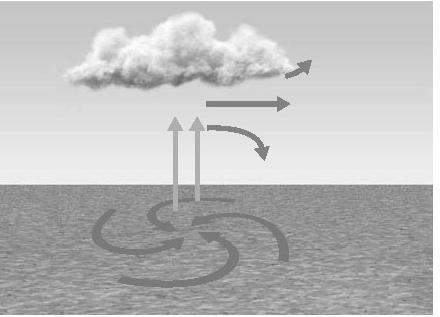
11.
Hot air rises because...
a)
it is less dense
b)
it is heavier
c)
it is more dense
d)
it contains Helium
12.
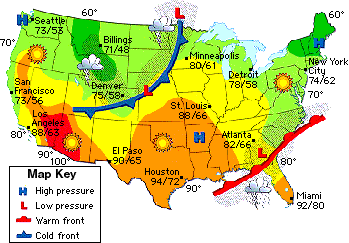
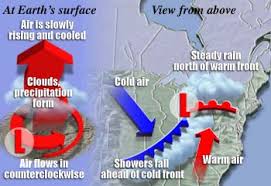
According to the map, which city is likely experiencing warmer weather?
a)
Seattle
b)
Chicago
c)
Boston
d)
San Diego
13.
Which type of weather is Dallas, Texas, likely experiencing?
a)
Thunderstorms
b)
Clear skies
c)
Cold temperatures
d)
Gentle precipitation for days
14.
Which of the following is most likely a cause of hurricanes?
a)
Cooler ocean temperatures
b)
Warmer ocean temperatures
c)
Large ocean waves
d)
Strong ocean currents
15.
A hurricane forms over the Atlantic Ocean. When it hits land and comes ashore, its wind speed decrease significantly.  This happens because the hurricane:
a)
gains more water from the flooded land than the ocean
b)
meets a land breeze
c)
meets a stronger hurricane moving from land
d)
no longer gains energy from warm ocean water
16.
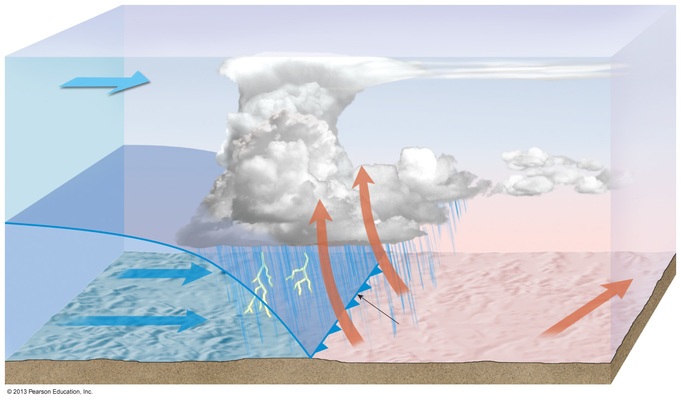
What type of weather usually goes with this symbol?
a)
Clear, sunny skies
b)
Cloudy skies
c)
Hot temperature
d)
Thunderstorms
17.
What type of weather will occur with this symbol?
a)
Thunderstorms, cooler temperatures
b)
Gentle precipitation, warmer temperatures
c)
Sunny skies, warmer weather
d)
Cloudy skies, cooler weather
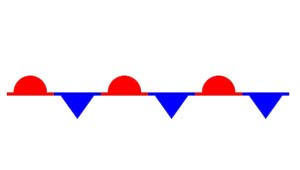
18.
This is the symbol for a... 
a)
Occluded Front
b)
Stationary Front
c)
Warm Front
d)
Cold Front 
19.
Which type of pressure system is pictured?
a)
high
b)
low
c)
medium
d)
none
20.
What type of weather would you expect with the pressure system pictured?
a)
clear
b)
cloudy
c)
severe storms
d)
hot
21.
Which term describes a circulation of air or water that is caused by uneven heating?
a)
convection current
b)
conduction current
c)
radiation current
d)
emission current
22.
____________ air sinks/falls because it is ____________dense.
a)
Cold, More
b)
Warm, Less
c)
Cold, Less
d)
Warm, More
23.
The place where two air masses meet.
a)
air mass
b)
air pressure
c)
water cycle
d)
front
24.
When air pressure is high, what type of weather do we experience?
a)
sunny and clear
b)
rainy and cloudy
25.
When air pressure is low, what type of weather do we experience?
a)
sunny and clear
b)
rainy and cloudy
26.

Hurricanes traveling over land or cold water will cause the storm to weaken.

a)

True

b)

False

27.
What is the “fuel” that “feeds” a hurricane
a)
cold air
b)
dry air
c)
warm and moist air
d)
warm and dry air
28.
What locations in the United States are most vulnerable to hurricanes?
a)
Florida
b)
Washington
c)
Tennessee
d)
Arkansas
29.
A low pressure system is located over Georgia. What type of weather will they have?
a)
clear, sunny skies
b)
cloudy and rainy
30.
A high pressure system is located north of New York City. What type of weather will be experienced there?
a)
clear, sunny skies
b)
cloudy and rainy
31.
Which one heats and cools fastest?
a)
land
b)
sea
c)
both are the same rate
d)
air
32.
What kind of weather happens during a warm front?
a)
Light rain or light snow
b)
Heavy rain or heavy snow
c)
Clear skies, temp. warms
d)
Clear skies, temp. cools
33.
What kind of weather happens during a cold front?
a)
Light rain or light snow
b)
Heavy rain or heavy snow
c)
Clear skies, temp. warms
d)
Clear skies, temp. cools
34.

Wind is caused by

a)

differences in humidity and dew point

b)

differences in air temperature and air pressure

c)

differences in continental deflection

d)

height above sea level

35.

Differences in air temperature and air pressure are caused by

a)

topography and elevation

b)

relative humidity

c)

evaporation, sublimation, and condensation

d)

uneven heating of the Earth's surface

36.

Both global winds and local winds

a)

are prevailing winds

b)

are based on their altitude

c)

move in straight paths

d)

are caused by uneven heating of the Earth's surface

37.

The model shows how the sun heats Earth at different latitudes.


How does this affect climate at different latitudes?

a)

The sun heats all of Earth so climates are similar throughout the globe.

b)

The uneven heating of Earth by the sun causes the climate to be warm and dry at the equator and cold and wet toward the poles.

c)

The angle of sunlight is different at different latitudes, which causes the climate to be warm at the equator and colder toward the poles.

38.
How does the air move in a land breeze?
a)
From east to west
b)
From west to east
c)
From the land to the ocean
d)
From the ocean to the land
39.
How does the air move in a sea breeze?
a)
wind moves from north to south
b)
wind moves from ocean to the land
c)
wind moves from the land to the ocean
d)
wind moves from south to north
40.
In a sea breeze, the air is warmer above the _____.
a)
land
b)
ocean
c)
sky
d)
beach
41.
Which best describes why winds at the beach change direction between day and night? **
a)
because the temperatures over land and over water change 
b)
because warm air over land sinks and stays in place over land
c)
because cool air rises and is replaced by warm air from the ocean 
d)
because cool air sinks and stays in place over land 
42.
Which best describes why winds at the beach change direction between day and night? **
a)
because the temperatures over land and over water change 
b)
because warm air over land sinks and stays in place over land
c)
because cool air rises and is replaced by warm air from the ocean 
d)
because cool air sinks and stays in place over land 
43.
Why does warm air rise?
a)
Warm air is more dense than cooler air.
b)
Warm air has more pressure than cooler air.
c)
Warm air is less dense than cooler air.
d)
Warm air has a higher dew point than cooler air.
44.
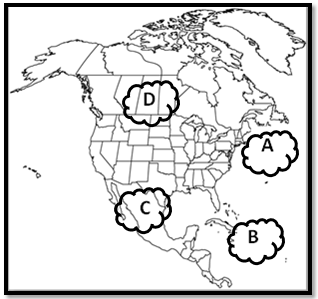
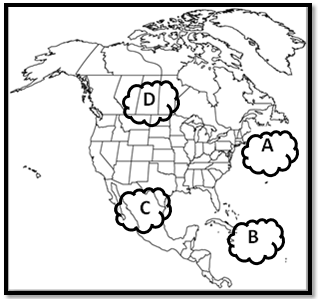
Which type of air would you find at air mass A?
a)
cold, dry
b)
warm, humid
c)
warm, dry
d)
cold, humid
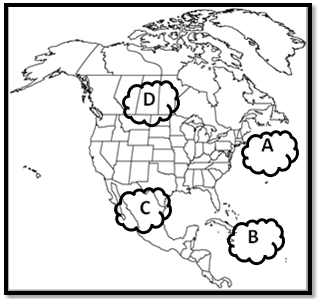
45.
Which type of air would you find at air mass B?
a)
cold, dry
b)
warm, humid
c)
warm, dry
d)
cold, humid
46.
Which type of air would you find at air mass C?
a)
cold, dry
b)
warm, humid
c)
warm, dry
d)
cold, humid
47.
Which type of air would you find at air mass D?
a)
cold, dry
b)
warm, humid
c)
warm, dry
d)
cold, humid
48.
What kind of breeze is this & what time of day/night would it form?
a)
Land breeze - daytime
b)
Land breeze - nighttime
c)
Sea breeze - daytime
d)
Sea breeze - nighttime
49.
rapidly moving cold air  mass runs into a warm air mass the cold air slides under the warm air. This is called a  .....
a)
cold front
b)
warm front
c)
stationary front
50.
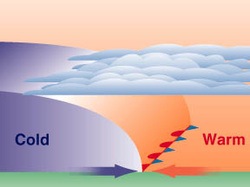
When a warm air mass gently slides on top of a cold air mass, and you have drizzly rain and then warmer weather, what type of front is it?
a)
warm front
b)
cold front
c)
occluded front
d)
stationary front
51.
What type of storm front is this? 
a)
warm front
b)
cold front
c)
stationary front
d)
occluded front
52.
Which most likely produces clear, cool weather?
a)
zero air pressure
b)
stable air pressure
c)
a low pressure system
d)
a high pressure system
53.
Which type of front is pictured?
a)
Cold front
b)
Warm front
c)
Occluded front
d)
Stationary front
54.
Which system results in rainy or stormy weather?
a)
high pressure
b)
low pressure
c)
hurricane
d)
weather system
55.
LABEL THE FOLLOWING FRONTS AND/OR WEATHER MAP SYMBOLS.
a)
 warm front
b)
cold front
c)
stationary front
d)
occluded front  
56.
Which city is experiencing thunderstorms?
a)
Denver
b)
New York 
c)
Miami 
d)
Boise
57.
Which city is currently experiencing a snow storm?
a)
Seattle
b)
Los Angeles
c)
Chicago
d)
New York
58.
A cold front is approaching Minneapolis. What will happen to the air temperature?
a)
stay the same
b)
increase
c)
decrease
59.
The weather forecast tomorrow says there will be a 15 mph northeast wind and a high temperature of 52 degrees. What three instruments will a meteorologist use to make this prediction?
a)
anemometer, wind vane, thermometer
b)
barometer, hygrometer, wind vane
c)
thermometer, satellite image, hygrometer
d)
wind vane, satellite image, barometer
60.
Which tool measures humidity or the amount of moisture in the air?
a)
wind vane
b)
barometer
c)
anemometer
d)
hygrometer
61.
Which tool measures air pressure?
a)
Thermometer
b)
Barometer
c)
Wind Vane
d)
Hygrometer
62.
Which tool measures wind speed?
a)
Anemometer
b)
Hygrometer
c)
Barometer
d)
Wind Vane
63.
What does this tool measure? (look at the picture)
a)
air pressure
b)
water vapor in the air/humidity
c)
temperature
d)
wind speed
64.
Measures weather conditions higher up in the atmosphere
a)
Weather Balloon
b)
Hot Air Balloon
c)
water balloon
d)
an airplane
65.
A radar tracking system to determine the location and velocity of a storm, clouds, precipitation, etc.
a)
Radar
b)
Weather Channel
c)
Dropper Radar
d)
doppler radar
66.
For snow to fall, the air temperature must be what?
a)
Above 0 degrees celsius
b)
Below 0 degrees celsius
c)
Freezing
d)
Warmer at the ground than high in the air
67.
what is the most common precipitation 
a)
sleet 
b)
freezing rain
c)
snow 
d)
rain 
68.
The ____ has a major effect on the water cycle.
a)
sun
b)
moon
c)
clouds
d)
rain
69.

What tool would be most useful in helping a meteorologist track and predict weather?

a)

a rain gauge

b)

weather radar

c)

an anemometer

d)

a barometer

70.
Which step of the water cycle shows water vapor heating up and going into the atmosphere?
a)
Condensation
b)
Precipitation
c)
Accumulation
d)
Evaporation
71.
Which step of the water cycle shows water collecting around dust particles and forming clouds?
a)
Condensation
b)
Precipitation
c)
Accumulation
d)
Evaporation
72.

What type of cloud is this?

a)

Stratus

b)

Cumulus

c)

Cirrus

73.

What type of cloud is this?

a)

Stratus

b)

Cumulus

c)

Cirrus

74.

What type of cloud is this?

a)

Stratus

b)

Cumulus

c)

Cirrus

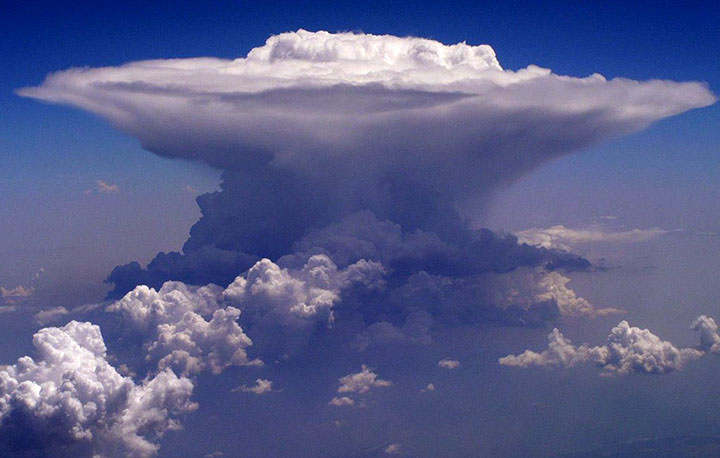
75.
Which cloud is this?
a)
cumulus
b)
cumulonimbus
c)
cirrus
d)
stratus
76.

A rain shadow forms on the ___________ side of a mountain as a result of ___________ rainfall there.

a)

windward; more

b)

windward; less

c)

leeward; more

d)

leeward; less

77.

Which side of the mountain usually gets deserts and why?

a)

windward, because of rising, moist air

b)

leeward, because of rising, dry air

c)

windward, because of sinking, moist air

d)

leeward, because of sinking, dry air

78.

As you go to the top of a mountain, what happens to the temperature?

a)

nothing

b)

it decreases

c)

it increases

d)

it fluctuates between warm and cold

79.

Which side of a mountain range is closer to the ocean?

a)

leeward side

b)

rain shadow side

c)

windward side

d)

downwind side

80.

What is the windward side of a mountain?

a)

The wet side that is upwind of the mountain.

b)

The side of the mountain with the most people.

c)

The dry side that is downwind of the mountain.

d)

The side of the mountain with the rain shadow.

81.

Which side of the mountain usually gets deserts and why?

a)

windward, because of rising, moist air

b)

leeward, because of rising, dry air

c)

windward, because of sinking, moist air

d)

leeward, because of sinking, dry air