wayground logo

Free Printable Worksheets

Font size

S
M
L
XL
Worksheets

Quarter 2 Assessment Review

Total questions: 82

Worksheet time: 1hrs 9mins

Name
Class
Date
1.

What type of force is this man using to push his grocery cart?

a)

Normal Force

b)

Gravity

c)

Air Resistance

d)

Applied Force

2.
What is the net force?
a)
20 N 
b)
0 N 
c)
400 N 
d)
40 N 
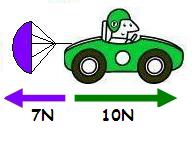
3.

What is the net force?

a)

3 N

b)

3 N, right

c)

17 N, right

d)

3 N, left

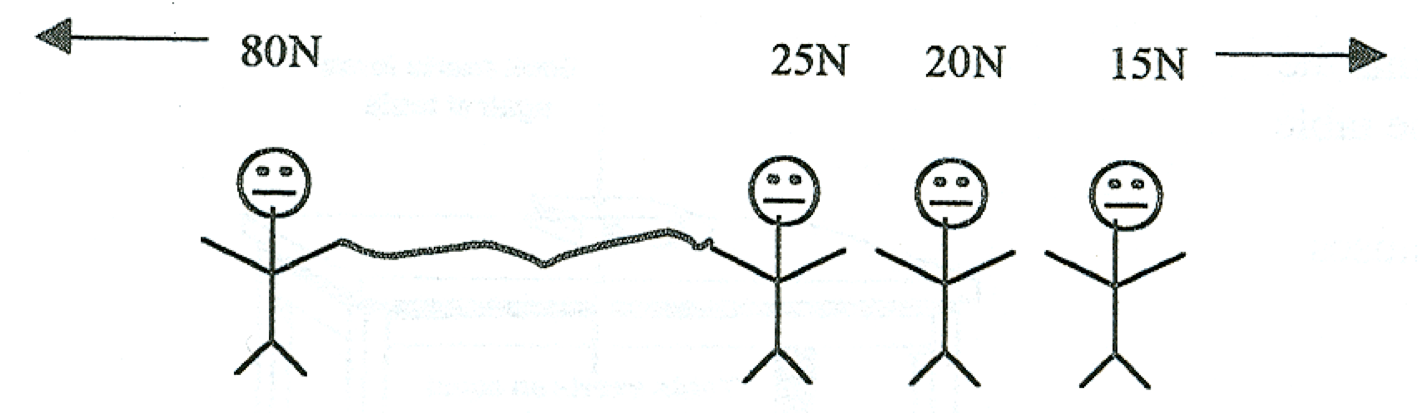
4.
Who wins the tug of war with what net force?
a)
The person on the left with 20 N
b)
The person on the left with 80 N
c)
The people on the right with 20 N
d)
The people on the right with 100 N
5.

A ____________ is a push or a pull on an object.

a)

friction

b)

force

c)

magnet

d)

gravity

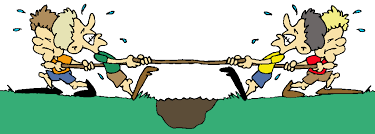
6.
If these teams are pulling with the same amount of force what will happen?
a)
The boy in blue will win.
b)
They will not move at all.
c)
The boy in red will win.
d)
Both will fall down.
7.
What will cause an object to move?
a)
Applied forces
b)
Balanced forces
c)
Unbalanced forces
8.
What force holds the planets in motion around the sun?
a)
Magnetic
b)
Electrical
c)
Gravitational
d)
Air Resistance
9.
What does the strength of gravity between two objects depend upon?
a)
Mass & distance
b)
Mass & weight
c)
Gravity & inertia
d)
Inertia & mass
10.
All objects in the universe have a gravitational attraction to each other. 
a)
True
b)
False
11.
This type of force resist motion between two surfaces that are pressed together
a)
contact
b)
gravity
c)
friction
12.

Are forces applied when the objects involved are in direct contact.

a)

Contact forces

b)

Normal forces

c)

action-at-a-distance forces

13.

Force with which objects tend to return to its original state after being stretched or compressed by an external force.

a)

Push or pull

b)

Tension

c)

Elasticity

d)

Friction

14.
What force are you demonstrating when you make a sock stick to your shirt? 
a)
Magnetic Force
b)
Electrical Force
c)
Gravitational Force
d)
Applied Force
15.
What force are you demonstrating when you bring the north and south poles of a magnet together? 
a)
Magnetic Force
b)
 Electrical Force
c)
 Contact Force
d)
Friction
16.

capacity to do work is called

a)

work

b)

joule

c)

energy

d)

none

17.
What does the Law of Conservation of Energy state?
a)
That energy is the movement of electrons within an atom.
b)
That energy is a means to an end.
c)
That energy can be created when needed.
d)
That energy cannot be created or destroyed.
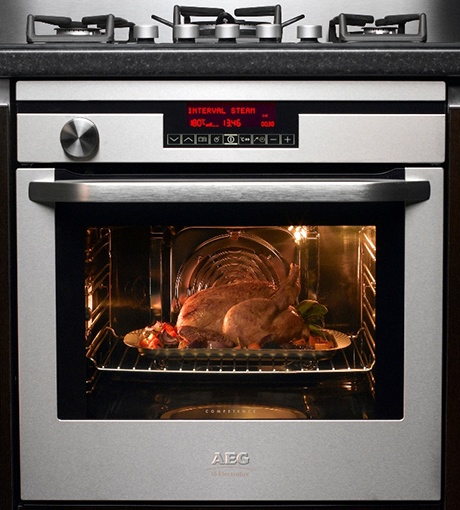
18.
What is the energy transformation?
a)
Electrical to Electromagnetic
b)
Mechanical to Electrical
c)
Electrical to Thermal
d)
Kinetic to Sound
19.
What is the energy transformation?
a)
Mechanical to Kinetic to Sound
b)
Mechanical to Electrical to Light
c)
Electrical to Thermal to Mechanical
d)
Kinetic to Sound to Potential
20.
What is the energy transformation?
a)
Potential to Kinetic
b)
Kinetic to Potential
c)
Electrical to Kinetic
d)
Kinetic to Electromagnetic
21.
The form of energy from the sun can be transformed into the energy needed for a tree to grow. What types of energy occur in this transformation?
a)
Electromagnetic - mechanical
b)
Potential - kinetic
c)
Light - chemical
d)
Nuclear - thermal
22.
Which energy conversion is taking place when you put gasoline in a car?
a)
thermal -> electrical
b)
mechanical -> electrical
c)
chemical -> mechanical
d)
mechanical -> electromagnetic
23.
Electrical Energy is transferred to _____ Energy.
a)
Thermal
b)
Solar
c)
Electrical
d)
None
24.
Can you create energy?
a)
Yes
b)
No
25.

Whats Newtons First Law?

a)

The more force applied to an object the faster it will accelerate.

b)

An object in motion will stay in motion and an object at rest will stay at rest unless acted by an outside force.

c)

for every ection there is an equal and oposite reaction

26.

The Law of Inertia

a)

Newtons 1st Law of motion

b)

Newtons 2nd Law of motion

c)

Newtons 3rd Law of motion

27.

Newton's third law states that any action will have a(n) ___ and ___ reaction

a)

Equal and similar

b)

Equal and opposite

c)

Equal and different

d)

Greater and opposite

28.

Acceleration: is the rate of change in _____.

a)

distance

b)

Speed

c)

Velocity

d)

displacement

29.
What is Newtons 2nd law of motion?
a)
Pancakes 
b)
Force= Mass multiplied by acceleration
c)
For every action there is a equal and opposite  re-action.
d)
Law of gravity 
30.
What is Newtons 2nd law of motion?
a)
Pancakes 
b)
Force= Mass multiplied by acceleration
c)
For every action there is a equal and opposite  re-action.
d)
Law of gravity 
31.
Which has more Inertia? (so need more force to move) 
a)
Truck
b)
Ant
c)
A cat
d)
A skateboard
32.
This graph demonstrates an object that is -
a)
Increasing speed
b)
At a constant speed
c)
Decreasing speed
d)
Stationary
33.

This graph demonstrates an object that is -

a)

Increasing speed away from the start

b)

Moving away from the start at a constant speed

c)

Decreasing speed toward the start

d)

Moving forward the start at a constant speed

34.
Which line represents an object moving at a faster speed?
a)
A
b)
B
35.
Which runner stopped for a rest?
a)
Albert
b)
Bob
c)
Charlie
36.
Which runner won the race?
a)
Albert
b)
Bob
c)
Charlie
37.
What is happening at A?
a)
Stationary
b)
Accelerating
c)
Slower steady speed; moving away from the starting position
d)
Steady speed; returning to start position
38.

Which scenario best matches the graph shown below?

a)

A student walked 2 km to his friend’s house in 20 minutes. Then the two friends walk 1 km together in 40 minutes.

b)

A boy walks 1.0 kilometer in 30 minutes. He then walks at a faster rate for another 30 minutes and travels 2.0 kilometers in that time.

c)

A student travels 2 km in 30 minutes. The student then travels another 2 km in only 10 minutes. After that, the student rests.

39.

What is the average speed of the entire trip? HINT: Find the last time and distance on the line and divide.

a)

6 km/ min

b)

300 km/min

c)

8.3 km/min

d)

0.12 km/min

40.

A girl on a bike rides down a hill 500 meters long in 50 seconds. What is her speed?

a)

100 m/s

b)

10 m/s

c)

1,000 m/s

d)

10 mph

41.

A trip to Florida takes 10 hours. The distance is 816 km. Calculate the average speed.

a)

81.6 km/hr

b)

81.6 mph

c)

82 m/s

d)

816 km/h

42.
A car travels 30 miles/hr for 3 hours, calculate the distance it will travel
a)
90 miles
b)
10 miles
c)
600 miles
d)
90 km
43.
A speed boat travels 200 miles at a speed of 20 miles/hr. How much time will it take to travel the 200 miles?
a)
10 hrs
b)
10 miles
c)
400 hrs
d)
100 km
44.

What is the breakdown of the Earth’s crust into sediment called?

a)

erosion

b)

deposition

c)

weathering

d)

whooshing

45.

Which one of the examples below is physical weathering?

a)

lichens growing on rock

b)

acid rain wearing away limestone

c)

oxidation (rusting) of a flag pole

d)

frost wedging splitting a rock apart

46.

Which of these terms describes the process of acid rain wearing out limestone?

a)

deposition

b)

chemical weathering

c)

physical weathering

d)

erosion

47.

Which of these is an example of erosion?

a)

light shining onto a mountain

b)

wind blowing away sediment

c)

rain breaking down rock

d)

all options are correct

48.

What is the process called when a glacier deposits rocks in oceans and lakes?

a)

deposition

b)

chemical weathering

c)

physical weathering

d)

erosion

49.

What is the movement of weathered material (sediment) from one place to another by wind, water, gravity, or ice?

a)

erosion

b)

deposition

c)

chemical weathering

d)

physical weathering

50.

Extreme temperature changes is an example of what type of weathering?

a)

chemical

b)

physical

51.

Weathering, erosion, and deposition impact Earth's geographic features.

a)

true

b)

false

52.

_____________________ changes the identity of rocks and it involves a chemical reaction or change.

a)

Physical weathering

b)

Chemical weathering

c)

Deposition

d)

Erosion

53.

This is an example of _____________________________.

a)

physical weathering

b)

chemical weathering

54.

This is the process of dropping sediment in a new location.

a)

Weathering

b)

Erosion

c)

Deposition

55.

Rain washing away soil from a hillside is an example of...

a)

physical weathering

b)

erosion

c)

deposition

d)

chemical weathering

56.

A pure substances ________ be broken down into simpler matter using physical methods.

a)

sometimes

b)

can

c)

can not

57.

What are two the two types of mixtures?

a)

elements

b)

compounds

c)

heterogenous

d)

homogenous

58.

What is the simplest kind of pure substance?

a)

Element

b)

Compound

c)

Homogenous Mixtures

d)

Heterogenous Mixtures

59.

Compounds are make up of.....

a)

One element

b)

No elements

c)

Multiple types of elements

60.

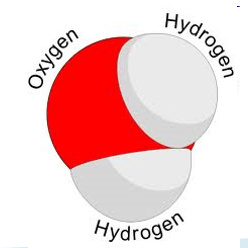
This is a water molecule. It is a ________.

a)

Element

b)

Compound

c)

Heterogenous Mixture

d)

Homogenous Mixture

61.

T/F A mixture is something that CAN be broken down into simpler materials using physical methods.

a)

True

b)

False

62.

Why kind of mixture is this? All parts of the mixture are visible because they do not mix together.

a)

Heterogeneous

b)

Homogenous

c)

Element

d)

Compound

63.

Why kind of mixture is this? Compounds cannot be distinguished from each other.

a)

Heterogeneous

b)

Homogenous

c)

Element

d)

Compound

64.
Which has a pH below 7?
a)
Acid
b)
Base
65.
Which has a bitter taste?
a)
Base
b)
Acid
c)
flagella
d)
cila
66.

What pH is the strongest base?

a)

1

b)

7

c)

4

d)

14

67.
What methods can you use to measure the pH of a solution?
a)
Observing color or clarity
b)
Measuring mass or volume
c)
Measuring density or electrical conductivity
d)
Using acid base-indicators or pH meters
68.
Which of the following is most likely to be basic:
a)
Lemon juice
b)
Vinegar
c)
Laundry detergent
d)
Coke
69.
Tastes Sour
a)
Acids
b)
Bases
c)
Salts
d)
All
70.

Bases have a pH of

a)

7

b)

Less than 7

c)

More than 7

71.
Blue Color: Chemical or Physical Property
a)
Chemical Property
b)
Physical Property
72.
Density: Chemical or Physical Property
a)
Chemical Property
b)
Physical Property
73.
Flammability (burns): Chemical or Physical Property
a)
Chemical Property
b)
Physical Property
74.
Solubility (dissolves): Chemical or Physical Property
a)
Chemical Property
b)
Physical Property
75.
Melting Point: Chemical or Physical Property
a)
Chemical Property
b)
Physical Property
76.
Reacts with Water: Chemical or Physical Property
a)
Chemical Property
b)
Physical Property
77.
Hardness: Chemical or Physical Property
a)
Chemical Property
b)
Physical Property
78.
Boiling Point: Chemical or Physical Property
a)
Chemical Property
b)
Physical Property
79.

Physical properties....

a)

change the matter when studied

b)

can be observed and measured without changing the matter being studied

c)

include the ability to burn and rust

d)

are useless unless studied in a lab

80.
Which of the following is not a chemical property? 
a)
rusting 
b)
boiling 
c)
rotting 
d)
burning 
81.
Which one of these is a chemical property?
a)
melting point
b)
boiling point
c)
color
d)
flammability
82.

What is the outcome of observing a chemical property?

a)

Nothing

b)

A new substance is formed with different properties

c)

NaCl

d)

A rise in thermal conductivity