
 Worksheets
Unit 3 Test Review
Total questions: 85
Worksheet time: 1hrs 1mins
Name the largest layer
crust
mantle
outer core
inner core
Which layer is the thinnest?
crust
mantle
outer core
inner core
Which layer is plastic-like and allows the crust to flow over it?
lithosphere
asthenosphere
mantle
outer core
Which layer is responsible for the Earth's magnetic field?
crust
mantle
outer core
inner core
Which layer is solid and made of iron and nickel?
outer core
inner core
mantle
crust
Which layer has strong convection currents, which are responsible for the crust's movement?
crust
mantle
outer core
inner core
Which layer is made up of two different kinds of layers, continental and oceanic?
crust
mantle
outer core
inner core
What type of rock is found most readily in the crust?
gold
quartz
gabbro
granite
Which layer is on the outside?
crust
mantle
outer core
inner core
Which layer is the most dense and in the middle of the Earth?
crust
mantle
outer core
inner core
Temperature and pressure ___ as you move towards the center of the Earth.
decrease
increase
neither answer is correct.
Which of the following is the correct order of the Earth's layers moving inward to the center.
Crust
Mantle
Inner Core
Outer Core
Mantle
Outer Core
Inner Core
Crust
Inner Core
Outer Core
Crust
Mantle
Outer Core
Inner Core
Mantle
Crust
The crust and upper portion of the mantle are called the
asthenosphere.
lithosphere.
Which of the following statements is true about the inner core?
A. It is mostly made up of copper
B. It is mostly made up of iron and nickel
C. It is mostly made up of calcium
D. It is mostly made up of magnesium
In which layer of the Earth would you find convection currents?
A. crust
B. mantle
C. outer core
D. inner core
This layer of the Earth is made up of the Continental and Oceanic _________.
A. Mantle
B. Crust
C. Core
D. Mesosphere

Which layer is # 20.
A: Mantle
B: Lithosphere
C: Asthenosphere
Which of the following statements is an opinion about the mantle?
A. it makes up the bulk of the Earth’s mass
B. heat churns through it
C. it is the most important layer of the Earth

Which layer is # 19?
A: Mesosphere
B: Lithosphere
C: Asthenosphere
Which layer is the most dense and in the middle of the Earth?
crust
mantle
outer core
inner core
As we travel deeper into the Earth which of the following is true:
A. Pressure goes up and temperature goes down
B. Pressure goes down and temperature goes up
C. Both pressure and temperature go up
D. Both pressure and temperature go down
As we travel deeper into the Earth which of the following is true:
A. Pressure goes up and temperature goes down
B. Pressure goes down and temperature goes up
C. Both pressure and temperature go up
D. Both pressure and temperature go down

Which layer is # 18?
A: Mesosphere
B: Lithosphere
C: Asthenosphere
Tectonic plates that make up Earth's crust move because of _________________ in Earth's mantle.
convection currents
gravity
magnetic forces
conduction currents
From least to most dense, what is the correct order of Earth's four major layers?
crust, mantle, outer core, inner core
mantle, inner core, outer core, and crust
inner core, outer core, mantle, crust
crust, outer core, inner core, mantle
What composes about 71% of Earth's outermost layer?
oceanic crust
asthenosphere
continental crust
lithosphere

True or False? Heat rising from deep inside earth can move the crust’s plates.
Magnetic minerals in volcanic rock point to
the current north magnetic pole.
the north magnetic pole at the time they crystallized.
the north magnetic pole on the adjacent continent.
none of these.
What was Wegener’s continental drift idea?
The continents have moved slowly apart to their current locations.
The continents have always been located at their current locations.
The continents are moving slowly together from their current locations.
None of these
True or False-Similar fossil records across continents was evidence for continental drift.
True
False
Alfred Wegener named his single supercontinent ____________, which means "all Earth" in ancient Greek.
Pandora
Gandowandaland
Pangea
Percia
The most common type of minerals that record the direction and strength of the magnetic field are called ____________.
magnatips
magnabytes
magnalytes
magnetite
When all the continents are together, it is called a(n) ____________ continent.
massive
gigantic
enormous
super
The remains or traces of ancient life are called ____________.
bones
remanents
fossils
none of the above
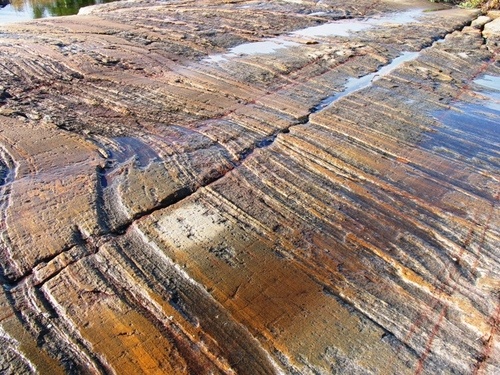
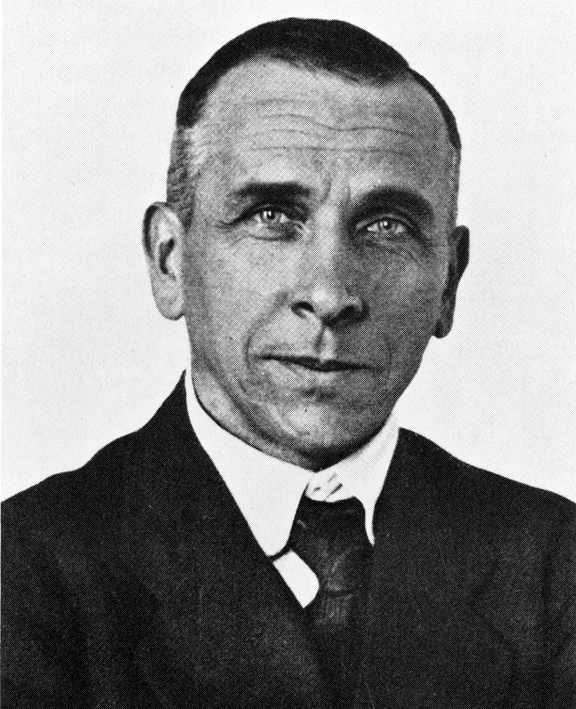
Alfred Wegener used all of the following for evidence of his idea EXCEPT...
The shapes of the continents fitting together like a puzzle
Similar fossils on different continents
Comparable modern weather patterns on different continents
Similar rock formations on different continents

According to the continental drift hypothesis, the presence of similar fossils in South America and Africa supports which scientific idea?
Animals easily and frequently travel from Africa to South America.
Species of animals probably traveled between continents on natural rafts (such as trees destroyed in tsunamis).
Land bridges once existed that connected the continents.
South America and Africa were once connected together.
The youngest rocks on the ocean floor are located ____.
near continents
at mid-ocean ridges
far from mid-ocean ridges
near Asia
Scientists have observed that the continents move apart or come together at speeds of a few centimeters per ____.
century
year
day
decade
Seafloor spreading occurs because ____.
new material is being added to the asthenosphere
earthquakes break apart the ocean floor
sediments accumulate at the area of spreading
molten material beneath Earth's crust rises to the surface
A vast, underwater mountain chain is called a(n) _________.
ocean ridge
oceanic crust
deep-sea trench
ocean floor sediment

What particular event is shown on the picture?
mid-ocean ridge
subduction zone
transform boundary
divergent boundary
What technology did scientists use in the mid-1900s to map the mid-ocean ridge?
satellites
submarines
deep-sea diving
sonar
In sea-floor spreading, molten material rises from the mantle and erupts
in deep-ocean trenches
along the edges of all the continents
along mid-ocean ridges
at the north and south plate
The process by which the ocean floor sinks beneath an deep-ocean trench and back into the mantle is known as
continental drift
subduction
conduction
convection
The process of ___________ continually adds new crust to the ocean floor along both sides of the mid-ocean ridge.
plate tectonics
seafloor spreading
continental drift
convection

What kind of plate boundary is shown on the picture?
divergent
convergent
transform
trench
The ocean floor sinks beneath a deep-ocean trench and back into the mantle in a process known as ________.
convection
subduction
continental drift
plate tectonics

What is formed at the subduction zone?
mountain ranges
deep-sea trenches
oceanic ridge
hills and valleys
What are the mechanisms that have been proposed to explain the movement of Earth’s tectonic plates?
slab pull and sea-floor spreading
mantle convection and continental drift
sea-floor spreading and continental drift
mantle convection, ridge push, and slab pull
A plate boundary is a place where two tectonic plates meet. There are several types of tectonic plate boundaries. Which statement below shows the correct definition of a tectonic plate boundary?
At a divergent boundary, plates separate.
At a transform boundary, plates move apart.
At a convergent boundary, plates slide past each other.
At a divergent boundary, one plate sinks under another plate.
The movement of tectonic plates is so slow and gradual that you cannot see or feel them moving. As a result, scientists depend on the global positioning system (GPS) to verify tectonic plate motion. Satellites can measure the small distances that GPS ground stations move over time. In what units is the movement of tectonic plates measured?
. meters/day
meters/week
centimeters/year
kilometers/month

Identify this type of plate movement
Divergent Boundary
Convergent Boundary
Transform Boundary
None
Tectonic plates can be made of continental crust or oceanic crust, or a combination of the two. Besides their locations, how else are these two kinds of crust different?
Continental crust is thinner than oceanic crust.
Continental crust is thicker than oceanic crust.
Tectonic plates made of continental crust are larger than plates made of oceanic crust.
Tectonic plates made of continental crust are smaller than plates made of oceanic crust.
__________ describes the large scale movement of the Earth’s lithosphere.
Crust Displacement
Mantle Movement
Plate Tectonic
None
This scientist was the first to develop the idea of continental drift.
Wegener
Einstein
Copernicus
Hawking

Identify this type of plate movement
Divergent Boundary
Convergent Boundary
Transform Boundary
None
Tectonic Plates are the pieces of the ____________ that move around on top of the asthenosphere.
Lithosphere
Mantle
Hard Rocks
Both B and C
Around 200 – 250 million years ago ______ started to break into separate plates.
Oceans
China
Pangea
None

The illustration below shows some of Earth’s tectonic plates. The arrows indicate the directions in which some of these plates are moving. According to this map, where can you infer that mountains are being formed?
A.between the Scotia Plate and the Pacific Plate
between the Cocos Plate and the Caribbean Plate
between the South American Plate and the African Plate
between the North America Plate and the Antarctic Plate
The spread of molten rock comes up from through cracks and creates new oceanic crust
Divergent Boundary
Convergent Boundary
Transform Boundary
None
Two plates moving or sliding by each other.
Divergent Boundary
Convergent Boundary
Transform Boundary
None
Two plates collide
Divergent Boundary
Convergent Boundary
Transform Boundary
None

Identify this type of plate movement
Divergent Boundary
Convergent Boundary
Transform Boundary
None
In some areas of the world, like California and Japan, earthquakes are a common occurrence. How can this best be explained?
The strong ocean currents are undermining both areas causing earthquakes.
Both areas are located near the edge of the Pacific Ocean, the unstable sand causes earthquakes.
Both areas are subjected to strong ocean wind and waves that causes earthquakes.
Both areas are on the boundary of active plates, the motion of the plates causes earthquakes.
Alfred Wegener thought which 2 continents looked like puzzle pieces that could fit together?
Antarctica and Asia
South America and Africa
South America and Australia
Africa and Pangaea
continental
puzzle effect
Most tectonic plates have both oceanic and continental crust. How are they different?
Oceanic is thinner and less dense than continental.
Continental is thinner than more dense than oceanic.
Continental is thicker and less dense than oceanic.
Oceanic is thicker and more dense than continental.
What is CONVECTION? (Select all that apply)
The transfer of heat by the movement of a heated solid.
When heated particles become less dense and rise, then they cool off become more dense and sink.
The transfer of heat when cold matter rises and heated matter sinks.
What geologic feature will form at a hot spot?
volcano
folded mountain
deep sea trench
rift valley
What type of plate boundary creates new sea floor?
Divergent
Convergent
Transform
Subduction

What type of plate boundary is represented in the picture?
Athensphere
Divergent
Transform
Convergent

Which crust subducts because it is denser than other crust?
pizza crust
oceanic crust
continental crust
new crust
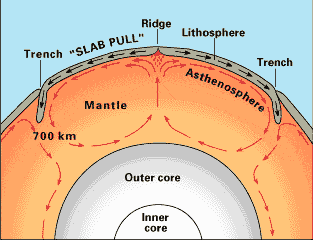
What is the source of energy that drives plate movement?
the subducton of the sea floor
the different densities of the oceanic and crustal plates
convection currents in the asthenosphere
the friction force between the plates that move past each other
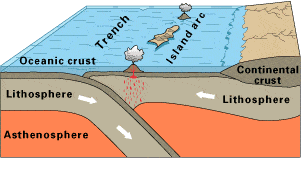
Observe this diagram of a plate boundary. One statement BEST describes what is happening. It is that
the oceanic crust is melting.
the denser ceanic crust is subducting under the less dense oceanic crust
volcanic islands are forming.
the tectonic plates are moving away from each other.
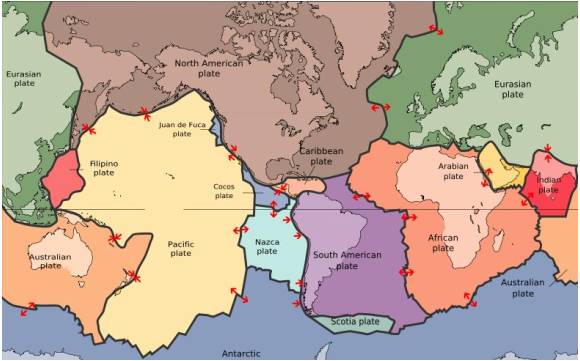
The map in the picture shows tectonic plate boundaries. This map would be useful in predicting the location of future
droughts
hurricanes
earthquakes
tornadoes

