wayground logo

Free Printable Worksheets

Font size

S
M
L
XL
Worksheets

Review

Total questions: 88

Worksheet time: 2hrs 44mins

Name
Class
Date
1.

Which substance is not an element?

a)

Neon (Ne)

b)

Oxygen (O2)

c)

Carbon dioxide (CO2)

d)

Iron (Fe)

2.

Which substance is a compound?

a)

Neon (Ne)

b)

Oxygen (O2)

c)

Carbon Dioxide (CO2)

d)

Nitrogen (N2)

3.

Which substance is not a molecule?

a)

Neon (Ne)

b)

Oxygen (O2)

c)

Carbon Dioxide (CO2)

d)

Nitrogen (N2)

4.
The nucleus of an atom can be described as:
a)
spacious and negatively charged
b)
dense and positively charged
c)
spacious and positively charged
d)
dense and negatively charged
5.
How did Rutherford discover the proton?
a)
Cathode tube ray experiment
b)
Gold Foil Experiment
c)
Planetary Model
d)
Plum Pudding Model
6.
What does the nucleus of an atom contain?
a)
Electrons and neutrons
b)
Protons and neutrons
c)
Neutrinos and positrons
d)
DNA and RN
7.
Electrons can be found in
a)
The protons
b)
The nucleus
c)
Electron Clouds
8.
A pure substance that cannot be broken down into other substances by chemical or physical means. 
a)
compound          
b)
atom
c)
mixture 
d)
element
9.
Can a mixture be separated? 
a)
No
b)
Yes
c)
Only sometimes
10.
The basic unit of matter is
a)
a mixture
b)
a substance
c)
an atom
d)
a compound
11.
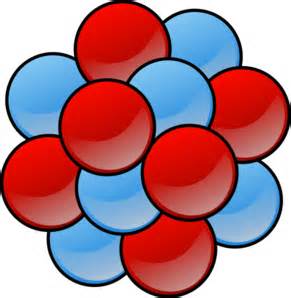
This picture represents which of the following?
a)
Element
b)
Compound
c)
Mixture
12.
A pure substance...
a)
is an element or a compound
b)
is an element or a mixture
c)
is a compound or a mixture
d)
is a mixture
13.
NaHCO3 is an example of —
a)
an abbreviation
b)
a compound
c)
a mixture
d)
an element
14.

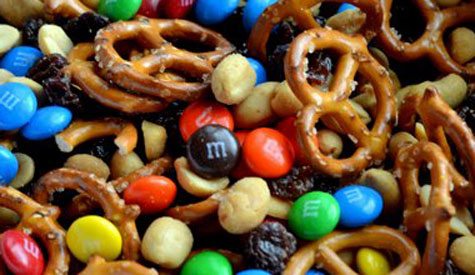
Describe this sample

a)

Pure element

b)

Pure compound

c)

Mixture of elements

d)

Mixture of compounds

15.
Describe this sample
a)
Pure compound
b)
Mixture of elements
c)
Mixture of compounds
d)
Mixture of elements and compounds
16.

As temperature rises ___________.

a)

an atom's kinetic energy stays the same

b)

an atom's kinetic energy increases

c)

an atom's kinetic energy decreases

d)

an atom's mass increases

17.

What state(s) of matter are present at B-C?

a)

Solid-liquid

b)

Liquid

c)

Liquid-gas

d)

Gas-Solid

18.

Arrange the 4 states of matter (from shortest to longest) based on their relative distance between particles.

a)

solid < liquid < gas < plasma

b)

plasma < gas < solid < liquid

c)

solid < plasma < gas < liquid

d)

gas < liquid < solid < plasma

19.

If a solid, liquid, gas, and plasma are at the same temperature, which has the strongest attractions between its atoms?

a)

Solid

b)

Liquid

c)

Gas

d)

Plasma

20.
When a liquid changes its phase and turns into a solid it is known as
a)
condensation.
b)
melting.
c)
vaporization.
d)
freezing or solidification.
21.

state of matter that has a fixed volume and a fixed shape

a)

solid

b)

liquid

c)

gas

d)

plasma

22.
When an electric arc superheats and ionizes a gas such as compressed air, it creates a fourth state of matter known as the _____.
a)
plasma
b)
puddle
c)
arc
d)
electrode
23.

Phase change going from a Gas to a Solid...

a)

Deposition

b)

Sublimation

c)

Condensation

d)

Vaporization

24.

When placed at equal distances apart, the greatest gravitational attraction will be between two

a)

skateboards

b)

bowling balls

c)

school buses

25.

Which is needed to determine the amount of gravitational force between two objects?

a)

distance and mass

b)

weight and time

c)

area and weight

26.

The gravitational force exerted by an object depends on its

a)

volume

b)

mass

c)

weight

27.
What is gravitational force?
a)
It makes objects at rest start moving.
b)
It makes objects that are moving stop.
c)
The force of attraction between two objects.
d)
It pulls you into space.
28.
As the product of two objects' masses increases, the pull of gravity
a)
Increases
b)
Decreases
c)
Stays the same
29.
Mass is a measurement of 
a)
how much matter is present in an object
b)
how much weight is present in an object
c)
the amount a spring is compressed on a scale
d)
none of the answers are correct
30.
Jupiter has about 317 times more mass than Earth. What can you infer from this fact? 
a)
That Jupiter’s gravitational force is much weaker than on Earth’s gravitational force.
b)
That Jupiter’s gravitational force is much stronger than Earth’s gravitational force.
c)
That Jupiter’s and Earth’s gravitational forces are equal.
d)
Mass has no effect on the gravitational force between two objects
31.
Which of these best describes why your weight (on Earth) would change on another planet?
a)
Dehydration effects on different planets change weight.
b)
In general, the smaller the planet, the greater weight
c)
Different planets have different gravitational pulls
d)
Weight does not change, no matter where you are.
32.

What is the relationship between mass and gravitational pull?

a)

Higer mass creates higher gravitational pull

b)

Lower mass creates higher gravitational pull

c)

Lower gravitational pull creates more mass
33.
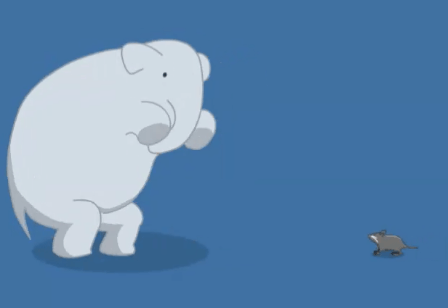
Which objects have a STRONG force of gravity?
a)
Objects with GREATER mass, like elephants
b)
Objects with LESS mass, like mice
34.
What is the SI unit used to measure force? 
a)
pounds 
b)
grams 
c)
newtons 
d)
friction
35.
As distance between two objects increase the pull of gravity 
a)
Increases
b)
Decreases
c)
Stays the same
36.
Which of the following never changes no matter where in the universe?
a)
weight
b)
force
c)
mass
d)
pounds
37.
A person would weigh less on on the Moon than on the Earth because . . .
a)
Moon has more mass, and therefore more gravity
b)
Moon has less mass, and therefore more gravity
c)
Moon has more mass, and therefore less gravity
d)
Moon has less mass and therefore less gravity
38.
As mass increases, what happens to gravitational force?
a)
increases
b)
decreases
c)
stays the same
d)
i don't know
39.

The distance travelled in a given amount of time is represented by which formula? Speed = distance / time (s=d/t)

a)

Mass

b)

Height

c)

Speed

d)

Force

40.

Energy that is stored and only transforms when an outside force acts on the object

a)

Kinetic energy

b)

Speed

c)

Potential energy

d)

Friction

41.

What is it called when two surfaces rub against each other?

a)

Energy

b)

Force

c)

Gravity

d)

Friction

42.

The three examples pictured are of

a)

Non-contact Forces

b)

Contact Forces

43.

The force between the phone and the mount is a

a)

contact force

b)

non-contact force

44.

What TWO ways can you increase gravitational attraction between two objects?

a)

Give the objects more mass

b)

Make the objects closer to each other

c)

Give the objects less mass

d)

Make the objects further to each other

45.
The Law of Conservation of Energy states:
a)
Energy can created or destroyed but not transformed 
b)
Energy cannot be created or destroyed, it can only transformed
c)
Energy can't be created, destroyed or transformed
46.
According to the Law of Conservation of energy, the amount of energy before and after a reaction must be the same. Which statement below is true?
a)
The total amount of energy is conserved
b)
The total amount of energy is less after a reaction
c)
The total amount of energy is more after a reaction
47.
Which energy transformation below matches?
Water moving over a dam to move a generator?
a)
kinetic to chemical
b)
kinetic to electrical
c)
solar to electrical
48.
Which energy transformation below matches?
A book falling?
a)
chemical to sound and heat
b)
kinetic to sound and heat
c)
electrical to sound and heat
49.
Which energy transformation below matches?
Animals eating food?
a)
electrical to potential
b)
chemical to kinetic
c)
potential to chemical
50.
Which energy transformation below matches?
Burning coal or carbon-based fuel at a powerplant?
a)
chemical to heat to electrical
b)
mechanical to chemical to sound
c)
electrical to chemical to heat
51.
Which energy transformation below matches?
An electrical circuit?
a)
chemical to heat, sound, light, mechanical
b)
solar to heat, sound, light, mechanical
c)
electrical to heat, sound, light, mechanical
52.
Potential or kinetic?
Running?
a)
potential
b)
kinetic
53.

Atoms and molecules become ___________ during condensation.

a)

Slower

b)

Faster

c)

Red

54.

Heat energy is a form of...

a)

Potential energy

b)

Kinetic energy

c)

Static energy

55.

Molecules begin to move faster during conduction because...

a)

they are eager to reach the other side of the container

b)

they are being chased by bears

c)

they collide with other fast-moving molecules.

56.

Atoms and molecules of fluids rise and sink due to differences in density caused by temperature changes during...

a)

Convection

b)

Conduction

c)

Radiation

57.

Molecules of sand on the beach become faster during the day as a result of...

a)

Conduction

b)

Convection

c)

Radiation

58.

The direction of heat flow is...

a)

From hot to cold

b)

From cold to hot

c)

Random

59.
What happens to particles as they cool down?
a)
They slow down
b)
Nothing
c)
They don't move
d)
They speed up
60.
What happens to particles as they heat up?
a)
They slow down
b)
Nothing
c)
They don't move
d)
They speed up
61.
Thermal energy ALWAYS moves from _____ to _____.
a)
solid to liquid
b)
ice to water
c)
hot to cold
d)
solid to gas
62.
Which example below is an example of radiation?
a)
Standing on a hot metal bridge
b)
The attic is warmer than the basement
c)
The Sun heating the Earth
d)
Touching hot sand with your feet
63.

The Law of Conservation of Mass states Matter is NEITHER created nor destroyed.

a)

True

b)

False

64.

How many oxygen atoms are in this chemical formula?

a)

6 oxygen atoms

b)

2 oxygen atoms

c)

3 oxygen atoms

d)

4 oxygen atoms

65.
If a reaction starts with a total 75g of reactants it should produce 
a)
a total of 40g of products
b)
a total of 75g of products
c)
a total of 180 g of products
d)
None of the above
66.
How many elements does PbNO3 have?
a)
2
b)
3
c)
4
d)
5
67.
How many nitrogen atoms does NH3 have?
a)
1
b)
2
c)
3
d)
4
68.

No new substance is formed in a physical change.

a)

True

b)

False

69.
Evidence of a physical change.
a)
New substance
b)
Shape Change
c)
Light produced
d)
Gas released.
70.

Chemical channges are ______________ chnages.

a)

Temporary

b)

Permanent

71.
If a new substance is formed would this be a physical or chemical change?
a)
Physical
b)
Chemical
72.

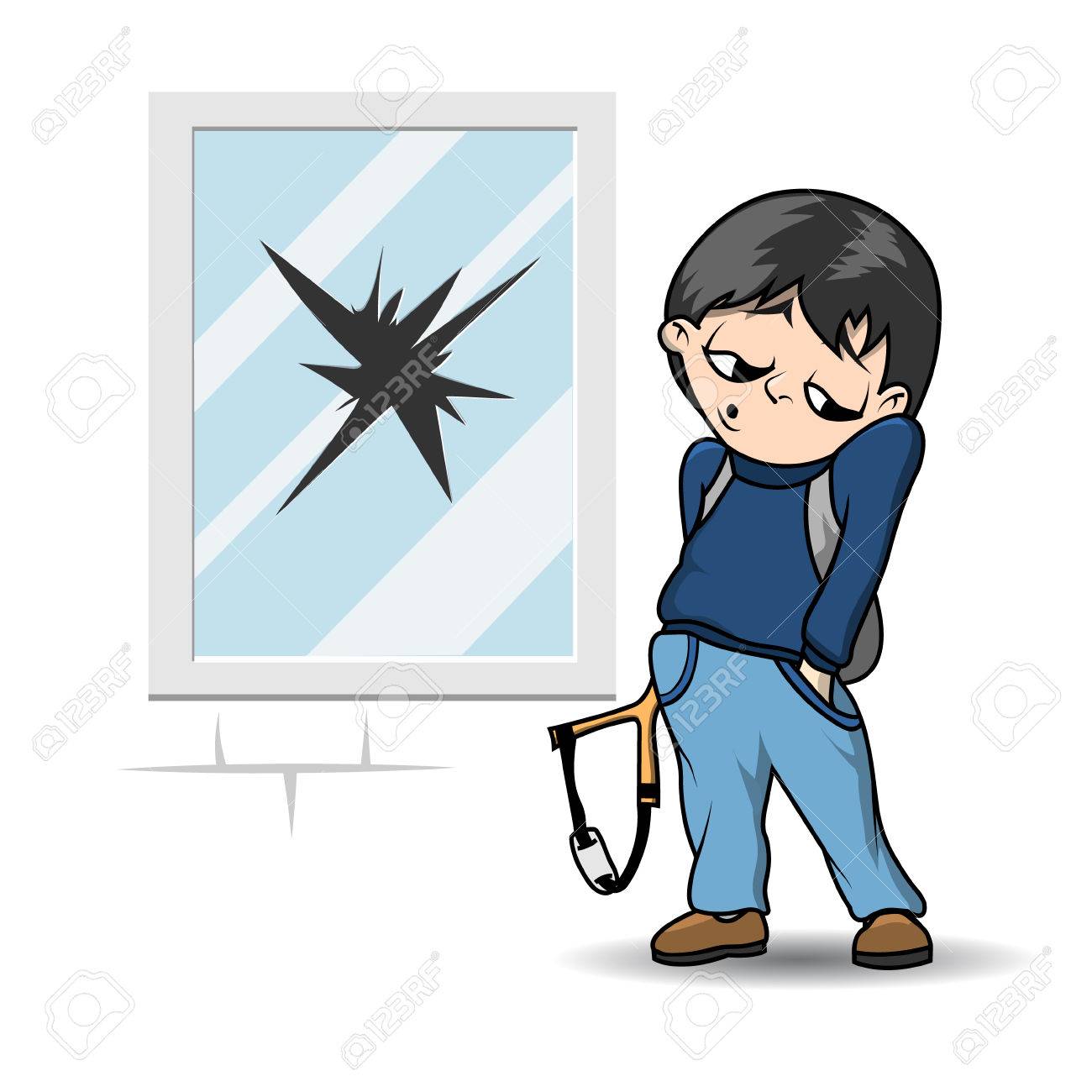
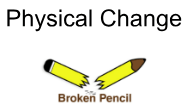
What kind of change is breaking a window?
a)
b)
73.
Is sour milk a physical or chemical change?
a)
Physical
b)
Chemical
74.
Is melting iron a physical or chemical change?
a)
Physical
b)
Chemical
75.
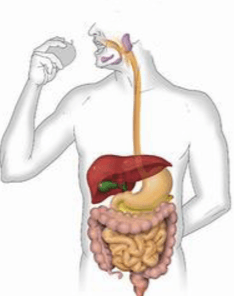
Is digesting your food a physical or chemical change?
a)
Physical
b)
Chemical
76.
Fireworks Exploding are a ________ change.
a)
Physical Change
b)
Chemical Change
77.

What kind of change is baking a cake?

a)
b)
78.

What kind of change is crushing a soda can?

a)
b)
79.

What is light defined as in the context of the provided material?

a)

A disturbance that transfers energy from one place to another without transferring matter.

b)

Electromagnetic radiation that you can see.

c)

The maximum extent of the repeating quantity from equilibrium.

d)

A material through which light does not pass.

80.

What type of wave is a sound wave?

a)

A transverse wave.

b)

A longitudinal wave.

c)

A mechanical wave that can travel only through matter.

d)

All of the above

81.

What is the definition of frequency in the context of waves?

a)

The perception of how high or low a sound is.

b)

The number of times the pattern repeats in a given amount of time.

c)

The transfer of energy from a wave to the medium through which it travels.

d)

The passage of a wave through a medium.

82.

What does pitch refer to in terms of sound waves?

a)

The bouncing of a wave off a surface.

b)

The change in direction of a wave when it travels by the edge of an object or through an opening.

c)

The perception of how high or low a sound is; related to the frequency of a sound wave.

d)

The transfer of energy from a wave to the medium through which it travels.

83.

What does absorption mean when discussing waves?

a)

The number of times the pattern repeats in a given amount of time.

b)

The passage of a wave through a medium.

c)

The transfer of energy from a wave to the medium through which it travels.

d)

The change in direction of a wave when it travels by the edge of an object or through an opening.

84.

What is meant by transmission in the context of waves?

a)

The bouncing of a wave off a surface.

b)

The transfer of energy from a wave to the medium through which it travels.

c)

The passage of a wave through a medium.

d)

The perception of how high or low a sound is.

85.
Visible light is which type of wave?
a)
seismic
b)
mechanical
c)
longitudinal
d)
electromagnetic
86.
Which of these colors of visible light has the shortest wavelength?
a)
red
b)
green
c)
violet
d)
yellow
87.

There is only one fish in the fishbowl below. When Joseph looks down at the fish, the image he observes is closer to the surface than the actual location of the fish.

Which wave characteristic does Joseph’s observation demonstrate?

a)

amplitude

b)

diffraction

c)

reflection

d)

refraction

88.

What happens to the speed of light as it exits the air and enters a glass of water?

a)

It speeds up

b)

It remains constant

c)

It slows down

d)

It first slows down and then speeds up