
 Worksheets
Heat & Temperature Unit Review
Total questions: 93
Worksheet time: 47mins
Which states allow easy flow of particles?
Move faster and farther apart


At which point does the substance finish boiling?
B
C
E
F
D

Which is true of liquids?
Particles arranged in an ordered manner
Particles are not touching one another
Particles can slide past each other
Particles can vibrate but not move around
The particles get stickier
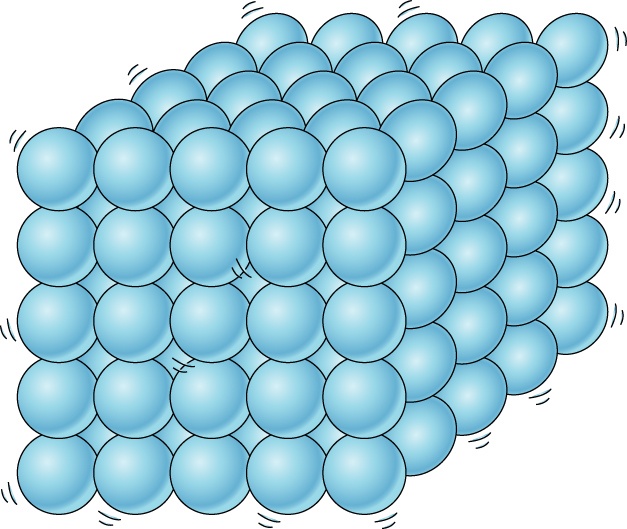
Closely packed vibrate in place.
Closely packed vibrate in place.
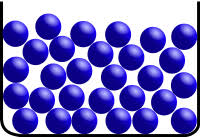
Closely packed vibrate in place.

In the above diagram, "State of Matter B" is a liquid. This means that it has:
definite shape and volume.
no definite shape or volume.
definite volume, but changing shape.
definite shape, but changing volume.
My glass of ice water is sitting in the sun and has droplets of water on the outside of the glass. What is happening?
condensation
evaporating
melting
freezing

Energy (heat) is added in order to go from ...

When a substance changes from a liquid to a gas, this is called...
Melting
Evaporation
Condensation
Freezing
Convert
450 K to Celsius723oC
277oC
177 oC
623oC
Convert
300 K to Celsius573oC
37oC
27oC
600oC
What is the boiling point of water on the Celsius scale?
0oC
373oC
100oC
212oC
What is the boiling point of water on the Kelvin scale?
0K
373K
100K
212K


What is the temperature on the thermometer?
40°C
100°C
96°C
36°C

What is the temperature on the thermometer?
2°C
34°C
40°C
10°C
What is a Bimetallic Strip?
Two different metals joined (fused) together to form a strip.
Two same metals joined (fused) together to form a strip.
Two different papers joined together
Which thermometer is different from the others?


If two objects have different temperatures, heat will flow from the warmer object to the cooler one UNTIL ____________
one reaches a temperature of zero
they both have an equal temperature
one runs out of energy

Observe the diagram. Which statement is true about the kinetic energy of the molecules in the containers?
The molecules are moving faster in Diagram A
The molecules are moving slower in Diagram A
The molecules are moving at the same rate in both diagrams

What is thermal energy?
Average kinetic energy of object
Total kinetic energy of object
Energy transferred from one object to the other
Heat

What is temperature?
Average kinetic energy
Total kinetic energy
Energy transferred between two objects
Heat

Which of these glasses has a greater TEMPERATURE?
Glass A
Glass B
They have the same temperature.
Neither has a temperature.
Which of these glasses has more THERMAL ENERGY?
Glass A
Glass B
They have the same thermal energy.
Neither has thermal energy.

Which of these objects has the highest TEMPERATURE?
Iceberg
Ice cube
Boiling pot of water
Monkey
Which of these objects has the most THERMAL ENERGY?
Iceberg
Ice cube
Boiling pot of water
Monkey

Number 2 represents a ________
solid
liquid
gas

From 30 degrees to 55 degrees, what state of matter is the substance?
Solid
Liquid
Gas


Look at the diagram, what causes the bottle cap to pops off?
Too much water in the bottle
Too much air in the bottle
The air in the bottle expanded when it gained heat.

The diagram shows an iron ball before heated and after heated.
Why the iron cannot pass the iron ring?
the ring becomes smaller
the iron ball expands when gaining heat
the iron ball contracts after being cooled

Where is thermal expansion and contraction more noticeable?
solids
liquids
gases
it's equally noticeable in all states of matter

If the atoms of an object are moving or vibrating fast, the temperature would be...
cold
hot
unknown

Why did the train tracks become crooked?
The train tracks gained heat, expanded and increased in length.
The train tracks lost heat, contracted and decreased in length.

The diagram shows a bimetallic strip made of two metals, brass and iron. Which metal, brass or iron, bends more when heated?
Brass
Iron
Tom puts a metallic cover over his car’s windshield after parking. How does this control the sun’s rays during a sunny day?

A group of friends gather around a fire to stay warm. This is an example of ________.
conduction
convection
radiation

The baby chickens kept warm by the heat lamps. This is an example of ________.
conduction
convection
radiation

The handle of a metal spoon warms up when it is placed in a hot bowl of soup because of ________.
convection
conduction
radiation

Near the ceiling of a room the air is warmer. The warm air rises because of ________.
conduction
convection
radiation
The kind of heat transfer that travels through space in electromagnetic waves is ______________________.
convection
radiation
conduction

The type of heat transfer that creates currents in water is called ________.
conduction
convection
radiation

Which is NOT a conductor?


According to the table, which material expands to least?
Lead
Pyrex
Glass
Aluminum

According to the table, which material is the WORST insulator?
Blue Polystyrene
Brick
Fiberglass
Still Air
What is the RSI of 2 cm of still air?
0.15 RSI
0.3 RSI
0 RSI
3 RSI

According to the table, which material is a better conductor, cork or ice?
Cork
Ice
According to the table, which material is a better insulator, brass or glass?
Brass
Glass

Throughout the day, Matthew and Mei measure the temperature of lake water as it is warmed by the sun. The following table shows their data at four different times.
At what time was the thermal energy of the lake water the greatest?
9 a.m.
11 a.m.
3 p.m.
5 p.m.

Kumar is studying how Earth is warmed by sunlight. The following illustration shows his model of the sun and Earth.
Which process is mostly responsible for warming the soil in Kumar’s model?
Conduction between the lamp and the soil causes the soil to warm.
Convection currents between the lamp and the soil cause the soil to warm.
Expansion of particles in the soil causes the soil to warm.
Radiation from the lamp reaches the soil and causes the soil to warm.

What type of heat transfer is cooling the boy in the picture with the fan?
Conduction
Convection
Radiation
We used aluminum foil to ___________ radiation into our solar ovens.
absorb
reflect
greenhouse
heat
Black paper helps us ____________ more energy.
absorb
reflect
bounce
conduct

This type of light transmission happens when light is able to bend.
Refraction
Reflection
Absorption

A plant taking in sunlight.
Refraction
Reflection
Absorption

Social Media is an example of a...
Want
Need
Both

Food is a...
Need
Want

Clothes are a...
Want
Need
Both

Coal is...
A renewable source of energy
A non-renewable source of energy

Flowing water is..
A non-renewable source of energy
A renewable source of energy

Wind is ...
clean, safe & available
clean, cheap & limited
cheap, unlimited & safe
unavailable, expensive & clean

Plant remains are
A non-renewable source of energy
A renewable source of energy
Which of these things are examples of renewable energy sources?
wind
solar
water
oil
Click all of the things that are non-renewable energy sources.
oil
gas
coal
water
Biomass is created from ______.
Plants, animal waste, and garbage
Splitting atoms
The energy rays of the sun
Moving turbines
Why is geothermal energy considered a renewable resource?
It doesn't matter if the water from underground evaporates.
The water evaporates.
The water cycle makes it rain.
The water can be put back and reused.
What colour would you want your floors/walls to be in order to absorb radiant energy in a passive solar heating system?
light pink
white
neon
dark (grey or black)
What are the two types of solar heating systems?
active
hot
passive
cold
Check passive or active.
This heating system is simple: reduce heat loss and increase heat gain from the Sun
passive
active
An accurate definition of Sustainability is
meeting population needs
meeting the needs of the present without compromising the ability of future generations to survive
meeting the needs of the future without worrying about todays
meeting the food needs of animals
Uses waste heat from industry to heat buildings or generate electricity.
cogeneration
active solar heating
sustainability
passive solar heating
What is happening between stages B and C?
The particles are moving faster and faster.
The particles are expanding in size.
The particles are increasing in temperature.
The particles bonds are being broken.
Identify the temperature of its freezing point.
90°C
60°C
55°C
30°C

