
 Worksheets
Unit 1 Matter Review
Total questions: 82
Worksheet time: 1hrs 22mins
In which state of matter are the particles furthest apart?
gas
solid
liquid
In which state of matter do particles vibrate in place?
gas
solid
liquid
The energy an object has due to its motion.
thermal energy
temperature
kinetic energy
All of these states of matter take the shape of their container EXCEPT:
Liquids
Solids
Gases
What state of matter are the particles moving the fastest and are farthest apart?
Solid
Liquid
Gas
This is the only state of matter that has a "Definite Shape"
Liquids
Solids
Gases
A _________ is made up of two or more substances that are together in the same place but ARE NOT chemically combined.
Pure substance
Mixture
Solution
Suspension
Air is:
An element
A compound
A mixture
None of these
Fruit Loops, pizza, and Skittles are examples of ____________________ mixtures.
heterogeneous
homogeneous
pure

Digesting food (food being broken down in the stomach).
Physical Change
Chemical Change
Coffee, mouthwash, and vinegar are examples of __________________ mixtures.
heterogeneous
homogeneous
pure
___________ are the smallest unit of an element that maintains the properties of that element.
Atoms
Elements
Compounds
Mixtures

any characteristic of matter that you can observe without changing the identity of the substances that make it up
physical property
chemical property
A student is given a sample of an unknown substance. He is asked to determine if it is classified as a metal, a metalloid, nonmetals, or rare earth metals. He discovered that the unknown element moved either heat or electricity, but not both, and was a solid at room temperature. This element is most likely a
Metal
Nonmetal
Metalloid
Rare Earth Metal
a characteristic of matter you observe as it reacts or changes into a different substance
physical property
chemical property

A rancher lights a brush pile on fire.
Physical Change
Chemical Change
the temperature at which a solid changes to a liquid
solubility
boiling point
melting point
state of matter
The substances in this mixture have been mixed together so well that the different parts will not separate on their own.
Homogeneous mixture
Heterogeneous mixture
Pure substance
All of the following are evidences of a chemical change except -
a change in temperature
the production of a gas
a change in state of matter
an odor being given off
the temperature at which a liquid changes to a gas
solubility
boiling point
melting point
state of matter
the state of being solid, liquid, or gas
solubility
boiling point
melting point
state of matter
The substances in this mixture DO NOT blend smoothly throughout, and the individual substances that compose the mixture can be detected or seen.
Homogeneous mixture
Heterogeneous mixture
Pure substance
the ability of a type of matter to burn easily
flammability
rust
solubility
conductivity

Chocolate chips are melted in a pot on the stove.
Physical Change
Chemical Change
This state of matter the particles "flow" each other and take the shape of it's container
Solid
Gas
Liquid

A student is given a sample of an unknown substance. He is asked to determine if it is classified as a metal, a metalloid, nonmetals, or rare earth metals. He discovered that the unknown element conducted some heat and electricity, had a shiny luster, and was soft and malleable, and magnetic. This element is most likely a
Metal
Nonmetal
Metalloid
Rare Earth Metal

A metal wagon is left out in the rain and it starts to rust.
Physical Change
Chemical Change
Which type of elements touch the staircase, or zigzag line, on the periodic table?
Metals
Nonmetals
Metalloids
Rare Earth Metals

A furniture maker uses a piece of sandpaper to make a chair more smooth.
Physical Change
Chemical Change

Breaking a watermelon into pieces.
Physical Change
Chemical Change

A woman puts food scraps into a compost pile where they decompose.
Physical Change
Chemical Change
A student is given a sample of an unknown substance. He is asked to determine if it is classified as a metal, a metalloid, nonmetals, or rare earth metals. He discovered that the unknown element did not transfer heat nor electricity, a low luster, very brittle, and a low density. This element is most likely a
Metal
Nonmetal
Metalloid
Rare Earth Metal
Every chemical change results in -
a change in temperature.
the formation of a new substance.
a color change.
the formation of a precipitate.

The powder is blue.
physical property
chemical property

A candle burning because the wick is flammable.
physical property
chemical property

When the two substances combined, a reaction happened causing bubbling and fizzing.
physical change
chemical change
Which of the following are signs of a chemical reaction?
Formation of a gas
A change in temperature
A change in color
A change in size
What is the density of water?
1g/mL
3g/mL
7g/mL
2.3g/mL
Which type of elements are to the left of the periodic table excluding Hydrogen?
Metals
Nonmetals
Metalloids
Rare Earth Metals
Which types of elements are to the right of the periodic table?
Metals
Nonmetals
Metalloids
Rare Earth Metals
If an object is a better conductor of heat and electricity than nonmetals, but not as good of a conductor as metals, then it is a-
non-conductor
semi-conductor
good conductor
Which type of elements are apart of the Lanthanide series plus Scandium and Yttrium?
Metals
Nonmetals
Metalloids
Rare Earth Elements

Water drops form on the outside of a cold glass of lemonade (condensation).
Physical Change
Chemical Change
A student is given a sample of an unknown substance. He is asked to determine if it is classified as a metal, a metalloid, nonmetals, or rare earth metals. He discovered that the unknown element both heat and electricity, had a shiny luster, had a high density, and high melting point. This element is most likely a
Metal
Nonmetal
Metalloid
Rare Earth Metal

Sodium metal and chlorine gas react to form salt.
Physical Change
Chemical Change

What is the least dense liquid in this container?
Honey
vegetable oil
lamp oil
water

Enrique put an object in a glass of water. The object sank to the bottom of the glass. Which answer is true about the density of the object?
The object has more density than the water.
The object has less density than the water.
The object has the same density as water.
The object has no density.


Which picture shows how the particles in a liquid are arranged?
A
B
C


Lighting a Match
Physical Change
Chemical Change

Melting Ice Cream
Physical Change
Chemical Change

Bending a metal rod
Physical Change
Chemical Change


What is a mixture?
elements chemically combined
a combination of different things
it is found on the Periodic Table
it is made of chemical

This oatmeal is an example of a...
compound
homogeneous mixture
heterogenous mixture


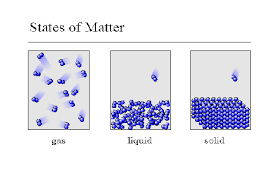
At higher temperatures
particles in an object have less kinetic energy
particles in an object move faster
a gas contracts
Which of the following states of matter has the LOWEST level of kinetic energy?
Solid
Liquid
Gas
Plasma

How can you change the states of matter of an object?
you cannot change the states of matter
do nothing they will change on their own
add or remove heat
The formation of a solid when two liquids combine is called?
Solidification
Freezing
Precipitate
Solubility
Which is NOT evidence of a chemical change?
Unexpected color change
gas produced
breaking
temperature change (with no outside heat added)
Which of the following options provides evidence of a CHEMICAL change?
Wood is burned releasing ash and smoke
Rocks separate when soil is sifted
Boiling water bubbles when heated
Salt dissolves in water
Which of the following is NOT an indicator of chemical change?
Formation of a gas
Formation of a solid
Change in texture
Change in color

