
 Worksheets
Physical and Chemical Changes Review
Total questions: 77
Worksheet time: 39mins

Is burning sugar a...
Chemical Reaction
Physical Reaction
Ripping cardboard is an example of
Physical Change
Chemical Change
Baking a cake is an example of
Physical Change (Just changed phases)
Chemical Change (can't change it back)

How do you know a chemical reaction takes place?
Something new is made
Changes Color
Changes Temp
Bubbles or Steams
ALL of the ABOVE
When you change from solid to liquid it is called..
Freezing
Melting
Evaporation
Condensation

What happens as a solid starts to melt? Select all that apply
Bonds vibrate and start to pull apart
Bonds vibrate and pull together
Temp increases and so does kinetic energy
Temp decreases and so does kinetic energy
What is the difference between HO and He?
HO what santa says while delivering presents
No difference
HO is two elements because both are caps and He is one element since it is lower case
They are both two atoms
Is NaCl an element or compound?
Element
Compound
Both
A chemical change is different than a physical change because in a chemical change...
Chemicals are used
A new substance is formed and in a physical change no new substance is formed
Molecules do not physically touch
The change can be seen but in a physical change it cannot
One clue of a chemical change is the formation of a precipitate. A precipitate is formed when...
Two liquids react and a gas is produced
A solid dissolves in a liquid
One liquid dissolves in another
Two liquids react and a solid is formed
An element and an atom are different but related because...
A particular element is made up of many different types of atoms
A molecule is the same as an atom
An element is made up of all the same type of atom
An element is smaller than an atom
Nails rusting is a...
Physical Change
Chemical Change
Water boiling is a...
Physical Change
Chemical Change
Fireworks are a...
Physical Change
Chemical Change
Fireworks are a...
Physical Change
Chemical Change
Crushing a soda can is a...
Physical Change
Chemical Change
Breaking a window is a...
Physical Change
Chemical Change
Lighting a match is a...
Physical Change
Chemical Change
Matter can be classified by characteristics. In science, what do we call these characteristics?
acidic and basic properties
physical and chemical properties
dependent and independent properties
positive and negative properties
Which characteristics are chemical characteristics?
flammability
melting point
reactivity
boiling point
ability to rust
Which characteristics are physical characteristics?
melting point
solubility
combustibility
boiling point
What happens to the atoms of matter after a chemical change?
The atoms are destroyed.
New atoms are created
Bonds are broken and new bonds are formed.
Which changes are physical changes?
Cutting paper
Toasting Bread
Crushing a Can
Painting a Fence
Dissolving Sugar
Which changes are chemical changes?
Cutting paper
Toasting Bread
A Rotting Banana
Fireworks Display
Rusting
Two 6th Grade students mixed two substances together in a container covered with a balloon. After the mixing the balloon inflated. What sign is present that chemical reaction has happened?
A precipitate formed.
The color changed.
The temperature changed.
A gas was produced.
A student accidently spilled vinegar into a glass of milk. Soon a strange solid appeared. What sign is present that a chemical reaction has happened?
A precipitate formed.
The color changed.
The temperature changed.
A gas was produced.
Over time a banana on the counter turned brown. What sign is present that a chemical reaction happened?
A precipitate formed.
The color changed.
The temperature changed.
A gas was produced.
When the candle was lit, a pool of liquid wax formed in the area around the wick, and then spilled over the side and solidified. Does this observation refer to a physical change or a chemical change?
physical change
chemical change
None of the above

Is the reaction that occurs in the diagram endothermic or exothermic?
exothermic
endothermic
Which of the following is NOT a pure substance?
Element
Compound
Mixture
A chemical change is when two or more substance combines to create something new. Which of the following is an example of a chemical change?
a gas is formed
ice melts
wood is chopped into small pieces
paper is shredded
The law of conservation of mass says that in physical or chemical changes, mass is neither (a) nor destroyed.

When sugar dissolves in water a ______________ change occurs.
Physical change
Chemical Change

Cracking an egg is a ________________ change.
Physical Change
Chemical Change

Burning Sugar is an example of a ________________ change.
Physical Change
Chemical Change


Air:
Pure Substance or Mixture?
Pure Substance
Mixture

Aluminum:
Pure Substance or Mixture?
Pure Substance
Mixture

Water:
Pure Substance or Mixture?
Pure Substance
Mixture

Dr. Pepper:
Pure Substance or Mixture?
Pure Substance
Mixture

What term belongs in #1?
(a)
What term belongs in #2?
(a)
What term belongs in #3?
(a)

Sand:
Pure Substance or Mixture?
Pure Substance
Mixture

Salt:
Pure Substance or Mixture?
Pure Substance
Mixture
An _______________ is made up of one or more of the same kind of atom chemically combined.
atom
element
molecule
compound
A ______________ is made up of different kinds of atoms chemically combined.
element
compound
mixture
molecule
True or False: elements AND compounds are pure substances.
True
False
A ______________ mixture is one that does not have a uniform composition.
heterogeneous
homogenous
pure substance
A _________________ mixture is one where the substances are evenly spread throughout.
heterogeneous
homogeneous
pure substance
Which of these is an element?
Salt (NaCl)
Water (H20)
Oxygen (O)
Carbon Dioxide (CO2)
Select all the pure substances below (pick 3).
element
compound
molecule
mixture
Select all the elements. (Pick 3.) H2O
H2O
Nitrogen
Oxygen
Cl2
NaCl

Water
Pure Substance
Mixture

The ability of a substance to catch on fire and burn is a
chemical formula.
state of matter.
chemical property.
physical property.

Pizza, soil, and lemonade are all examples of
compounds.
atoms.
mixtures.
elements.
What type of substance is always made up of a single type of atom?
mixture
element
molecule
compound
What type of substance is ALWAYS made up of two or more different types of elements joined by chemical bonds?
mixture
element
molecule
compound

A combination of two or more substances that are not chemically combined is known as a
mixture
molecule
compound
element

A car rusting is an example of a
physical change.
chemical change.
Which are BOTH pure substances?
Mixtures and Elements
Compounds and Elements
Protons and Neutrons
Mixtures and Compounds
A ___________________ is also known as a solution.
compound
element
homogeneous mixture
heterogeneous mixture
Which IS NOT a pure substance?
Mixtures
Elements
Compounds
Which type of mixture has particles which are uniformly distributed?
Homogeneous
Heterogeneous

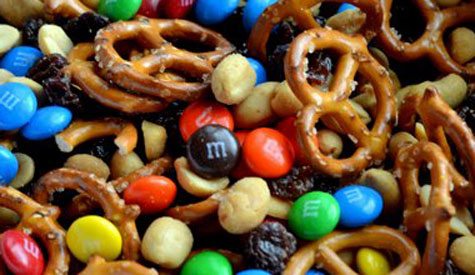

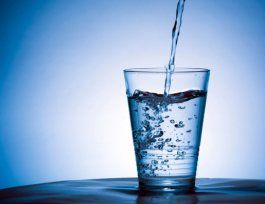

Describe this sample
Pure element
Pure compound
Mixture of elements
Mixture of compounds

Red water changing to clear is a
physical change
chemical change

