
 Worksheets
Final Quiz over Natural Disasters
Total questions: 75
Worksheet time: 42mins
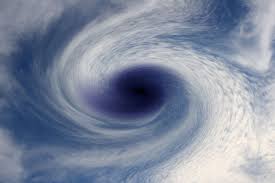

What causes an Earthquake?
Tectonic plates in the Earth moving and sliding.
Giants racing across the Earth.
Masses of people jumping up and down all at once.
The "Ring of Fire" refers to...
the path of volcanoes along the Pacific Ocean where the majority of volcanoes and Earthquakes take place.
The pretty rings you wear around your fingers.
The bubble volcano in Finding Nemo

Which Natural Disaster could have caused this?
A landslide.
An avalanche.
A volcanic eruption.
A flood.
BONUS: What does "Tsunami" mean in English?
Harbor Wave
Big Wave
Humongous Wave
Coast Wave
A sudden shaking of the earth
earthquake
landslide
floods

What is this natural disaster?
Landslide
wildfire
hurricane
Avalanche

What is this natural disaster?
Blizzard
Earthquake
Avalanche
None of them

What is this natural disaster?
Earthquake
Flood
Drought
Tsunami

What is this natural disaster?
Tsunami
Flood
Wildfire
I don't know
- Which of the following is a true statement about hurricanes?
They only affect the tropical areas
They cannot be measured on any scientific scale
Their winds are always above 74 miles per hour
They cause more deaths every year than tornadoes and earthquakes
If a hurricane destroyed an entire U.S. city, what category would it most likely be?
Category 1 or 2
Category A or B
Category X or Y
Category 4 or 5
Which country would most likely be affected by a typhoon?
The United States
Japan
Spain
Brazil
What happens immediately after a hurricane makes landfall?
It gets stronger
It gets weaker
Its winds pick up speed
It starts hailing
Deadliest Hurricane that hit the U.S history is:
Hurricane Katrina (2005)
Typhoon Cora (1966)
Hurricane Patricia (2015)
Hurricane Wilma (2005)
What is the highest category hurricane?
3
5
6
7
Why does a hurricane slow down when it hits land?
The wind stops it
It stops raining
It loses its energy source
The air is different


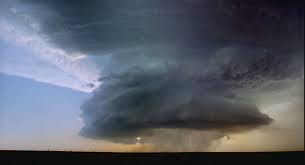


a rating scale developed in 1970 by the scientist T. Theodore Fujita to categorize tornadoes and their relative strength
meteorologist
Fujita Tornado Scale
moisture
Tornado Alley

a weather scientist
waterspout
supercell
meteorologist
debris

Which is NOT true of tornadoes?
Most tornadoes are local storms.
Typical tornadoes are 400-500 feet wide.
Tornado winds generally range from 20-50 miles per hour.
Tornadoes can last for a few minutes to an hour or more.

What is the first step in the birth of a tornado?
dark sky
thunderstorm
high wind
rain

Which is true of waterspouts?
They are very strong tornadoes.
They are most common in mountainous areas.
They are very common in northern states.
They are common along the Gulf Coast.

Which tornado is the most rare?
F1
F3
F4
F5

Which of the following is not something a person may see or hear before a tornado?
Debris falls from the sky.
There is a continuous thunder and lightning.
Falling hail.
The sky turns greenish or greenish black.
An area where air or liquid spins in a circle is called a
vortex
spin cycle
cool front
A storm surge is
a rapidly spinning funnel of air
a rise in sea level caused by a storm's winds
fun to swim in
Hurricanes are named by
alphabetical order and using boys names
alternating boys and girls names and in alphabetical order
where they are located
A dust devil can develop into a tornado.
True
False
where quake begins below surface
elastic rebounding
focus
epicenter
fault
where quake begins on surface
epicenter
joint
fault
focus
The magnitude of an earthquake is measured by an instrument called as:
A digital scale
seismograph
seismogram
kilogram
The opening at the top of the volcanic mountain is known as:
Magma
Lava
Crater
Calderas
The seismic waves which is due to the collision of tectonic plates travel to the surface and cause_________.
Volcano
Tsunamis
Earthquake
Ocean wave
Earthquakes under the sea can cause ________.
Moderate tremor
Severe earthquake
Tsunamis
Shock wave

What do we call the energy produced by an earthquake?
transform waves
gap waves
earthquake waves
seismic waves
Most of the magma from a volcano comes up through a long, narrow, rocky tube called a...?
shoot
vent
tube
slide
Wildfires are more likely during a drought due to increased:
Oxygen in the atmosphere
Lightning strikes
Wind speeds
Availability of fuel
When something "spreads like wildfire," that means:
It's very destructive
It spreads quickly
It's extremely hot
It's unpredictable
Three things that a fire must have to continue (heat source, oxygen, and fuel source) is called a __________?
fire line
fire triangle
rage
Starting a fire on purpose to cause harm or damage; an illegal act is called __________?
rage
embers
arson

Also known as Strato Volcanoes, this volcano is made from alternating layers of ash and lava is called a(n) _________________ volcano
composite
cinder cone
shield
fissure
Where is the Ring of Fire located?
Atlantic Plate
Pacific Plate
Japanese Plate
North American Plate
What percentage of all earthquakes occur around the Ring of Fire?
25%
50%
75%
90%
What do we call the flowing magma?
Lava
Lahar
Ashfall
all of the above
A kind eruption, that are short meters tall , Explosive burst accompanied by booming sounds
Vulcanian
Plinian
Strombolian
Pelean
It is a type of eruption that It’s major damage comes from landslides or ash flowing slopes at high speeds.
Strombolian
Vulcanian
Plinian
Pelean
It is the most effective of all eruptions
Strombolian
Vulcanian
Plinian
Pelean
These are much stronger and much destructive with time, Their dome gets damaged that leads to a more continuous lava flow instead of short bursts of Lava.
Strombolian
Vulcanian
Plinian
Pelean
How fast does an avalanche travel?
20-30 mph
1000-2000 mph
80-100 mph
10-15 mph
what is an avalanche?
Snow on a mountain
A phenomenon of nature
Winter disaster
Something that is cause by air pollution and acid rain
An avalanche is....
a gradual movement of a mass of snow towards the coast
a slow movement of ices towards a river
a rapid movement of snow over flat land
a sudden fast movement of snow down a steep slope
3. Avalanche victims have only 15-35 minutes before running out of oxygen and ____________ .
terrain
suffocating
slope
occur

What is this natural disaster?
Huricane
Landslide
Earthquake
Avalanche

