Worksheets
Unit 4 Test- Earth: A Dynamic Planet
Total questions: 70
Worksheet time: 59mins
Which one of the examples below is physical weathering?
lichens growing on rock
acid rain wearing away limestone
oxidation (rusting) of a flag pole
frost wedging splitting a rock apart

The Mount Rushmore National Monument is carved from the granite (formed from magma underground) of South Dakota's Black Hills. What type of rock is granite?
Igneous
Metamorphic
Sedimentary
None of the above

The process when rocks break into smaller pieces due to exposure to natural elements is called...
Deposition
Erosion
Weathering

How does metamorphic rock change into sediments?
Heat and Pressure
Weathering and Erosion
Melting
Compaction and Cementation
During which process does layer upon layer of sediment build up, exerting pressure on the layers below?
Erosion
Compaction
Conglomerate
Metamorphic rock transforms to sediment by ______?
melting and cooling
cementation and compaction
Weathering and erosion
heat and pressure
Heat and ____________ can change sedimentary rock into metamorphic rock.
Pressure
Melting
Coolig
Igneous rocks form from the __________ of magma or lava.
Pressure
Cooling
Heat
_________ is the process which causes magma to form.
Pressure
Melting
Cooling
Thinking about sedimentary rock, the oldest layers are found
on the top most layer
in the middle of other layers
all layers are the same age
towards the bottom

Which of these terms describes the process of acid rain wearing out limestone?
deposition
chemical weathering
physical weathering
erosion
Which one of the examples below is physical weathering?
lichens growing on rock
acid rain wearing away limestone
oxidation (rusting) of a flag pole
frost wedging splitting a rock apart
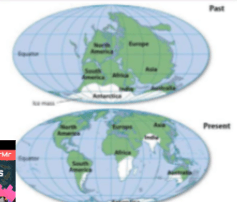
The idea that the continents were once part of a single landmass that broke apart and
moved is
Continental Drift
Tectonic Plates
Transform
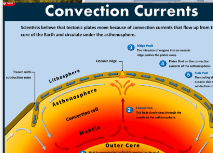
The movement of the tectonic plates is caused by
the rotation of the Earth
convection currents in the Asthenosphere
the gravity of the iron-nickel core
the Moho discontinuity
The fact that similar fossils are found on both sides of the ocean is evidence of
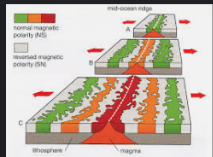
magnetic reversal
global positioning
continental drift
oceanic drift
What is the driving force behind the movement of the plates?
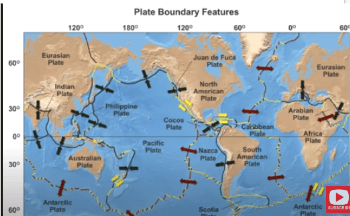
The earth's outer shell is divided into slabs of rock called ______ .
continental plates
crustal plates
trench plates
tectonic plates
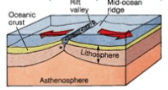
divergent
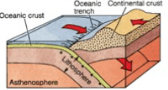
convergent
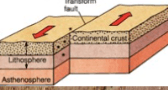
transform

Why are the remains of ancient organisms buried so deeply within the earth? Choose the best answer.
They were swallowed up by major earthquakes
Most ancient organisms lived underground
They were buried by the meteor strike that killed the dinosaurs
They were buried by natural processes

What force is important in the creation of both coal and petroleum?
Putrefaction
Petrification
Pressure
Oxidation

How long does it take decaying organisms to transform into fossil fuels?
Decades
Millions of years
Thousands of years
Hundreds of years

Which of the following is most likely to use coal as fuel?
Car
Car
Airplane
Factory

Why is burning fossil fuels bad for the environment?
It destroys the ozone layer
It adds harmful mercury to waterways
The clouds it creates bring excess rain and flooding
The gases emitted lead to global climate change

The gases produced by burning fossil fuels usually contain which element?
Carbon
Oxygen
Hydrogen
Nitrogen

Which layer is younger than layer 4?
2
1
6
3
Which layer is the oldest?
(a)

Fossil B was once a marine organism. This means the environment that it lived in was most likely ___________.
a desert
a lake
a forest
an ocean

Which two words can best complete the order in the process shown?
1. (a)
2. Sediment is created
3. Erosion
4. (b)
5. Compacting
6. Cementation into Rocks
Which activity uses a nonrenewable resource?
heating a building with solar panels
building a house with timber
driving a car that uses gasoline
pumping water with wind power


Which of the following are Non-Renewable energy resources? (Check all that apply.)
coal
wind
solar
nuclear

One advantage of solar and wind power over fossil fuels is that
wind and solar are presently much less expensive than fossil fuels.
wind and solar come from natural processes and fossil fuels do not.
wind and solar are nonrenewable resources and fossil fuel are renewable.
wind and solar are continuously renewable and fossil fuels take millions of years to be formed.

Renewable or Nonrenewable: Coal
Renewable
Nonrenewable

Renewable or Nonrenewable: Natural Gas
nonrenewable
renewable

Renewable or Nonrenewable: Oil
Nonrenewable
Renewable
The ozone protects us from:
pollution
meteors
Ultraviolet Rays
all of the abover
A few ways to help reduce the amount of greenhouse gases in our atmosphere is...
do nothing
turn off all electrical things not in use
use renewable sources of energy
reduce the amount of meats you eat
Above a continent, a warm air mass slowly passes over a cold air mass. As the warm air begins to cool, clouds form. What will most likely happen next?
lightning will strike
hail will form
hurricanes will form
rain will fall
Which of the following factors would most likely cause a hurricane to decrease in strength?
increasing the number of large clouds
moving toward tropical waters
staying over a warm body of water for a long period of time
moving over land
Jet streams are long, wide air currents in the upper atmosphere. They often affect weather over large areas. In what direction do jet streams above North America usually flow?
north to south
east to west
west to east
south to north

What type of weather will Florida expect when the front comes through?
light rain or drizzle
many days of rain, snow, or fog
heavy precipitation or thunderstorms
sunny, clear, and windy
Grace is studying the difference between weather and climate. Which statement best describes weather?
Panama City has short mild winters and long, hot and humid summers
The temperature was 31°C (88°F) in Jacksonville, Florida on Saturday.
Jacksonville, Florida gets 50 inches of rain, on average, per year
The yearly rainfall average for Tallahassee, Florida is 155 centimeters
The climate of an area can be different from its weather. Which of the following statements describes the climate of an area?
There should be heavy rains tomorrow morning
The average temperature from 1930–1996 was 23°C (74°F)
The rains next week are expected to cause some flooding.
The high temperature on September 4, 2009, was 32°C (89°F)
As you move towards the poles, what happens to temperature?
temperature becomes hotter
temperature becomes colder
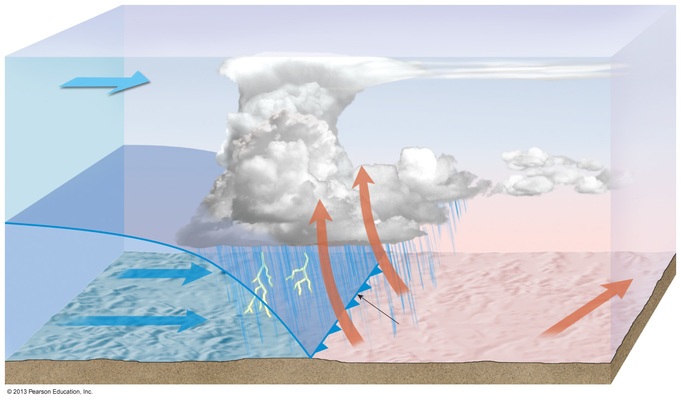
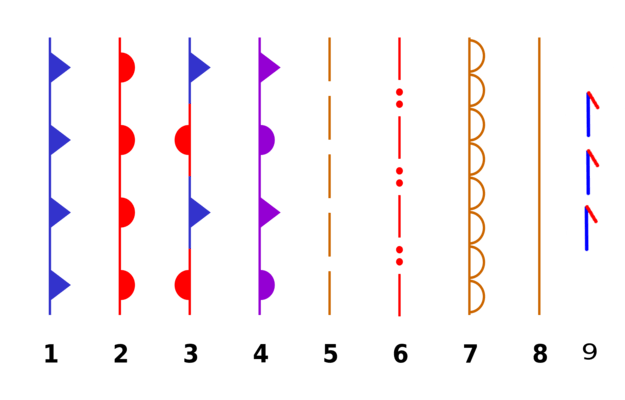
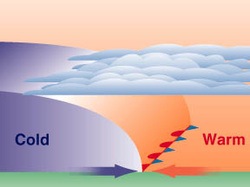
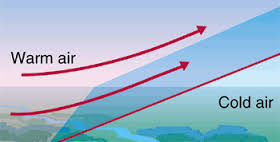

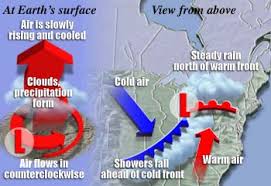
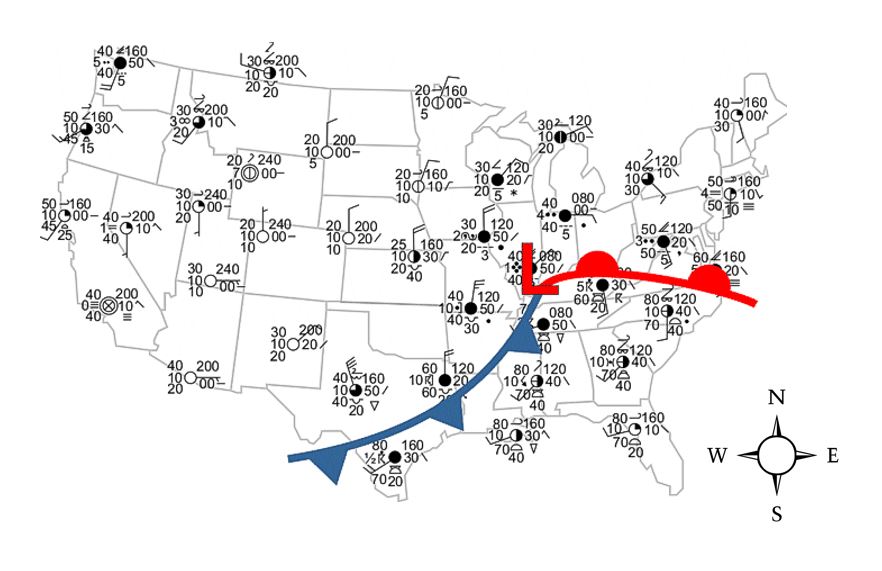
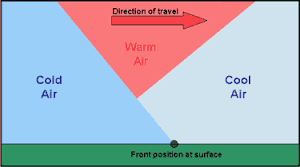
Which one shows a warm front?