
 Worksheets
Gen Chem Atom and Nuclear Assessment Practice
Total questions: 65
Worksheet time: 1hrs 12mins
Name
Class
Date
1.
How many neutrons are in the nucleus of the atom 179F?
a)
17
b)
9
c)
8
d)
7
2.
Which radioactive decay mode does not result in a different atomic number or atomic mass?
a)
alpha decay
b)
beta decay
c)
gamma decay
d)
all of the preceding
3.
________ is the process in which an unstable atomic nucleus emits charged particles and energy.
a)
radioactivity
b)
combustion
c)
neutralization
d)
ionization
4.
What type of radiation is the least penetrating?
a)
alpha decay
b)
beta decay
c)
delta decay
d)
gamma decay
5.
What type of radiation is the most penetrating?
a)
alpha decay
b)
beta decay
c)
delta decay
d)
gamma decay
6.
Isotopes of uranium have different
a)
atomic numbers
b)
numbers of neutrons
c)
numbers of planetary electrons
d)
numbers of protons
7.
The number of protons in the nucleus of an atom of atomic number 32 is
a)
4
b)
32
c)
42
d)
73
8.
Atoms of 235U and 238U differ in structure by three (3)
a)
electrons
b)
isotopes
c)
neutrons
d)
protons
9.
The emission of a beta particle results in a new element with the atomic number
a)
increased by 1
b)
increased by 2
c)
decreased by 1
d)
decreased by 2
10.
As depicted in 146C, the 14 is the
a)
atomic number
b)
atomic mass
c)
isotope number
d)
number of protons and electrons
11.
The alpha particle can initially be stopped by
a)
a thin sheet of paper
b)
a thin sheet of metal (i.e. aluminum)
c)
a quarter inch of lead
d)
1.5 inches of concrete
12.
The beta particle can initially be stopped by
a)
a thin sheet of paper
b)
a thin sheet of metal (i.e. aluminum)
c)
a quarter inch of lead
d)
1.5 inches of concrete
13.
Gamma rays can initially be stopped by
a)
a thin sheet of paper
b)
a thin sheet of metal (i.e. aluminum)
c)
a quarter inch of lead
d)
a liquid substance
14.

The image is a representation of a _________; it has the same make up as a __________.
a)
alpha particle; hydrogen nucleus
b)
beta particle; helium nucleus
c)
gamma particle; carbon nucleus
d)
helium nucleus; alpha particle
15.

The image depicted is a representation of
a)
42He
b)
-01e
c)
Γ particle
d)
γ
16.
Thorium-234 has a half-life of 24 days. How much would remain after 48 days if you started with 100 grams?
a)
0g
b)
12.5g
c)
25g
d)
50g
17.
________ is the process in which the nuclei of two (2) atoms combine to form a larger nucleus.
a)
fusion
b)
fission
c)
radiation
d)
ionization
18.
______ is the splitting of an atomic nucleus into two (2) smaller parts.
a)
fusion
b)
fission
c)
radiation
d)
ionization
19.
What type of reaction is represented by the following?
9140Zr → 9141Nb + -01e
9140Zr → 9141Nb + -01e
a)
alpha decay
b)
beta decay
c)
gamma decay
d)
delta decay
20.
What type of reaction is represented by the following?
24395Am→ 23993Np + 42He
24395Am→ 23993Np + 42He
a)
alpha decay
b)
beta decay
c)
gamma decay
d)
delta decay
21.
Fill in the mission requirements.
21084Po → 20682Pb + _____
21084Po → 20682Pb + _____
a)
-01e
b)
42He
c)
H3O+
d)
OH-
22.
Fill in the mission requirements.
146C → 147N + _____
146C → 147N + _____
a)
-01e
b)
42He
c)
H3O+
d)
OH-
23.
What types of radiation is emitted when carbon-14 decays?
a)
alpha particles
b)
beta particles
c)
delta particles
d)
gamma rays
24.
What type of reaction occurs in the sun?
a)
fusion
b)
fission
c)
nuclear decay
d)
chemical reactions
25.
Which of the following is an example of nuclear fusion?
a)
A plutonium atom is used to start a chain reaction that detonates a nuclear weapon
b)
A uranium atom is split apart into lighter elements
c)
Two hydrogen atoms are combined to form a helium atom
d)
Two hydrogen atoms bond with an oxygen atom to form a water molecule
26.
In what part of an atom can protons be found?
a)
Inside the electrons
b)
Inside the neutrons
c)
Inside the atomic nucleus
d)
Inside the electron shells
27.

In order of most to least penetrating radiation we have
a)
Alpha , Beta, Gamma
b)
Beta , Gamma , Alpha
c)
Gamma, Beta, Alpha
d)
Gamma, Alpha, Beta
28.

This is an example of...
a)
Fission reaction
b)
Fusion reaction
c)
Decomposition reaction
d)
Combustion
29.
If Thorium-234 undergoes a beta decay, What element will be left in its place?
a)
Actinium-234
b)
Thorium-233
c)
Protactinium-234
d)
Radium-230
30.
What do carbon-12 and carbon-14 have in common?
a)
They have the same number of protons
b)
They have the same number of neutrons
c)
They have the same atomic mass
d)
They have the same atomic weight
31.
How is carbon-12 different from carbon-14?
a)
They have a different number of protons
b)
They have a different number of electrons
c)
They have a different number of neutrons
d)
They are different elements
32.
If we start off with element 5024X after an alpha decay we get another element Y that looks like
a)
5022Y
b)
4622Y
c)
4820Y
d)
5426Y
33.

If we start off with element 5024X after an gamma decay we get another element that looks like
a)
5224X
b)
5023X
c)
5024X
d)
5025X
34.
Which particle has a positive charge?
a)
electron
b)
orbital
c)
proton
d)
neutron
35.
Choose the particle that has no charge.
a)
nucleus
b)
neutron
c)
proton
d)
electron
36.
This particle determines what element you have - the elements identity.
a)
electron
b)
proton
c)
neutron
d)
valence shell
37.
What is the mass of a proton and a neutron?
a)
1amu
b)
2grams
c)
13amu
d)
10cm
38.
Which particles make up the nucleus of an atom?
a)
protons and neutrons
b)
electrons and protons
c)
electrons, protons, and neutrons
d)
electrons and neutrons
39.
What is the mass number and name of an element with 8 protons and 8 neutrons?
a)
16 - Carbon
b)
16 - Oxygen
c)
24 - Oxygen
d)
8 - Neon
40.
An element with a mass number of 10 and an atomic number of 6 has how many protons?
a)
5
b)
8
c)
6
d)
10
41.
An element with a mass number of 11 and an atomic number of 5 has how many neutrons?
a)
11
b)
5
c)
6
d)
16
42.
This contains most of the mass of an atom
a)
Electron Cloud
b)
Nucleus
c)
Electron
43.
Which scientist saw the atom as a positively charged sphere with negative particles (electrons) embedded within?
a)
J.J. Thomson
b)
Niels Bohr
c)
John Dalton
d)
Ernest Rutherford
44.
Which scientist proposed a model of the atom in which the electrons are orbiting at different levels?
a)
Niels Bohr
b)
James Chadwick
c)
John Dalton
d)
Ernest Rutherford
45.
Bohr's model of the atom proposed that ___.
a)
electrons move around the nucleus in fixed orbits
b)
neutrons move around the nucleus
c)
neutrons do not exist, but are just paired protons and electrons
d)
the nucleus spins
46.
J.J. Thomson's model of the atom is given this name because he believed that electrons were spread randomly throughout a positive sphere.
a)
plum pudding model
b)
orbital model
c)
Thomson's model
d)
plasma model
47.
Which scientist is responsible for first discovering that all the atoms of a particular element are identical but are different from the atoms of all other elements?
a)
Dalton
b)
Thomson
c)
Bohr
d)
Rutherford
48.
Which scientist used his gold foil experiment to show that an atom has a small, central, positively charged nucleus that contains most of the atom's mass?
a)
Rutherford
b)
Bohr
c)
Thomson
d)
Dalton
49.

Order the atomic models below from the oldest to the most recent.
a)
2, 1, 3, and 4
b)
1, 2, 4, and 3
c)
3, 2, 4, and 1
d)
3, 1, 2, and 4
50.
Which scientist proposed a model of the atom in which the individual atoms were thought of as tiny solids like balls or marbles?
a)
John Dalton
b)
James Chadwick
c)
Ernest Rutherford
d)
J.J. Thomson
51.
Which statement is true according to current thinking?
a)
An atom is mostly empty space.
b)
An atom is a collection of particles, so tightly packed that there is little empty space.
c)
The atomic nucleus is very mobile, and moves around inside a cloud of electrons.
d)
The size of atoms changes over time, pulsating from large to small to large again.
52.
Which of the following correctly describes the electron cloud model?
a)
Electrons do not follow fixed orbits, but are found more frequently in areas around the nucleus.
b)
Electrons are found in fixed orbitals around a positive nucleus.
c)
All of an atom's mass is concentrated in the electron cloud around the nucleus.
d)
Electrons are evenly embedded throughout a positively charged sphere.
53.

Whose model of an atom is displayed in the picture?
a)
Thomson
b)
Rutherford
c)
Dalton
d)
Bohr
54.
Dalton's model was a solid sphere with no subatomic particles. What was the nickname for this model?
a)
Billiard Ball
b)
Nuclear
c)
Planetary
d)
Plum Pudding
55.
Who discovered a particle in the nucleus with no charge called the neutron?
a)
Chadwick
b)
Bohr
c)
Rutherford
d)
Dalton
56.
How many neutrons would Fe-56 have?
a)
56
b)
26
c)
30
d)
33
57.
How many protons does P-30 have?
a)
30
b)
16
c)
12
d)
15
58.
What element has 42 protons?
a)
Ca
b)
Mo
c)
Zr
d)
Po
59.
If an atom of nickel has a charge of +3, how many electrons does the atom have?
a)
28
b)
25
c)
26
d)
31
60.
If an atom of oxygen has a charge of -2, how many electrons does the atom have?
a)
18
b)
6
c)
8
d)
10
61.
How many neutrons would V-49 have?
a)
26
b)
49
c)
23
d)
50.94
62.
How many protons does Pb-209 have?
a)
127
b)
209
c)
82
d)
291
63.
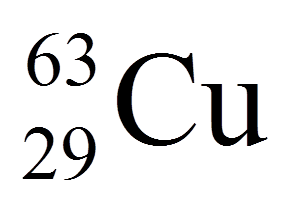
The top number in this isotope notation is
a)
the mass number
b)
the atomic number
c)
the atomic mass
d)
the neutron number
64.
The bottom number in this isotope notation is
a)
the mass number
b)
the atomic number
c)
the atomic mass
d)
the neutron number
65.
γ is the symbol for
a)
alpha decay
b)
beta decay
c)
gamma decay
100 %

