wayground logo

Free Printable Worksheets

Font size

S
M
L
XL
Worksheets

Unit 2 - Earth's Resources

Total questions: 121

Worksheet time: 2hrs 45mins

Name
Class
Date
1.
What form of alternative energy uses the sun?
a)
Wind power
b)
hydroelectric power
c)
geothermal power
d)
solar power
2.
What form of alternative energy uses plants and animal waste and turns it into sugar and then liquid fuel?
a)
geothermal power
b)
biomass power
c)
solar power
d)
hydroelectric power
3.
What form of alternative energy uses a dam?
a)
hydroelectric power
b)
geothermal power
c)
biomass power
d)
solar power
4.
What form of alternative energy uses the heat from the earth?
a)
solar power
b)
geothermal power
c)
biomass power
d)
wind power
5.
Which natural resource is a renewable energy resource?
a)
coal
b)
oil (petroleum)
c)
natural gas
d)
sun
6.
materials in the environment that are useful to people
a)
nonrenewable energy
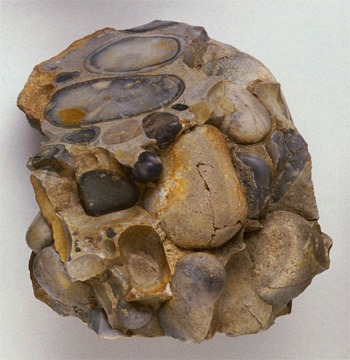
b)
conservation
c)
natural resources
d)
solar energy
7.
the wise use and protection of natural resources
a)
natural resources
b)
green
c)
renewable energy
d)
conservation
8.
Natural resources are products of the Earth that people use to meet their needs.
a)
true
b)
false
9.
Why are fossil fuels considered nonrenewable resources if they are still forming beneath the surface today?
a)
They are being formed as a type of methane which we cannot use.
b)
They are being formed too far beneath the surface.
c)
The fossil fuels are being broken down by a natural process.
d)
We are depleting the fossil fuels much faster than they can form.
10.
Coal is a __________ energy resource.
a)
Renewable
b)
Nonrenewable
11.
Solar Power is a __________ energy resource.
a)
Renewable
b)
Nonrenewable
12.
Natural Gas is a __________ energy resource.
a)
Renewable
b)
Nonrenewable
13.
Geothermal Power is a __________ energy resource.
a)
Renewable
b)
Nonrenewable
14.
Some power plants pump water down deep holes into hot rock. The hot rock heats the water, which turns the water into steam. The steam rushes back to Earth’s surface and is used to make electricity. This plant is generating which alternative energy resource?
a)
biomass
b)
wind
c)
solar energy
d)
geothermal energy
15.
The sun is the source of all energy on Earth.
a)
true
b)
false
16.
Which of the following is a renewable resource?
a)
Oil
b)
Coal
c)
Crops
d)
Natural Gas
17.
It is important to conserve nonrenewable resources because these resources–
a)
Form from the remains of plants or  animals
b)
May be used up in the near future
c)
Have less stored energy than renewable resources
d)
Are easier to find than other resources
18.
We dig metal out of the Earth to make steel for buildings, cars, and buses. Metal is a nonrenewable resource.
a)
True
b)
False
19.

What is another name for oil?

a)

granite

b)

nuclear

c)

coal

d)

petroleum

20.

How long does it take to "make" fossil fuels?

a)

hundred years

b)

millions of years

c)

a few years

d)

thousands of years

21.

A disadvantage of using nonrenewable energy sources is that they __.

a)

cause pollution

b)

are very expensive

c)

can be used over and over

d)

only take a few years to be able to reuse

22.
A rock which contains a useful mineral is call a/an
a)
gem
b)
quarry
c)
ore
d)
alloy
23.
The color of a mineral in powder form is called the mineral's 
a)
hardness
b)
specific gravity
c)
luster
d)
streak
24.
How light reflects off of a mineral is called the mineral's 
a)
luster
b)
streak
c)
cleavage
d)
fracture
25.
Why is coal not a mineral?
a)
It's not a solid
b)
It is man-made
c)
It is not inorganic
d)
It is made of carbon
26.
The following image shows what mineral property?
a)
Hardness
b)
Streak
c)
Cleavage
d)
Density
27.
Diamond has a hardness of ___ on Mohs Hardness Scale.
a)
1
b)
5
c)
8
d)
10
28.
Dull, silky, waxy, pearly, and earthy are terms that best describe which property of minerals?
a)
luster
b)
color
c)
streak
d)
cleavage
29.
By definition, a mineral has which of the following characteristic(s)?
a)
definite chemical composition
b)
crystal structure
c)
naturally occuring
d)
all of the above
30.
How do you test the hardness of a mineral? 
a)
Throw it against a wall
b)
Step on it
c)
Scratch Test
d)
Kick it until it breaks
31.
What mineral is used for pencils?
a)
Graphite
b)
Galena
c)
Magnetite
d)
Quartz
32.
What mineral is salt?
a)
quartz
b)
sulfur
c)
halite
d)
calcite
33.
A naturally occurring, inorganic solid with a crystal structure and a definite chemical composition is referring to
a)
density
b)
streak
c)
mineral
d)
non silicate mineral
34.
The solid, geometric form of a mineral produced by a repeating pattern of atoms
a)
crystal
b)
density
c)
element
d)
fracture 
35.
What mineral is the softest mineral on Moh's Hardness Scale and the main ingredient in baby powder?
a)
feldspar
b)
talc
c)
gypsum
d)
kaolinite
36.
Which mineral smells like rotten eggs?
a)
talc
b)
sulfer
c)
mica
d)
pyrite
37.
A mineral's resistance to being scratched is called?
a)
streak
b)
luster
c)
hardness
d)
heft
38.
The mineral halite is formed by 
a)
hot water solutions
b)
cooling of magma
c)
cooling of lava
d)
evaporation
39.
How many characteristics does an object have to have to be considered a mineral?
a)
2
b)
3
c)
4
d)
5
40.
What does the Mohs Scale measure?
a)
Streak
b)
Luster
c)
Hardness
d)
Cleavage
41.
Which of the following is an example of luster?
a)
Soft
b)
White
c)
Metallic
d)
Hard
42.
_____________________ means that the mineral was formed by nature, not by a human or machine
a)
Naturally Occurring
b)
Inorganic Processes
c)
Solid
d)
Crystal Shape
43.
What does solid mean?
a)
Definite shape and indefinite volume
b)
Indefinite shape and indefinite volume
c)
Indefinite shape and definite volume
d)
Definite shape and definite volume
44.
What does inorganic mean?
a)
Something that is living
b)
Something that is dead, but was once living
c)
Something that was never living
45.
Flat sides and sharp edges with patterns that repeat over and over again
a)
Crystal Shape
b)
Inorganic Processes
c)
Definite Chemical Composition
d)
Solid
46.
When a mineral breaks in an uneven, rough, or jagged way
a)
Luster
b)
Cleavage
c)
Hardness
d)
Fracture
47.
When a mineral breaks smoothly and evenly.
a)
Luster
b)
Cleavage
c)
Hardness
d)
Fracture
48.
If I shine a UV light over a mineral and it glows, it means the mineral has this special property:
a)
Magnetism
b)
Fluorescence
c)
Double Refraction
d)
Luster
49.
Which of the following is NOT a way to identify a mineral?
a)
Luster
b)
Hardness
c)
Heaviness
d)
Density
50.
What is the LEAST useful way to identify a mineral?
a)
luster
b)
streak
c)
color
d)
density
51.
A mineral breaks into pieces like are shown in the picture. How would you describe its breakage?
a)
Fracture
b)
Cleavage
c)
Glassy
d)
Waxy
52.
A mineral breaks into pieces like are shown in the picture. How would you describe its breakage?
a)
Fracture
b)
Cleavage
c)
Glassy
d)
Waxy
53.
A mineral can be formed from which of the following ways?
a)
Precipitation
b)
breaking rocks
c)
Condensation
d)
Evaporation of water solutions
54.
What mineral can pick up a paperclip because of it's magnetic properties?
a)
galena
b)
graphite
c)
magnetite
d)
hematite
55.
Which mineral smells like rotten eggs?
a)
talc
b)
sulfer
c)
mica
d)
pyrite
56.
Which mineral property is being shown here?
a)
luster
b)
hardness
c)
cleavage
d)
streak
57.

1. Rock sediments that travel down a mountain, sand being blown across the beach, and mud sliding down a hill are all examples of

a)

pressing and cementing

b)

erosion

c)

part of the rock cycle

d)

fossil formation

58.

The remains of living things that died long ago are often found in what type of rock?

a)

igneous rocks

b)

sedimentary rock

c)

metamorphic rock

d)

all rocks

59.

The cooled and hardened magma from volcanoes form what rocks?

a)

igneous

b)

sedimentary

c)

metamorphic

d)

fossils

60.

The property of hardness is being observed when Calcite has a hardness of 3.5 and Shale has a hardness of 6.2. According to the Moh's Scales of Hardness, which rock can scratch a rock that has a hardness of 5.4?

a)

Calcite

b)

Shale

c)

neither rock

d)

both rocks

61.

Hot, molten rock inside the earth is called ...

a)

lava

b)

magma

c)

igneous rock

d)

minerals

62.

Once magma reaches the earth's surface, it is called __________.

a)

a vent

b)

minerals

c)

igneous rocks

d)

lava

63.

Rocks that are buried deep in the earth can be changed into an entirely new rock when it goes through what?

a)

weathering and erosion

b)

pressing and cementing

c)

heat and pressure

d)

cooling and hardening

64.

A person who studies the properties of rocks to tell how the rocks may have been formed are ____________.

a)

mineralists

b)

geologists

c)

rock stars

d)

rockologists

65.
What is an igneous rock?
a)
Rock that forms when melted, or molten rock from deep below Earth's surface cools and hardens.
b)
A solid material made up of one or more minerals.
c)
Rock that forms when existing rocks are changed by heat, pressure, or chemicals beneath the Earth's surface.
66.
What is metamorphic rock?
a)
Rock that forms when melted, or molten rock from deep below Earth's surface cools and hardens.
b)
A solid material made up of one or more minerals.
c)
Rock that forms when existing rocks are changed by heat, pressure, or chemicals beneath the Earth's surface.
67.
What is a rock?
a)
Rock that forms when melted, or molten rock from deep below Earth's surface cools and hardens.
b)
A solid material made up of one or more minerals.
c)
Rock that forms when existing rocks are changed by heat, pressure, or chemicals beneath the Earth's surface.
68.
This rock was found near the mouth of a volcano. What type of rock is this?
a)
Sedimentary
b)
Igneous
c)
Metamorphic
69.
This rock was molten lava that cooled quickly as it came out of a volcano. What type of rock is this?
a)
Sedimentary
b)
Igneous
c)
Metamorphic
70.
In order for a metamorphic rock to form, _______ is needed.
a)
Pressure
b)
Heat 
c)
Heat and Pressure
d)
Weathering
71.
Is magma below or above ground
a)
above
b)
below
72.
What are Igneous Rocks that form as magma cools underground called
a)
extrusive rocks
b)
intrusive rocks 
73.
This rock cooled on the outside of a volcano and contained air bubbles when it was forming. What type of rock is this?
a)
Sedimentary
b)
Igneous
c)
Metamorphic
74.
This rock started as molten magma. What type of rock is this?
a)
Sedimentary
b)
Igneous
c)
Metamorphic
75.
A slow cooling igneous rock will have _____ crystals
a)
large
b)
small
c)
average
d)
black
76.
Metamorphism is caused by intense _____ & _____.
a)
foliation & nonfoliation
b)
texture & composition
c)
cementation & compaction
d)
temperature & pressure 
77.
_____ rock forms when magma ______ & solidifies.
a)
Sedimentary; thickens
b)
Igneous; thickens
c)
Metamorphic; deepens
d)
Igneous; cools
78.
If magma cools ____, it has a ____ texture.
a)
quickly; course-grained
b)
quickly; fine-grained
c)
slowly; course-grained
d)
slowly; fine-grained
79.
Texture is based on:
a)
size & shape of a rock's mineral grains
b)
how/where a rock forms
c)
the minerals a rock is made up of
80.
A rock is a naturally-occuring solid mixture of one or more minerals and ___ matter.
a)
organic
b)
inorganic
81.
All rocks are composed of
a)
organic material
b)
dirt
c)
minerals
d)
weathered rock
82.
Cooling and crystallization are parts of the process to form which type of rock
a)
sedimentary
b)
igneous
c)
magma
d)
minerals
83.
Stone Mountain is a large granite landmark in Georgia.  It formed as a result of the cooling of magma well below the Earth's surface.  Which term describes Stone Mountain
a)
Intrusive igneous rock
b)
extrusive igneous rock
c)
guyot
d)
volcanic rock
84.
If you were to discover a rock that appeared to have weathered rock deposited in layers, what kind of rock would you think it would be?
a)
Igneous
b)
Sedimentary
c)
Metamorphic
d)
Lava
85.
Volcanic activity on Earth's surface most likely results in the formation of which of the following type of rock?
a)
Intrusive igneous
b)
Extrusive igneous
c)
Classic sedimentary
d)
Average igneous
86.
Limestone, under extreme heat and pressure, forms marble.  What type of rock is marble?
a)
Igneous
b)
Sedimentary
c)
Metamorphic
d)
Magma
87.
Which of the following processes form sediment?
a)
Deposition
b)
Erosion
c)
Weathering
d)
All of the above
88.
How do scientists identify rocks?
a)
Composition and texture
b)
Mass
c)
Color and size
d)
Location
89.
When magma cools quickly, what kind of texture does the rock have?
a)
Coarse-grained
b)
Large-grained
c)
Fine-grained
d)
Mineralized
90.
When temperature and pressure change, what can happen to the minerals in rocks?
a)
All minerals stay the same
b)
All minerals change change into magma
c)
Some minerals change into other minerals
d)
All minerals change into other minerals
91.
What type of rock can contain a fossil of a sea animal called trilobite?
a)
Mineral
b)
Sedimentary
c)
Igneous
d)
Volcanic
92.
A rock sample is found with the following characteristics: it has flattened mineral grains and it shows bands.  It was found deep below the Earth's surface in a mine.  What kind of rock is it?
a)
Extrusive igneous
b)
Non-foliated metamorphic
c)
Foliated metamorphic
d)
Igneous metamorphic
93.
Choose the statement that BEST describes metamorphic rock.
a)
Metamorphic rock does not change.
b)
Metamorphic rock changes into a fossil.
c)
Metamorphic rock can change many times to a different type of rock.
d)
Metamorphic rock changes only into a sedimentary rock.
94.
What are the 3 major types of rocks?
a)
Igneous, Metamorphic, Sedimentary
b)
Metamorphic, Igneous, Cementation
c)
Brown, Red, Gray
d)
Streak, Hardness, Breakage
95.
Two ways to describe types of igneous rocks are _____
a)
Extrusive and Intrusive
b)
Foliated and Non-Foliated
c)
Clastic and Biochemical
d)
Black and Gray
96.
This rock was formed by smaller pieces of rock that settled at the bottom of a lake millions of years ago. What type of rock is this?
a)
Sedimentary
b)
Igneous
c)
Metamorphic
97.
Which of the words below describe mud, sand, and tiny bits of rocks that cement together to form a type of rock?
a)
stalactites
b)
magmas
c)
metamorphs
d)
sediments
98.
What is sedimentary?
a)
Formed by heat and pressure
b)
Formed by heat and cooling
c)
Layered rock formed by compaction
d)
All of the above
99.
The process when rocks break into smaller pieces due to exposure to natural elements is called
a)
erosion
b)
weathering
c)
sediments
100.
The movement of weathered material (sediment) is called?
a)
weathering
b)
erosion
c)
deposition
101.
What is deposition?
a)
Dropping off sediment
b)
Movement of sediment
c)
Breaking down of sediment 
102.
The three groups of rocks are classified by
a)
How they form
b)
Color
c)
Grain size
d)
Chemical Composition
103.
True or False: Once a rock is sedimentary, it cannot become an igneous rock.
a)
True
b)
False
104.
Each rock type can follow only one pathway of the rock cycle.
a)
True
b)
False
105.
naturally occurring solid mixture of one or more minerals and organic matter
a)
deposion
b)
erosion
c)
rock 
d)
rock cycle
106.
process in which sediment is dropped and comes to rest
a)
deposition
b)
erosion
c)
rock 
d)
rock cyle
107.
process by which new rock is made from old rock
a)
rock 
b)
texture
c)
rock cycle
d)
composition 
108.

Soil contains air and water

a)

True

b)

False

109.

In which of the following soil layers is humus mostly found?

a)

horizon, bedrock

b)

horizon, subsoil

c)

horizon, parent material

d)

horizon, topsoil

110.

Soil formation begins with the weathering of

a)

litter

b)

humus

c)

bedrock

d)

the A horizon

111.

Select the definition of soil

a)

layers of soil with distinct physical properties in a soil profile

b)

mixture of weathered rock, organic material, water, and air

c)

decomposed organic matter

d)

vertical section showing the soil horizons

112.
Are there minerals in soil?
a)
Yes
b)
No
113.
Which of the following best describes soil erosion?
a)
A.  the breakdown of soil 
b)
A.  the improvement of soil
c)
A.  the addition of soil
d)
A.  the movement of soil by wind or water
114.
Soil is made of
a)
weathered rocks and minerals
b)
dead plants and animals
c)
air and water
d)
all of the above
115.

A single layer of soil is called a _______________.

a)

profile

b)

horizon

c)

row

d)

column

116.

All of the layers of soil together can be called a _________.

a)

profile

b)

horizon

c)

row

d)

layer

117.

This term describes decayed organic matter such as dead plants and animals

a)

topsoil

b)

subsoil

c)

humus

d)

soil

118.

Which horizon is also called "topsoil"?

a)

Horizon O

b)

Horizon A

c)

Horizon B

d)

Horizon C

119.

Which horizon is made of organic matter?

a)

Horizon O

b)

Horizon A

c)

Horizon B

d)

Horizon C

120.

Granite has only recently been exposed at a location on Earth’s surface. What will need to happen first in order for soil to eventually form in this location?

a)

A thick layer of humus must form on top of the granite.

b)

The granite must be broken into smaller pieces by weathering processes.

c)

Erosion by wind and water must move pieces of granite to other locations.

d)

Microorganisms must begin to break down the remains of plants and animals.

121.

It can take a long time for soil to form. Which are the primary factors that affect soil formation?

a)

rainfall, temperature, wind, time, and plants

b)

time, climate, topography, plants, and animals

c)

parent rock, sunshine, plants, animals, and bacteria

d)

climate, parent rock, topography, living things, and time