
 Worksheets
Atoms & The Periodic Table
Total questions: 42
Worksheet time: 35mins
Name
Class
Date
1.
Atomic mass - Atomic Number =
a)
protons
b)
neutrons
c)
electrons
d)
Average Mass
2.
An element is defined by its number of
a)
protons
b)
electrons
c)
neutrons
d)
protons + electrons
3.

Which atom is labeled correctly?
a)
A
b)
B
c)
C
d)
D
4.
What charge does a proton have?
a)
Negative
b)
Positive
c)
Neutral
5.
What charge does an electron have?
a)
Negative
b)
Positive
c)
Neutral
6.
What charge does a neutron have?
a)
Positive
b)
Negative
c)
Neutral
7.

What subatomic particles would you find in the nucleus of an atom?
a)
Protons only
b)
Protons and Neutrons
c)
Neutrons and Electrons
d)
Protons and Electrons
8.

What subatomic particle(s) would be found orbiting the nucleus?
a)
Neutrons only
b)
Electrons only
c)
Protons and Neutrons
d)
Protons and Electrons
9.
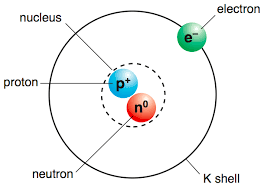
Which subatomic particles contribute the most to the mass of an atom?
a)
Protons, Neutrons, Electrons
b)
Protons only
c)
Protons and Electrons
d)
Protons and Neutrons
10.

The first energy level can hold up to how many electrons?
a)
8
b)
4
c)
2
d)
5
11.

All matter is made of...
a)
energy
b)
atoms
c)
electrons
d)
compounds
12.

What are the 3 subatomic particles that make-up the atom?
a)
protons, neutrons, and isotopes
b)
neutrons, isotopes, and electrons
c)
positives, negatives, and electrons
d)
protons, neutrons, and electrons
13.
What is the atomic number?
a)
the number of protons
b)
the number of protons and neutrons
c)
the number of neutrons
d)
the number of protons and electrons
14.
an atom with atomic number 6 would have how many protons
a)
6
b)
12
c)
3
d)
cannot be determined
15.

How many protons does this atom have?
a)
2.5
b)
6
c)
5
d)
10.811
16.

What part of the atom is the arrow pointing to?
a)
nucleus
b)
proton
c)
electron shell
d)
electron
17.
If the number of protons equal the number of _____, the atom will have no charge
a)
protons
b)
neutrons
c)
electrons
d)
nucleus
18.
How many electrons can the 2nd, 3rd, and 4th shell hold?
a)
2
b)
4
c)
6
d)
8
19.
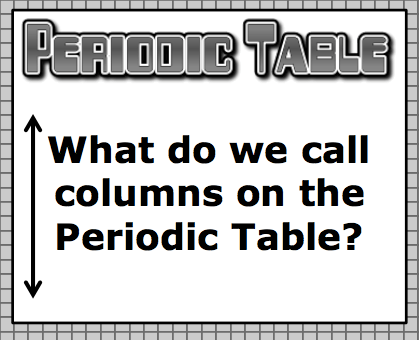
a)
Periods
b)
Groups
20.
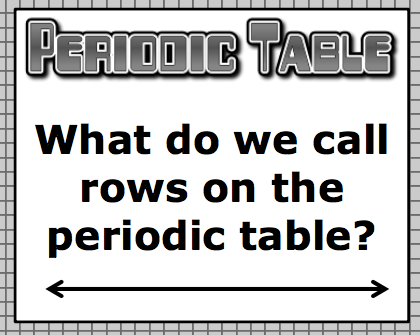
a)
Periods
b)
Groups
21.

a)
energy levels
b)
valence electrons
c)
protons
d)
neutrons
22.
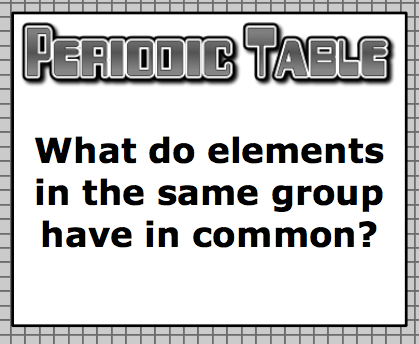
a)
energy levels
b)
valence electrons
c)
protons
d)
neutrons
23.
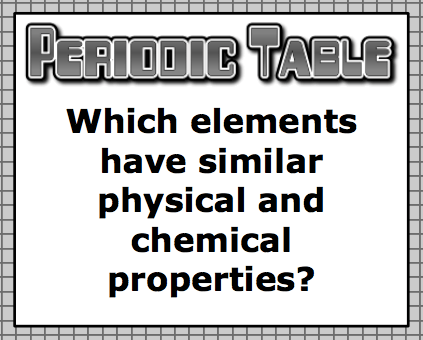
a)
Same group
b)
Same period
24.
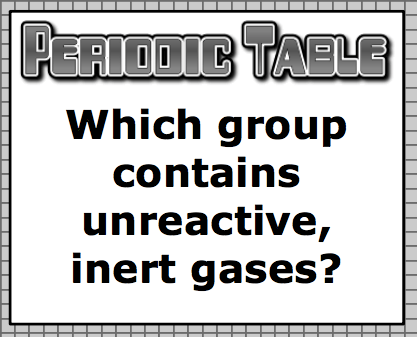
a)
Group 1
b)
Group 17
c)
Group 2
d)
Group 18
25.
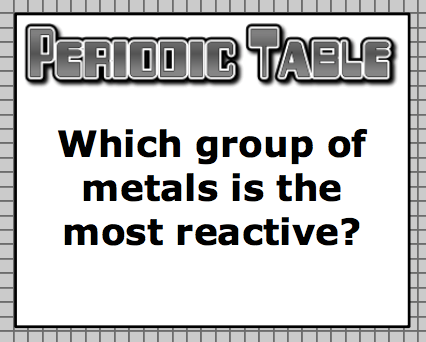
a)
Group 1
b)
Group 17
c)
Group 18
d)
Group 2
26.
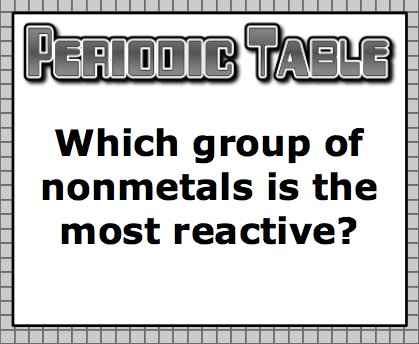
a)
Group 1
b)
Group 17
c)
Group 18
d)
Group 2
27.
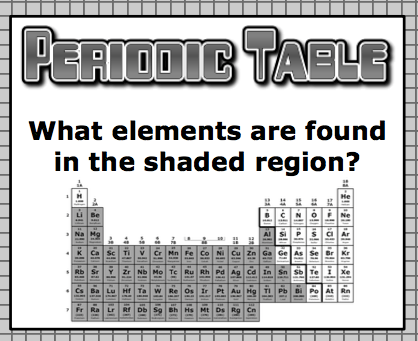
a)
Metals
b)
Nonmetals
c)
Metalloids
28.
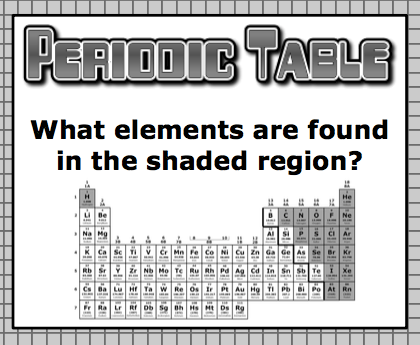
a)
Metals
b)
Nonmetals
c)
Metalloids
29.
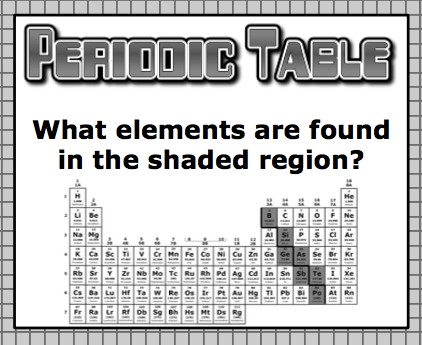
a)
Metals
b)
Nonmetals
c)
Metalloids
30.
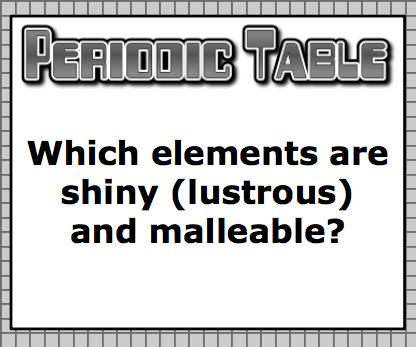
a)
Metals
b)
Nonmetals
c)
Metalloids
31.
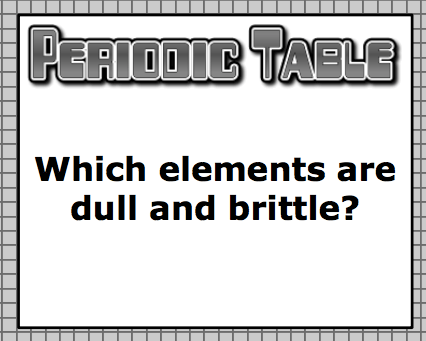
a)
Metals
b)
Nonmetals
c)
Metalloids
32.
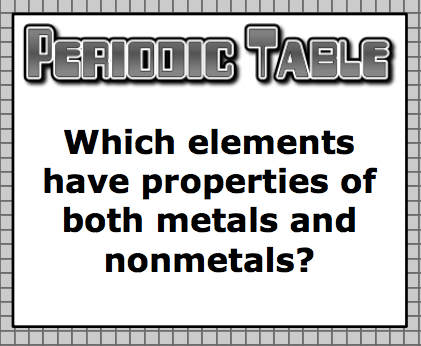
a)
Metals
b)
Nonmetals
c)
Metalloids
33.
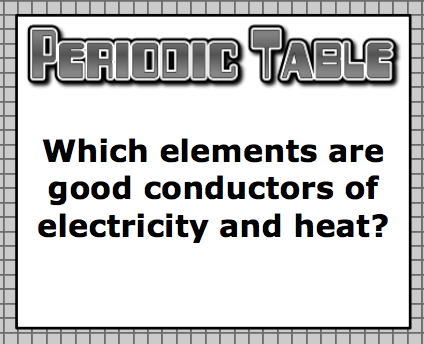
a)
Metals
b)
Nonmetals
c)
Metalloids
34.
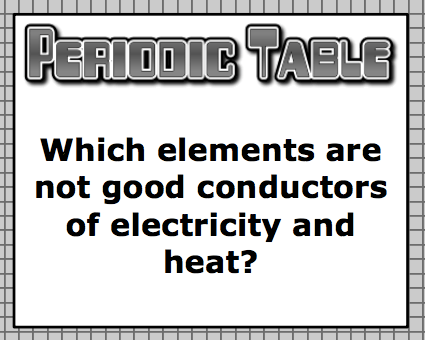
a)
Metals
b)
Nonmetals
c)
Metalloids
35.

Which group are the Alkali Metals found?
a)
Group 1
b)
Group 6
c)
Group 18
d)
Group 13
36.
What is the element symbol for boron?
a)
B
b)
Bo
c)
Bn
d)
W
37.
Group 1 on the Periodic Table is called the ______________.
a)
Alkali Metals
b)
Alkaline Earth Metals
c)
Transition Metals
d)
Lanthanides
38.
Group 2 on the Periodic Table is called the ________________.
a)
Transition Metals
b)
Noble Gases
c)
Alkaline-Earth Metals
d)
Alkali Metals
39.
Groups 3-12 are called the _____________.
a)
Boron Group
b)
Tansition Metals
c)
Actinides
d)
Lanthanides
40.

The highlighted group is called the ___________.
a)
Lanthanides
b)
Actinides
c)
Noble Gases
d)
Nitrogen Group
41.
Group 16 is called the __________.
a)
Oxygen Group
b)
Alkali Metals
c)
Actinides
d)
Nitrogen Group
42.
Group 18 is called the __________________________.
a)
Halogens
b)
Noble Gases
c)
Carbon Group
d)
Alkaline-Earth Metals
100 %

