Wayground logo

Free Printable Worksheets

Font size

S
M
L
XL
Worksheets

Unit 2A Review

Total questions: 40

Worksheet time: 19mins

Name
Class
Date
1.

JJ Thomson discovered what subatomic particle

a)

nucleus

b)

neutron

c)

proton

d)

electron

2.

Rutherford discovered what part of the atom? Check all that apply.

a)

nucleus

b)

neutron

c)

proton

d)

electron

3.

First person to propose the concept of an atom

a)

Rutherford

b)

Democritus

c)

Dalton

d)

Bohr

4.

Who proposed the theory that atoms orbit the nucleus in specific orbits.

a)

Bohr

b)

Democritus

c)

Rutherford

d)

Chadwick

5.

These particles are found in the nucleus

a)

protons and electrons

b)

nucleus and neutrons

c)

protons and neutrons

d)

electrons and neutrons

6.

Rutherford experimented with ____

a)

Gold foil and alpha particles

b)

Cathode rays and alpha particles

c)

electron and alpha particles

d)

gold foil and cathode rays

7.
Ionization energy is the...
a)
energy needed to remove the outermost electron.
b)
ability of an atom to attract electrons from another atom.
8.

Electronegativity is the...

a)

energy needed to remove the outermost electron.

b)

ability of an atom to attract and hold onto electrons

9.
Which element has the smaller atomic radius: potassium (K) or bromine (Br)?
a)
potassium (K)
b)
bromine (Br)
10.
Which element has the greatest ionization energy: Aluminum (Al)    or    Chlorine (Cl)?
a)
Aluminum (Al)
b)
Chlorine (Cl)
11.
Which element has the greatest electronegativity: Nitrogen (N) or Arsenic (As)?
a)
Nitrogen (N)
b)
Arsenic (As)
12.
As you move down a group, atomic radius increases because - 
a)
you add more and more neutrons
b)
you add more and more protons
c)
you add more and more shells (energy levels)
d)
you add more atomic mass
13.
The atom with the largest atomic radius in Group 18 is - 
a)
Ar
b)
He
c)
Kr
d)
Rn
14.
As you move across the periodic table from left to right, the atomic radius decreases.  This is because - 
a)
the number of protons increases, so attraction to electrons increases
b)
the number of energy levels increases
c)
the number of electrons increases
d)
the atomic mass increases
15.
Francium (Fr) has the lowest ionization energy in Group 1 because - 
a)
it has the smallest number of valence electrons
b)
it has the greatest atomic mass
c)
it has the greatest number of protons, so it attracts its electrons the strongest
d)
its 1 valence electron is very far from the nucleus, so little energy is needed to remove it
16.
What is the name of family I
a)
Alkaline Earth Metals
b)
Boron Family
c)
Alkali Metals
d)
Halogen Family
17.
In the modern periodic table elements are arranged by:
a)
atomic mass
b)
atomic number
c)
valence electrons
d)
number of isotopes
18.
The atomic number of an element tells the number of _____ in the nucleus of an atom of that element.
a)
protons
b)
neutrons
c)
electrons
d)
isotopes
19.
Most of the mass of an atom is found it its _____.
a)
electron cloud
b)
nucleus
c)
atomic number
d)
empty space
20.
Rutherford's experiment showed that most of an atom is made up of _____.
a)
a nucleus
b)
an electron cloud
c)
empty space
d)
alpha particles
21.
Which item on this element square is the chemical symbol?
a)
Copper
b)
29
c)
Cu
d)
63.546
22.
What is the atomic mass of "F"
a)
9
b)
18
c)
17
d)
19
23.
An atom of the element with atomic number 6 always has _____.
a)
six protons in its nucleus
b)
an atomic mass of six
c)
more than six neutrons
d)
six electron clouds
24.
What are subatomic particles? 
a)
the nucleus 
b)
electron cloud
c)
positive charge
d)
electrons, protons, and neutrons
25.
Each row in a periodic table is called a 
a)
Group
b)
Period
c)
Row
d)
Column
26.
Each column in the periodic table is called a 
a)
period
b)
group
c)
cluster
d)
unit
27.
Which group of the periodic table is composed of inert (not reactive)  gases?
a)
alkali metals
b)
alkaline earth metals
c)
halogens
d)
noble gases
28.
Elements which are shiny, conduct electricity and heat are called
a)
metal
b)
nonmetal
c)
metalloid
d)
nonexistent
29.
The atoms along the staircase are called 
a)
metals
b)
nonmetals
c)
metalloids
d)
noble gases
30.
Which is an alkali metal?
a)
Magnesium
b)
Iron
c)
Sodium
d)
Europium
31.
The periods of the periodic table tell us:
a)
Number of valence electrons
b)
Number of electron shells
c)
Number of protons
d)
What's a period?
32.
What quantities vary between isotopes of an element?
a)
protons, electrons, and atomic mass
b)
protons, electrons, and atomic number
c)
neutrons and electrons
d)
neutrons and atomic mass
33.
How many neutrons does the isotope of lithium have?
a)
8
b)
3
c)
4
d)
5
34.
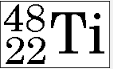
How many protons does this isotope of titanium have?
a)
48
b)
22
c)
26
d)
70
35.
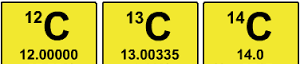
What do these isotopes of carbon all have in common?
a)
neutrons & mass number
b)
atomic number and neutrons
c)
atomic number and electrons
d)
protons, atomic number, and mass number
36.
How many neutrons in C-14?
a)
6
b)
7
c)
14
d)
8
37.

If an atom loses electrons, the charge will be positive.

a)

true

b)

false

38.

How many electrons would a Nitrogen ion gain/lose?

a)

lose 5

b)

gain 5

c)

lose 3

d)

gain 3

39.

How many electrons would a Calcium ion gain/lose?

a)

lose 1

b)

gain 1

c)

lose 2

d)

gain 2

40.

A Bromine ion gains 1 electron, which of the following is the correct symbol for a Bromine ion?

a)

Br-1

b)

Br+1

c)

Br+7

d)

Br-7