
 Worksheets
Matter
Total questions: 60
Worksheet time: 41mins
Name
Class
Date
1.

What are the three states of matter?
a)
solid, volume, mass
b)
density, volume, mass
c)
solid, liquid, gas
d)
density, gas, volume
2.
Something that takes up space and has mass.
a)
volume
b)
matter
c)
mass
d)
density
3.
A state of matter that has a definite volume and shape.
a)
solid
b)
liquid
c)
gas
d)
matter
4.

A measure of how much mass is contained in a given unit of volume.
a)
mass
b)
density
c)
volume
d)
matter
5.

The amount of space something takes up
a)
density
b)
volume
c)
mass
d)
matter
6.
Shape is a ____ that helps identify an object.
a)
physical property
b)
chemical property
c)
mass
d)
matter
7.
Iron + oxygen = rust is an example of a ___________.
a)
physical property/change
b)
chemical property/change
c)
mass
d)
volume
8.
A watermelon has more matter than a grape, so it has more
a)
mass
b)
eat
c)
solid
d)
greater
9.
You can measure ______ with grams.
a)
mass
b)
volume
c)
conductivity
d)
melting point
10.
The ability of a metal to allow heat or electricity to pass through it.
a)
conductivity
b)
insulator
c)
mass
d)
density
11.
A description of objects that can be measured and observed.
a)
gas
b)
mustangs
c)
physical properties
d)
melting point
12.
a type of matter that can be found on earth as a solid, liquid, and gas
a)
gold
b)
water
c)
oxygen
d)
rock
13.
If you saw a glass of water and later the water was gone what happened to the water? Remember that your in the science lab.
a)
Ms. Klenk was very thirsty and drank the water.
b)
evaporation
c)
precipitation
d)
solubility
14.
Example for Physical Property
a)
Taste
b)
explodes
15.
A physical property can be observed with your
a)
Eyes
b)
Ears
c)
Tastes
d)
All of the above
16.
Cutting an orange is a physical change.
a)
True
b)
False
17.
An example of a physical property is
a)
flammability
b)
acidic
c)
color
d)
ability to rust
18.

What causes a change in the state of matter?
a)
physical properties
b)
chemical energy
c)
temperature
19.
Which change can occur when you add heat energy to water?
a)
The water can change from a liquid to a solid
b)
The water can change from a gas to a liquid
c)
The water can change from a liquid to a gas
d)
The water can change from a solid to a liquid
20.
I am the smallest whole particle of matter.
a)
atom
b)
compound
c)
molecule
d)
mixture
21.

I am two or more atoms chemically bonded.
a)
atom
b)
compound
c)
molecule
d)
mixture
22.

I am 2 or more elements chemically bonded.
a)
atom
b)
molecule
c)
compound
d)
mixture
23.
Texture, color, states of matter, flexibility, freezing & melting points
a)
Chemical Properties
b)
Physical Properties
c)
States of Mass
d)
Scientific matterology
24.
Which of the following is an example of a chemical property?
a)
melting
b)
bending a paper clip
c)
rusting
d)
boiling water
25.

A pure substance that cannot be broken down into any other substance by chemical or physical means.
a)
compound
b)
mixture
c)
molecule
d)
element
26.
What can causes ice to transform from a solid to a liquid?
a)
The air.
b)
The cold.
c)
Shape
d)
Heat
27.
This state of matter does not have a definite size or shape.
a)
Gas
b)
Liquid
c)
Solid
d)
Milk
28.
Which is not a property of matter?
a)
Shape
b)
Mass
c)
Liquid
d)
Volume
29.

Which state of matter has particles that are tightly packed?
a)
liquid
b)
gas
c)
solid
30.
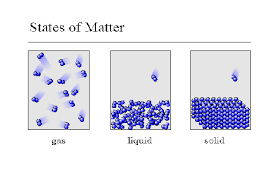
At higher temperatures
a)
particles in an object have less energy
b)
particles in an object move faster
c)
a gas contracts
31.
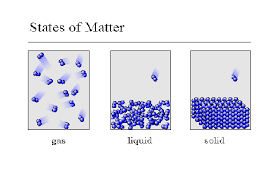
A gas
a)
has a definite shape but no definite volume
b)
has a definite volume but no definite shape
c)
has fast-moving particles
32.
Freezing
a)
Solid to gas
b)
Liquid to solid
c)
Gas to solid
d)
Liquid to gas
33.
Boiling
a)
liquid to gas
b)
gas to solid
c)
gas to liquid
d)
solid to liquid
34.
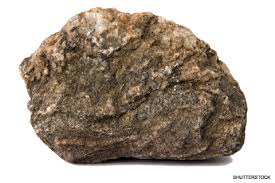
Which state of matter has tightly packed molecules?
a)
solid
b)
liquid
c)
gas
35.
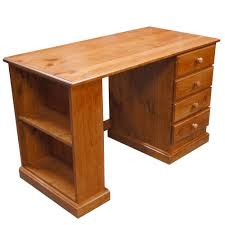
Which state of matter has a definite shape?
a)
solid
b)
liquid
c)
gas
36.
What is happening when my ice cream changes from a solid to a liquid?
a)
freezing
b)
melting
c)
burning
d)
evaporation
37.
Define a liquid.
a)
Indefinite shape, indefinite volume
b)
Definite shape, definite volume
c)
Found in stars
d)
Definite volume, indefinite shape
38.
The state of matter that has no definite size or shape is
a)
Solid
b)
Liquid
c)
Gas
39.
Particles of a liquid
a)
are tightly packed together and stay in a fixed position.
b)
have no viscosity.
c)
decrease in volume with increasing temperature.
d)
are free to move around one another but still touch.
40.
What term describes a solid changing to a gas?
a)
Deposition
b)
Sublimation
c)
Evaporation
d)
Freezing
41.
What is condensation?
a)
gas to solid
b)
gas to liquid
c)
liquid to solid
d)
solid to liquid
42.
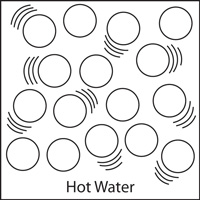
The speed of the molecules determines the _____.
a)
volume
b)
density
c)
pressure
d)
temperature
43.
The slower the particles in a substance move,
a)
the colder it is.
b)
the warmer it is.
c)
the more energy it has.
d)
the less energy it has.
44.
Thermal energy is...
a)
heat energy.
b)
the energy of motion
c)
energy of nuclear processes.
d)
an indication of physical change.
45.
A chemical change
a)
doesn't really change much.
b)
creates a new substance
c)
is a change in the state of matter
46.
A physical change is...
a)
a change that doesn't change the identity
b)
a change that makes something new.
c)
a chemical reaction
47.
What happens when my glass of water is sitting in the sun and disappears into a gas?
a)
evaporation
b)
burning
c)
melting
d)
freezing
48.
My glass of ice water is sitting in the sun and has droplets of water on the outside of the glass. What is happening?
a)
condensation
b)
evaporation
c)
melting
d)
freezing
49.
Sugar is added to water and stirred unit it completely dissolves. Which of the following correctly describes something that has happened to the sugar?
a)
The mass of the sugar decreased.
b)
The sugar disappeared an no longer exists.
c)
The sugar is evenly distributed in the water.
d)
The crystal of sugar have entered the atmosphere.
50.
The boiling point of water is -
a)
0° C
b)
50° C
c)
200° C
d)
100° C
51.

What is the volume of the rock? The water level is displaced from 20 mL to 23 mL with the rock.
a)
3 mL
b)
23 mL
c)
20 mL
d)
43 mL
52.
Which property would best separate a mixture of sand and iron filings?
a)
density
b)
electrical conductivity
c)
melting point
d)
magnetism
53.
Two objects are placed in water. One sinks and the other floats. Which conclusion can be drawn from this data?
a)
one object is magnetic and the other is not
b)
one object is solid and the other is a liquid
c)
one object has a greater density than the other
d)
one object is much larger than the other
54.
What properties can you use to describe matter using your five senses?
a)
Measurable/Quantitative
b)
Observable/Qualitative
55.

Which is true?
a)
Material A is a liquid
b)
Material C is a solid
c)
Material B is a gas
d)
Material B is a liquid
56.
What is the freezing point of water?
a)
0*F
b)
100*C
c)
100*F
d)
0*C
57.

What property of matter do the following items have in common?
a)
size
b)
color
c)
textrue
d)
mass
58.

The rubber duck floats on the water because -
a)
it is less dense than the water.
b)
it is yellow.
c)
it is more dense than the water.
d)
it is a solid.
59.
Which mixture could you separate by adding water and then pouring through a coffee filter?
a)
sand and salt, because the salt would dissolve and the sand would not
b)
baking soda and salt, because they both dissolve
c)
sugar and salt, because they both dissolve
d)
iron fillings and sand, because neither one dissolves
60.
How can I get salt out of water after it has dissolved and formed a solution?
a)
Pour it out through a strainer.
b)
You can't. It's dissolved, it's gone.
c)
Let the water evaporate, salt will remain.
100 %

