
NEW
Font size
S
M
L
XL
 Worksheets
Photosynthesis and Cellular Respiration
Total questions: 37
Worksheet time: 24mins
Name
Class
Date
1.
What is the pigment in chloroplasts that performs photosynthesis?
a)
Chlorosynthesis
b)
Chlorophyll
c)
ADP
d)
Electron Transport
2.
What process occurs when light energy is captured in autotrophs and converted into sugar?
a)
Photosynthesis
b)
Cellular Respiration
3.
Which of the following is the correct equation for PHOTOSYNTHESIS?
a)
CO2 + light + H2O --> O2 + Sugar
b)
CO2 + sugar + H2O --> O2 + light
c)
O2 + light + H2O --> CO2 + Sugar
d)
CO2 + O2 + H2O --> Light+ Sugar
4.
Which organelle performs PHOTOSYNTHESIS?
a)
Chloroplast
b)
Mitochondria
5.
Which gas is removed from the atmosphere during photosynthesis?
a)
hydrogen
b)
oxygen
c)
nitrogen
d)
carbon dioxide
6.
What are the products of photosynthesis?
a)
water and carbon dioxide
b)
oxygen and glucose
c)
oxygen and carbon dioxide
d)
oxygen and water
7.
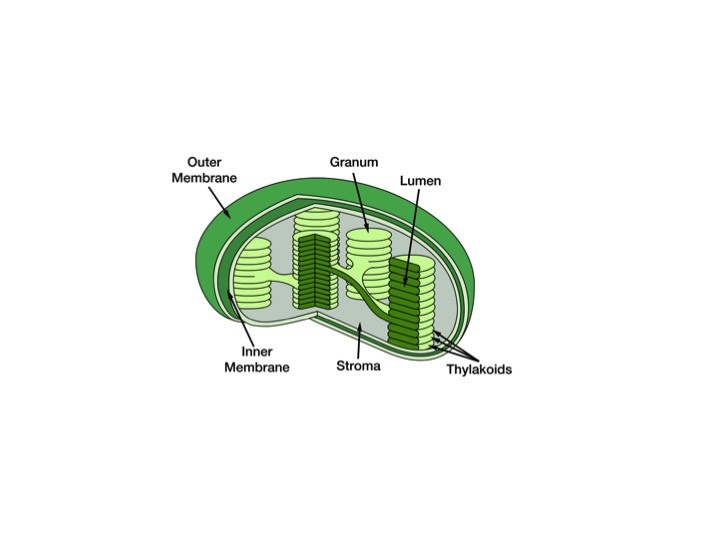
Chloroplasts are...
a)
Structures of animal cells to produce ATP
b)
Organelles where lipids are elaborated
c)
Specialized structures of plants where food is made
d)
Waste organelle of plants
8.
Leaves look green because.....
a)
they eat their vegetables
b)
to blend into their environment
c)
they contain a molecule named chlorophyll
d)
they are sick
9.

If all four plants were watered daily but placed in a closet, receiving no sunlight, what process would NOT occur?
a)
Ingestion of carbon dioxide
b)
Filtration of water through the soil
c)
Photosynthesis
d)
Water absorbtion
10.
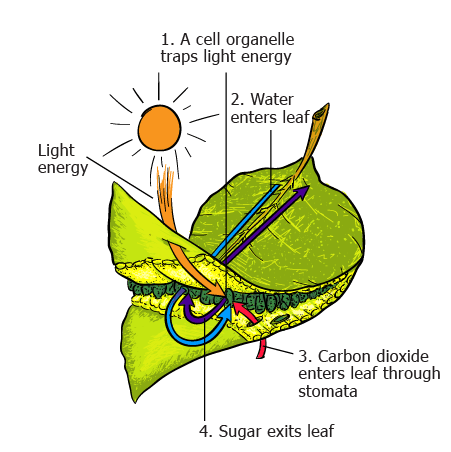
Look at the image
What substances and organelle work together to absorb sunlight to perform photosynthesis in this example?
What substances and organelle work together to absorb sunlight to perform photosynthesis in this example?
a)
cell wall and chloroplast
b)
mitochondria and water
c)
vacuole and carbon dioxide
d)
chloroplast and chlorophyll
11.
What are the reactants in the equation for cellular respiration?
a)
oxygen and lactic acid
b)
carbon dioxide and water
c)
glucose and oxygen
d)
water and glucose
12.
What is cellular respiration?
a)
the breakdown of glucose to release ATP
b)
the breakdown of glucose to release NADH
c)
the breakdown of glucose to release FADH
d)
the breakdown of glucose to release carbon
13.
What is the molecule called that mitochondria produce when they respire glucose?
a)
ATP
b)
ADP
c)
DNA
d)
80p
14.
This is the "powerhouse" of the cell. Most of an eukaryotic cell's energy is made here.
a)
mitochondria
b)
ribosomes
c)
chloroplasts
d)
nucleus
15.
How are photosynthesis and cellular respiration related?
a)
They have opposite equations
b)
they have the same equation
c)
they both produce carbon dioxide
d)
they both produce oxygen
16.
What gas is released into the air during cellular respiration?
a)
oxygen
b)
carbon dioxide
c)
water
d)
glucose
17.

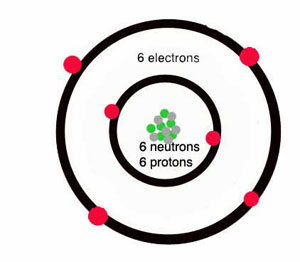
What does the picture show?
a)
carbon dioxide molecule
b)
oxygen molecule
c)
water molecule
d)
glucose molecule
18.

The rabbit's ORIGINAL source of energy is from the...
a)
plant
b)
sun
c)
ATP
d)
glucose
19.
The leaves in plants change color in the fall because...
a)
there is not enough sunlight
b)
there is a reduced water supply
c)
the temperature is cooler
d)
all of the above are correct
20.
Photosynthesis occurs in specific parts of a plant. Where would it NOT occur?
a)
green leaves
b)
brown tree trunk
c)
green stem
d)
green branch
21.
A plant is releasing a gas. What is the most likely gas?
a)
co2
b)
methane
c)
water vapor
d)
oxygen
22.
True or False:
Both plant cells and animal cells depend on cellular respiration for their energy needs.
Both plant cells and animal cells depend on cellular respiration for their energy needs.
a)
True
b)
False
23.

Which of these is NOT A TRUE statement about why photosynthesis is important:
a)
It captures and makes the sun's energy available to all species
b)
It turns deadly CO2 into Oxygen for us to breath
c)
It helps plants create energy to send to rest of food chain
d)
It makes the water for our planet
24.
Where is a lot of the CO2 located on earth?
a)
space
b)
absorbed in the ground
c)
in the atmosphere acting as a greenhouse gas
d)
in plants
25.
Photosynthesis
a)
absorbs CO2
b)
releases CO2
26.
Respiration
a)
absorbs CO2
b)
releases CO2
27.
What are all living things made of?
a)
Soil
b)
Oxygen
c)
Carbon
d)
water
28.
Combustion is another word for _______________.
a)
a train
b)
a bus
c)
a dog
d)
burning
29.
How do living organisms return carbon to the atmosphere in the carbon cycle?
a)
respiration and photosynthesis
b)
decomposition and respiration
30.
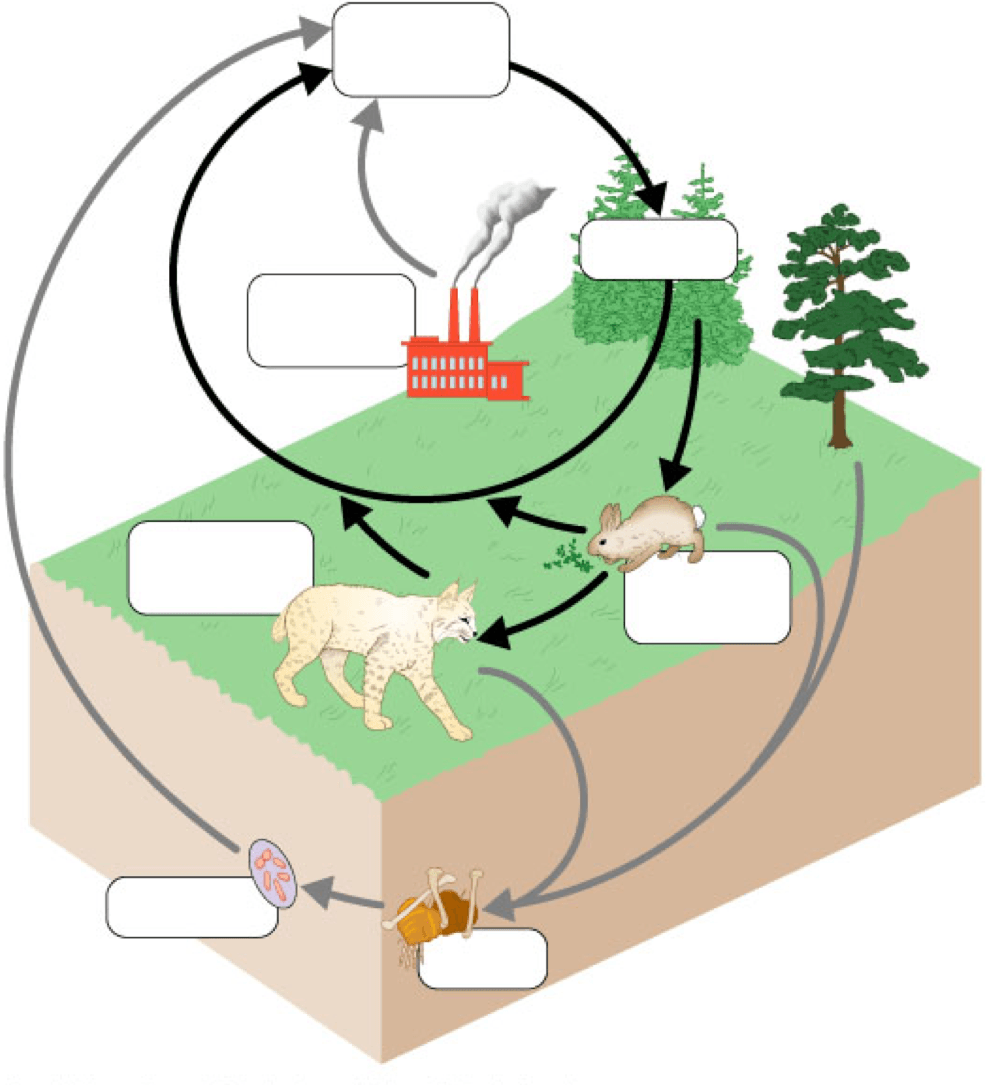
In what process is Carbon transformed into chemical energy?
a)
Photosynthesis
b)
Respiration
c)
Primary Production
d)
Secondary Production
31.
Carbon can be found in...?
a)
The atmosphere
b)
Inside of the Earth
c)
Fossil fuels
d)
All of the above!
32.
The circulation of the element Carbon among Earth's atmosphere, land, oceans, and organisms is called _____________.
a)
the Carbon Cycle
b)
the Oxygen Cycle
c)
the Carbon dioxide Cycle
d)
the Water Cycle
33.
Which is a true statement?
a)
Humans depend on oxygen, plants depend on carbon dioxide
b)
Plants produce carbon dioxide
c)
Humans depend on carbon dioxide, plants depend on oxygen
d)
Humans don't depend on plants for the air they need
34.
When experimenting with the growth of a plant, a scientist uses three (of the same type of) plants, two different fertilizers, equal light, and equal water. What type of variable is the fertilizer?
a)
Dependent
b)
Independent
c)
Control
d)
Compound
35.

Everything you want to remain the same or unchanged is called are called the ___________ variables.
a)
independent
b)
dependent
c)
controlled
36.
The steps you took to do your experiment.
a)
Results
b)
Problem
c)
Procedure
d)
Conclusion
37.
Al wonders if adding salt to water will affect how long it takes the water to freeze. Al thinks that salt water will freeze more quickly than fresh water. He decides to check his hypothesis by conducting an experiment. Al takes two ice trays and fills one with distilled water and the other with distilled water that has two tablespoons of salt added. He makes sure he puts exactly the same amount of water in each ice tray. Al takes the trays and puts them side by side in the freezer. Al checks the ice trays every 10 minutes to see if the water in each tray has begun to freeze. Al finds that after 20 minutes the water in the ice tray without the salt has started to form ice, while the ice tray with the salt water is still completely liquid.
What is his hypothesis?
What is his hypothesis?
a)
Salt water freezes slower than fresh water.
b)
Water freezes in a freezer
c)
Salt water freezes faster than fresh water.
d)
water will freeze in 20 minutes
Reset

