wayground logo

Free Printable Worksheets

Font size

S
M
L
XL
Worksheets

Bonding Test

Total questions: 55

Worksheet time: 36mins

Name
Class
Date
1.

Formula for Sodium + Chlorine

a)

NaCl

b)

Na2Cl

c)

NaCl2

d)

SC

2.

Formula for Magnesium + Iodine

a)

MgI2

b)

Mg2I

c)

MgI

d)

MnI3

3.

Formula for Sodium + Oxygen

a)

NaO

b)

Na2O

c)

NaO2

d)

SO

4.

Formula for Calcium + Chlorine

a)

CaCl

b)

CaCl2

c)

Ca2Cl

d)

CCh

5.

Formula for Aluminum + Chlorine

a)

AlCl

b)

Al3Cl

c)

AlCl3

d)

ACh

6.

Which shows the proper bonding of Aluminum + Chlorine

a)

A

b)

B

c)

C

d)

D

7.

Which shows the proper bonding of Calcium + Chlorine

a)

A

b)

B

c)

C

d)

D

8.

Which shows the proper bonding of Sodium + Oxygen

a)

A

b)

B

c)

C

d)

D

9.

Which shows the proper bonding of Magnesium + Iodine

a)

A

b)

B

c)

C

d)

D

10.

Which shows the proper bonding of Sodium + Chlorine

a)

A

b)

B

c)

C

d)

D

11.
In the chemical formula for an ionic compound, which item is written first?
a)
positive ion
b)
negative ion
c)
subscript
d)
the female
12.
Magnesium bromide is an ionic compound with the chemical formula MgBr₂.  What does the "2" tell you?
a)
There are 2 bromide ions for every magnesium ion
b)
Bromide has a 2- charge
c)
Bromide has a 2+ charge
d)
There are 2 magnesium ions to every bromide ion
13.
Which is the correct name for CaBr2?
a)
Calcium Bromine
b)
Bromine Calcium
c)
Calcium Bromide
d)
Carbon and Bromine
14.
What is the formula of Sodium oxide?
a)
Na2O
b)
NaO2
c)
Na2O2
d)
Na2O
15.
An ionic bond forms when atoms ___________ electrons.
a)
gain
b)
share
c)
increase
d)
transfer
16.
Which of the following is an example of an IONIC COMPOUND?
a)
NaCl
b)
H2O
c)
CO2
d)
NO
17.
Which of the following is an example of a COVALENT COMPOUND?
a)
H2S
b)
KI
c)
CaCl2
d)
MgO
18.
Which is the correct lewis dot structure for calcium chloride?
a)
A
b)
B
c)
C
19.
The desire for an element to have 8 atoms around it is called 
a)
Octet Rule
b)
Resonance
c)
Ionization energy
d)
Electronegativity
20.
How many Valence Electrons are on Oxygen
a)
2
b)
7
c)
6
d)
1
21.
What is the name of this Compound
a)
P2O5
b)
Phosphorous PentaOxide
c)
Diphosphorous pentaoxide
d)
Phosphourous Oxide
22.
What is the formula for this Compound
a)
PCl
b)
PCL5
c)
PCl5
d)
Phosphorous Penta Chloride
23.
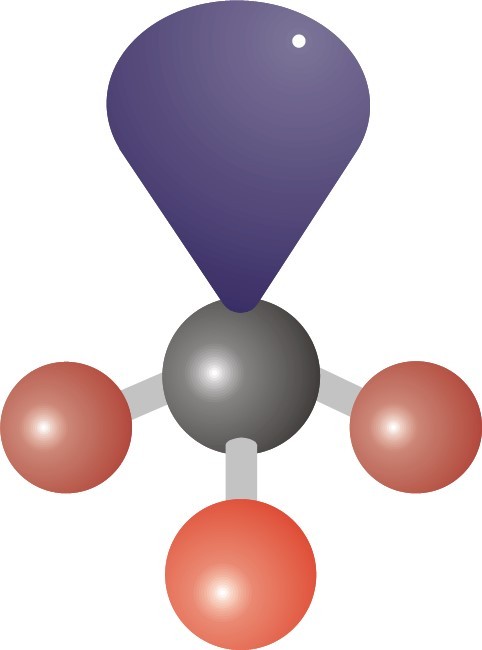
What is the name of this Molecule shape
a)
Tetrahedral
b)
Trigonal Pyramidal 
c)
Trigonal bipyramidal
d)
Bent
24.
Which of these would be covalently bonded
a)
Fr and K
b)
Sc and O 
c)
F and Cl
d)
He and Pt
25.
A covalent bond is formed when two atoms ____ electrons
a)
share
b)
lose
c)
transfer
d)
gain
26.
What is it called when atoms share two pairs of electrons?
a)
A double bond
b)
A single bond
c)
A triple bond
d)
A quadruple bond
27.
What is it called when atoms share one pair of electrons?
a)
A double bond
b)
A triple bond
c)
A quadruple bond
d)
A single bond
28.
What is it called when atoms share three pairs of electrons?
a)
A single bond
b)
A double bond
c)
A triple bond
d)
a quadruple bond
29.
What do the prefixes in front of an element name tell us about the compound?
a)
The number of that compound
b)
The number of that element
c)
The atomic number
d)
The atomic mass
30.
What bond is formed between a nonmetal and a nonmetal?
a)
Covalent bond
b)
Ionic bond
31.
The prefix MONO means
a)
1
b)
2
c)
3
d)
4
32.

When naming covalent compounds...

a)

You need roman numerals and no prefixes

b)

You do not need roman numerals or prefixes

c)

You need roman numerals and prefixes

d)

You do not need roman numerals but you do need prefixes

33.

In an ionic bond the metal wants to ______ electrons.

a)

lose

b)

gain

c)

share

34.

When a metal loses an electron(s) it becomes a ...

a)

positive ion

b)

negative ion

c)

metalloid

d)

nonmetal

35.

In an ionic bond the non-metal wants to ______ electron(s).

a)

lose

b)

gain

c)

share

36.

When a non-metal gains an electron it becomes a...

a)

positive ion

b)

negative ion

c)

metalloid

d)

metal

37.

In a covalent bond both non-metals _____ electrons.

a)

transfer

b)

share

38.

Beryllium and sulfur will form a ______ bond

a)

ionic

b)

covalent

c)

metalloid

39.

Carbon and Oxygen will make a ___________ bond.

a)

ionic

b)

covalent

c)

metallic

40.

Nitrogen and Oxygen will make a ____________ bond

a)

ionic

b)

covalent

c)

metallic

41.
Metallic bonding is...
a)
a type of covalent bond.
b)
a type of ionic bond.
c)
an attraction between positive ions and electrons.
42.

Why do metallic compounds conduct electricity as solids?

a)

core electrons are mobile, allowing electricity to flow through the metal

b)

valence electrons are mobile, allowing electricity to flow through the metal

c)

protons are mobile, allowing electricity to flow through the metal
d)

the metal cations are mobile, allowing electricity to flow through the metal
43.
In metals, the _______ electrons form a shared sea of electrons.
a)
Metallic
b)
Inner
c)
Outer
d)
Ionic
44.
Which type of bond creates a "pool" of electrons between atoms?
a)
Ionic Bonds
b)
Covalent Bonds
c)
Metallic Bonds
d)
Saving Bonds
45.
This is a correct dot diagram for oxygen (O)
a)
true
b)
false
46.
Hint: Draw the Lewis dot structure for NH3.
a)
tetrahedral
b)
trigonal pyramid
c)
trigonal planar
d)
bent or angular
47.
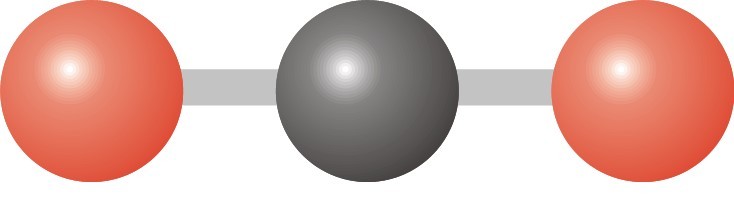
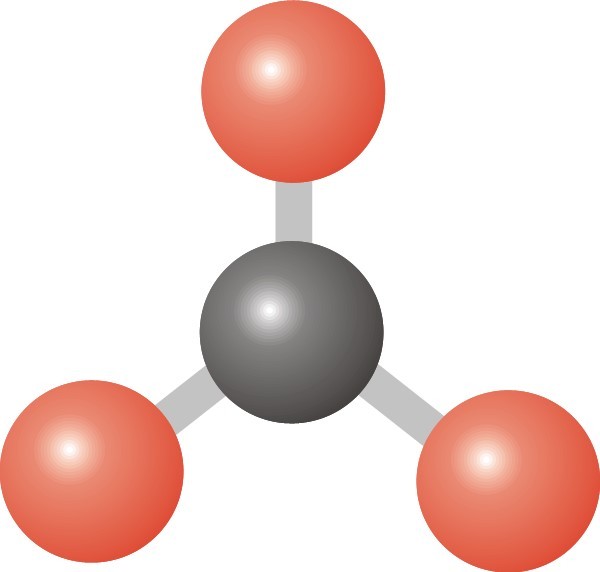
Which molecule would have this shape?
a)
BF3
b)
CH4
c)
PCl5
d)
CO2
48.
What molecule could this be? 
a)
BF3
b)
CH4
c)
H2O
d)
CO2
49.
Which of the following shapes has unshared pairs of electrons on the central atom? 
a)
Bipyramidal
b)
Bent
c)
Trigonal Planar
d)
Tetrahedral
50.
What is incorrect about the Lewis structure?
a)
too many valence e-
b)
too few valence e-
c)
paired e- with not all sides filled
d)
nothing
51.
In the correct Lewis Structure for methane (CH4), how many unpaired electrons can be found around Carbon?
a)
0
b)
2
c)
4
d)
8
52.
Who could this be?
a)
H2O
b)
NH3
c)
CO2
d)
CH4
53.

How many valence electrons does boron want?

a)

6

b)

8

c)

3

d)

2

54.

Which of the following only want 2 valence electrons?

a)

Hydrogen

b)

Helium

c)

Boron

d)

Oxygen

e)

Magnesium

55.

Which of the following want 8 valence electrons?

a)

Hydrogen

b)

Helium

c)

Boron

d)

Oxygen

e)

Magnesium