
 Worksheets
Bio1 Hist of cells, Pro/Euk, Plant/Animal, & Organelles 7.1/7.2
Total questions: 53
Worksheet time: 38mins
Name
Class
Date
1.
In what organelle is the genetic material found inside?
a)
Endoplasmic Reticulum
b)
Golgi Complex
c)
Nucleolus
d)
Nucleus
2.
What organelle is called the "powerhouse" of a cell?
a)
Endoplasmic Reticulum
b)
Nucleus
c)
Mitochondria
d)
Nucleolus
3.

Using this image, what organelle is C?
a)
Cell Wall
b)
Mitochondria
c)
Large Cell Vacuole
d)
Chloroplast
4.
What is the function of the mitochondria?
a)
Structure that manufactures ribosomes
b)
Structures that converts nutrients to energy
c)
Stack of membranes that packages chemicals
d)
Structure that contains DNA and directs the cell
5.
What is the function of the vacuole?
a)
Sac that stores water, nutrients, and waste products
b)
Sac filled with digestive chemicals
c)
Jelly-like substance within the plasma membrane
d)
stack of membranes that packages chemicals
6.
Where does photosynthesis occur?
a)
mitochondria
b)
stomata
c)
xylem
d)
chloroplast
7.

I store water in both plant and animal cells. What am I?
a)
cytoplasm
b)
ribosomes
c)
vacuole
d)
lysosomes
8.

I make proteins for the cell. What am I?
a)
ribosome
b)
mitochondria
c)
chloroplast
d)
lysosome
9.
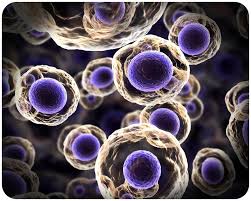
The two kinds of cells are Prokaryotes and Eukaryotes. How are they different?
a)
Prokaryotes have a nucleus.
b)
Eukaryotes have a nucleus.
c)
Prokaryotes are plant cells.
d)
There is no difference.
10.

What cell part is NOT found in all cells?
a)
Cell Wall
b)
Cell Membrane
c)
Cytoplasm
d)
Genetic Material
11.

Complex cell. Can be plant or animal. Contains membrane bound organelles.
a)
Eukaryotic Cell
b)
Prokaryotic Cell
c)
Bacteria
d)
Blood cell
12.
"Storage tanks" Can hold food, water or waste for the cell
a)
Ribosomes
b)
Vacuole
c)
Chloroplast
d)
Nucleolus
13.

What is the name of the structure shown in the diagram where cellular respiration takes place?
a)
Chloroplast
b)
Mitochondrion
c)
Nucleus
d)
Vacuole
14.
Which of the following is found in eukaryotic cells but NOT prokaryotic cells?
a)
Cell membrane
b)
Mitochondria
c)
Ribosomes
d)
DNA
15.
Micro-body that removes excess hydrogen from the cell and combines it with oxygen to make hydrogen peroxide Catalase breaks down the toxic H2O2
(Plant and Animal cells)
(Plant and Animal cells)
a)
Mitochondria
b)
Chloroplast
c)
Peroxosome
d)
Plasmodesmata
16.
Protects cell from surroundings
Allows certain substances in, keeps others out Phospholipid bilayer with proteins
(Plant and animal)
Allows certain substances in, keeps others out Phospholipid bilayer with proteins
(Plant and animal)
a)
Contractile Vacuole
b)
Cell Membrane
c)
Nucleus
d)
Centrioles
17.
Complexes that makes proteins; Free in cytosol or bound to rough ER or nuclear envelope translate mRNA into amino acid
(Plant and Animal)
(Plant and Animal)
a)
Centrioles
b)
Ribosomes
c)
Golgi Apparatus
d)
Endoplasmic Reticulum
Rough+Smooth
Rough+Smooth
18.
Organelle active in synthesis, modification, sorting, and secretion of cell products
(Plant and Animal)
(Plant and Animal)
a)
Centrioles
b)
Ribosomes
c)
Golgi Apparatus
d)
Endoplasmic Reticulum
Rough+Smooth
Rough+Smooth
19.
Digestive organelle where macromolecules are hydrolyzed
(Animal only)
(Animal only)
a)
Mitochondria
b)
Lysosomes
c)
Vacuole
d)
Cytoskeleton
20.
Reinforces cell's shape;functions in cell movement; components are made of protein
(Plant and animal)
(Plant and animal)
a)
Cytoskeleton
b)
Vacuole
c)
Lysosomes
d)
Mitochondria
21.
Located on the outside of a cell
pushes the cell forward
whip like structure made of microtubles; 9 pair ring outside, 1 pair inside
pushes the cell forward
whip like structure made of microtubles; 9 pair ring outside, 1 pair inside
a)
Cillia
b)
Flagellum
c)
Mitochondria
d)
Chloreoplast
22.
Where are proteins made?
a)
Golgi body
b)
Mitoichondrion
c)
Chromosomes
d)
Ribosomes
23.
Most of the cell membrane is made of...
a)
Phospholipids
b)
Carbs
c)
Proteins
d)
Nucleic acids
24.
Phospholipid tails are...
a)
Nonpolar (water fearing)
b)
Polar (water loving)
25.
Phospholipid heads are...
a)
Polar (water loving)
b)
Nonpolar (water fearing)
26.
When looking at the cell membrane, where are the phospholipid tails are located?
a)
Inner part of the bilayer
b)
Outer part of the bilayer
c)
At the end of the bilayer
d)
Goes through each end of the bilayer
27.
How many layers is the lipid bilayer?
a)
1
b)
2
c)
3
d)
4
28.
The ___ is the basic unit of structure and function of organisms
a)
Atom
b)
Cell
c)
Matter
d)
All of these
29.
Which statement is a part of the cell theory?
a)
All cells come from preexisting cells
b)
Bacteria are prokaryotic cells
c)
Eukaryotic cells are complex
d)
Humans are multicellular
30.
Who looked at cork and named the cell?
a)
Robert Hooke
b)
Van Leeuwenhoek
c)
Robert Brown
d)
Francesco Redi
31.
Which of the following is a prokaryote?
a)
Animal cell
b)
Bacterial cell
c)
Virus
d)
Plant cell
32.
Which of the following IS a major principle of the Cell Theory?
a)
All cells form through binary fission
b)
All cells contain a nucleus
c)
All cells arise from pre-existing cells
d)
All cells contain DNA
33.
What is the difference between a prokaryotic cell and a eukaryotic cell?
a)
Eukaryotes have DNA, prokaryotes don't have DNA
b)
Eukaryotes are animal cells, prokaryotes are plant cells
c)
Eukaryotes have a nucleus inside the cell, prokaryotes don't have a nucleus
d)
Prokaryotes have a nucleus, eukaryotes don't have a nucleus
34.

This image shows the detailed structure of the tiny mitochondria organelle. Which microscope most likely took this image?
a)
Compound Light
b)
Scanning Electron
c)
Dissecting
d)
Transmission Electron
35.

Which microscope took a 3D image of this fly's head?
a)
Compound Light
b)
Transmission Electron
c)
Dissecting
d)
Scanning Electron
36.
As a cell becomes larger, its
a)
volume increases faster than its surface area
b)
surface area increases faster than its volume
c)
volume increases, but its surface area stays the same
d)
surface area increases, but is volume stays the same
37.
Compared to small cells, large cells have more trouble
a)
dividing.
b)
producing daughter cells.
c)
moving needed materials in and waste products out.
d)
making copies of their DNA.
38.
Synthesizes lipids, stores calcium, detoxifies drugs and poisons
a)
Rough ER
b)
Smooth ER
c)
Golgi Apparatus
d)
Peroxisomes
39.
Which is true of prokaryotic and eukaryotic cells?
a)
Prokaryotic cells are larger than eukaryotic cells.
b)
Eukaryotic cells do not have nuclei, and prokaryotic cells do have nuclei.
c)
Prokaryotic cells lack membrane-bound organelles, and eukaryotic cells contain membrane-bound organelles.
d)
Eukaryotic cells are simpler than prokaryotic cells.
40.
Which of these is the function of a mitochondria?
a)
protein synthesis
b)
endocytosis
c)
cellular respiration
d)
osmosis
41.

Which of the following scientists developed 500+ microscopes and was the first to observe bacteria?
a)
Anton van Leuwenhoek
b)
Matthais Schleiden
c)
Robert Hooke
d)
Theodor Schwann
42.
What is the relationship between the cell size and the cell nutrient absorption rate?
a)
The smaller the cell size the less nutrients are absorbed
b)
The larger the cell size the more nutrients are absorbed
c)
The smaller the cell size the more nutrients are absorbed
d)
The relationship between cell size and nutrient absorption rate cannot be determined
43.
THE FOLLOWING SCIENTISTS CONTRIBUTED TO THE CELL THEORY EXCEPT____________.
a)
SCHLEIDEN
b)
LEEUWENHOEK
c)
SCHWANN
d)
VIRCHOW
44.
CELLS SUCH AS ANIMAL, PLANT, PROTIST, AND FUNGAL CELLS ARE __________.
a)
PROKARYOTES
b)
EUKARYOTES
45.
There are three parts to the cell theory. Which is NOT one of those parts?
a)
All organisms are composed of one or more cells.
b)
The cell is the basic unit of structure and organization in organisms.
c)
Cells spontaneously arise from carbon and nutrients carried in the bloodstream.
d)
All cells come from pre-existing cells.
46.
What is the basic unit, or "building block" of life?
a)
Cell
b)
Molecule
c)
Organelle
d)
Atom
47.
Which scientist viewed a piece of cork under a simple microscope and first used the term "cell"?
a)
Robert Hooke
b)
Anton Von Leeuwenhoek
c)
Matthias Schleiden
d)
Theodore Schwann
48.

The image shows a cell which LACKS a nucleus and other membrane bound organelles. This is known as a ______________ cell.
a)
Prokaryotic Cell
b)
Eukaryotic Cell
49.

What type of cell is seen in the image?
a)
Animal Cell
b)
Plant Cell
c)
Bacteria Cell
d)
Prokaryotic Cell
50.

Directs all cell activities through the DNA located there.
a)
Lysosomes
b)
Nucleus
c)
ribosomes
d)
Mitochondria
51.
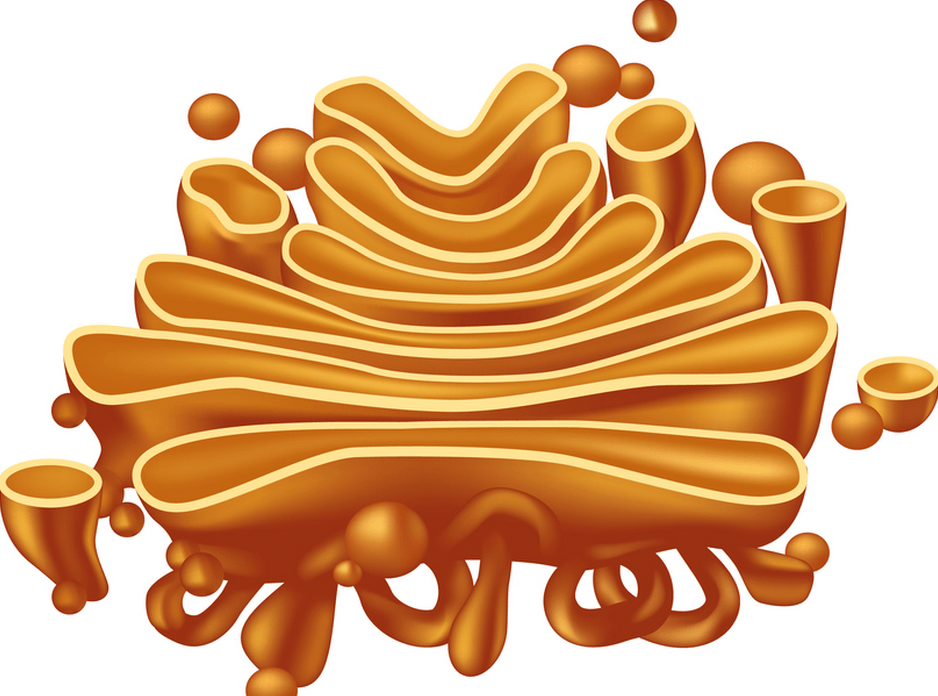
I am a protein packaging and shipping machine! Who am I?
a)
vacuole
b)
ribosome
c)
mitochondrion
d)
golgi apparatus
52.
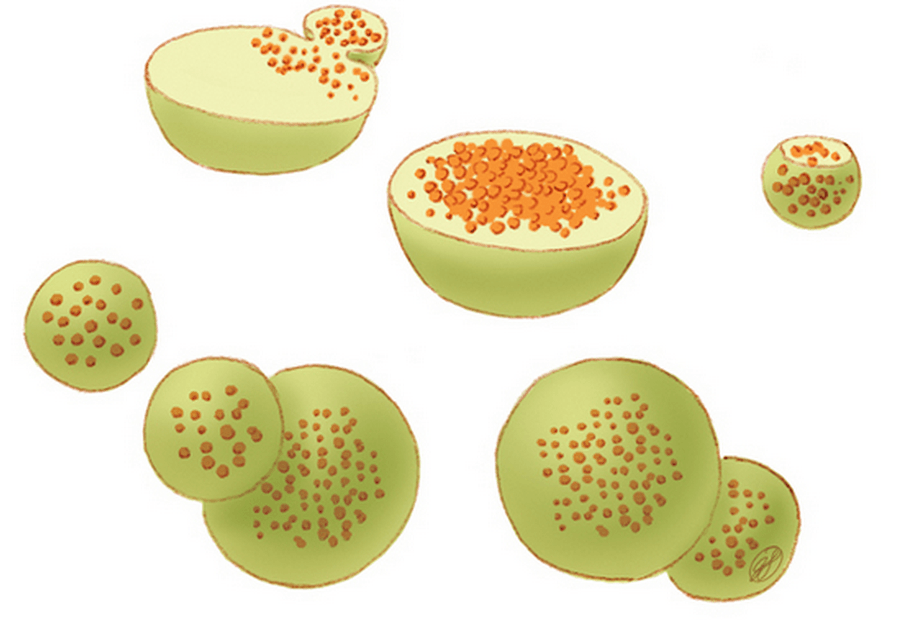
You might think of me as the trash collector or digester, but recycler is maybe more accurate. What am I?
a)
mitochondria
b)
lysosome
c)
vacuole
d)
ribosome
53.
The ____________ regulates what enters and leaves the cell.
a)
mitochondria
b)
cell membrane
c)
golgi bodies
d)
cell wall
100 %

