wayground logo

Free Printable Worksheets

Font size

S
M
L
XL
Worksheets

Big Reviews!

Total questions: 129

Worksheet time: 2hrs 41mins

Name
Class
Date
1.
The diffusion of WATER across a semi-permeable membrane is
a)
osmosis
b)
diffusion
c)
endocytosis
d)
exocytosis
2.
Active transport requires
a)
energy
b)
the nucleus
c)
chloroplasts
d)
lysosomes
3.
What organelles are only found in PLANT cells
a)
lysosomes & centrioles
b)
cell wall & chloroplasts
c)
nucleus & nucleolus
d)
mitochondria & ribosomes
4.
What organelles is NOT found in a PROkaryote
a)
nucleus
b)
cell membrane
c)
Chromosomes (DNA)
DNA
d)
ribosomes
5.
The mitochondria....
a)
produces energy
b)
causes cell division
c)
is not an organelle
d)
is found in a prokaryote
6.
Which is NOT part of the Cell Theory
a)
New cells are produced from existing cells
b)
All living things are composed of cells
c)
Only eukaryotic cells have a nucleus
d)
Cells are the basic unit of structure & function in living things
7.
How are unicellular organisms different from multicellular organisms? 
a)
There are no differences.
b)
They are made of many cells. 
c)
They are only classified as prokaryotes.
d)
They are made of only one cell. 
8.
In order to sustain life, all cells must...
a)
digest nutrients and water
b)
excrete waste and fluids
c)
must be able to maintain a homeostasis environment (aka cellular respiration and regulation)
d)
All of the above
9.
Gives the cell a rigid, box-like shape; outside of the cell membrane; in plants.
a)
cytoplasm
b)
chromatin
c)
cell wall
d)
cell membrane
10.
What biomolecule do enzymes belong to? 
a)
Carbohydrate
b)
Lipid
c)
Nucleic Acid
d)
Protein
11.
Which biomolecule is found in pasta and bread?
a)
Lipid
b)
Protein
c)
Nucleic Acid
d)
Carbohydrate
12.
Which biomolecule is a main source of quick energy?
a)
Nucleic Acid
b)
Protein
c)
Lipid
d)
Carbohydrate
13.
Which biomolecule is found in fats, oils, and waxes and is a source of long-term energy
a)
Proteins
b)
Nucleic Acid
c)
Lipids
d)
Carbohydrate
14.
Carbon, Hydrogen, Oxygen and Nitrogen are elements in what biomolecule?
a)
Carbohydrate
b)
Lipid
c)
Protein
d)
Nucleic acid
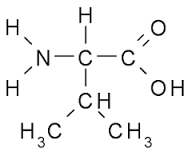
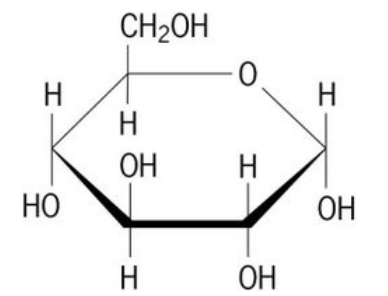
15.
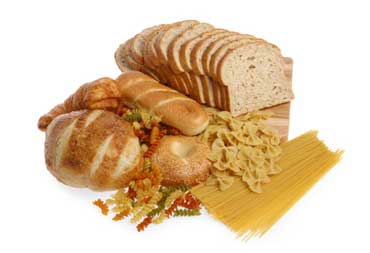
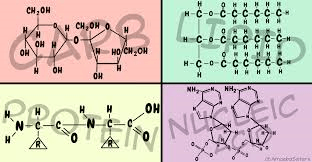
Which biomolecule is this a picture of?
a)
Protein
b)
Nucleic Acid
c)
Lipid
d)
Carbohydrate
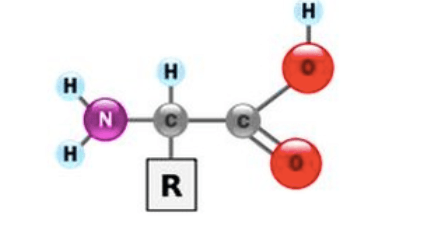
16.
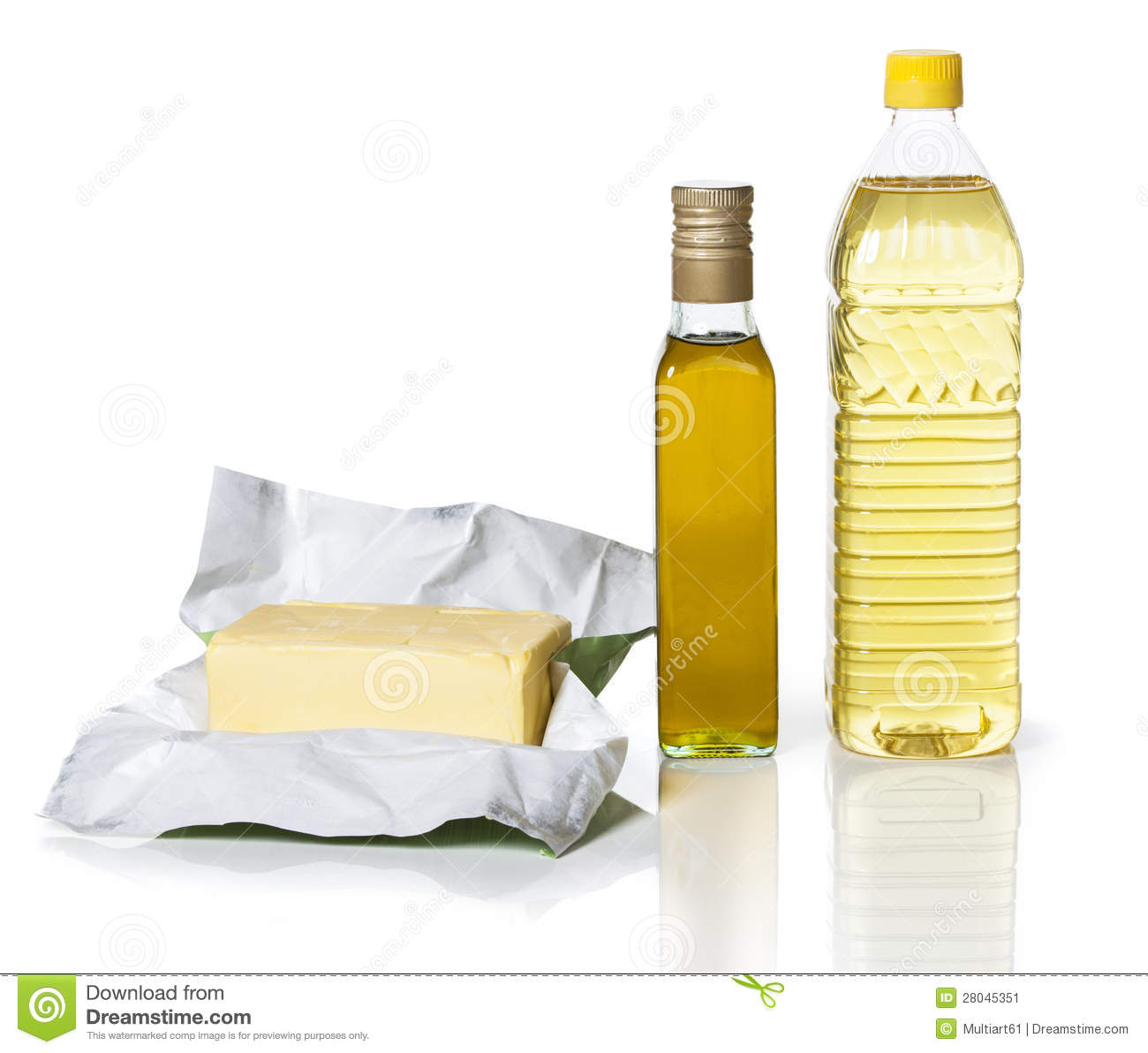
Which biomolecule is this a picture of?
a)
Protein
b)
Nucleic Acid
c)
Lipid
d)
Carbohydrate
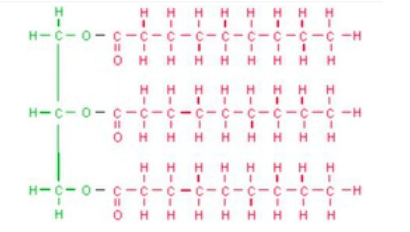
17.
Which biomolecule is this a picture of?
a)
Protein
b)
Nucleic Acid
c)
Lipid
d)
Carbohydrate
18.
Which biomolecule is responsible for insulation and energy storage?
a)
Protein
b)
Nucleic Acid
c)
Lipid
d)
Carbohydrate
19.
What elements are common to all 4 biomolecules?
a)
Carbon, hydrogen, nitrogen
b)
Carbon, Nitrogen, Phosphorus
c)
Carbon, Hydrogen, Oxygen
d)
Carbon, Hydrogen, Phosphorus
20.
What do viruses need to reproduce?
a)
they need genetic material
b)
They need a host cell
c)
They need  bacteria
d)
They need insulin
21.
How does a virus cause a person to develop the common cold?
a)
invades the host cell to reproduce
b)
removes energy from the host cell
c)
produces toxins in the host cell
d)
protects the host cell from bacteria
22.
What part of a virus is the protein capsule that houses the genetic material (DNA/RNA)?
a)
tail
b)
nucleus
c)
capsid
d)
glycoprotein
23.

Which of the following is NOT a nitrogen base in DNA?

a)

Cytosine

b)

Guanine

c)

Adenine

d)

Thymine

e)

Uracil

24.

If a geneticist sequenced a gene (sequence of DNA) and found that the base Adenine showed up 5000 times, how many Thymine bases would be in this gene?

a)

5000

b)

2000

c)

10000

d)

2500

25.

DNA is a single helix shape.

a)

True

b)

False, because it is not a helix

c)

False, because it is a double helix

26.

If the following is one side of replicated DNA, what will the matching bases be: ACGGTCA

a)

TGCCAGT

b)

UGCCAGU

c)

ACGTCAG

d)

TGCCAGA

27.

In the process of transcription...

a)

DNA becomes a protein

b)

DNA becomes mRNA

c)

mRNA becomes a protein

d)

mRNA becomes DNA

28.
What is the name for when DNA makes another copy of itself?
a)
transcription
b)
translation
c)
replication
d)
duplication
29.
Where does transcription take place?
a)
nucleus
b)
cytoplasm
c)
rough ER
d)
mitochondrion
30.
DNA codes for...
a)
cholesterol
b)
proteins
c)
fatty acids
d)
carbohydrates
31.
The genetic code is read three "letters" at a time, so that each "word" is three bases long and corresponds to a single amino acid. What is each three-letter "word" in mRNA know as? 
a)
an anitcodon
b)
a codon
c)
a decoding band
d)
a gene
32.
Looking at the mRNA strand, how many codons are there.  
UCGAGACU
a)
8
b)
4
c)
2
d)
1
33.
Which is a difference between DNA and RNA
a)
RNA is double stranded
b)
RNA is not made of nucleotides
c)
RNA contains Uracil instead of Thymine
d)
RNA does not contain a sugar
34.
What process is shown?
a)
Translation
b)
Transcription
c)
DNA replication
d)
Non-disjunction
35.
Using the table what does the codon CUG code for?
a)
alanine
b)
Proline
c)
Leucine
d)
Methionine
36.
Using the codon identify the amino acid sequence:
AUG-CCA-GUA-GGG-UAA
a)
MET-HIS-ALA-GLY-STOP
b)
MET-PRO-GLY-VAL-STOP
c)
MET-PRO-VAL-GLY-STOP
d)
MET-THR-SER-ASP-STOP
37.
What is the source of energy for photosynthesis?
a)
carbohydrates-chemical
b)
sunlight-radiant
c)
heat-thermal
d)
television-electrical
38.
What are the products (what's made) during photosynthesis?
a)
glucose and oxygen
b)
water, light, and carbon dioxide
39.
In which organelle (part of the cell) does photosynthesis take place?
a)
mitochondria
b)
chloroplast
c)
nucleus
d)
cell membrane
40.
All living things do which of the following?
a)
Chemosynthesis
b)
Respiration
c)
photosynthesis
d)
all of the answers
41.
What is one of the reactants of cellular respiration?
a)
energy
b)
glucose
c)
carbon dioxide
d)
water
42.
What is the correct equation for cellular respiration?
a)
6O2 + C6H12O6 -> 6CO2 + 6H2O + Energy
b)
6O2 + C6H12O6 + Energy -> 6CO2 + 6H2O
c)
6CO2 + 6H2O -> 6O2 + C6H12O6 + Energy
d)
6CO2 + 6H2O + Energy -> 6O2 + C6H12O6
43.
B=brown eyes
b= blue eyes
What is true about two brothers that have brown eyes?
One has genotype BB the other Bb.
a)
they have same phenotype and genotype
b)
they have different genotypes and phenotypes
c)
they have same phenotype but different genotypes
d)
they have same genotype but different phenotypes
44.
A dog gives birth to 5 puppies. What percentage of the chromosomes does each puppy share with the mother?
a)
25%
b)
50%
c)
75%
d)
100%
45.
What does heterozygous mean?
a)
An organism that has the same genes for a trait (TT or tt)
b)
An organism that has different genes for a trait (Tt)
c)
When neither gene is fully dominant; offspring is a mixture of both
d)
the different forms of a trait (hair color--> brown, blonde, red
46.
What is it called when a sperm and egg meet?
a)
meiosis
b)
fertilization
c)
cell division
d)
mitosis
47.
A cell with only half the normal number of chromosomes is called a ___________ cell.
a)
haploid
b)
prokaryotic
c)
heterotrophic
d)
eubacterial
48.
Cytoplasmic division is also known as
a)
cytokinesis
b)
mitosis
c)
interphase
d)
cytotoxic
49.
The cell spends most of it's life in ________________.
a)
mitosis
b)
cytokinesis
c)
Interphase
d)
None of the above
50.
B=brown eyes
b= blue eyes
What is true about two brothers that have brown eyes?
One has genotype BB the other Bb.
a)
they have same phenotype and genotype
b)
they have different genotypes and phenotypes
c)
they have same phenotype but different genotypes
d)
they have same genotype but different phenotypes
51.
A dog gives birth to 5 puppies. What percentage of the chromosomes does each puppy share with the mother?
a)
25%
b)
50%
c)
75%
d)
100%
52.
If a heterozygous tall pea plant is crossed with a short pea plant, what are the possible genotypes of the future offspring?
a)
100% Tt
b)
50% Tt, 50% tt
c)
75%Tt, 25%tt
d)
25%TT, 50%Tt, 25%tt
53.
This is an example of what?
a)
Complete dominance
b)
Incomplete dominance
c)
Codominance
d)
None of the above
54.
Two brown eyed parents (Bb) have a baby. What is the chance the baby is blue eyed?
a)
0 %
b)
25%
c)
50%
d)
75%
55.
Sex cells are produced through the process of
a)
mitosis
b)
cytokinesis
c)
binary fission
d)
meiosis
56.
An organism's appearance is known as its
a)
heredity
b)
phenotype
c)
genotype
d)
pedigree
57.
Red/green color blindness is a recessive trait.  A woman who is a carrier for this allele marries a normal-vision male.  What is the probability that they will have a child who is color blind?
a)
1/4
b)
1/2
c)
3/4
d)
1
58.
Cells of organism must replicate for ?
a)
growth
b)
repair of damaged cells
c)
replacement of dying cells.
d)
All of the above
59.
Before cells can divide, what must be copied?
a)
mitochondria
b)
cytoplasm
c)
DNA
d)
Cell Wall
60.
The ___________ holds the replicated sister chromatids together.
a)
centriole
b)
chromosomes
c)
centromere
d)
cycles
61.
The cell spends most of it's life in ________________.
a)
mitosis
b)
cytokinesis
c)
Interphase
d)
None of the above
62.
Which system provides oxygen and removes carbon dioxide?
a)
digestive
b)
muscular
c)
respiratory
d)
nervous
63.
What organ absorbs water to create solid waste?
a)
Small Intestine
b)
Stomach
c)
Large intestine
d)
Pancreas
64.
What do Red-Blood cells do?
a)
Carry oxygen from the lungs to the body cells and  transport carbon dioxide from the cells back to the lungs
b)
keeps blood flowing in one direction to the heart and prevent blood from flowing backwards
c)
Collects  blood from the capillaries and drain it into the veins
d)
Bring nutriients to the cells and carries away waste materials.
65.
Glands are small organs located throughout your body that secrete (release) substances called
a)
Plasma
b)
Hormones
c)
Enzymes
d)
Bile
66.
Which type of blood vessel carries blood AWAY from the heart?
a)
Arteries
b)
Veins
c)
Capillaries
67.
What system makes your body get warm/hot when you exercise? 
a)
Respiratory System
b)
Muscular System
c)
Skeletal System
68.
Gas exchange between the blood and the outside occurs in which system?
a)
Respiratory
b)
Circulatory
c)
Lymphatic
d)
Integumentary
69.
When tissues come together, they form ___________.
a)
cells
b)
atoms
c)
organs
d)
systems
70.

The job of the heart is to . . .

a)

pump blood around the body.

b)

send food to the small intestines.

c)

break down food.

d)

give energy to the body.

71.

What body system produces blood cells for the body?

a)

Nervous System

b)

Digestive System

c)

Respiratory System

d)

Skeletal System

72.

How many chambers does the heart have?

a)

6

b)

5

c)

4

d)

3

73.

The movement of blood through the heart and body is called:

a)

circulation

b)

Locomotion

c)

Ventriculation

d)

heart pump

74.

Deoxygenated blood

a)

Carbon dioxide rich blood from the lungs

b)

Carbon dioxide rich blood from body cells

c)

Nitrogen and carbon dioxide rich blood

75.

Oxygenated blood

a)

Oxygen rich blood from the lungs

b)

Oxygen rich blood from the kidneys

c)

Oxygen rich blood the brain

76.
What is the function of this  system?
a)
Take in oxygen and release carbon dioxide
b)
Break apart nutrients into usable pieces of energy
c)
Transport nutrients and oxygen to the  body
d)
Provide movement for the body
77.
What are the main organs of gas exchange in the respiratory system?
a)
diapragm
b)
lungs
c)
trachea
d)
bronchi
78.
Letter D is pointing to which Respiratory organ?
a)
Alveoli
b)
Diaphragm
c)
Lung
d)
Bronchi
79.
arteries, veins, and capillaries are three types of __________
a)
heart valves
b)
blood vessels
c)
cells
d)
veins
80.
Pathway of air
a)
Nose Pharynx Larynx Trachea Bronchi Alveoli Brochioles 
b)
Nose Pharynx Larynx Trachea Bronchi Brochioles Alveoli
81.
What disease are you at risk of when you smoke?
• caused by damaged alveoli limiting gaseous exchange
a)
Chronic obstructive pulmonary disease (COPD)
b)
Chronic pulmonary disease (COPD)
82.
external respiration (gaseous exchange) happens between which 2 structures?
a)
Lungs and air
b)
Alveoli and capillaries 
c)
Alveoli and muscle cells
d)
Blood and muscle cells
83.
What is the correct name for our windpipe?
a)
Bronchioles
b)
Oesophagus
c)
Trachea
d)
Alveoli
84.
What does the digestive system do?
a)
Break down food into small molecules so the body can absorb them
b)
Break down food into large molecules so the body can absorb them
c)
Transport oxygen from the lungs around the body though the blood stream
d)
Pass electrical signals generated by stimulus to the brain
85.
What are the five levels of organisation?
a)
Cell - Organ - Tissue - Organ System - Organism
b)
Organism - Organ System - Organ - Cell - Tissue
c)
Cell - Tissue - Organ - Organ System - Organism
d)
Banana - Orange - Tissue - Cell - Organ
86.

Which of the following does not belong to the digestive system?

a)

Oesophagus

b)

Rectum

c)

Duodenum

d)

Endoplasmic Reticulum

87.

Which of the following is not a digestive process?

a)

Mechanical digestion

b)

Propulsion

c)

Exhalation

d)

Absorption

88.

How are nutrients absorbed?

a)

Fats --> fatty acids and sugars, Proteins --> amino acids, Carbohydrates --> glycerol

b)

Fats --> fatty acids and glycerol, Proteins --> peptide chains, Carbohydrates --> complex sugars (eg. glucose)

c)

Fats --> complex sugar and glycerol, Proteins --> amino acids, Carbohydrates --> simple sugars (eg. glucose)

d)

Fats --> fatty acids and glycerol, Proteins --> amino acids, Carbohydrates --> simple sugars (eg. glucose)

89.

Which of the following is the correct sequence of the digestive system?

a)

Ingestion,Chemical digestion, Propulsion, Mechanical digestion, Absorption, Defecation

b)

Ingestion,Chemical digestion, Mechanical digestion, Absorption, Propulsion, Defecation

c)

Ingestion, Mechanical digestion, Propulsion, Chemical digestion, Absorption, Defecation

d)

Chemical digestion, Ingestion, Mechanical digestion, Absorption, Propulsion, Defecation

90.
Which of the following is a term for a group of similar organisms that can reproduce fertile offspring?
a)
individual
b)
population
c)
species
d)
fossil
91.

Natural selection could not occur without

a)

geographic isolation

b)

variation in the population

c)

stable environments

d)

competition for unlimited resources

92.

The combined alleles of all individuals in a population is called the population's

a)

phenothype

b)

gene pool

c)

mutation rate

d)

allele frequency

93.
Natural selection results in change over time by acting on traits that are
a)
heritable
b)
new
c)
mutated 
d)
better than the best
94.
What is the process in which humans breed organisms for certain traits?
a)
natural selection
b)
inheritance
c)
artificial selection
d)
descent withOUT modification
95.
asexual reproduction produces offspring with
a)
half of a single parent's genes
b)
the same genes as the parent
c)
a mix of genes from two parents
d)
lots of genetic variation
96.
two species are in different environments and look very similar.  However, that are not closely related (analogous).  Their resemblance is most likely an example of.
a)
sexual selection
b)
temporal isolation
c)
convergent evolution
d)
divergent evolution
97.
An earthquake causes an ocean channel top open and separate an island into two.  the species on each section are now in
a)
geographic isoliation
b)
behavioral isolation
c)
disruptive selection
d)
temporal isolation
98.
What increases genetic variation when animals move  from one population to another
a)
genetic drift
b)
sexual selection
c)
bottleneck effect
d)
gene flow
99.
Genetic variation can arise from a random change in the DNA of a gene.  The change is called a(n)
a)
mutation
b)
gene flow
c)
gene pool
d)
allele
100.
Two organisms that are closely related would have
a)
very similar DNA sequence
b)
exactly the same DNA sequences
c)
no proteins in common
d)
completely different DNA sequence
101.
Some organisms that share a common ancestor have features that have different functions, but similar structures.  These are known as
a)
vestigial structures
b)
analogous structures
c)
homologous structures
d)
fossil structures
102.
If an organism has a vestigial structure, that structure likely once had a function in a(n)
a)
close relative
b)
early ancestor
c)
unrelated organism
d)
embryological stage
103.
The 8 levels of classification, broadest to most specific.
a)
Domain, Genus, Family, Order, Class, Phylum, Kingdom, Species
b)
Domain, Species, Kingdom, Genus, Phylum, Family, Class, Order
c)
Domain, Kingdom, Phylum, Class, Order, Family, Genus, Species
d)
Order, Kingdom, Species, Domain, Phylum, Family, Class, Genus
104.
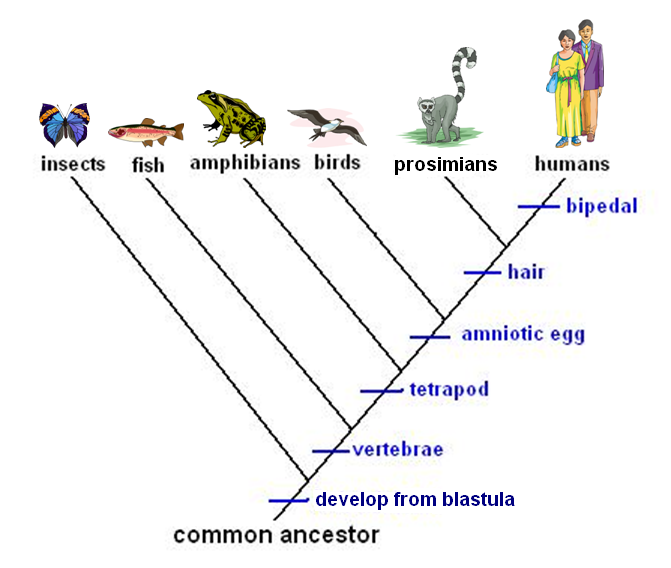
Which organisms pictured on the cladogram have hair?
a)
prosimians only
b)
prosimians and humans
c)
humans only
d)
prosimians and birds
105.
What kingdom do unicellular, prokaryotic organisms that live in extreme environments?
a)
Animal
b)
Archaebacteria
c)
Eubacteria
d)
Plant
106.
An illustration and a dichotomous key are given. What is the correct classification for this organism?
a)
Class Insecta
b)
Order Amblygygi
c)
Order Araneae
d)
Order Scorpiones
107.

What Kingdom do I belong in?

I am unicellular.

I am prokaryotic.

I reproduce asexually.

I am autotrophic.

I live everywhere!

a)

Eubacteria

b)

Archaeabacteria

c)

Animalia

d)

Plantae

e)

Protista

108.

What Kingdom do I belong to?

My friends and I are mostly multicelled.

We are heterotrophic.

All of our cells are eukaryotic.

We reproduce either sexually or asexually.

We are known as parasites.

a)

Animalia

b)

Eubacteria

c)

Archaeabacteria

d)

Protista

e)

Plantae

109.
The scientific name for an organism is made from the:
a)
class and family name
b)
genus and species name
c)
domain and kingdom name
d)
kingdom and phylum name
110.
Who first proposed binomial nomenclature as a way of classifying organisms?
a)
Carl Linnaeus
b)
Carl's Jr.
c)
Charles Darwin
d)
Henry Groseclose
111.
Which organism in the table is least closely related to the chimpanzee?
a)
human
b)
grey wolf
c)
tiger snake
d)
monarch butterfly
112.

Choose the correct way to write the scientific name for humans:

a)

homo sapiens

b)

Homosapiens

c)

Homo sapiens

d)

Homo Sapiens

113.
An organism that produces its own food supply from inorganic compounds is called a(an)
a)
heterotroph
b)
consumer
c)
detritivore
d)
autotroph
114.
What does a food web represent?
a)
All connections of energy flow throughout all organisms in a habitat.
b)
The specific ways that mutualism is carried out.
c)
A single pathway or energy flow between organisms. 
d)
How carnivores get their food. 
115.
A collection of organisms that make up a community as well as all of the nonliving aspects of the environment.
a)
Population
b)
Community
c)
Habitat
d)
Ecosystem
116.
Organisms that can capture energy from inorganic, nonliving sources.
a)
Producers
b)
Consumers
c)
Detritivores
d)
Carnivores
117.

AUXIN is a hormone that is involved in TROPISMS. Which of the following is a result of it?

a)

Tropism helps a plant go through photosynthesis

b)

Tropism allows a plant to move in a certain direction

c)

Tropism allows a plant to produce glucose

d)

Tropism allows for pollination

118.

Which of the following fixes Nitrogen in the soil so plants can absorb it through the roots?

a)

Fungi

b)

Bacteria

c)

Mr. Palencia does it

d)

Amoebas

119.

The Anthers, Stigma and Ovaries are the...

a)

The endocrine system of the plants

b)

The nervous system of the plants

c)

The reproductive system of the plants

d)

The Digestive system of the plants

120.

The guard cells open and close the stomata, while the stomata exchanges gases.

a)

True

b)

False

121.

Through Meoisis, we experience Crossing Over, this leads to...

a)

Diversity

b)

Variety

c)

Creation of polypeptides

d)

Both A and B

122.

The tubes and support that transport water

and nutrients up, down and around in plants

a)

Vascular System

b)

Shoot System

c)

Root System

d)

Reproductive System

123.

Pores under leaves

that allow for transpiration

and gas exchange

a)

Xylem

b)

Stomata

c)

Phloem

d)

Transpiration

124.
Flower: What is label B (the head of the male part of a flower)?
a)
Anther
b)
Filament
c)
Petal
d)
Pistil
125.
What is the food making process of a plant?
a)
Photosynthesis
b)
Chloroplast
c)
Mitosis
d)
Sugar
126.
a)

A

b)

B

c)

C

d)

D

127.
a)

A

b)

B

c)

C

d)

D

128.
a)

A

b)

B

c)

C

d)

D

129.
a)

F

b)

G

c)

H

d)

J