wayground logo

Free Printable Worksheets

Font size

S
M
L
XL
Worksheets

Sem 1 Final Study Guide

Total questions: 115

Worksheet time: 1hrs 24mins
Name
Class
Date
1.
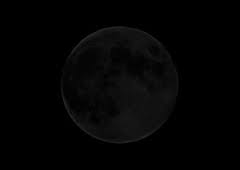
Name the moon phase
a)
First Quarter
b)
Last Quarter
c)
New Moon
d)
Full Moon
2.
Name the moon phase
a)
First Quarter
b)
Last Quarter
c)
New Moon
d)
Full Moon
3.
How much of the moon is always lit?
a)
can't tell
b)
always changes
c)
half
d)
3/4
4.
The cycle of the moon lasts about a _.
a)
day
b)
year
c)
week
d)
month
5.
The moon ____________ around the Earth.
a)
revoloves
b)
rotates
c)
up
d)
down
6.
The 0 degree line of latitude is the ___________.
a)
Equator
b)
Prime Meridian
c)
International Date Line
d)
Contour line
7.
The 0 degree mark of longitude is known as the ___________ ______________ measure from Greenwich England.
a)
Equator
b)
Prime Meridian
c)
International Date Line
d)
Contour Line
8.
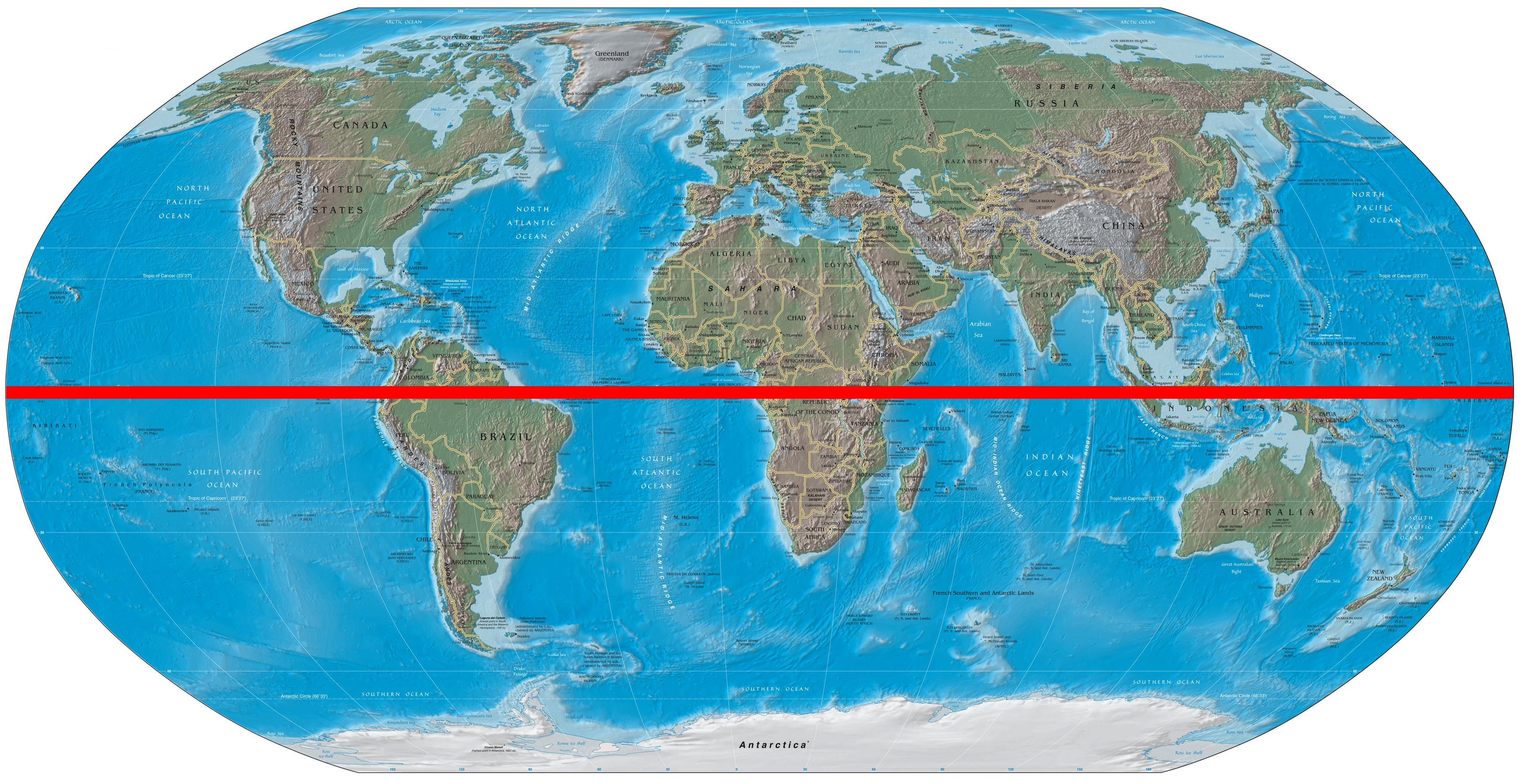
What is the name of this line at 0 degrees latitude?
a)
Prime Meridian
b)
Equator
c)
North Pole
d)
South Pole
9.
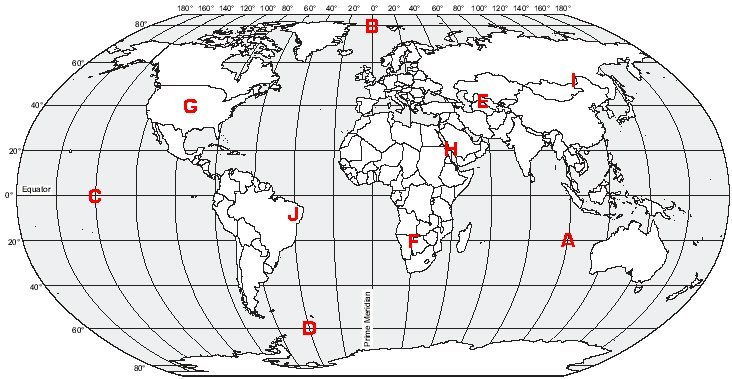
What is the approximate location of letter B?
a)
80oN, 0o
b)
0o, 80oW
c)
80oS, 0o
d)
0o, 80oE
10.
Which of the following letter is at approximately 60 degrees S, 40 degrees W? 
a)
A
b)
D
c)
E
d)
H
11.
Which letter would you find at 15oS, 60oW?
a)
A
b)
C
c)
L
d)
H
12.
a)
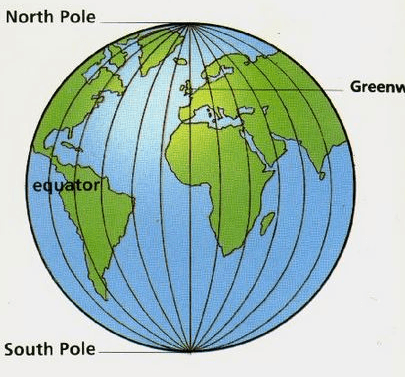
The map show the lines of longitude.
b)
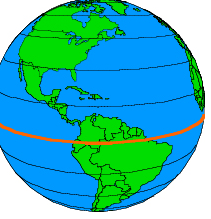
The map shows the lines of latitude.
13.
a)
The map shows lines of longitude.
b)
The map shows lines of latitude.
14.
The Earth's axis is tilted _____ degrees.
a)
23.5
b)
25.3
c)
30.2
d)
24
15.
At position A, which hemisphere would have summer?
a)
Northern hemisphere
b)
Southern hemisphere
16.
What happens when the area in which you live tilts away from the sun?
a)
It is summer.
b)
It is spring.
c)
It is winter.
d)
It is fall.
17.
The term equinox means....
a)
equal amount of day light and equal amount of night
b)
Equal amount of winter and summer
c)
Equal amounts of hot dogs for everyone
d)
The longest day of the year
18.
What do June 21 and December 21 have in common?
a)
equinox dates
b)
the moon is full
c)
solstice dates
d)
the cold fronts blow in
19.
Why is the Equator warmest?
a)
Because it is closest to the sun.
b)
Because it receives the most direct sunlight
c)
Because no clouds form here.
d)
Because it is far from the sun
20.
In spring/summer, the axis of the earth is pointed away or toward the sun?
a)
towards
b)
Neither away or toward
c)
away
21.
Which season is taking place in the Northern Hemisphere in Position 2?
a)
Winter
b)
Spring
c)
Summer
d)
Fall
22.
The hemisphere where you live 
a)
equator
b)
southern
c)
northern
d)
eastern
23.
What causes there to be longer number of hours of light during the summer
a)
Earth tilt's away from the sun in summer
b)
Earth's revolves slower in summer
c)
Earth tilts toward the sun in summer
d)
Earth is closer to the sun
24.
 What is the reference point used to measure elevation?
a)
lake level
b)
sea level
c)
zero
d)
elevation
25.
What are the two main factors that determine the climate of an area?
a)
precipitation and humidity
b)
temperature and air pressure
c)
wind conditions and humidity
d)
temperature and precipitation
26.
What causes winds to form on Earth?
a)
solar energy
b)
ocean currents
c)
elevation differences
d)
uneven heating of the Earth by the sun
27.
What are the 3 major climate zones in order from equator to the poles?
a)
polar, temperate, tropical
b)
tropical, temperate, polar
c)
temperate, polar, tropical
28.
What is the condition of the Earth's atmosphere at a certain time and place?
a)
climate
b)
temperature
c)
weather
d)
air pressure
29.
What is the measure of distance in degrees north and south from the equator?
a)
latitude
b)
longitude
c)
elevation
d)
topography
30.
What is the height of an area above sea level?
a)
elevation
b)
topography
c)
latitude
d)
longitude
31.
Which sentence best describes how latitude and temperature are related?
a)
LOWER latitude = COLDER air temperature
b)
HIGHER latitude = COLDER air temperature
c)
HIGHER latitude = WARMER temperatures
32.
What is the weather conditions in an area over a long period of time?
a)
climate
b)
temperature
c)
elevation
d)
precipitation
33.
What causes some areas of Earth to receive less intense solar energy than others?
a)
the mass of earth
b)
the curve of earth
c)
the density of earth
d)
the elevation of earth
34.
Latitude and Longitude are measured in______.
a)
kilometers
b)
degrees
c)
miles
d)
hours
35.
Which STATE is located at...
120°W, 45°N
a)
WA
b)
OR
c)
UT
d)
ND
36.
Which city is closest to the Equator?
a)
Los Angeles
b)
Minneapolis
c)
Miami
d)
Unable to determine
37.
When reading coordinates what do you read first?
a)
The numbers
b)
Longitude
c)
Latitude
d)
The degrees
38.
What ocean would you be in if you were at 30 degrees south and 150 degrees west?
a)
The Atlantic Ocean
b)
The Arctic Ocean
c)
The Pacific Ocean
d)
The Indian Ocean
39.

The Prime Meridian separates what two hemispheres?

a)

North and South

b)

North and East

c)

South and West

d)

East and West

40.
What are the four MAIN directions on the Compass Rose?
a)
North, South, East, and West
b)
Northeast, Southeast, Northwest, Southwest
41.
Earth and the other planets closest to the Sun are made mostly of _______
a)
gas
b)
metal
c)
water
d)
rock
42.
The moon is a natural  ______ of Earth.
a)
comet
b)
axis
c)
satellite
d)
space probe
43.
Earth's ________ on its axis causes day and night.
a)
rotation
b)
revolution
c)
phase
d)
comet
44.
One kind of  _______ is the crescent Moon.  
a)
axis
b)
asteroid
c)
phase
d)
space probe
45.
One full orbit of an object around another object is called a ________.
a)
axis
b)
rotation
c)
revolution
d)
satellite
46.
The __________ has planets, moons, comets, and asteroids.
a)
solar system
b)
earth
c)
rotation
d)
United States
47.
One of the main differences between the outer and inner planets is __________.
a)
The inner planets all have water
b)
the inner planets are much bigger than the outer planets
c)
the outer planets are gas planets
d)
the outer planets have rings, and the inner planets don't
48.
Where is the asteroid belt found?
a)
between earth and mars
b)
Between Uranus and Neptune
c)
Between Mercury and Venus
d)
Between Mars and Jupiter
49.
Select the order from smallest to largest.
a)
Sun, Milky Way, solar system, universe
b)
Sun, Milky Way, universe, solar system
c)
Sun, solar system, Milky Way, universe
d)
Sun, solar system, universe, Milky Way
50.
Why does Earth have different seasons? 
a)
because of the distance between Earth and the sun 
b)
because of the speed of Earth as it rotates on its axis 
c)
because of the amount of light blocked by the moon on its axis 
d)
because of the tilt of Earth on its axis as it moves around the sun 
51.
Which factor makes Earth different from all the other planets in the solar system in its ability to support life? 
a)
The Earth is exposed to rays from the sun. 
b)
The Earth has only one moon that orbits around it. 
c)
The Earth rotates in an elliptical orbit around the sun. 
d)
The Earth has a breathable atmosphere. 
52.
Which best explains why the moon has phases?
a)
The moon’s position changes in relation to the sun and Earth. 
b)
The sun’s position changes in relation to the moon and Earth. 
c)
The Earth casts a shadow on the moon as it rotates. 
d)
The moon rotates along its axis
53.
Day and night is caused by the _____________ of earth on its axis.
a)
revolution
b)
orbit
c)
rotation
54.
As the Earth travels around the sun, this tilt causes different areas of the Earth’s surface to get different amounts of daylight at different times of the year. The angle of the Sun’s rays to the surface also causes areas to have more or less of the Sun’s energy. This causes the ________.
a)
months
b)
day and night
c)
seasons
d)
years
55.
a pattern of stars that form an imaginary picture or design in the sky
a)
Orbit
b)
Rotate
c)
constellation
d)
Milky Way
56.
A spiral galaxy of stars that contains our Sun
a)
Planisphere
b)
Intensity
c)
Star
d)
Milky Way
57.
Which color star has medium temperature?
a)
Bluish-White
b)
Yellow
c)
Reddish-Orange
58.
Which of the following causes seasons?
a)
the earths tilt
b)
the earths rotation
c)
the earths revolution around the sun
d)
the earths size 
59.
Located at the leading edge of a temperature drop off. Bring heavy thunderstorms, rain, and hail. Cool, fair weather is likely to follow.  
a)
Warm Front
b)
Cold Front
c)
Occluded Front
d)
Stationary Front 
60.
Located at the leading edge of a warm air mass. Brings gentle rain or light snow, followed by warmer, milder weather.  
a)
Warm Front
b)
Cold Front 
c)
Occluded Front 
d)
Stationary Front 
61.
Where the warm and cold air meet and stall, clouds and fog form, and it may rain or snow.  It could bring many days of clouds and precipitation.  
a)
Warm Front
b)
Cold Front
c)
Occluded Front 
d)
Stationary Front 
62.
Identify the type of front that is shown in the image.
a)
Occluded Front
b)
Cold Front
c)
Stationary Front
d)
Warm Front
63.
Identify the type of front that is shown in the image.
a)
Occluded Front
b)
Cold Front
c)
Stationary Front
d)
Warm Front
64.
Identify the type of front that is shown in the image.
a)
Occluded Front 
b)
Cold Front
c)
Stationary Front
d)
Warm Front
65.

how long does it take the moon to complete a full revolution around earth?

a)

365 days one year

b)

24 hours

c)

1 week

d)

28 days

66.

the rotation of earth causes

a)

a month

b)

day in night

c)

seasons

d)

a year

67.

What is the name of the curved path that the satellite follows?

a)

orbit

b)

track

c)

rotation

d)

revolution

68.
If the earth, moon and sun are arranged as shown, what phase will the moon be?
a)
new moon
b)
first quarter
c)
full moon
d)
third quarter
69.
The position of the Earth, moon, and sun during a Solar eclipse are:
a)
Sun, Earth, Moon
b)
Moon, Earth, Sun
c)
Sun, Moon, Earth
d)
Earth, Moon, Suun
70.
What phase must the moon be in to allow for a lunar eclipse?
a)
new moon
b)
full moon
c)
first quarter moon
d)
waxing gibbous moon
71.
In North America a vernal (spring) equinox usually occurs on what day?
a)
September 21
b)
June 21
c)
December 21
d)
March 21
72.
Spring tides and neap tides occur in patterns governed by
a)
changes in the force of the Earth's gravity
b)
the type of ocean currents near where the tides occur
c)
whether the gravity of the moon is strong or weak
d)
the relative positions of the earth, moon and sun (phases of the moon)
73.
When do the greatest tidal ranges occur?
a)
spring tides
b)
high tides
c)
neap tides
d)
low tides
74.
How many seasons would earth have if it was not tilted?
a)
one
b)
two
c)
three
d)
four
75.

what moon phase can you not see the moon

a)

full

b)

new

c)

waning crescent

d)

waxing crescent

76.
What part of the illustration shows Evaporation? 
a)
1
b)
2
c)
3
d)
4
77.
Which number illustrates Condensation?
a)
1
b)
2
c)
3
d)
4
78.
What kind of weather is usually associated with a high pressure system?
a)
Sunny weather
b)
Precipitation (rain, snow, etc.)
79.
Which weather tool measures air pressure?
a)
thermometer
b)
barometer
c)
anemometer
d)
psychrometer
80.
This weather tool measures wind speed and direction
a)
thermometer
b)
barometer
c)
anemometer
d)
psychrometer
81.
Which weather tool measures temperature?
a)
thermometer
b)
barometer
c)
psychrometer
d)
anememeter
82.
The boundary  between two air masses is known as:
a)
front
b)
storm
c)
climate
d)
flood
83.
Mark looks at the clouds in the sky and decides that he does not need to
take his umbrella with him today. Which clouds did Mark most likely see
in the sky?
a)
cirrus
b)
nimbostratus
c)
cumulonimbus
84.
Which type of cloud is most often observed during a thunderstorm?
a)
cirrus
b)
stratus
c)
cumulus
d)
cumulonimbus
85.
Hot air (RISES / FALLS) __________.
a)
RISES
b)
FALLS
86.
Which condition usually means cloudy, stormy weather?
a)
high pressure
b)
low pressure
87.
a)
nimbostratus cloud
b)
cumulonimbus cloud
c)
cirrocumulus cloud
d)
altostratus cloud
88.
A _____ is a large, swirling, low-pressure system that forms over the Atlantic Ocean.
a)
blizzard
b)
cold front
c)
tornado 
d)
hurricane
89.
A violently rotating column of air called a _____ when it comes in contact with the ground.
a)
hurrican
b)
tornado
c)
trade wind
d)
local wind
90.
Rain, snow, sleet, and hail are all forms of _____.
a)
precipitation
b)
condensation
c)
evaporation
d)
climate
91.
The amount of water vapor present in the air is called ________________.
a)
weather
b)
humidity
c)
air mass
d)
dew point
92.
When a warm air mass gently slides on top of a cold air mass, and you have drizzly rain and then warmer weather, what type of front is it?
a)
warm front
b)
cold front
c)
occluded front
d)
stationary front
93.
Space and all the matter and energy in it.
a)
Space
b)
Solar System 
c)
Universe
d)
Sun
94.
The sun and all of the planets and other bodies that travel around it. 
a)
Universe 
b)
Galaxy 
c)
Star
d)
Solar System 
95.
A relatively large spherical body that orbits a star.
a)
Star 
b)
Planet
c)
Moon 
96.
A large celestial body that is composed of gas and that emits light.
a)
star
b)
black hole
c)
element 
d)
big bang
97.
A collection of stars, dust, and gas bound together by gravity.
a)
Nebula
b)
Galaxy 
c)
Universe
d)
Protostar
98.
 The actual brightness of an object such as a star
a)
Luminosity 
b)
Apparent Magnitude 
c)
Brightness 
d)
Light Year
99.
A gigantic explosion in which a massive star collapses and throws its outer layers into space.
a)
Black Hole 
b)
Supernova
c)
Neutron Star 
d)
Nebula 
100.
The most commonly accepted theory that explains the beginning of our known universe is the -
a)
Theory of Evolution
b)
Big Bang Theory
c)
Cell Theory
d)
Blackhole theory
101.
_______________  ______________ are fast moving ribbons of air that move from west to east in the Northern Hemisphere.
a)
westerlies
b)
jet streams
c)
trade winds 
d)
easterlies
102.
_________________ absorbs heat energy and releases heat energy quickly. 
a)
land
b)
water
c)
air
d)
mountains
103.
The tropical region extends from __________________ latitude.
a)
0-30 degrees
b)
30-60 degree
c)
60-90 degrees
104.
The polar regions extends from ___________________ latitude. 
a)
0-30 degrees
b)
30-60 degrees
c)
60-90 degrees
105.
The  _____________  brings down cold polar conditions from the north.
a)
westerlies
b)
polar jet streams
c)
California current
d)
Gulf Stream 
106.
Global convection currents are set up in the atmosphere because of the ____________________ of Earth’s surfaces.
a)
even heating
b)
uneven heating
c)
cooling
d)
storms
107.

Winds are named

a)

by the time of year they blow.

b)

from the direction they begin blowing.

c)

for the climate zone in which they blow.

d)

for the direction they blow towards.

108.

When convection occurs

a)

cool and warm gases or liquids sink.

b)

cool and warm gases or liquids rise.

c)

warm gases or liquids rise and cool gases or liquids sink.

d)

warm and cool gases or liquids sink and cool gases or liquids rise..

109.

The sun's rays are least direct at the

a)

land near the equator.

b)

oceans and other large bodies of water.

c)

at high altitudes.

d)

near the poles.

110.

Tropical, temperate, and polar climate zones occur because of

a)

the jet stream.

b)

unequal heating of the Earth.

c)

altitude.

d)

the Coriolis Effect.

111.

Places shown on a weather map that have the same temperature are connected by

a)

isobars.

b)

isotherms.

c)

thermolines.

d)

thermobars.

112.

Isobars are lines on a map joining places that have the same

a)

temperature.

b)

wind speed.

c)

air pressure.

d)

humidity.

113.

Climate is

a)

pattern of weather over a period of time.

b)

weather for the day.

c)

atmospheric gases.

d)

changing weather of the day.

114.

Which two areas that are next to each other will mostly likely have the STRONGEST winds?

a)

a lake and creek

b)

forest and valley

c)

ocean and beach

d)

pond and river

115.
_________________ absorbs heat energy and releases heat energy quickly. 
a)
land
b)
water
c)
air
d)
mountains