
 Worksheets
Lesson 7 Reading Two— Detectors Work because of Properties
Total questions: 37
Worksheet time: 22mins

All detectors are made based on the ______________ of materials.
properties
items
mass
volume

Properties are always the same for a substance. The ____________ of different substances are different.
materials
properties
items
list

Properties are characteristics of substances. Properties help tell substances ______________.
awash
apart
away
always

Properties do not depend on the amount of substance you have. Examples of properties are ________, texture, hardness, and malleability.
light
color
energy

When you ___________ across a bridge, you probably care whether it is made of aluminum or a stronger metal.
ride
swim
float

Properties of materials matter in many ways— to ___________ and to other people.
fish
scientists
mermaids
aliens

When people want to make something, the _____________ of the materials they use are important.
cars
characteristics
place

Substances (whether solids, liquids, or gases) have different properties; they are made up of ___________ particles.
the same
different
similar

Properties are characteristics of materials that scientists use to describe materials.
true
false

Properties are a unique way to describe materials because they remain the same— the amount (mass or volume) of the material is not important.
true
false

Scientists refer to the smell of a particular material as an odor. __________ is one property.
Odor
Orange
Green
Yellow

There are many other properties such as color, hardness, and so on. Odor helps to detect matter.
true
false

By identifying the smell of matter, it helps us to understand more about matter. Not all things have an odor, just like not all _______________ have a color.
masses
materials
volumes

Each material has a unique set of properties.
true
false

In Lesson 6, you saw two clear, colorless liquids. How could you tell them apart? (They had different odors, and they changed the _________ paper different colors— one red,
the other blue.)
indicator
ink
insect
crazy

How could you tell that gases that all look clear and colorless are actually different?
different color patterns of the emission spectra
the same color patterns of the emission spectra
similar color patterns of the emission spectra

Why do different materials have different properties?
made up of different particles
made up of the same particles
made up of similar particles

Different materials can have some similar properties (color) but they must have some different properties.
true
false

Properties can be used to distinguish one material from another.
true
false

Sometimes it is difficult (or impossible) to determine whether substances are the same by looking at them; more scientific methods and indicators are needed.
true
false

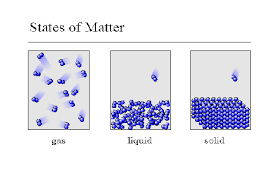
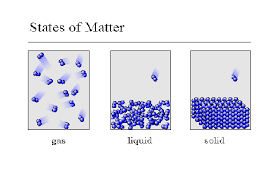
Which of the following best describes a gas?
particles close together
particles far apart
particles evenly spaced

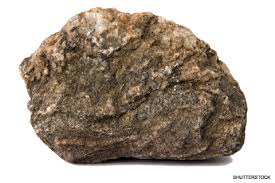
Which state of matter does this image best represent?
liquid
solid
gas

What does an object's characteristic properties include?
size and shape
physical properties and chemical properties
mass and weight

Which of the following is a characteristic property of matter?
age
color
mass

What is the formula for density?
density = mass x volume
density = mass / volume
density = mass + volume
density = mass - volume


Is color a property?
Yes, a property
No, not a property

I am anything that has mass and takes up space!
energy
matter
molecules
atoms

To use the e- nose, a
patient exhales into an oxygen mask connected to it.
true
false

Bacteria colonies are made of particular types of molecules. They also have characteristic odors, so they have a “smell print” similar to a fingerprint.
true
false

Doctors can find it challenging to detect sinus infections. A sinus infection and pneumonia have different smell prints because they are made up of different ________________.
moles
molecules
mice
mats

When you ride across a bridge, you probably care whether it is made of aluminum or a stronger
metal. Properties of materials matter in many ways— to scientists and to other people.
true
false

