Wayground logo

Free Printable Worksheets

Font size

S
M
L
XL
Worksheets

8th Grade Science Fall Semester Exam Review

Total questions: 43

Worksheet time: 1hrs 9mins
Name
Class
Date
1.
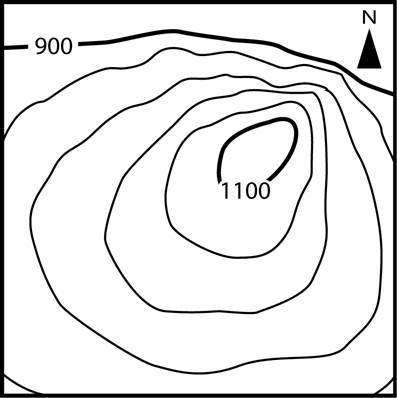
Provided is a topographic map of a hill with contour lines drawn showing elevation in meters.
The steepest slope on this hill can be found on the side that is facing which direction?
a)
Southwest
b)
Northeast
c)
Northwest
d)
Southeast
2.
The type of plate boundary where two plates come together is a .....
a)
Convergent Boundary
b)
Divergent Boundary
c)
Transform Boundary
d)
Plate Boundary
3.
What type of event will occur at this boundary?
a)
Earthquake
b)
Volcano Eruption
c)
Tornado
d)
Mountain Building
4.
Which of the following is the name of the ancient supercontinent formed 28 Million Years ago.
a)
Pangea
b)
Gondwanda
c)
Laurasia
d)
Neverland
5.
If there are two forces going in the same direction how would you find the net force?
a)
Subtract
b)
Add
c)
Neither
d)
Multiply
6.
Find the net force: 15 N to the right, and another 15 newtons to the right.
a)
0 N Right
b)
0 N Left
c)
30 N Left
d)
30 N Right
7.
With unbalanced forces, the object will move in the direction of the _______ force.
a)
larger 
b)
smaller 
c)
equal 
8.
You and your dad are moving the couch from one side to another. Your dad pushes with a force of 35 N to the right and you push with a force of 25 N right. What is the net force on the couch?
a)
60 N right
b)
10 N left
c)
60 n right
d)
50 N left
9.
The Earth's axis is tilted _____ degrees.
a)
23.5
b)
25.3
c)
30.2
d)
24
10.
At position A, which hemisphere would have summer?
a)
Northern hemisphere
b)
Southern hemisphere
11.
What happens when the area in which you live tilts away from the sun?
a)
It is summer.
b)
It is spring.
c)
It is winter.
d)
It is fall.
12.
What do June 21 and December 21 have in common?
a)
equinox dates
b)
the moon is full
c)
solstice dates
d)
the cold fronts blow in
13.
Which season is taking place in the Northern Hemisphere in Position 1?
a)
Winter
b)
Spring
c)
Summer
d)
Fall
14.
Which season is taking place in the Northern Hemisphere in Position 4?
a)
Winter
b)
Spring
c)
Summer
d)
Fall
15.
a)
1st
b)
2nd
c)
3rd
16.
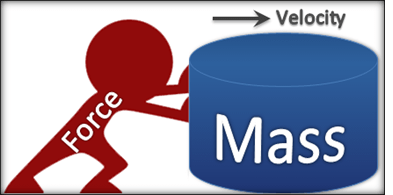
What law is best described by inertia?
a)
1st
b)
2nd
c)
3rd
17.
a)
1st
b)
2nd
c)
3rd
18.
Action/Reaction
a)
1st
b)
2nd
c)
3rd
19.
Equal and Opposite
a)
1st
b)
2nd
c)
3rd
20.

The resistance of an object to any change in its motion is called ______________________.

a)

inertia

b)

friction

c)

gravity

d)

weight

21.
What is the unit to MEASURE force?
a)
Kilogram
b)
Meter
c)
Pascal
d)
Newton
22.
A ____________ is a push or a pull on an object.
a)
friction
b)
force
c)
magnet
d)
gravity
23.
Balanced or unbalanced?
a)
balanced
b)
unbalanced
24.
Balanced or Unbalanced?
a)
Balanced 
b)
Unbalanced
25.
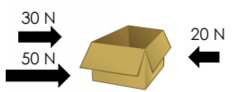
Calculate the Net Force. 
a)
60N, Left 
b)
40N, Right 
c)
0N
d)
60N, Right
26.
What pulls a ball back to earth?
a)
Gas
b)
Gravity
c)
Friction
d)
Molecules
27.
What is the net force?
a)
400 N Up
b)
400 N Down
c)
- 400 N Down
d)
800 N Down
28.

Rain washing away soil from a hillside is an example of what?

a)

Weathering

b)

Erosion

c)

Deposition

d)

Compaction

29.

Waves dropping sand on the beach is an example of what?

a)

Weathering

b)

Erosion

c)

Deposition

d)

Compaction

30.

Deltas forming at the mouths of rivers are examples of what?

a)

Weathering

b)

Erosion

c)

Deposition

d)

Compaction

31.
A satellite image of an area in Florida shows a river with slight bends along its length. A second satellite image taken of the same area 10 years later shows the same river with  a different course. What is the best explanation for the difference in the shape of the river's course between the two satellite images?
a)
Wind blew waves across the water surface, eroding away the bank on one side of the river until the river's course changed its shape
b)
Regular freezing and thawing of the river split the soil along the river banks, changing the shape of the river
c)
Water eroded the banks of the river and deposited the eroded soil on opposite banks, causing the river to form tighter bends
d)
Acid rain chemically weathered the banks along the river, forcing the river to wind back and forth
32.

The process of breaking up rocks on Earth's surface is known as what?

a)

sediment

b)

erosion

c)

weathering

d)

deposition

33.
What is the formula to calculate speed?
a)
Speed = time/distance
b)
Speed = distance/time
c)
Speed = distance x time
d)
Speed = time x distance
34.
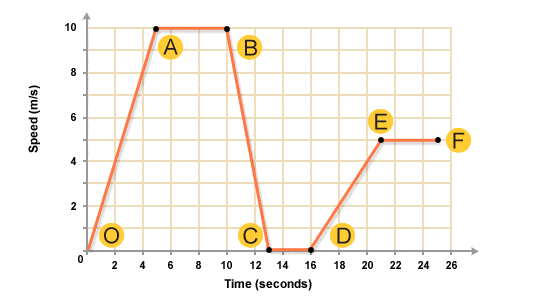
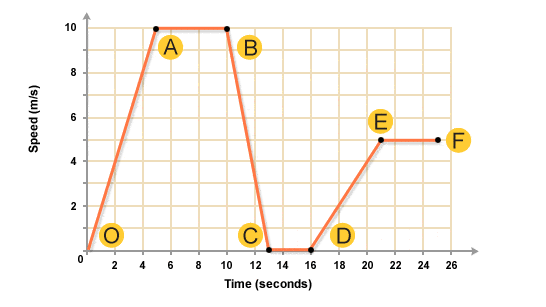
According to the graph how far does the person travel in the first 5 seconds?
a)
2 m
b)
10 m
c)
0 m
d)
5 m
35.
What is the average speed of the person during the first 5 seconds?
a)
0 m/s
b)
1 m/s 
c)
3 m/s
d)
6 m/s 
36.
What is velocity?
a)
the quickness of an object
b)
the location of an object
c)
acceleration
d)
speed in a specific direction
37.
What is happening in this graph from point B to C?
a)
The object is going down a hill.
b)
The object is returning to its starting location.
c)
The object is slowing down.
d)
The object is staying still.
38.
What is happening in this graph from point A to B?
a)
The object is accelerating.
b)
The object is not moving.
c)
The object is decelerating.
d)
The object is moving at a constant speed.
39.
Which runner won the race?
a)
A
b)
B
c)
C
40.
The Great Rift Valley in Africa and the Mid-Atlantic Ridge were both created by this type of plate boundary. 
a)
divergent
b)
convergent
c)
transform
d)
subduction
41.

Which of the following BEST describes the change in energy that occurs as a roller coaster travels from position X to position Y?

a)

Kinetic energy increases while potential energy decreases.

b)

Kinetic energy decreases while potential energy increases.

c)

Kinetic energy increases and potential energy increases.

d)

There is no change in energy.

42.

The satellite image below shows a portion of the Namib Desert in Africa. This is an ancient, sandy desert with dunes that can be up to 305 m tall. The Namib Desert extends inland from the Atlantic Ocean between 80 km and 200 km and receives only 5 mm to 76 mm of rain each year.


A satellite picture of this same area taken weeks before shows that the shape and location of some sand dunes have changed. Which of these most likely caused the changes in the dunes?

a)

Ocean waves

b)

Flowing rivers

c)

Blowing wind

d)

Crustal uplift

43.
What are most likely the dates of the full moons? (Hint:  2 weeks from new moon to full moon.)
a)
February 5, March 7, April 5, May 4
b)
February 15, March 17, April 15, May 14
c)
February 25, March 27, April 25, May 24
d)
February 29, March 31, April 29, May 28