wayground logo

Free Printable Worksheets

Font size

S
M
L
XL
Worksheets

Psychology- Biological Foundations

Total questions: 126

Worksheet time: 2hrs 34mins

Name
Class
Date
1.
The _________ controls how much light enters the black hole in the center of the eye.
a)
cornea
b)
iris
c)
pupil
d)
retina
2.
What is letter B
a)
Optic nerve
b)
Lens
c)
Cornea
d)
Retina
3.
What is letter F?
a)
Retina
b)
Pupil
c)
Vitreous humor
d)
Iris
4.
What is letter G?
a)
Sclera
b)
Retina
c)
Lens
d)
Vitreous humor
5.
What is letter H?
a)
Cornea
b)
Optic nerve
c)
Iris
d)
Retina
6.
What is letter I?
a)
Cornea
b)
Lens
c)
Vitreous humor
d)
Optic nerve
7.
The layer of receptor cells that lines the back of the eye where nerve impulses begin.
a)
Iris
b)
Lens
c)
Retina
d)
Pupil
8.
What is letter B
a)
Optic nerve
b)
Lens
c)
Cornea
d)
Retina
9.
What is letter E?
a)
Vitreous humor
b)
Retina
c)
Cornea
d)
Optic nerve
10.
What is letter F?
a)
Retina
b)
Pupil
c)
Vitreous humor
d)
Iris
11.
What is letter I?
a)
Cornea
b)
Lens
c)
Vitreous humor
d)
Optic nerve
12.
What portion of your eye gives you your eye color?
a)
iris 
b)
choroid
c)
pupil
d)
retina
13.
What light sensitive cells are stimulated in bright light? 
a)
cones
b)
rods
14.
What light sensitive cells are stimulated in dim light?
a)
rods
b)
cones
15.
Which part of the eye contracts and dilates based on the environment? 
a)
Pupil
b)
Cornea
c)
Sclera
d)
Iris
16.
Which nerve transmits information from the eye to the brain?
a)
Optic
b)
Olfactory
c)
Occulomotor
d)
Trigeminal
17.

When the image hits the retina, the image is upside down. What flips the image over so that it is right-side up?

a)

lens

b)

retina

c)

the brain

d)

optic nerve

18.

What does the pupil do?

a)

It controls the amount of light that enters the eye.

b)

It lines the back of the eyeball and receives images from the cornea.

19.

It is a hole in the middle of the iris that takes in light.

a)

retina

b)

iris

c)

pupil

d)

sclera

20.

The colored area of your eye is called

a)

retina

b)

iris

c)

pupil

d)

sclera

21.

in what part of your eye is the image formed?

a)

iris

b)

pupil

c)

lens

d)

retina

22.

I

a)

pupil

b)

aqueous humor

c)

lens

d)

fovea

23.
What is the function of the hippocampus ? 
a)
Helps coordinate muscles 
b)
It is involved in emotion , memory and spatial orientation
24.
The thalamus is the place _________
a)
that first receives messages signaling such sensations as pain, pressure and temperature from sensory receptors 
b)
It is the central monitor to keep temperature, makes you feel hungry, slept and is in charge of growth
25.
The lobe of the brain important for vision is called: 
a)
Occipital Lobe 
b)
Temporal Lobe 
c)
Frontal Lobe 
26.
The lobe of the brain important for the sense of touch is called: 
a)
Temporal Lobe 
b)
Parietal lobe 
c)
Occipital lobe
27.
#10 on the diagram represents the 
a)
Pituitary Gland
b)
spinal cord
c)
brainstem
d)
Pons
28.
#6 on the diagram is the
a)
pituitary gland
b)
hypothalamus
c)
thalamus
d)
medulla
29.
#1 on the diagram represents the
a)
the visual cortex
b)
the motor cortex
c)
the sensory cortex
d)
the cerebral cortex
30.
#5 on the diagram represents the 
a)
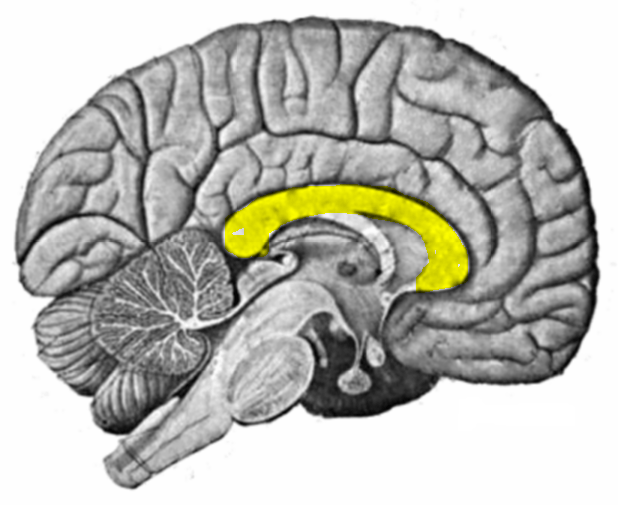
Corpus callosum
b)
Hippocampus
c)
Cerebellum
d)
Hypothalamus
31.
#2 on the diagram represents the
a)
corpus callosum
b)
frontal lobe
c)
thalamus
d)
hypothalamus
32.
#11 on the diagram represents the
a)
brainstem
b)
spinal cord
c)
midbrain
d)
medulla
33.
#3 on the diagram represents the 
a)
left hemisphere
b)
corpus callosum
c)
reticular formatiton
d)
brainstem
34.
#4 on the diagram represents the 
a)
hypothalamus
b)
temporal lobe
c)
hippocammpus
d)
thalamus
35.
a)
Frontal Lobe
b)
Brain Stem
c)
Cerebellum
d)
Occipital Lobe
36.
a)
Cerebellum
b)
Brain Stem
c)
Occipital Lobe
d)
Temporal Lobe
37.
a)
Corpus Callosum
b)
Amygdala
c)
Thalamus
d)
Hypothalamus
38.
a)
Frontal Lobe
b)
Parietal Lobe
c)
Temporal Lobe
d)
Occipital Lobe
39.
a)
Amygdala
b)
Corpus Callosum
c)
Thalamus
d)
Hippocampus
40.
a)
Frontal Lobe
b)
Parietal Lobe
c)
Occipital Lobe
d)
Temporal Lobe
41.
a)
Frontal Lobe
b)
Parietal Lobe
c)
Occiptal Lobe
d)
Temporal Lobe
42.
a)
Frontal Lobe
b)
Parietal Lobe
c)
Temporal Lobe
d)
Occipital Lobe
43.
The association area of the ___________ lobe processes visual information.
a)
Occipital lobe
b)
Temporal lobe
c)
Frontal lobe
d)
Parietal lobe
44.
Involved in controlling attention, spatial perception and bodily awareness, for example: touch, pressure and pain.
a)
Occipital lobe
b)
Parietal lobe
c)
Frontal lobe
d)
Temporal lobe
45.
The part of the brain that controls higher mental activities such as learning, perception, memory  and making decisions.
a)
cerebellum
b)
cerebrum
c)
thalamus
d)
midbrain
46.
The part of the brain that controls coordination, balance, and equilibrium
a)
cerebrum
b)
thalamus
c)
cerebellum
d)
medulla oblongata
47.
Part of limbic system that plays a major role in the consolidation of memory.
a)
amygdala
b)
hypothalamus
c)
hippocampus
d)
pons
48.
Lobe involved with making decisions, planning, reasoning, and carring out voluntary body movements.
a)
Frontal Lobe
b)
Parietal Lobe
c)
Occipital Lobe
d)
Temporal Lobe
49.
Receives and processes  auditory information and involved in language comprehension?
a)
Frontal Lobe
b)
Temporal Lobe
c)
Occipital Lobe
d)
Parietal Lobe
50.
Receives and processes visual information.
a)
Frontal Lobe
b)
Temporal Lobe
c)
Occipital Lobe
d)
Parietal Lobe
51.

A threadlike extension of a neuron that carries nerve impulses away from the cell body.

a)

2

b)

5

c)

8

d)

3

52.

The endpoint of a neuron where neurotransmitters are stored.

a)

1

b)

2

c)

6

d)

7

53.

Part of a nerve cell that contains the nucleus

a)

1

b)

2

c)

4

d)

5

54.

Insulation around axon which allows for faster movement of the impulse.

a)

1

b)

2

c)

3

d)

4

55.

Branchlike parts of a neuron that are specialized to receive information.

a)

1

b)

2

c)

6

d)

7

56.

Structure that contains the cell's genetic material (DNA) and controls the cell's activities

a)

1

b)

2

c)

3

d)

4

57.

A gap in the myelin sheath of a nerve.

a)

3

b)

4

c)

5

d)

6

58.
The long slender pole connecting the neuron to the axon terminal is?
a)
Axeum
b)
Axon
c)
Axen
d)
Axam
59.
Processes that carry nerve impulses away from the cell body are calles
a)
Dendrites
b)
Axons
c)
Synapses
d)
Myelin sheaths
60.
The junction between 2 neurons is called the
a)
dendrite
b)
axon
c)
node of Ranvier
d)
synapse
61.
What does the Myelin Sheath protect?
a)
Axon
b)
Dendrite
c)
Cell body
d)
axon terminal
62.
This is the electrical charge that travels down an axon when a neuron is firing
a)
Resting Potential
b)
Action Potential
c)
Threshold
d)
Refractory Period
63.
A chemical produced by neurons that carries messages to other neurons
a)
myelin sheath
b)
neurotransmitter
c)
axon
d)
axon terminal
64.
The tiny gap between neurons where nerve impulses are sent from one neuron to another.  It is where communication occurs between an axon and dendrite
a)
synapse
b)
axon terminal
c)
impulse
d)
myelin
65.
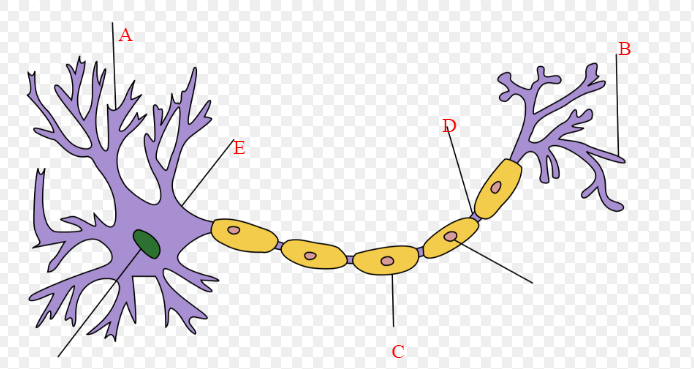
What is structure labeled B in the picture?
a)
Dendrite
b)
Axon
c)
Cell Body
d)
Axon Terminal
66.
A
a)
Dendrite
b)
Axon
c)
Axon Terminal
d)
Cell Body
67.
E
a)
Synapse
b)
Cell Body
c)
Axon 
d)
Dendrite
68.
What is structure labeled D in the picture?
a)
Dendrite
b)
Axon
c)
Cell Body
d)
Axon Terminal
69.
What is structure labeled C in the picture?
a)
Dendrite
b)
Axon
c)
Cell Body
d)
Axon Terminal
70.
label 1
a)
nucleus
b)
cell body
c)
dendrite
d)
axon
71.
label 2
a)
nucleus
b)
cell body
c)
dendrite
d)
axon
72.
Label 3
a)
nucleus
b)
cell body
c)
dendrite
d)
axon
73.
C
a)
Synapse
b)
Soma
c)
Axon Terminal
d)
Myelin Sheath
74.
B
a)
Dendrite
b)
Axon
c)
Axon Terminal
d)
Cell Body
75.

Between what years is adolescence?

a)

7-11

b)

0-2

c)

9-18

d)

18-21

76.

using a spoon or fork and building tower blocks are examples of..

a)

large motor skills

b)

gross motor skills

c)

development skills

d)

fine motor skills

77.

infant’s response in turning toward the source or touching that occurs anywhere around the mouth.

a)

Grasping reflex

b)

feeding reflex

c)

Clinging reflex

d)

Rooting reflex

78.

infant’s clinging response to a touch on the palm of the hand

a)

clinging reflex

b)

rooting reflex

c)

clinging rooting reflex

d)

Grasping reflex

79.

Refers to individuals intellectual growth from infancy to adulthood

a)

maturation

b)

childhood developement

c)

Behavior acqisition

d)

Cognitive development

80.
What is the first stage of Piaget's cognitive development?
a)
Preoperational
b)
Sensorimotor 
c)
Formal operational
d)
Concrete operational
81.
Erikson said that when you are a teenager, your main goal is to find your . .
a)
Trust
b)
Calling
c)
Identity
d)
Integrity
82.
A 38-year-old woman quits her high-paying marketing job to focus on her children and become a school counselor. What stage would Erikson consider this to be:
a)
Idenitity vs. Role Confusion 
b)
Generativity vs. Stagnation
c)
Ego Integrity vs. Despair
d)
Industry vs. Inferiority
83.
According to Piaget, during the formal operational stage people begin to:
a)
reason abstractly
b)
adhere to social norms
c)
distinguish between good and bad behaviors
d)
become aware of the positive and negative consequences of their own behaviors
84.
______________ is a progressive, irreversible brain disorder characterized by gradual deterioration of memory, reasoning, language and eventually physical function. 
a)
Alzheimer disease 
b)
Parkinson disease
c)
MCI
85.
____________________________ causes an infant to cry when their caregiver leaves. 
a)
attachment
b)
generativity
c)
separation anxiety
d)
stranger anxiety
86.
An infant who has developed object permanence...
a)
is attached to specific objects, such as a blanket.
b)
will see all objects as being the same.
c)
knows that an object, such as a rattle, exists even if it is not in view.
d)
cries when a wanted object is taken away.
87.
When the baby's cheek is stroked they turn towards the side it was stroked and begins making sucking motions
a)
rooting reflex
b)
sucking reflex
c)
grasp reflex
d)
Babinski reflex
88.
Jane, a preschooler, insists on dressing herself each morning for school, even though she generally selects mismatching outfits, misses buttons, and wears her shoes on the wrong feet. When her mother tries to dress Jane or fix her outfit, Jane brushes her mother off and insists on doing it herself. What stage of psychosocial development best describes Jane’s behavior?
a)
Trust vs. Mistrust 
b)
Autonomy vs. Shame and Doubt
c)
Intiative vs. GUilt 
d)
Industry vs. Inferiority 
89.
According to Piaget, children come to understand that the volume of a substance remains constant despite changes in its shape during the ________ stage.
a)
sensorimotor
b)
preoperational
c)
concrete operational
d)
formal operational
90.
According to Erikson, a man’s midlife crisis happens in the 
a)
generativity vs stagnation
b)
intimacy vs isolation
c)
integrity vs despair
d)
identity vs role confusion
91.
Piaget was concerned with what type of development?
a)
Cognitive
b)
Physical
c)
Moral
d)
Social
92.
What functions does this lobe carry out?
a)
Hearing and auditory processing
b)
Vision and visual processing
c)
Processing fear
d)
Judgment, impulse control, planning
93.
Which stage did Piaget predict people are entering at the beginning of adolescence?
a)
postconventional stage
b)
intimacy versus isolation
c)
formal operations
d)
concrete operations
94.
Fight-or-flight reactions include activation of ___.
a)
the parathyroid glands, leading to increased metabolic rate.
b)
the thyroid gland, leading to an increase in the blood calcium concentration.
c)
the anterior pituitary gland, leading to cessation of gonadal function.
d)
the adrenal medulla, leading to increased secretion of epinephrine.
95.
Chemical messengers that signal a change in the body
a)
hormone
b)
enzyme
c)
protein
d)
carbohydrate
96.
Hormones that are secreted by the posterior pituitary gland are made in the
a)
cerebrum
b)
cerebellum
c)
hypothalamus
d)
thalamus
97.
Which hormone helps glucose get it into the cells of the body?
a)
Calcitonin
b)
Thyroxin
c)
Insulin
d)
Cortisol
98.
Letter C is pointing to
a)
Thyroid
b)
Pineal Gland
c)
Adrenal
d)
Parathyroids
99.
Letter F is pointing to
a)
Thymus
b)
Pineal Gland
c)
Adrenal
d)
Parathyroids
100.
Letter H is pointing to
a)
Thymus
b)
Pancreas
c)
Pituitary
d)
Pineal
101.
Which gland is the master gland?
a)
Pituitary
b)
Pancreas
c)
Adrenal
d)
Pineal
102.
The gland labeled 4 in the diagram is?
a)
the thymus gland
b)
the thyroid gland
c)
the parathyroid glands
d)
the adrenal glands
103.
A tissue or group of tissues that make and releases hormones. 
a)
Endocrine System
b)
Pancreas
c)
Flight or Fight Response
d)
Glands
104.
regulates blood-sugar levels.
a)
Endocrine System
b)
Pancreas
c)
Flight or Fight Response
d)
Glands
105.
is a network of tissues and organs that release chemicals that control certain body functions.
a)
Hormones
b)
Pituitary Gland
c)
Endocrine System
d)
Type 2 Diabetes 
106.
The gland that stimulates body metabolism
a)
Thyroid
b)
testes
c)
ovary
d)
adrenal
107.
The gland that stimulates secondary sex characteristics in females. 
a)
Thyroid
b)
testes
c)
ovary
d)
adrenal
108.
Testosterone is produced in the 
a)
ovary
b)
testes
c)
pancrease
d)
thyroid 
109.

These release testosterone, which controls changes in a male's body and regulates sperm production.

a)

Ovaries

b)

Target Cells

c)

Parathyroids

d)

Testes

110.

The joining of sperm and egg is known as...

a)

respiration

b)

fertilzation

c)

homeostasis

111.

The structure that protects and cushions an embryo

a)

umbilical cord

b)

amniotic sac

c)

placenta

d)

fetus

112.

Choose the correct order after fertilization occurs

a)

embryo, zygote, fetus

b)

zygote, embryo, fetus

c)

egg, sperm, fetus

d)

fetus, embryo, mitosis

113.

Name that gland that produces adrenaline

a)

pituitary

b)

thyroid

c)

adrenal

d)

pancreas

114.
If you have diabetes, you most likely have a problem with this hormone.
a)
ADH
b)
Glucagon
c)
Insulin
d)
PTH
115.

Produces the hormone insulin and glucagon, which controls the level of glucose in the blood.

a)

Thyroid Gland

b)

Pancreas

c)

Thymus Gland

d)

Pituitary Gland

116.
Are chemicals that travel in the blood and cause changes in different parts of the body
a)
Hormones
b)
Glands
c)
Parathyroid 
d)
Adrenal Gland 
117.
Where are the adrenal glands located?
a)
One on each side of the larynx
b)
On top of the kidneys
c)
Behind the orbital bone
d)
The inner ear
118.
What is gland #3?
a)
Adrenal Gland
b)
Pancreas
c)
Ovaries
d)
Testes
119.
Letter H is pointing to
a)
Thymus
b)
Pancreas
c)
Pituitary
d)
Pineal
120.
Letter I is pointing to
a)
Testes
b)
Oviducts
c)
Ovaries
d)
Adrenals
121.

Letter J is pointing to

a)

Ovaries

b)

Pineal Gland

c)

Adrenal

d)

Testes

122.
Controls glucose levels in blood
a)
Parathyroid
b)
Pancreas
c)
Pituitary gland
d)
Hypothalamus
123.
controls changes in growing male's body
a)
ovaries
b)
testes
c)
pancreas
d)
thymus
124.

The gland labeled 4 in the diagram is?

a)

the thymus gland

b)

the thyroid gland

c)

the parathyroid glands

d)

the adrenal glands

125.
Endocrine glands produce __________ which maintain the body in homeostasis
a)
oils
b)
neurotransmitters 
c)
tears
d)
hormones
126.
targets bone and muscle to promote growth and development
a)
growth hormone
b)
prolactin
c)
oxytocin
d)
ADH (antidiuretic hormone)