
 Worksheets
Semester Exam ILS Review
Total questions: 64
Worksheet time: 1hrs 1mins
Name
Class
Date
1.
A series of steps used by scientists to solve a problem or answer a question.
a)
scientific method
b)
recipe
c)
data collection
d)
metric system
2.
A testable explanation to a problem that has not yet been tested.
a)
data
b)
theory
c)
hypothesis
d)
fact
3.

What is this?
a)
Beaker
b)
Flask
c)
Graduated Cylinder
d)
Buret
4.

What is this?
a)
stir rod
b)
thermometer
c)
chem scoop
d)
test tube
5.

What is this?
a)
hot plate
b)
ring stand
c)
bunsen burner
d)
flask
6.

What is this?
a)
beaker
b)
flask
c)
graduated cylinder
d)
thermometer
7.

What is this?
a)
flask
b)
funnel
c)
beaker
d)
clay triangle
8.
If you do not understand a direction or part of a lab procedure, you should
a)
figure it out as you do the lab
b)
try several methods until something works
c)
skip it and go to the next part
d)
ask your instructor
9.
Keeping your work area neat and clean is important because:
a)
My teacher is a neat-freak
b)
I won't lose my supplies in the clutter.
c)
It keeps the room from looking messy.
d)
It helps prevent accidents.
10.
Which of the following IS considered safety equipment in our classroom?
a)
Eyewash Station
b)
Emergency Shower
c)
Fire Extinguisher
d)
All of the Above.
11.

a)
test tube clamp
b)
tongs
c)
ring stand
d)
buret clamp
12.
What is the name of the machine that spins in order to separate out components based on density?
a)
Centrifuge
b)
Microscope
c)
Blender
d)
Triple Beam Balance
13.
Will a construction paper air plane fly faster than an airplane made from notebook paper? Choose the best hypothesis.
a)
If I make a paper airplane from notebook paper, then it will fly faster than construction paper.
b)
Yes.
c)
No.
d)
I think the construction paper air plane will fly faster.
14.
If I study for my scientific method test, then I will have a better test score. What is the dependent variable?
a)
Scientific Method
b)
Studying
c)
Independent variable
d)
Test score
15.
If I listen to Mr. Castro's instructions, then I will have less accidents in the lab. What is the independent variable?
a)
Yes
b)
Maybe
c)
Listening or not listening to instructions
d)
Likelihood of having an accident in lab
16.

This bullseye demonstrates...
a)
High Accuracy & High Precision
b)
High Accuracy & Low Precision
c)
Low Accuracy & High Precision
d)
Low Accuracy & Low Precision
17.
In what organelle is the genetic material found inside?
a)
Endoplasmic Reticulum
b)
Golgi Complex
c)
Nucleolus
d)
Nucleus
18.
What is the function of the vacuole?
a)
Sac that stores water, nutrients, and waste products
b)
Sac filled with digestive chemicals
c)
Jelly-like substance within the plasma membrane
d)
stack of membranes that packages chemicals
19.
Where does photosynthesis occur?
a)
mitochondria
b)
stomata
c)
xylem
d)
chloroplast
20.

I make proteins for the cell. What am I?
a)
ribosome
b)
mitochondria
c)
chloroplast
d)
lysosome
21.
Controls what enters/leaves a cell
a)
cell membrane
b)
Nuclear membrane
c)
cell wall
d)
cytoplasm
22.
stiff, protective outer layer of plant cells
a)
cell membrane
b)
nuclear membrane
c)
cell wall
d)
cytoplasm
23.
packages proteins for delivery
a)
Endoplasmic reticulum
b)
ribosomes
c)
golgi apparatus
d)
lysosomes
24.
break down (digest) worn out cell parts, mostly in animal cells
a)
cytoplasm
b)
lysosomes
c)
mitochondria
d)
vacuoles
25.
jello-like material, fills the space between cell organelles, is where many chemical reactions occur
a)
cytoplasm
b)
chromatin
c)
chloroplast
d)
cell membrane
26.
What is the function of nucleus?
a)
Structure that organizes motion of chromosomes.
b)
Structure that contains DNA and directs the cell
c)
Membrane that surrounds and protects the cell
d)
Stack of membranes that packages chemicals
27.

What does this organism use for movement?
a)
Pseudopod
b)
Cilia
c)
Flagella
d)
legs
28.

What does this organism use for movement?
a)
Pseudopod
b)
Cilia
c)
Flagella
d)
legs
29.
Which type of cell has no nucleus?
a)
Eukaryote
b)
Prokaryote
c)
Animal
d)
Plant
30.
Prokaryotes have contains membrane-bound organelles. True or False?
a)
True
b)
False
31.
Are prokaryotes multicellular or unicellular?
a)
Multicellular
b)
Unicellular
32.
Eukaryotes have true nucleus? True or False?
a)
True
b)
False
33.
Eukarytoes have Many membrane-bound organelles? True or False
a)
True
b)
False
34.
Has cytoplasm
a)
Prokaryote
b)
Eukaryote
c)
both
d)
yes
35.
Has ribosomes
a)
Prokaryote
b)
Eukaryote
c)
both
d)
nihn
36.
Has Mitochondria
a)
Prokaryote
b)
Eukaryote
c)
both
d)
none
37.
What type of cell does not have a nucleus?
a)
eukaryotic
b)
prokaryotic
38.
Plants and animal cells are examples of ___ cells
a)
prokaryotic cells
b)
eukaryotic cells
39.
The ___ is the basic unit of sturucture and function of organisms
a)
atom
b)
cell
c)
matter
d)
all other answers are correct
40.
Which statement is a part of the cell theory?
a)
all cells come from preexisting cells
b)
bacteria are prokaryotic cells
c)
eukaryotic cells are complex
d)
humans are multicellular
41.
A broad and comprehensive statement of what is thought to be true; it is supported by much evidence.
a)
hypothesis
b)
theory
c)
guess
d)
fact
42.
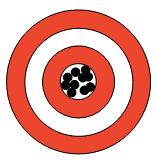
?
a)
High Accuracy & High Precision
b)
High Accuracy & Low Precision
c)
Low Accuracy & High Precision
d)
Low Accuracy & Low Precision
43.

Identify this piece of equipment.
a)
Centrifuge
b)
Incubator
c)
Heating block
d)
Aliquot mixer
44.
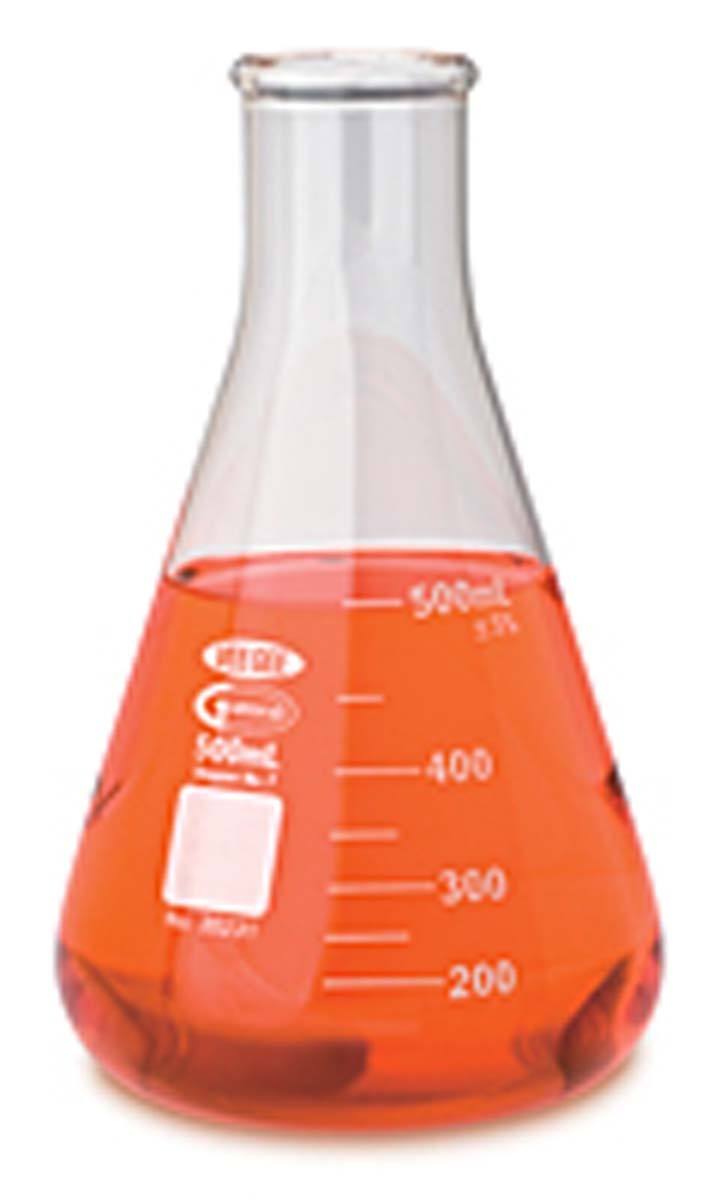
Identify the equipment shown here:
a)
Beaker
b)
Flask
c)
Test Tube
d)
Graduated Cylinder
45.

Identify the equipment shown here:
a)
grinder
b)
evaporating dish
c)
mortar and pestle
d)
crucible
46.

The cell below is in a _________ solution.
a)
Hypotonic
b)
Hypertonic
c)
Isotonic
47.

The cell below is in a _____________ solution.
a)
Hypertonic
b)
Hypotonic
c)
Isotonic
48.

What type of solution is this cell in?
a)
Isotonic
b)
Hypertonic
c)
Hypotonic
d)
diffused
49.

What type of solution is this cell in?
a)
Isotonic
b)
Hypertonic
c)
Hypotonic
d)
diffused
50.
The movement of water across the membrane for a high concentration to a low concentration.
a)
endocytosis
b)
osmosis
c)
facilitated diffusion
51.
What is diffusion?
a)
molecules move everywhere
b)
no movement
c)
when molecules move from a high concentration to a low concentration
52.
Passive transport requires no
a)
concentration gradients
b)
osmosis
c)
motion
d)
energy
53.

Which form of active transport is being shown?
a)
Pinocytosis
b)
Endocytosis
c)
Exocytosis
d)
Osmosis
54.
What is it called when molecules move across the cell membrane from an area of high concentration to an area of low concentration through a carrier protein?
a)
Diffusion
b)
Osmosis
c)
Active Transport
d)
Facilitated Diffusion
55.
What is equilibrium?
a)
When concentrations cannot be balanced between two substances
b)
When concentrations are balanced between two substances
c)
Making the energy in the top half of your body equal the the energy in the bottom half
d)
Concentrations do not exist
56.
An example of a substance that requires active transport to enter or leave a cell is
a)
protein
b)
water
c)
oxygen
d)
carbon dioxide
57.
Convert 300 meters to centimeters:
a)
3000 cm
b)
0.3 cm
c)
30,000 cm
d)
3 cn
58.
Convert from meters to cm: 9 meters
a)
900 cm
b)
90 cm
c)
0.9 cm
d)
0.09 cm
59.
5,000 mg = ____ g
a)
50
b)
5
c)
500
d)
5,000
60.
1 L = _______ mL
a)
1
b)
10
c)
100
d)
1000
61.
Write 0.00000707 in scientific notation.
a)
7.07 x 10⁻⁶
b)
7.07 x 10⁶
c)
707 x 108
d)
707 x 10-8
62.
Write 6,700 in scientific notation.
a)
6.7 x 10³
b)
6.7 x10⁻³
c)
67 x 102
d)
67 x 10-2
63.
Write 8.73 x 10⁻⁴ in standard form.
a)
0.000873
b)
0.0873
c)
87,300
d)
8,730
64.
Write 2.08 x 10² in standard form.
a)
208
b)
0.0208
c)
20,800
d)
0.208
100 %

