wayground logo

Free Printable Worksheets

NEW

Font size

S
M
L
XL
Worksheets

Cell cycle, meiosis, chromosomes,

Total questions: 63

Worksheet time: 1hrs 23mins

Name
Class
Date
1.
Cytokinesis is a phase of mitosis. 
a)
True
b)
False 
2.
Cells spend the majority of their lives in
a)
Interphase
b)
Mitosis
c)
Synthesis 
d)
Gap 2
3.

Cells of organisms must go through cell division for?

a)

growth

b)

repair of damaged cells

c)

replacement of dying cells.

d)

All of these

4.

DNA is replicated during ______ of the cell cycle.

a)

Gap 1

b)

Synthesis (S phase)

c)

Gap 2

d)

Gap 0

5.
What is cytokinesis?
a)
This is when two cells merge together to make one giant cell.
b)
The stage where chromosomes migrate to the opposite ends of the cell. 
c)
The stage of the cell cycle where the rest of the cell divides after mitosis is complete.
d)
The stage in which DNA condenses into chromosomes.
6.
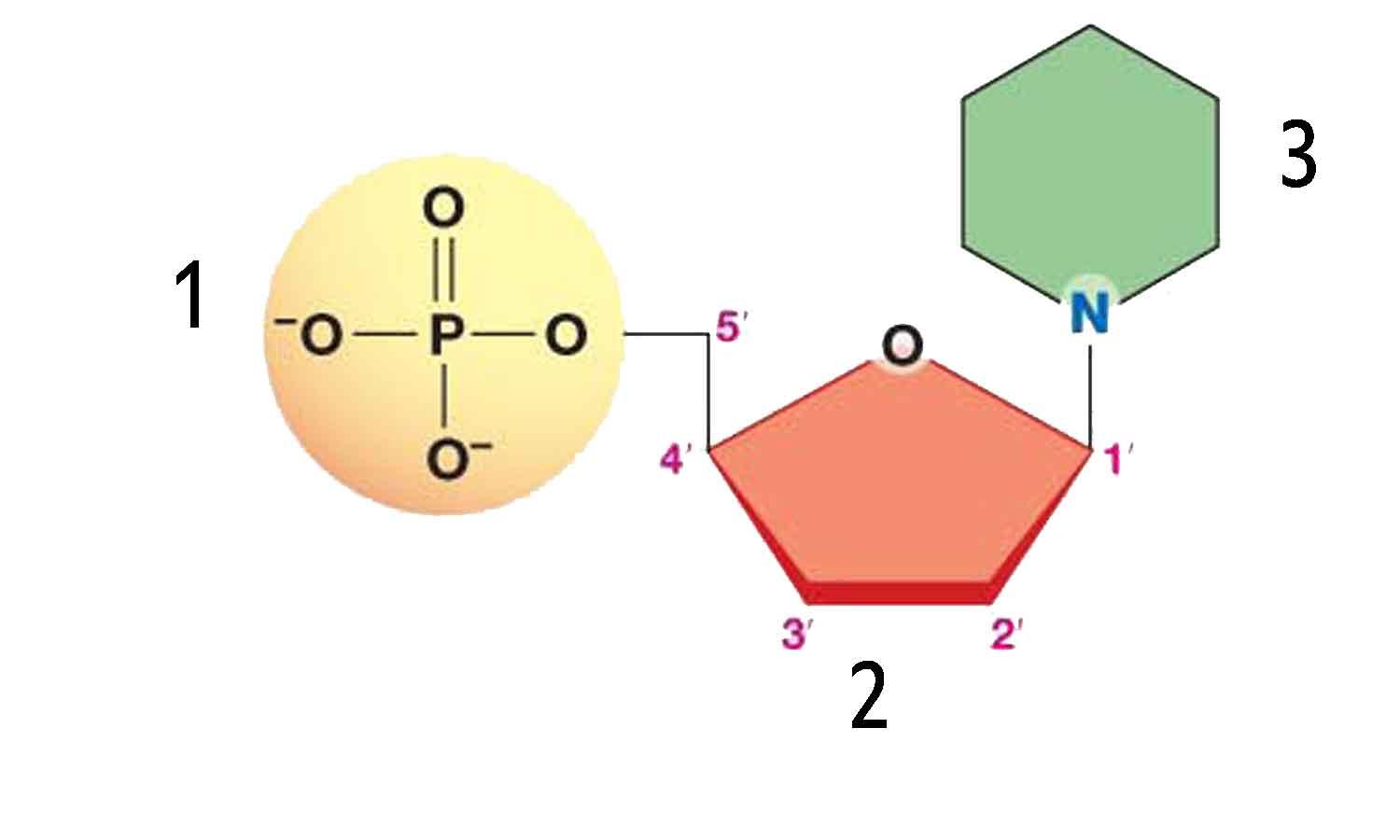
Identify the parts of the nucleotide shown:
a)
1) Ribose Sugar      2) Phosphate 
3)  Nitrogen Base
b)
1) Deoxyribose Sugar
2) Phosphate
3) Nitrogen Base
c)
1) Phosphate
2) Ribose Sugar
3) Nitrogen Base
d)
1)  Phosphate
2) Deoxyribose Sugar
3)  Nitrogen Base
7.

During most of interphase, DNA is found in a relaxed form called

a)

chromosome

b)

centromere

c)

centriole

d)

chromatin

8.

In prophase of mitosis, chromosomes

a)

form and the nuclear envelope disappears.

b)

are pulled toward opposite ends of the cell.

c)

chromosomes line up along the equator of the cell

d)

chromosomes begin to decondense and the two new nuclei begin to form.

9.

In metaphase of mitosis, chromosomes

a)

form and the nuclear envelope disappears.

b)

are pulled toward opposite ends of the cell.

c)

chromosomes line up along the equator of the cell

d)

chromosomes begin to decondense and the two new nuclei begin to form.

10.

During mitosis, DNA is found in the condensed form called a

a)

chromosome

b)

centromere

c)

centriole

d)

chromatin

11.

In anaphase of mitosis, chromosomes

a)

form and the nuclear envelope disappears.

b)

are pulled toward opposite ends of the cell.

c)

chromosomes line up along the equator of the cell

d)

chromosomes begin to decondense and the two new nuclei begin to form.

12.

After mitosis, the cytoplasm and organelles are divided between the two new forming cells in a process called

a)

centriole

b)

chromatin

c)

cytokinesis

d)

centromere

13.

This process is the programmed death of a cell

a)

stem cell

b)

regulation

c)

apoptosis

d)

cytocide

14.

These undifferentiated cells can become specialized cells after receiving a chemical signal.

a)

stem cells

b)

generic cells

c)

blank cells

d)

empty cells

15.
What does DNA Replication mean?
a)
DNA is made.
b)
DNA makes new cells. 
c)
DNA copies itself.
d)
DNA starts the cell cycle.
16.
True or False. 
After a cell goes through cytokinesis, it starts mitosis all over again.
a)
True
b)
False
17.
What phase is this cell in?
a)
Cytokinesis
b)
Mitosis
c)
Prophase
d)
Metaphase
18.
What phase is this cell in?
a)
Mitosis
b)
Interphase
c)
Anaphase
d)
Telophase
19.
What phase is this cell in?
a)
Mitosis
b)
Cytokinesis
c)
Prophase
d)
Telophase
20.
What phase is this cell in?
a)
Mitosis
b)
Interphase
c)
Prophase
d)
Telophase
21.
What part of the cell cycle is this cell in?
a)
Mitosis
b)
Interphase
c)
Telophase
d)
Cytokinesis
22.
In what phase do the organelles disperse out into the daughter cells, and the cell prepares for cytokinesis?
a)
Prophase
b)
Interphase
c)
Mitosis
d)
Telophase
23.

The correct sequence of mitosis:

a)

metaphase, anaphase, telophase, prophase

b)

prophase, metaphase, anaphase, telophase

c)

prophase, anaphase, metaphase, telophase

d)

telophase, metaphase, prophase, anaphase

24.

During which cycle can you identify chromosomes

a)

G1 phase

b)

G2 phase

c)

S phase

d)

M phase

25.
BONUS:
How long is the whole cell cycle for most animal cells?
a)
2-3 days
b)
24 hours
c)
2-3 hours
d)
23 hours
26.

Identical halves of a chromosome are called?

a)

Cousins

b)

Chromatids

c)

Centromere

d)

Centrosome

27.

Chromosomes are visible and spindle fibers start to appear

a)

prophase

b)

metaphase

c)

telophase

d)

anaphase

28.

There are 2 nucli in one cell

a)

telophase

b)

prophase

c)

anaphase

d)

metaphase

29.

After mitosis the number of chromosomes in the newly created cells will be:

a)

Half the number of the original cell

b)

The same number as the original cell

c)

Twice as much as the original cell

30.

The division of chromosomes is called?

a)

anaphase

b)

mitosis

c)

cytokineses

d)

G0

31.

The division of the cytoplasm is called?

a)

anaphase

b)

mitosis

c)

cytokineses

d)

G0

32.

What happens during interphase besides preparing for mitosis?

a)

Nothing other than preparation for cell division happens in a cell during interphase.

b)

Nothing actually happens during interphase.

c)

The cell is doing it's job during interphase as well as getting ready for mitosis.

d)

During interphase, the cell is resting.

33.
Which process and type of resulting cells are represented?
a)
mitosis, gametes
b)
mitosis, body cells
c)
meiosis, gametes
d)
meiosis, body cells
34.
The chromosomes that pair up during meiosis, are called __________ chromosomes.  
a)
homozygous 
b)
asexual
c)
homologous
d)
genes
35.
A male shark has 40 chromosomes in each of its sex cells. How many would be present in its body cells?
a)
20
b)
40
c)
80
d)
160
36.
Which letter(s) in the diagram correspond to cells that are haploid? 
a)
A
b)
B
c)
C
d)
A and B
37.
Compared to the number of chromosomes contained in a body cell, how many chromosomes would normally be contained in a gamete?
a)
The same number
b)
One-fourth as many
c)
Twice as many
d)
Half as many
38.
What causes genetic variation in meiosis?
a)
chromosomes lining up
b)
crossing over of chromosomes
c)
separation of chromosomes
d)
chromosomes pulling apart
39.
What is one of the advantages, why is it better to reproduce sexually versus asexually?
a)
survival of the fittest
b)
overproduction
c)
genetic variation
d)
cloning
40.
Crossing over helps promote 
a)
male genotype
b)
genetic variation
c)
DNA replication
d)
mitosis
41.
A human zygote should have _____ chromosomes inside.
a)
46
b)
23
c)
92
d)
64
42.
Females have ____ and males have _____ chromosomes.
a)
XX, XY
b)
XY, XX
c)
XX, XX
d)
XY, XY
43.
A human being has a somatic cell that has 46 chromosomes.  What is the haploid number found in a gamete?
a)
23
b)
46
c)
69
d)
92
44.
Diploid Cells are represented by
a)
2n
b)
n
c)
4n
d)
1/2 n
45.
The cells produced via meiosis are called:
a)
sex cells
b)
somatic cells
c)
body cells
d)
skin cells
46.
Unlike mitosis, meiosis in male mammals results in the formation of
a)
one haploid gamete
b)
three diploid gametes
c)
four diploid gametes
d)
four haploid gametes
47.
The process of crossing over occurs in what phase of meiosis?
a)
anaphase 1
b)
prophase 1
c)
prophase 2
d)
telophase 1
48.
If a somatic cell in a butterfly contains 24 chromosomes, a butterfly egg would contain
a)
3
b)
6
c)
12
d)
24
49.
The chromosomes that pair up during meiosis, are called __________ chromosomes.  
a)
homozygous 
b)
asexual
c)
homologous
d)
genes
50.
Which best describes the process shown?
a)
nondisjunction
b)
mitosis
c)
independent assortment
d)
crossing over
51.
The absorption of nutrients is determined by...
a)
The cell's volume
b)
The cell's surface area
c)
The cell's ribosomes
d)
The cell's DNA
52.
Which cells are more efficient at obtaining nutrients?
a)
Small Cells
b)
Medium Size Cells
c)
Large Cells
d)
X-Large Cells
53.
What is another reason we need meiosis?
a)
So the offspring has genes from both parents
b)
So the offspring has genes from one parent
c)
So the offspring has genes from neither parents
d)
So the offspring makes its own genes
54.
As a cell’s size increases, its ratio of surface area to volume decreases.
a)
True
b)
False
55.
The amount of nutrients needed is determined by...
a)
The cell's volume
b)
The cell's surface area
c)
The cell's Rough ER
d)
The cell's Smooth ER
56.
As a cell becomes larger, its
a)
surface area increases faster than its volume.
b)
volume increases faster than its surface area
57.
How can surface area (SA) be increased? 
a)
Grow larger
b)
Divide into smaller pieces
58.
Autosomes are
a)
chromosomes found in autotrophs, only
b)
chromosomes that automatically correct all errors in the DNA
c)
chromosomes that determine traits other than sex
d)
chromosomes that determine the sex of the individual
59.
How many DNA molecules make up a chromosome?
a)
1
b)
2
c)
23
d)
46
60.
Each identical side of a chromosome is the 
a)
centromere
b)
chromatin
c)
centriole
d)
chromatid
61.
Histones are 
a)
proteins wound up in DNA
b)
critical to maintaining the shape of chromosomes
c)
aid in the tight packing of DNA
d)
all of these 
62.
When DNA is in its less coiled, "relaxed," state, between cell divisions, it is called
a)
autosomes
b)
chromatid
c)
chromatin
d)
centromere
63.
The structure that holds two chromosomes together until they separate for cell division is the
a)
chromatid
b)
chromatin
c)
centromere
d)
cytoplasm