
NEW
Font size
 Worksheets
Benchmark Exam 1: Ch.1-4 Review
Total questions: 35
Worksheet time: 45mins
Dirt is an example of a(n)
element
compound
hetergeneous mixture
homogeneous mixture
Which of the following represents a physical change only?
adding electricity to water to produce hydrogen and oxygen gas
condensing of steam
burning a propane camping stove
cooking a steak

Which of the above drawings represents a pure substance?
(a)
(b)
(c)
(a) and (c)
(a) and (b)
Which of the following represents a chemical property of a specific metal?
When in contact with air it corrodes (rusts).
It has magnetic properties.
Its density is higher than that of water.
It melts at 800°C
The term used to describe the conversion from a liquid state to a gaseous state is
evaporation
melting
sublimation
condensation
With correct significant figures, the sum for the operation
1.2315 + 0.116 + 15.10 is
16.45
16.4475
16.4
16

To the correct number of significant figures, what is the level of the liquid in the graduated cylinder?
6.0 mL
6 mL
6.01 mL
5 mL

To the correct number of significant figures, what is the temperature reading on the following Celsius thermometer?
15.67ºC
16ºC
15ºC
15.6ºC
Which element would have a similar chemical reactivity in water as K?
Ar
Cu
Ca
Rb

Which elements commonly form anions?
A and B
A and C
B and D
C and D

Which element belongs to the alkaline earth metals family on the periodic table?
A
B
C
D

All of the drawings here represent species that are
isoelectronic (same e- configuration)
isotopes (same element, different # neutrons)
ions
allotropes
D= 2 g/mL
What is the volume?
(Hint: 3 ft = 1 yd and 5280 ft = 1 mi)
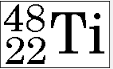

How many electrons does the ION of lithium have?
8
3
4
2
What is the density of a substance that has a mass of 30g and a volume of 6 milliliters?
24 g/ml
5 g/ml
36 g/ml
180 g/ml
Arrange the following spectral regions in order of increasing energy:
infrared, microwave, UV, red light, indigo light
ultraviolet < infrared < red light < indigo light < microwave
microwave < indigo light < red light < infrared < ultraviolet
ultraviolet < indigo light < red light < infrared < microwave
microwave < infrared < red light < indigo light < ultraviolet
A nonmetal is an element that tends to ____ valence electrons in chemical reactions, becoming a(n) ____ in the process.
lose; anion
lose; cation
gain; anion
gain; cation

The spheres below represent atoms of Li, Be, B, and F (not necessarily in that order).
Which one of these spheres represents an atom of F?
sphere (a)
sphere (b)
sphere (c)
sphere (d)
For an electron in a given atom, the larger the principal energy level, the
smaller the average distance from the nucleus and the higher the orbital energy
larger the average distance from the nucleus and the higher the orbital energy
smaller the average distance from the nucleus and the lower the orbital energy
larger the average distance from the nucleus and the lower the orbital energy.
Which ion has the same electron configuration as Kr?
Rb+
Se2-
Br-
All of the above ions have identical electron configurations
What is the electron configuration for oxygen?
1s22s22p63s2, 3p64s23d104p5
1s22s22p4
1s22s22p6
1s22s22p63s23p64s23d1

1s22s22p63s23p64s23d10

