
Font size
 Worksheets
Midterm Review
Total questions: 45
Worksheet time: 24mins


Which of the following best describes the political system of Ancient Rome the best?
A strong central government
Rule by a coalition of emperors & religious leaders.
Universal suffrage in national elections.
Strict adherence of constitutional principles.
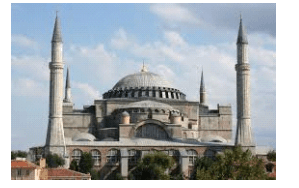
What made Constantinople a successful city during the Byzantine Empire?
Their use of concrete, domes, & arches.
It was the capital during the Pax Romana when the entire empire flourished.
It resembled other cities in the Roman Empire & was called "New Rome"
It was in the center of the world & was the crossroad of trade between Europe & Asia.
Which of the following is a contribution Rome made to our modern day legal system?
A person is innocent until proven guilty
The Bill of Rights
Men have more rights than women under the law.
A person is considered guilty until proven innocent.

Which Chinese river is shown highlighted in the Map? Hint(it is the longest river in China.)
Yellow
Yangtze
Amazon
Mississippi
Select the 5 relationships in Confucianism that should be respected & obeyed.
Husband over Wife
Ruler over Subject
Older brother over younger brother
Father over Son
Friend & Friend
Confucius believed that good government depended on _______ leaders.
Wise
Rich
Buddhist
Wordly
In what ways did China reunite under the Tang Dynasty? Select three.
Civil Service Exams were reintroduced.
Land was given to Farmers
Emperor Sui made farmers work on building projects such as the Great Wall
Taizong was strengthened the government.
Many Chinese people began to adopt Zen Buddhism
During the Song Dynasty, there were many advances in agriculture, commerce, & technology. What effect did these advances have on population growth?
Population growth was a result of better trade & economic growth.
Better farming techniques led a surplus of food, which led to a population growth.
Population grew when the invention of woodblock printing was passed via trade routes
Improving the compass led to a population growth because it was easier for people to find China.
Which of the following technologies spread from China to other parts of Asia and Europe along the Silk Road?
Paper making, printing press, magnetic compass, and cannons.
Paper making, woodblock printing, magnetic compass, and cannons
Paper making, woodblock printing, magnetic compass, and gunpowder.
Gunpowder, magnetic needles, compass, and astrolabe.
Which Mongolian ruler completed the conquest of China conquering Southern China and starting the Yuan Dynasty?
Kubali Khan
Marco Polo
Genghis Khan
Zheng He
Which Mongolian ruler united Mongol clans & conquered Northern China?
Kublai Khan
Marco Polo
Genghis Khan
Zheng He
Which statement best explains why China and the Ming Dynasty excelled in exploration ahead of other empires?
China had more technology that propelled them such as junks & the magnetic compass.
China was the wealthiest civilization in the world.
China was trying to colonize America before Europe.
China's location to the Pacific Ocean enabled for easier exploration.
Why was the Great Wall of China originally built?
To show off China's building techniques
To protect from invaders
To isolate themselves from the rest of the world.
To keep Buddhism from spreading into China.
How was Buddhism spread to Japan?
Cultural Diffusion
Military Conquest
Missionaries
The building on Monasteries
Samurai's protection for Daimyo's in exchange for land, food, etc. What is this relationship an example of?
Hierarchy
Feudalism
Manorialism
Confucianism
Shinto influences on Japan include all of the following EXCEPT:
Belief in monotheism.
It contributes to Japan's love of nature.
It encouraged people to strive for simplicity.
Rituals were practiced by ancient Japanese rulers.
What does the word Samurai mean?
To serve
To fight
to honor
to win
Literature played a major role in the Heian Period culture. What famous novel was written during this time period?
The Tale of Shogun
The Tale of Heian
The Tale of Genji
The Tale of Nara

The following picture is of a statue in Japan. It would be an example of what religion spreading from China to Japan.
Confucianism
Shintoism
Hinduism
Buddhism
Which of the following was the capital of Japan during the Golden Age of the Arts between 794-1180?
Beijing
Nara
Heian
Tokyo

Sect of Islam; Majority of Muslims (85%); believe the leaders of Muslim nation (caliph) should be elected from among those capable of doing job
Sunni
Arab merchants
Shia
Mehmed

Sect of Islam; minority of Muslims belong to this group (15%); believed leadership (Caliph duties) should fall to a relative of the Prophet Muhammad
Shia
Sunni
Arab merchants
Muhammad

Considered one of the greatest Ottoman sultans; undertook military campaigns that enlarged his realm; oversaw development of law, literature, art, and architecture; known as "the law giver"
Mehmed the Conqueror
Muhammad
Suleiman the Magnificent
Al Razi
Which of the following were Arab Nomads who herded animals and traveled from oasis to oasis?
Caravans
Sheikh
Bedouins
Berbers

What is the name of this famous building built for the Shah's late wife?
Taj Mahal
Hagia Sophia
Colosseum
Hippodrome
Which of the following are important advancements Muslim scholars made in Math & Science? Select three.
Arabic Numerals
Geometry
Improved the Astrolabe
Proved the earth was round by measuring it.
How did the ownership of trade routes & rise of merchants lead to cultural diffusion of Islam?
Arab merchants, most of whom were Muslims, controlled the trade routes throughout the Middle East.
When the Mongols took over the Silk Road, Chinese technology was given to Islamic scholars.
Keeping trade posts along major trade routes allowed for Muslim merchants to establish relationships with India's upper class.
Invaders constantly disrupted trade & Muslim merchants abandoned certain trade routes.
Which statement best describes the similarities between Suleiman & Justinian?
Both were generals in their armies & created mandatory exams to join their military.
Neither owned gold or salt mines in Africa & did not tax merchants traveling through their lands.
Both revised their legal systems and expanded their empires through military conquest.
Both improved their economy through trade & exploration to the Americas.
What main source provides guidance to Islam's followers?
teachings in the Holy Bible
stories handed down by word of mouth
lessons in the Torah
written text in the Quran
Which statement best explains why the Safavid Empire was able to make diplomatic ties with Europeans?
Shah Osman killed thousands of Christians & Jews making Europeans intimidated.
Shah Abbas I was tolerant of Christianity, so it allowed him to get along well with European countries.
Shah Mehmet was tolerant of Jews & Christians which allowed him to protect Persia since he got along well with Europeans.
Ismail made Christianity the official religion of Persia therefore he got along well with European countries.
Which of the following do Judaism, Christianity, and Islam have in common?
Monotheistic
Polytheistic
They all believed Muhammad was the final prophet
They used the Quran as their holy text
Which contribution did Muslims make to Astronomy?
They discovered there were 9 planets.
They discovered that the sun was the center of the universe.
They improved the astrolabe.
The developed the Scientific Method
How did trading centers of Timbuktu & Jenne become centers of culture & learning?
outside influences caused cities to develop unique cultures.
exhaustion of resources forced cities to change.
the sharing of ideas, beliefs, and customs is an effect of trade.
conflicts among cities hindered cultural advancement.
Which statement explains reasons Griots became honored in West Africa?
Griots became leaders of local religions.
Griots guided groups to look to the future.
West African cultures relied on past customs.
West African economies benefited from the sales of stories.
What were the reasons cities such as Timbuktu & Jenne developed in West African Empires?
Cities' universities attracted students from many lands who moved there to study.
Cities had large agricultural markets and technologically advanced tools needed by farmers.
Cities attracted missionaries who sought to spread religion throughout West Africa.
Cities' resources were high in demand and a trade route connected them to North Africa.
Which of the following was the great Mali Emperor that Mali on the map & made Timbuktu a replica of Mecca?
Sunni Ali
Mansa Musa
Sulieman I
Askia Muhammad
Which two cities started out as trading centers but soon came cities of culture & learning too?
Jenne
Mecca
Cordoba
Timbuktu

