wayground logo

Free Printable Worksheets

Font size

S
M
L
XL
Worksheets

2 9 weeks DCA BBJH

Total questions: 93

Worksheet time: 3575secs

Name
Class
Date
1.
The Great Compromise solved the problem of both big and small states wanting representation. 
a)
True
b)
False
2.
Federalist SUPPORT a strong, national government and creating a new constitution.
a)
True
b)
False
3.
Which group of people wanted the Constitution to include a Bill of Rights?
a)
Federalists
b)
Anti-federalists
c)
Democrats
d)
Northerners
4.
 The Constitution was created in ...
a)
1492
b)
1776
c)
1787
d)
1800
5.
Which of the following is an example of checks and balances?
a)
A judge overturning a lower court decision
b)
A legislative bill being vetoed by the President
c)
A governor granting clemency (forgiveness) to a criminal
d)
A governor declaring a tax free period
6.
Which of the following best describes limited government?
a)
All power comes from checks and balances
b)
All power comes from the people (voters)
c)
All power comes from the king
d)
All power is given to the president
7.
Which of the three branches of government includes the President, Vice President, and cabinet members?
a)
Legislative
b)
Executive
c)
Judicial
d)
Supreme Court
8.
Which of the following is NOT a principle of the US Constitution?
a)
Popular Sovereignty
b)
Federalism
c)
Checks and Balances
d)
Aristocracy
9.
Which of the following describes the principle of representative democracy (republicanism)?
a)
All voters represent themselves by voting
b)
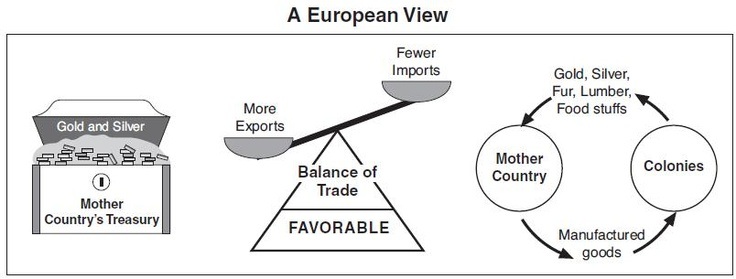
All voters have to vote for the President of the US
c)
Representatives are elected by voters to vote on legislation
d)
Representatives meet with voters and tally their responses on legislation
10.
Which principle allows for the separation of US laws into state and federal laws?
a)
Separation of Powers
b)
Checks and Balances
c)
Limited Government
d)
Federalism
11.
Freedom of speech, press, religion, assembly, and petition
a)
limited government
b)
individual rights
c)
federalism
d)
separation of powers
12.
powers not granted to the federal government in the Constitution belong to the states 
a)
republicanism
b)
checks and balances
c)
federalism
d)
separation of powers
13.
powers are divided among the legislative, executive, and judicial branches, giving each certain responsibilities
a)
checks and balances
b)
federalism
c)
representative democracy
d)
separation of powers
14.
powers are shared between the legislative, executive, and judicial branches of the government giving each some control over the other
a)
checks and balances
b)
federalism
c)
representative democracy
d)
separation of powers
15.
voters hold the sovereign power and elect representatives to exercise power for them
a)
popular sovereignty
b)
republicanism
c)
federalism
d)
separation of powers
16.
the government's right to rule comes from the people
a)
separation of powers
b)
republicanism
c)
limited government
d)
popular sovereignty
17.
What are the two parts of our Congress?
a)
The Station and the House
b)
The Senate and the House of Representatives
c)
The President and the Vice President
18.
The number of representatives a state has is based on the state's _________________________.
a)
location
b)
name
c)
population
d)
altitude
19.
What is "checks and balances?"
a)
Each branch of power has the ability to limit the power of the other branches. 
b)
The people elect their leaders. 
c)
The people are in charge. 
d)
The people have rights. (Bill of Rights) 
20.
What is republicanism?
a)
There are three branches of government. 
b)
The state and national government share power. 
c)
The people are in charge. 
d)
The people vote for their leaders, who then represent the people. 
21.

What is federalism?

a)

The people vote for their leaders who then represent them.

b)

The people have individual rights.

c)

There are three branches of government.

d)

The states and national government share power.

22.
What is popular sovereignty?
a)
"The people rule." 
b)
There are three branches of government. 
c)
There are two houses in the legislature. 
d)
The people vote for their leaders who then represent them. 
23.
What is another name for the federal government?
a)
national government
b)
state government
24.
The first 10 Amendments to the U.S. Constitution guarantees this principle.
a)
individual rights
b)
federalism
c)
separation of powers
d)
popular sovereignty
25.
Which Amendment protects you from having the military stay in your home?
a)
First Amendment
b)
Second Amendment
c)
Third Amendment
d)
Fourth Amendment
26.
Which amendment gives you the right of Religion, Assembly, Speech, and Press?
a)
First Amendment
b)
Second Amendment
c)
Third Amendment
d)
Fourth Amendment
27.
Which amendment gives you the right to keep weapons or arms?
a)
First Amendment
b)
Second Amendment
c)
Third Amendment
d)
Fourth Amendment
28.
Protecting the rights and freedoms of American citizens is _________________.
a)
the purpose of the 1st amendment
b)
the purpose of the 13th, 14th, and 15th amendments
c)
the purpose of the 10th amendment  
d)
the purpose of the Bill of Rights
29.
What does the 4th Amendment guarantee?
a)
no illegal search and seizure
b)
the right for cops to come into your house unnannounced
c)
no illegal gambling in your house
d)
no illegal cruel and unusual punishments
30.
What does the word "amend" mean?
a)
add to
b)
change
c)
make better
d)
make worse
31.
Can the US Constitution be changed?
a)
Yes
b)
No
32.
Prevents the quartering of soldiers in any home without the consent of the owner
a)
Amendment 2
b)
Amendment 3
c)
Amendment 6
d)
Amendment 8
33.
Guarantees the rights of people accused of a crime to due process of law including the right not to incriminate oneself or to be tried for the same crime twice (double jeopardy)
a)
Amendment 5
b)
Amendment 6
c)
Amendment 4
d)
Amendment 8
34.
Guarantees the right to jury trial in civil suits involving $20.00 or more.
a)
5th
b)
7th
c)
8th
d)
9th
35.
Guarantees the right to a speedy, impartial public trial in criminal cases with counsel and the right to cross examine.
a)
6th
b)
7th
c)
9th
d)
10th
36.
Prohibits excessive bail or fines or cruel or unusual punishment
a)
3rd
b)
5th
c)
7th
d)
8th
37.
Asserts that powers not delegated to the national government or denied to the states are reserved to the states.
a)
2nd
b)
8th
c)
9th 
d)
10th
38.
What the police have to show to a judge before getting a warrant.
a)
a good idea
b)
probable cause
c)
nothing
39.
The weaknesses of the Articles of the Confederation led to an effort to create a new _____________.
a)
Proclamation of 1763
b)
Constitution
c)
Declaration of Independence
d)
Treaty of Paris 1783
40.
This was America's 1st constitution, which proved to weak to protect the American people.
a)
Articles of Confederation
b)
U.S. Constitution
c)
Bill of Rights
d)
Declaration of Human Rights
41.
Congress never had any money because under the Articles they did NOT have the power to ____.
a)
print money
b)
sell items to other countries
c)
tax
d)
spend money
42.
The Articles created a _____ national government.
a)
strong
b)
weak
c)
nope
d)
nope
43.
The Great Compromise solved the problem of both big and small states wanting representation. 
a)
True
b)
False
44.
The Three-Fifths Compromise help settle the debate over whether to count slaves in the population or not.
a)
True
b)
False
45.
Federalist SUPPORT a strong, national government and creating a new constitution.
a)
True
b)
False
46.
Which compromise is made up of ideas from the Virginia Plan and the New Jersey plan?
a)
The Great Compromise
b)
The three-fifths compromise
c)
The constitutional compromise
d)
The big compromise
47.
What is the name of the first Constitution?
a)
Articles of Confederation
b)
Articles of Incorporation
c)
The Federalist Papers
d)
The Great Constitution 
48.
Shay's Rebellion helped prove what point?
a)
The federal government needed changing
b)
The states powers were too weak
c)
The Articles of Confederation were powerful
d)
George Washington was a great leader.
49.
James Madison was a federalist who wanted a federal constitution. 
a)
True
b)
False
50.
Anti-federalists wanted a Bill of Rights added to the constitution to help protect...
a)
Individual Rights
b)
State Rights
c)
Slavery
d)
The Articles of Confederation
51.
The Federalists papers were written to persuade people to support the new constitution.
a)
True
b)
False
52.
The first ten Amendment to the Constitution are called the  _______.
a)
Bill of Rights
b)
Preamble
c)
Articles
d)
Naturalization
53.
The Constitution replaced the ______ as the governing document of the country.
a)
Declaration of Independence
b)
Bill of Rights
c)
Emancipation Proclamation
d)
Articles of Confederation
54.
Patrick Henry opposed the Constitution because...?
a)
The states would give too much power to the Federal government
b)
The Federal government would give too much power to the states
c)
He was the main author of the Articles of Confederation
d)
He wanted the U.S. to be part of England again
55.
Which term means 'approve or pass an amendment'?
a)
republican
b)
federalism
c)
execute
d)
ratify
56.

Which of the following was a major weakness of the Articles of Confederation?

a)

Could not raise an army

b)

No Legislative Branch

c)

Could not declare war

57.
The Northwest Ordinance provided a pathway for territories to apply for
a)
statehood
b)
federal funding
c)
infrastructure grants
58.
Who was Daniel Shay?
a)
A farmer and leader of the rebellion
b)
A colonial debt collector
c)
executive of the colonial couts
d)
founder of the Sons of Liberty
59.

Patrick Henry once said, "Your President (central government) may easily become king. Your rights will be in the hands of a small minority." HENRY must have been a....

a)

Federalist

b)

Anti-Federalist

60.

Those opposed to ratifying the U.S. Constitution were called...

a)

Federalist

b)

Anti-Federalist

61.

Who would have said, "The states will surrender too much power to the federal government"

a)

Federalist

b)

Ant-Federalist

62.

Wanted to add a Bill of Rights to the U.S. Constitution.

a)

Federalist

b)

Ant-Federalist

63.

"The Constitution does not adequatly protect individuals from possible government abuse."

a)

Federalist

b)

Anti-Federalist

64.

George Mason was a....

a)

Federalist

b)

Ant-Federalist

65.

James Madison was a...

a)

Federalist

b)

Anti-Federalist

66.

Which of the following men was an Anti-Federalist?

a)

James Madison

b)

Patrick Henry

67.

This is the name of the official process of approving the U.S. Constitution.

a)

compromise

b)

ratification

c)

amendment

d)

federalism

68.

Which group of people liked the Constitution and wanted to ratify it without making any changes?

a)

Federalists

b)

Anti-Federalists

c)

Democrats

d)

Republicans

69.

This was a collection of 85 essays written by Alexander Hamilton, James Madison, and John Jay that explained the Constitution and encouraged people to ratify it.

a)

Essays of Government

b)

Anti-Federalist Documents

c)

Federalist Papers

d)

Ratification Papers

70.
Why did most people come to the New England colonies?
a)
They wanted the freedom to practice their religion the way they wanted.
b)
They wanted to make money by working in factories.
c)
They were taken from their home countries and forced to work there as slaves.
d)
They were looking for a more diverse place to live.
71.
In the Southern colonies, what was the economy mostly based on?
a)
Shipbuilding
b)
producing iron and textiles in factories
c)
whaling and fishing
d)
producing cash crops on large farms
72.
Which crop grew well in the Middle colonies because of the climate?
a)
wheat
b)
cotton
c)
tobacco
d)
fish
73.
Which colony region had many factories that supplied paper, textiles, and iron?
a)
the New England colonies
b)
the Middle colonies
c)
the Southern colonies
74.
People who lived in the New England colonies most likely had which of the following jobs?
a)
Farmin
b)
Raising livestock
c)
Ship building and fishing
75.
What was the climate like for the people of the New England colonies?
a)
Harsh winters and mild summers
b)
Warm, humid summers and mild winters.
c)
Cold winters and hot summers
76.
Which colonial region contained rocky soil and a jagged coastline?
a)
New England
b)
Mid-Atlantic
c)
Southern
77.
Large farms, called ___________________, were spread throughout the Southern colonies.
a)
Trade centers
b)
Plantations
c)
Settlements
78.
The people who settled in the New England colonies were looking for religious freedom
a)
True
b)
False
79.
Soil in the New England colonies was perfect for farming.
a)
True
b)
False
80.

What was George Washington’s advice in the Farewell Address (1796)?

a)

Avoid political parties

b)

Political Parties will benefit the country

81.

Which of the following is apart of Washington's legacy?

a)

Presidents only serving two terms (8yrs)

b)

Established a president serving forever

c)

Presidents taking control of all departments.

82.

What was the biggest issue that Political Parties disagreed with at first?

a)

The Size of the Federal Government

b)

Trade Agreements

c)

War Efforts

83.

What type of Government did the Federalist believe in?

a)

Strong National Government

b)

Weak National Government

c)

States control the Government

84.

What type of Government did the Democratic- Republicans / Anti-Federalist believe in?

a)

Weak National Government

b)

Strong National Government

c)

President is the Supreme Ruler

85.

Thomas Jefferson was apart of which Political Party?

a)

Democratic Republicans

b)

Federalist

c)

Whig

d)

Liberal

86.
Under Washington, Alexander Hamilton was the Secretary of?
a)
State
b)
War
c)
Treasury
d)
Education
87.
What does Strict Construction of the Constitution mean?
a)
Use it as a guide
b)
Follow it word for word
c)
Doing your chores the first time you are asked
88.
What did Hamilton believe in regarding government power and the economy?
a)
Promoting business and manufacturing
b)
Promoting farming
c)
Promote trade with China
d)
Promote trade with Russia
89.
What did Washington warn against in his Farewell Address ?
a)
The dangers of political parties
b)
Thomas Jefferson becoming president
c)
A national bank
90.
What was Washington's view on foreign policy?
a)
Set up permanent alliances  with other nations
b)
Do not set up permanent alliances with other countries
c)
Do not let foreign ships into harbors without paying taxes
d)
Letting ships freely enter U.S. waters will promote trade
91.

What is mercantilism?

a)

A system where a mother countries gains money and power from natural resources that come from its colonies.

b)

where colonies trade gold and silver with each other.

c)

Wars that start over money.

d)

Plantation colonies trading slaves for money.

92.

The impact of mercantilism was that

a)

The rate of slavery in the Americas went down

b)

Trade was limited in the Atlantic

c)

The Colony grew wealthy

d)

The Mother Country grew wealthy

93.
Based on the political cartoon, how does mercantilism benefit the mother country?
a)
The mother country always has something to eat.
b)
The mother country can get rich from the colonies.
c)
The colonies provide everything to the mother country.