
NEW
Font size
 Worksheets
Fall Chemistry Semester Exam Review
Total questions: 40
Worksheet time: 21mins
Data that is expressed using numbers. Ex. Mass = 25 g
Quantitative Data
Qualitative Data
Data that is expressed using words. Ex. odor, color
Quantitative Data
Qualitative Data
The octet rules states that most elements want to have _____ valence electrons.
2
4
6
8
Most elements are electronically stable in an octet, but Hydrogen is like Helium and only requires how many electrons?
one
two
four
eight
A statement that can be tested experimentally is a
variable
model
generalization
hypothesis
A theory is accepted as the explanation of an observed phenomenon until
one study contradicts the theory
repeated observations conflict with the theory
a new method is discovered
a leading scientist declares that it is invalid
What is the correct SI unit for mass?
Kilograms
newtons
pounds
liters
What is the correct SI unit for length?
meter
millimeter
centimeter
kilometer
A mutual electrical attraction between the nuclei and valence electrons of different atoms that binds the atoms together is called a(n)
dipole
Lewis structure
chemical bond
London force
The electrons involved in the formation of a chemical bond are called
dipoles
s electrons
Lewis electrons
valence electrons
As atoms bond with each other, they
increase their potential energy, creating less-stable arrangements
decrease their potential energy, creating less-stable arrangements
increase their potential energy, creating more-stable arrangements
decrease their potential energy, creating more-stable arrangements
If 2 covalently bonded atoms are identical, the bond is
nonpolar covalent
polar covalent
dipole covalent
coordinate covalent
If the atoms that share electrons have an unequal attraction for the electrons, the bond is called
nonpolar
polar
ionic
dipolar
A polar molecule contains
ions
a region of positive charge and a region of negative charge
only London forces
no bonds
The forces of attraction between molecules in a molecular compound are
stronger than the forces among formula units in ionic bonding
weaker than the forces among formula units in ionic bonding
about equal to the forces among forula units in ionic bonding
zero
Group which satisfies the octet rule without forming compounds
halogen
noble gas
alkali metal
alkaline-earth metal
Most chemical bonds are
purely ionic
purely covalent
partly ionic and partly covalent
metallic
The electron configuration of nitrogen is 1s2 2s2 2p3. How many more electrons does nitrogen need to satisfy the octet rule?
1
3
5
8
A neutral group of atoms held together by covalent bonds is a
molecular formula
chemical formula
polyatomic ion
molecule
In a molecule of Chlorine, the 2 shared electrons give each chlorine atom how many electrons in the outer energy level?
1
2
8
32
A scientist working with compounds containing carbon is working in the field of ______ chemistry.
inorganic
organic
theoretical
none of the above
The word 'atom' means
divisible
indivisible
none
The least massive particle in an atom is the
proton
neutron
electron
nucleus
If the atoms that share electrons have an unequal attraction attraction for the electrons, the bond is called
nonpolar
polar
ionic
dipolar
Noble gases are generally ______.
semiconductors
malleable
brittle
unreactive
Vertical columns on the periodic table are called ___?
groups
periods
rows
families
Horizontal rows on the periodic table are called ___?
groups
periods
rows
families
According to the Octet Rule, atoms of elements react with each other in order to attain ____ electrons in their outermost energy level or shell.
2
4
6
8
10
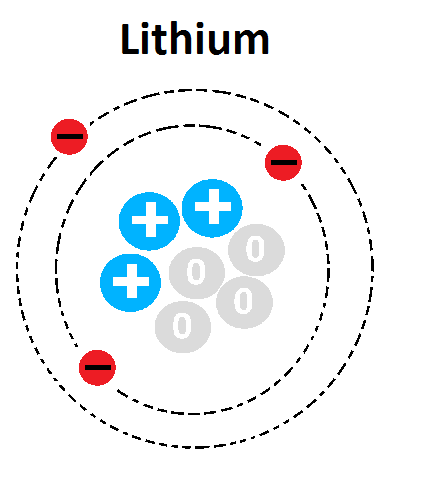
What is the mass number of this atom?
1
3
4
7
A(n) ____________ is made up of a neutral group of atoms held together by a covalent bond.
atom
molecule
electron
element
A polar molecule contains
ions
a region of positive charge and a region of negative charge
only London forces
no bonds
Most chemical bonds are
purely ionic
purely covalent
partly ionic and partly covalent
metallic
If 2 covalently bonded atoms are identical, the bond is
nonpolar covalent
polar covalent
dipole covalent
coordinate covalent

