Wayground logo

Free Printable Worksheets

Font size

S
M
L
XL
Worksheets

American History Midterm Review =)

Total questions: 136

Worksheet time: 5hrs 44mins

Name
Class
Date
1.
The primary goal of the NAACP was
a)
voting rights for women
b)
better working conditions
c)
regulation of the banking industry
d)
equality among the races
2.
A bill that originates from the people rather than legislators is known as
a)
a recall
b)
an initiative
c)
a referendum
d)
an amendment
3.
In The Jungle, Upton Sinclair exposed
a)
dangers faced by coal miners
b)
corrupt business practices of the Standard Oil Company
c)
unsanitary conditions in the meat-packing industry
d)
illegal deals between special interests and the government
4.
All of the following were actively involved in securing the right to vote for women except
a)
Elizabeth Cady Stanton
b)
Susan B. Anthony
c)
Florence Kelly
d)
Carrie Chapman Catt
5.
The law that required truthful labels was the
a)
Pure Food and Drug Act
b)
Meat Inspection Act
c)
Sherman Antitrust Act
d)
Interstate Commerce Act
6.
Muckrakers were
a)
politicians
b)
conservationists
c)
suffragists
d)
journalists
7.
The progrssive movement regarded all of the following as worthy goals except
a)
protecting social welfare
b)
promoting business monopolies
c)
creating economic reform
d)
fostering efficiency in the workplace
8.
Which of the following actions lead to the defeat of Taft in 1912?
a)
his overuse of the bully pulpit
b)
his failure to unify the Republican Party
c)
his refusal to sign the Payne-Aldrich Tariff
9.
Which of the following best states the primary goal of prohibitionists?
a)
to eliminate the sale fo alcohol to minors
b)
to eliminate the use of alcohol in society
c)
to reduce accidents in the workplace
d)
to reduce the availability of alcohol to minors
10.
What was Roosevelt's position on trusts?
a)
some trusts were harmful to the public interest
b)
all trusts should be busted
c)
trusts were of benefit to the public interest
d)
trusts were legal and could not be abolished
11.
reform movement that sought to return control of the government to the people
a)
Square Deal
b)
Progressivism
c)
conservation
d)
Federal Reserve System
12.
president of the U.S. who was a former president of Princeton University and governor of New Jersey
a)
Upton Sinclair
b)
Florence Kelley
c)
William H. Taft
d)
Woodrow Wilson
13.
muckraking journalist who exposed the terrible conditions of the meatpacking industry
a)
Upton Sinclair
b)
Florence Kelley
c)
William H. Taft
d)
Woodrow Wilson
14.
an advocate for improving the lives of women and children
a)
Upton Sinclair
b)
Florence Kelley
c)
William H. Taft
d)
Woodrow Wilson
15.
president whose actions split the Republican party after he angered both progressives and conservationists
a)
Upton Sinclair
b)
Florence Kelley
c)
William H. Taft
d)
Woodrow Wilson
16.
the movement to protect America's natural resources
a)
Progressivism
b)
conservation
c)
Square Deal
d)
Federal Trade Commission
17.
the term used to describe the progressive reforms of President Theodore Roosevelt
a)
Progressivism
b)
conservation
c)
Square Deal
d)
Federal Trade Commission
18.
watchdog agency given the power to stop unfair business practices
a)
Progressivism
b)
conservation
c)
Square Deal
d)
Federal Trade Commission
19.
a leader of the woman suffrage movement
a)
Upton Sinclair
b)
Susan B. Anthony
c)
Woodrow Wilson
d)
William H. Taft
20.
This is a vote on an initiative.
a)
initiative
b)
prohibition
c)
referendum
d)
progressive movement
21.
Members of the Woman's Christian Temperance Union fought for this cause by entering saloons, singing, praying, and asking saloonkeepers to stop selling alcohol.
a)
initiative
b)
prohibition
c)
referendum
d)
progressive movement
22.
This enabled voters to remove public officials from elected positions by forcing them to face an election before the end of their term if enough voters requested it.
a)
recall
b)
prohibition
c)
referendum
d)
progressive movement
23.
This was one of the inspirations for the creation of assembly lines at the Ford Motor Company.
a)
progressive movement
b)
scientific management
c)
prohibition
d)
recall
24.
This allowed for the popular, or direct, election of U.S. senators.
a)
scientific management
b)
progressive movement
c)
Seventeenth Amendment
d)
prohibition
25.
suffrage means
a)
discrimination
b)
women's rights
c)
the right to vote
d)
the denial of the right to vote
26.
The Progressive Party,  which became known as the Bull Moose Party, advocated a number of reforms including women's suffrage, an eight-hour workday, and a federal law against child labor.
a)
True
b)
False
27.
This was intended to provide revenue lost by the lowering of tariffs.
a)
income tax
b)
Clayton Antitrust Act
c)
Federal Reserve System
d)
woman's suffrage
28.
This specified that labor unions and farm organizations not only had a right to exist, but would also no longer be subject to antitrust laws.
a)
income tax
b)
Clayton Antitrust Act
c)
Federal Reserve System
d)
woman's suffrage
29.
This is a decentralized private banking system under government control.
a)
income tax
b)
Clayton Antitrust Act
c)
Federal Reserve System
d)
woman's suffrage
30.
This legislation put forth strict cleanliness requirements for meatpackers and created the program of federal meat inspection still used today.
a)
NAACP
b)
Meat Inspection Act
c)
Pure Food and Drug Act
d)
Elkins Act
31.
Militarism means....
a)
Building up armed forces and getting ready for war
b)
Having pride in your nation
c)
Trying to build an empire
d)
Agreements to help others
32.
9)  WWI began when Austria-Hungary declared war on Serbia one month after:
a)
Serbia tried to take more of Austria-Hungary's land.
b)
Serbia burned their flag.
c)
Archduke Ferdinand and his wife were killed.
d)
Serbia won more Olympic medals.
33.
When World War I began, the official United States policy was
a)
to enter on the side of the Allied Powers
b)
the enter on the side of the Central Powers
c)
to remain militarily and politically neutral
d)
to support the Central Powers by providing war materials
34.
Which of Woodrow Wilson's proposals was included in the Treaty of Versailles?
a)
the League of Nations
b)
reparations from Germany
c)
removal of all trade barriers
d)
restoration of the Russian monarchy
35.
According to Woodrow Wilson, the purpose of the League of Nations was
a)
to remove threat of future wars.
b)
to prevent nuclear proliferation.
c)
to help the US gain more territories.
d)
to help promote prohibition in other countries.
36.
On May 7, 1915, a German submarine torpedoed and sank
a)
the Maine
b)
The Titanic
c)
The Lusitania
d)
The Queen Mary
37.
What action on November 11, 1918, brought World War I to and end?
a)
An armistice was signed
b)
A surrender was given
c)
A propaganda campaign was waged.
d)
The allies won a major battle.
38.
Which answer summarize the Schlieffen Plan that Germany created to prepare for a two-front war?
a)
Attack France first, then Russia.
b)
Attack Russia first, then France.
c)
Send half of the army to France and half to Russia.
d)
Ally with Russia to fight France.
39.
What is the most probable link between militarism and imperialism?
a)
A country gains colonies, its military grows to protect them
b)
Army expands, the country wants colonies to recruit troops
c)
Colonies, grow, the military stages training exercises there
d)
Army expands, a country seeks colonies to prevent protesting
40.
Which of these is a type of fighting used in World War One?
a)
Trench Warfare
b)
Atomic Bomb
c)
Guerilla Warfare
d)
No-Man's Land
41.
What was the Zimmerman Note?
a)
The German policy of attacking all ships entering or leaving Britain
b)
Wilson's speech concerning why the U.S  should enter WWI
c)
A proposal by Germany that Mexico attack the US in return for territory
d)
a note left behind by a Serbian Nationalist in Austria-Hungary
42.
Payments for war damages were known as
a)
nationalism
b)
separatism.
c)
reparations.
d)
retaliations.
43.
What event led Great Britain to declare war on Germany?
a)
The Germans sank British supply boats
b)
The Germans sank American ships
c)
Germany invaded Russia
d)
Germany invaded Belgium 
44.
Which country switched alliances in 1915 and joined the Allies?
a)
Italy 
b)
Germany
c)
Austria-Hungary
d)
Cuba
45.
Who was the President of the United States during WWI?
a)
Woodrow Wilson
b)
Grover Cleveland
c)
Teddy Roosevelt
d)
Franklin D. Roosevelt
46.
An arms race is...
a)
Controlling another country
b)
Making the military stronger
c)
Pride for your country
d)
Competing to build more weapons
47.
Communist leader that quickly took over Russia and formed the Soviet Union after the revolution.
a)
Vladimir Lenin
b)
Tsar Nicholas II
c)
Adolf Hitler
d)
Franz Ferdinand
48.
What empires were eliminated after World War I?
a)
Russian and French
b)
German and Ottoman
c)
Austria-Hungry and Ottoman
d)
Austria-Hungry and Russia
49.

What is Yellow Journalism?

a)

Exaggerated news reports

b)

Information telling one side of an argument.

c)

Muckrakers

50.

When did Spain Declare War on The United States?

a)

April 25, 1898

b)

March 29, 1898

c)

February 15, 1898

51.

What were the THREE reasons that America went to war with Spain

a)

We were interested in trading with Cuba

b)

We felt Cuba's pain of being controlled by Spain.

c)

We wanted to trade with big countries.

d)

We did not like Spain

52.

Who was blamed for the sinking of the U.S.S Maine ship?

a)

Cuba

b)

China

c)

Great Britain

d)

Spain

53.

What three territories did we get for winning the Spanish American war?

a)

Guam, Philippines, and Hawaii

b)

Puerto Rico, Guam, and the Philippines.

c)

Philippines, Puerto Rico, and Venezuela.

54.

What was the Spanish American War's nickname?

a)

The Splendid Little War

b)

The Stupid Little War

c)

The Little War

55.

Why was the Spanish American War called the Splendid little War

a)

Because the United States were more skilled

b)

It only took four months

56.

Who were Rough Riders and who led them?

a)

Theodore Roosevelt, they were a cavalry unit that fought in the war.

b)

The Cuban president , they were a cavalry unit that fought in the war.

c)

President William Mckinley, they were a cavalry unit that fought in the war.

57.

Where did the fighting occur in the Spanish

American War.

a)

Puerto Rico and guam

b)

Puerto Rico and Philippines

c)

Cuba and Philippines

d)

Guam and Cuba

58.

What did the "open door policy" do?

a)

To stop Spain from trading with Cuba.

b)

To forbid Spain to trade with China.

c)

Allowed all countries access to trade with China's vast markets.

59.
______________ is a name for false or exaggerated reporting.
a)
Red-top
b)
Government
c)
Newspaper lying
d)
Yellow Journalism
60.
What ship had a huge explosion that killed 260 Americans?
a)
The Magic
b)
The Titanic
c)
The Lusitania
d)
The USS Maine
61.

Platt Amendment-

a)

limited Cuba's rights to make treaties and increased US ability to intervene in Cuban affairs

b)

forced US troops to withdraw from Cuba

c)

sold San Juan Hill to the US doe $20 million

d)

modeled Cuban legislature after the US congress

62.
Which territory did the United States NOT take as a territory and gave them independence? 
a)
Puerto Rico
b)
Guam
c)
Philippines
d)
Cuba
63.

Which of the following Amendments explained that the US had no intentions of annexing Cuba after the Spanish American War?

a)

Cuban Annexation Amendment

b)

Teller Amendment

c)

Treaty of Paris

d)

Treaty of Versailles

64.
Who was the leader of the Philippine Insurrection (Bolo War) against the US?
a)
William Taft
b)
William McKinley
c)
Emilio Aguinaldo
d)
Valeriano Weyler
65.

What annexed Pacific territory later became a U.S. State?

a)

Guam

b)

Phillippines

c)

Puerto Rico

d)

Hawaii

66.
Why did American want to build the Panama Canal?
a)
Trading and Military Purposes
b)
To have an advantage at war.
c)
To control Panama
d)
To prevent future wars
67.
The Roosevelt Corollary to the Monroe Doctrine did which of the following? 
a)
Prohibited United States intervention in the Caribbean. 
b)
Warned against European seizure of the Panama Canal.
c)
Declared the United States to be the “policeman” of the Western Hemisphere. 
d)
 Provided United States military support for democratic revolutions in Latin America.
68.

Which president believed in the idea of a , "Return to Normalcy?"

a)

Woodrow Wilson

b)

Warren G. Harding

c)

Calvin Coolidge

d)

Herbert Hoover

69.

Which president's administration was full of scandals?

a)

Woodrow Wilson

b)

Warren G. Harding

c)

Calvin Coolidge

d)

Herbert Hoover

70.

This term describes all three presidents approaches in regards to government involvement in the 1920s.

a)

Egalitarianism

b)

Laissez-faire

c)

Liberty

d)

Popular Sovereignty

71.

There were many prejudices in American society and politics in the 1920s. Choose FOUR from the list below which were most common.

a)

Hostility towards immigrants

b)

Anti-black racism

c)

Hostility towards small business owners

d)

Hatred of Catholics

e)

Fear of radicals, including anarchists

72.

What year would have been during the industrial revolution?

a)

1900

b)

1700

c)

1800

d)

2000

73.
Mass production led to:
a)
Products being more superior in quality
b)
goods became less expensive
c)
laborers received higher wages
d)
industries moved to rural areas
74.
What is the movement from rural to urban areas called?
a)
Moving
b)
colonization
c)
inflation
d)
urbanization
75.
Why did people move to the cities during the Industrial revolution?
a)
Jobs in factories
b)
Jobs on the farm
c)
Family
d)
Friends
76.

Which section of the United States benefited most from the Railroad/Locomotive?

a)

North

b)

South

c)

West

d)

England

77.
This picture is an example of a ...
a)
tenement.
b)
political machine.
c)
monopoly.
d)
sweatshop.
78.
What is a business that has no competitors in its industry?
a)
Monopoly
b)
Swanopoly
c)
Oligopoly
d)
Corporation
79.
The total or complete control of a service, product or industry that prevents competition
a)
Union
b)
Robber Barron
c)
Monopoly
d)
Captain of Industry
80.
How did the industrialist John D. Rockefeller typify the robber barons?
a)
Rockefeller brought artistic movements like the harlem Reanaissance tro American society.
b)
Rockefeller, founder of standard oil, monopolized many industries to become wealthy.
c)
Rockefeller was able to manipulate United States Congress demonstrating the rampant corruption in the american politicical system. 
d)
Rockefeller was able to expand his oil industry to 90% of the Third World nations.
81.
In this political cartoon, who is in charge of the Senate?
a)
The US Senators
b)
the US Constitution
c)
The owners of monopolies/ industrialists
d)
the American people
82.
Which group had a racial hatred of immigrants, since they took jobs from Americans for lower wages. 
a)
Nativists
b)
Political bosses
c)
Miners
d)
Labor leaders
83.
Which law gave farmland to citizens in order to move to the Great Plains?
a)
Sherman Antitrust Act
b)
Stamp Act
c)
Great Plains Act
d)
Homestead Act
84.
Which group provided basic services for immigrants & the poor for votes & made illegal fortunes
a)
Nativist
b)
Labor Unions
c)
Political Machines
d)
Robber Barons
85.
In the late 1800's, which was NOT a reason Congress passed restrictions on Chinese immigrants?
a)
Chinese immigrants took jobs
b)
Nativist & racial hate
c)
Chinese immigrants were moving east
d)
Chinese workers took lower pay
86.
Which island did European immigrants register to live in the U.S?
a)
Galveston
b)
Long
c)
Ellis
d)
Angel
87.
Which group believed in survival of the fittest and people were naturally selected to succeed?
a)
social darwinist
b)
political bosses
c)
nativist
d)
political machines
88.
Which one of these men was not a robber baron with a monopoly and ruthless business tactics?
a)
Andrew Carnegie
b)
JP Morgan
c)
John D. Rockefeller
d)
Thomas Edison
89.
Who was the leader of Tammany Hall (New York Poltical Machine)?
a)
Andrew Carnegie
b)
Henry Ford
c)
John D. Rockefeller
d)
William Tweed
90.
In 1889, during the Gilded Age, a Settlement House called Hull House was opened in Chicago.  It was designed to help working class women, many recent immigrants, move out of poverty and dependence on others.  It sought to address some of the excesses of industry and business.  Who founded Hull House?
a)
Margaret Sanger
b)
Jane Addams
c)
Elizabeth Cady Stanton
d)
Susan B. Anthony
91.
What was a city government marked by corruption, bribery, and Kickbacks (common during the Gilded Age) called?
a)
credit mobilier
b)
political machine
c)
corrected democracy
d)
electoral politics
92.
This term refers to the process of teaching immigrants about U.S. culture and our beliefs and customs, all the while assimilating into American society.
a)
Americanization
b)
Nativism
c)
American
d)
MexiCAN
93.

Political Machines took advantage of what major groups?

a)

The Immigrants and the Poor

b)

The Immigrants and Big Businesses

c)

The Poor and the Chinese

d)

The Chinese and the Big Businesses

94.

What was the purpose of the Civil Service Commission?

a)

fill government jobs based on merit

b)

end the Gilded Age

c)

break up monopolies

d)

award government jobs based on loyalty

95.
Angel Island is in...
a)
PA
b)
NC
c)
NY
d)
CA
96.
The Bessemer Process was a more efficient way to make this product, plus it made it stronger.
a)
steel
b)
automobiles
c)
gasoline
d)
cloth
97.
John D. Rockefeller used this method; when companies that produce a similar product merges together
a)
horizontal integration
b)
vertical integration
c)
scientific management
d)
time-study analysis
98.
Andrew Carnegie used this method; when a company owns the raw materials & transportation systems of a product
a)
vertical integration
b)
horizontal integration
c)
time-study analysis
d)
taylorism
99.
What was the first permanent labor union; it used strikes as a tactic?
a)
American Federation of Labor
b)
Knights of Labor
c)
International Workers of the World
d)
Knights of Columbus
100.
He created the company known as Standard Oil
a)
Andrew Carnegie
b)
Cornelius Vanderbilt
c)
John D. Rockefeller
d)
Thomas Edison
101.
The law created to prevent monopolies, and break up large companies like Standard Oil
a)
Interstate Commerce Act
b)
Homestead Act
c)
Dawes Act
d)
Sherman Anti-Trust Act
102.
The leader of the union known as  the American Federation of Labor
a)
Samuel Gompers
b)
Terrence Powderly
c)
John P. Morgan
d)
Henry Bessemer
103.
During the Gilded age, workers came together to work for better pay, working conditions, and less hours. Leaders such as Samuel Gompers help led many of this workers in....
a)
Philanthropy
b)
Labor Unions
c)
Political Bosses
d)
Credit Unions
104.
Name the immigrant who invented the telephone.
a)
Andrew Carnegie
b)
John D. Rockefeller
c)
Thomas Edison
d)
Alexander Graham Bell
105.
The innovation of this transportation help open up the national market? 
a)
boats
b)
railroads
c)
autombils 
d)
horse drawn carriages 
106.
 Images such as this illustrate the position that many US companies were — 
a)
requiring vocational training programs for children
b)
employing children as a source of cheap labor
c)
seeking government regulation of child labor
d)
providing safe working conditions for child laborers
107.
Which laws were passed to discriminate against African Americans?
a)
18th Amendment
b)
Temperance laws
c)
Jim Crow laws
d)
14th Amendment
108.
Which of the following believed equality could be achieved through vocational education and accepted social segregation?
a)
W.E.B. DuBois
b)
Frederick Douglass
c)
Booker T. Washington
d)
Ida B. Wells-Barnett
109.
Which inventor created lighting and new uses of electricity?
a)
Samuel Morse
b)
Thomas Edison
c)
Cyrus McCormick
d)
Robert Fulton
110.
J.P. Morgan was a captain of which industry?
a)
Railroads
b)
Steel
c)
Banking
d)
Oil
111.
Which of the following was upheld by the Supreme Court case, Plessy v. Ferguson?
a)
Chinese Exclusion Act
b)
Prohibition
c)
Jim Crow Laws
d)
Voting Rights
112.

The Dawes Severalty Act dealt with which group in America?

a)

Indians (Native Americans)

b)

Immigrants

c)

Chinese

d)

Settlers

113.

Civil Service Reform was a response to what?

a)

Political Machines and the Spoils System

b)

Chinese Immigrants

c)

Indians (Native Americans)

d)

The need to regulate State Governments

114.

Changing their names, cutting their hair, forcing them to adopt Christianity, requiring them to learn English, etc. These are all examples of what pushed on many Immigrants, but especially the Indians (Native Americans)?

a)

Assimilation

b)

Nativism

c)

Protectionism

d)

Temperance

115.

Overcrowding and pollution were caused primarily by what?

a)

Urbanization

b)

Industrialization

c)

Nativism

d)

Assimilation

116.

What Supreme Court case set the precedent for "Separate but Equal", which would last until the Civil Rights Movement of the mid 1900s?

a)

Plessy v Ferguson

b)

Brown v Board of Education

c)

Marbury v Madison

d)

Roe v Wade

117.
What gave 160 acres to people willing to settle the plains?
a)
Dawes Act
b)
National Grange
c)
Farmers' Alliances
d)
Homestead Act
118.
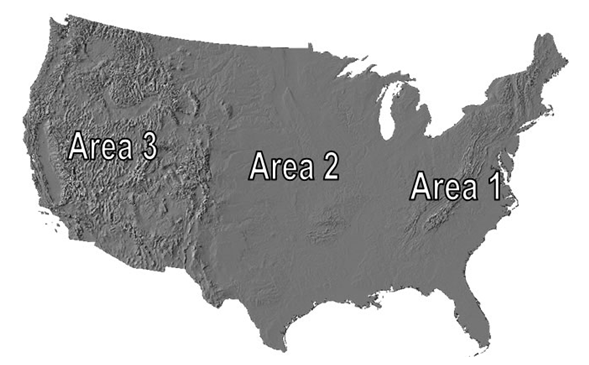
The Great Plains can be found in what area?
a)
Area 1
b)
Area 2
c)
Area 3
d)
None of the above
119.
Railroads, windmills, steel plows, and barbed wire are all examples of -
a)
items used to settle the Appalachian Mountains during the Gold Rush.
b)
native american technology.
c)
inventions and adaptations used to settle the Great Plains.
d)
innovations of WWI.
120.
A movement concerned with helping the poor -- according to biblical principles
a)
Social Gospel
b)
Gospel of Wealth
c)
Social Darwinism
121.
What were some problems that the people in factories encountered?
a)
long hours, good pay
b)
Low wages, long hours, dangerous
c)
dangerous, long hours, good pay
d)
low wages, good hours. dangerous
122.

What agency was created to control trade that crossed state lines?

a)

Civil Service Commission

b)

Interstate Commerce

c)

Sherman Antitrust

d)

Recall Commission

123.

The religious movement practiced by Indians that meant the white man would eventually disappear, was called the Ghost Dance

a)

True

b)

False

124.

What was one of the most dramatic cause of destruction of the buffalo?

a)

Hunting for sport

b)

disease

c)

famine

125.

What battle was a tremendous win for the Siuox?

a)

Wounded Knee Battle

b)

Sand Creek Battle

c)

Battle of Little Bighorn

126.

The battle at Wounded Knee brought the wars between Native Americans and US government to an end.

a)

True

b)

False

127.
Which two words would BEST describe the geography of the Great Plains?
a)
dry, hilly
b)
flat, forests
c)
flat, grassy
d)
swampy, treeless
128.
Which invention would probably be most useful for a cattle rancher during the late 1800s?
a)
steel plow
b)
covered wagon
c)
windmill
d)
barbed wire
129.
Which of the following was created largely with the help of Chinese immigrant workers?
a)
transcontinental railroad
b)
Panama Canal
c)
golden gate bridge
Mount Rushmore
130.
Which of the following was widely used in the Great Plains to build houses for the settlers?
a)
sun dried brick (adobe)
b)
lumber from trees
c)
Sod (made from grass)
d)
buffalo hides for teepees
131.
Land set aside by the US government for the relocation of Native Americans are called _______________.
a)
tenements
b)
ghettos
c)
colonies
d)
reservations
132.

Former slaves from the South who settled on the Great Plains

a)

Nacirema

b)

Exodusters

c)

Populists

d)

Scalawags

133.

The Dawes Act is an example of

a)

accomodation

b)

approximation

c)

acclimation

d)

assimilation

134.
The purpose of the _______________ _____________ was to turn Native Americans into independent farmers. They were given land to farm and in exchange they would become citizens of the United States.
a)
Dawes Act
b)
Homestead Act
c)
Bill of Rights
d)
15th Amendment
135.
What happened to Col. Custer's men at the battle of little big horn?
a)
They were all killed
b)
They were victorious
c)
They pushed the Indians back into their reservations
136.
Book written by Helen Hunt Jackson that criticized US treatment of Native Americans
a)
Century of Dishonor
b)
Uncle Tom's Cabin
c)
Silent Spring
d)
Impending Crisis of the South